Desert Online General Trading LLC
Dubai, United Arab Emirates
Desert Online General Trading LLC
Dubai, United Arab Emirates
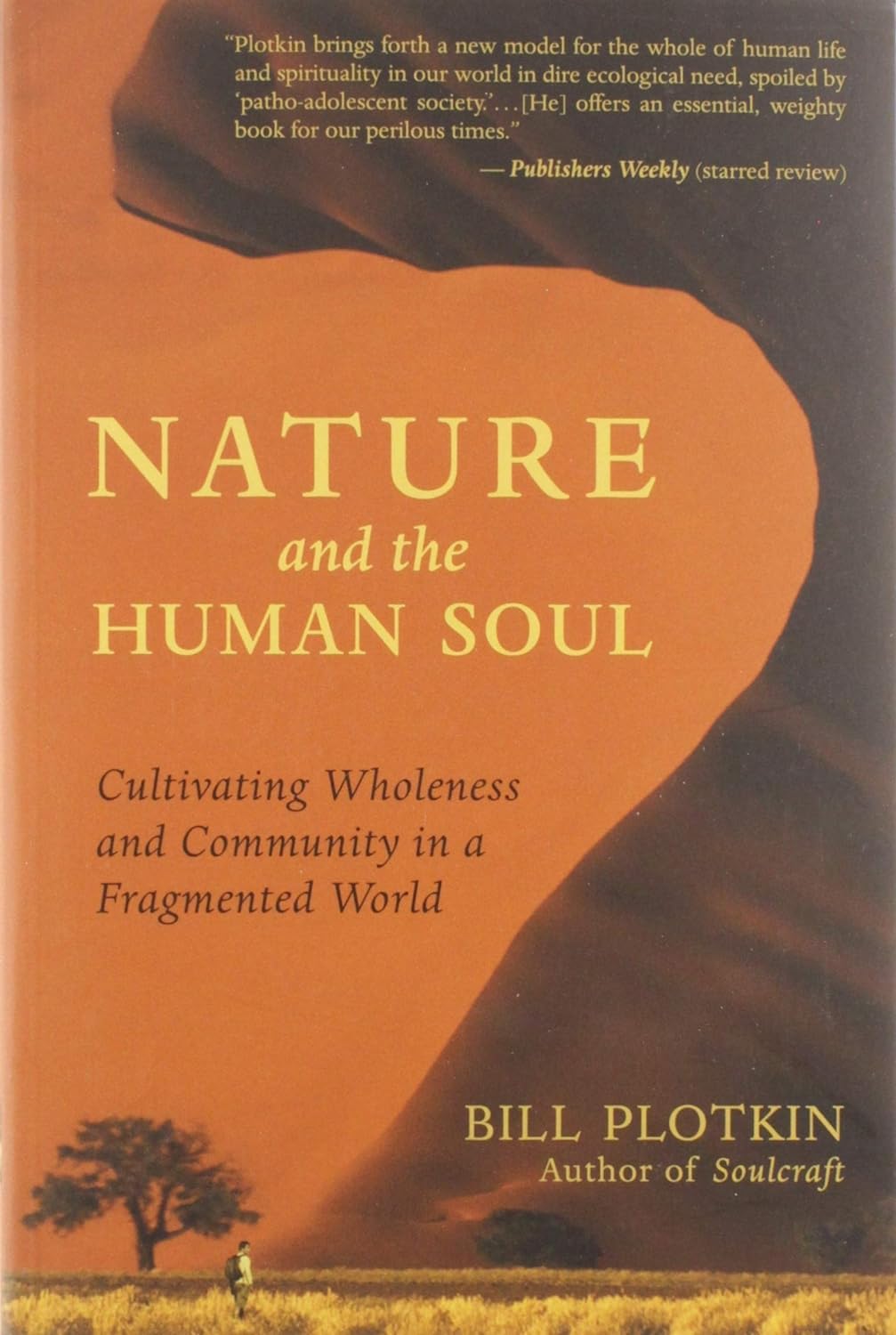
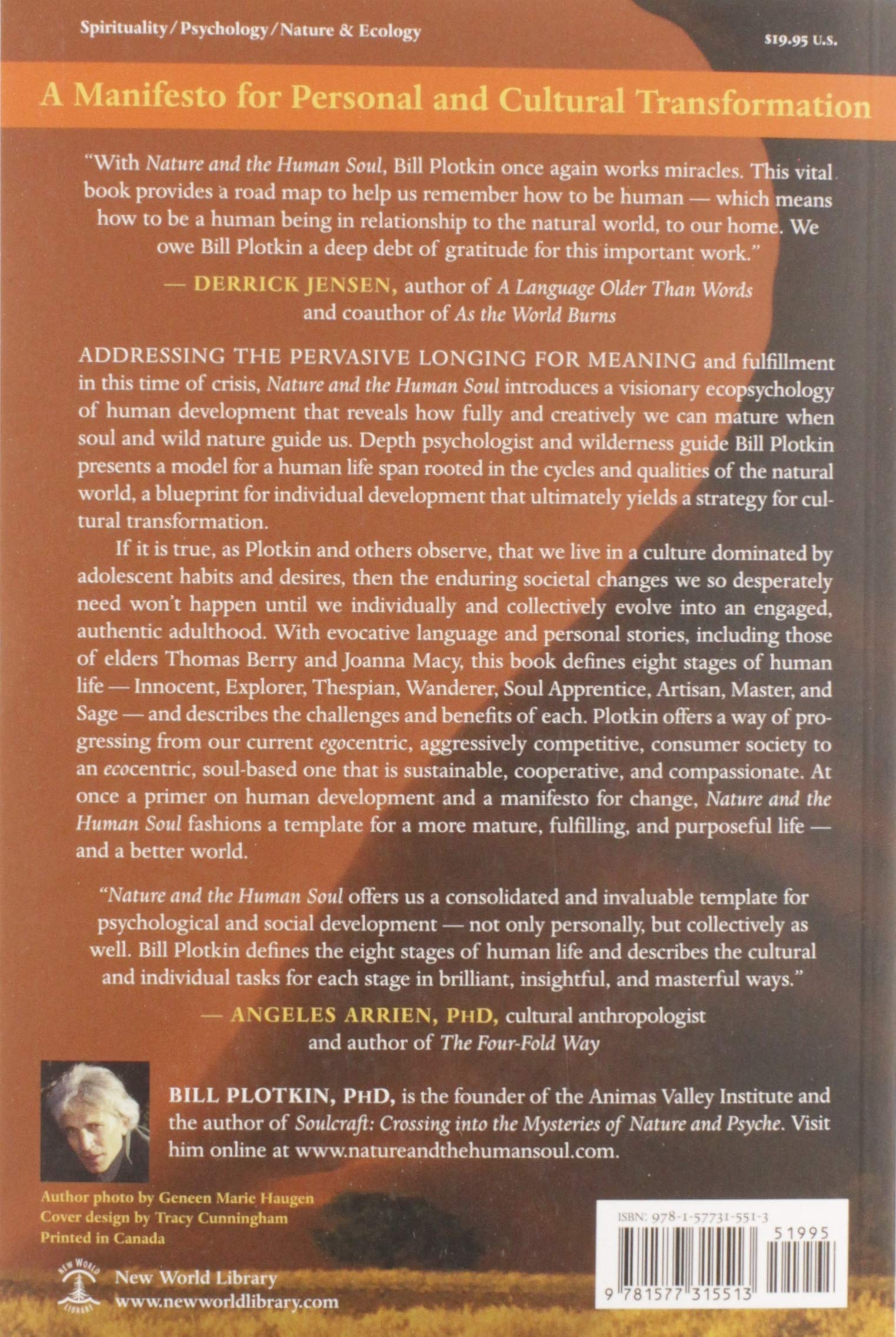

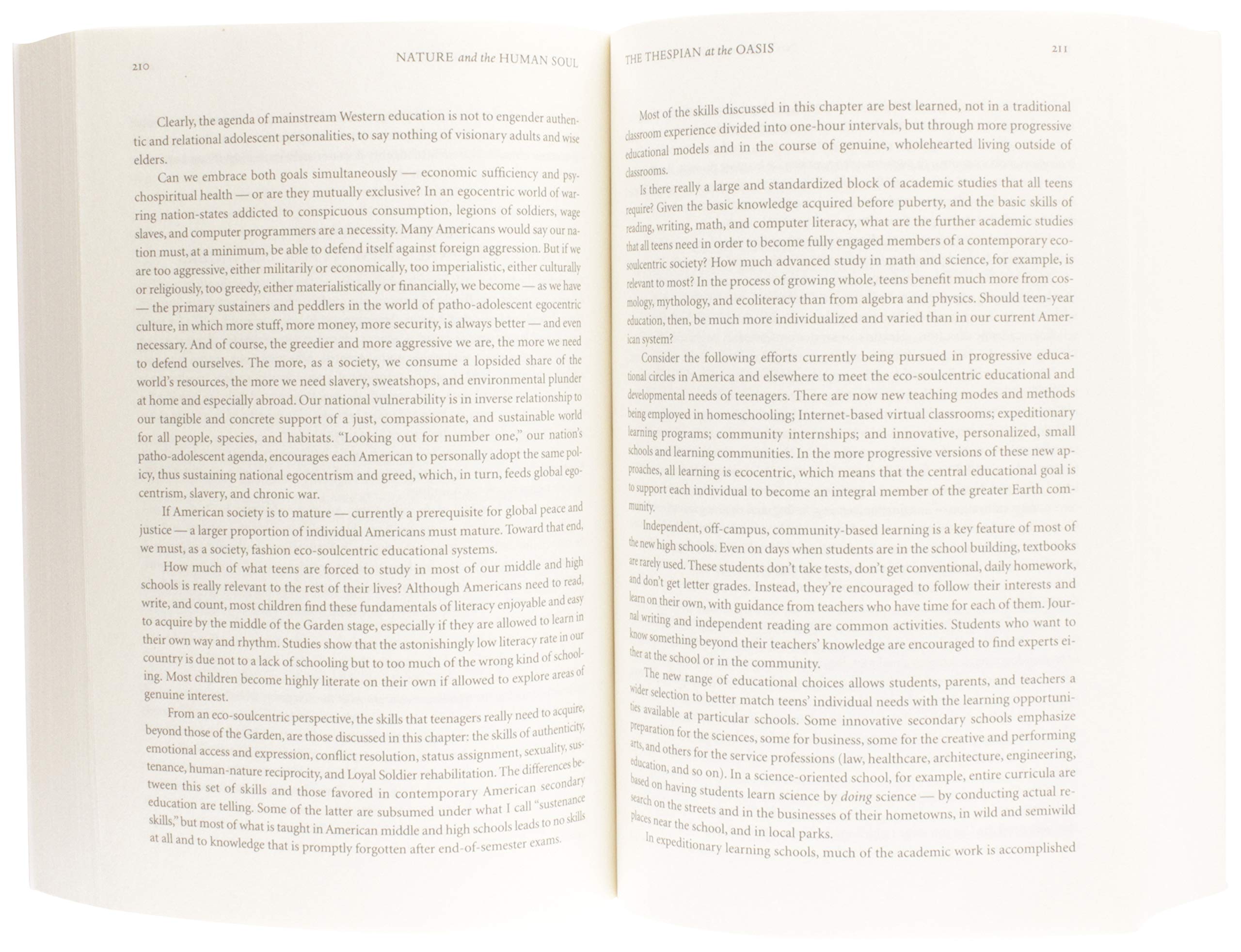
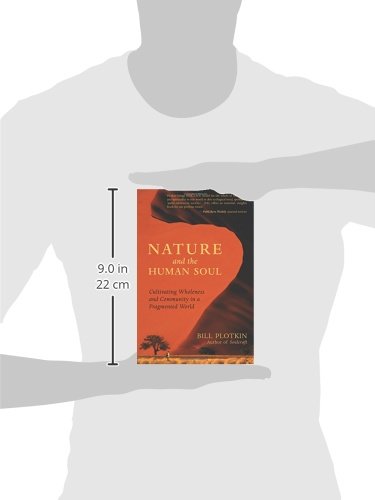
Nature and the Human Soul: Cultivating Wholeness and Community in a Fragmented World
H**C
The definitive guide to optimal human development
A few years ago, I read Jenny Wade's book Changes of Mind: A Holonomic Theory of the Evolution of Consciousness. It left an indelible impression on me by unmasking the reasons for different kinds of human behaviour that had up to that point been incomprehensible to me. I was also intrigued by the bold span of her model of consciousness - from before birth to after death. Despite everything that I had gained from it, however, the book left me feeling uneasy. It was especially in the later, transcendent stages of the model that I couldn't shake the feeling that something important was missing. Not that the model was mistaken, but that it had failed to engage the core questions of human life despite accurately portraying the development of consciousness. Yet, for all my misgivings, I couldn't put my finger on exactly what it was that was missing.Bill Plotkin's first book (Soulcraft: Crossing into the Mysteries of Nature and Psyche) revealed the answer. A whole dimension of spirituality - that pertaining to soul - was absent. Without it, human life seemed empty to me, as if one were trying to move on from it without first living it. Plotkin then proceeded to explore soul-based spirituality, leaving the challenge of integrating it with spirit-based spirituality that is commonly found in world religions to another book.Nature and the Human Soul is that book. It is the only book that I know of that examines how one can both heed the unique call of one's soul and honour the bonds that one shares with the rest of creation. Not only that, but it also considers the much-maligned ego and shows just how valuable it can be when placed in the service of forces larger than itself. Forging a working relationship between these three realms of spiritual growth - ego, soul and spirit - is perhaps the author's greatest accomplishment in this book. It creates a template for living that is pertinent to every stage of human life, and that approaches each one with sincere admiration of what it is instead of marginalising it with impatient anticipation of what it might someday become.Relying on nature and soul for guidance, which is the foundational premise of Plotkin's template, is also messier than what can be found in many other books on personal development. There are no hard and fast rules to follow. Instead, one is called upon to cultivate a personal relationship with these realms and interpret their subtle and often enigmatic messages through one's feelings. It is a challenging process riddled with pitfalls that takes a lifetime to navigate successfully. In fact, Plotkin doesn't shy away from divulging the dark side of human maturation, but takes an honest look at the doubt, trauma and sense of loss that frequently accompany it. He sheds light on the courage and determination that it takes to live authentically and why so many people shirk from it, as unfulfilling as the alternatives may be.The consequence of heeding the soul's call is to discover and occupy one's place in the world. It is to know intuitively that one is not an orphan in need of acceptance, but an inseparable part of the web of life. It is to nurture that web with soul-infused service, honing one's talents so that one's very life becomes a work of art. And it is to relinquish one's ownership of this masterpiece upon its completion, and surrender to spirit to conclude the life well lived.The splendour of Plotkin's vision is enhanced by comparison with human life as it frequently unfolds within the confines of modern society. All too often, it highlights what we have come to accept as normal to reveal it as pathological. The thorough comparison leaves no doubt that our society hasn't grown up. This renders it unable to satisfy the few of its members who have, and makes it a danger to everyone - to other societies, to the biosphere, and therefore even to itself.The comparison illustrates the power of Plotkin's template as a diagnostic tool - it doesn't need symptoms of dysfunction to reveal that one's life has gone off track. Its goal is not to help people adjust to the society in which they live, but to satisfy their innate longing for meaning and purpose as it manifests in the particular life stage in which they live. This focus on nature and soul makes the template essentially independent of culture, and so applicable to them all. It can at once serve as the foundational stone for a truly adult society should we choose to create one, and light the way for the transition from the adolescent society in which we live now. It is an impossible dream that Plotkin and others write about, but, as he says, the only dreams worth their salt at this stage of Earthly affairs are the impossible ones.(From the author of A Glimpse of Another World and Living Deliberately)
R**A
Finding One's Ultimate Place in the World
Based on a small ad in the Omega Institute catalogue in late 1997, I called someone named Bill Plotkin (who at the time essentially was Animas Valley Institute), and quite as a surprise to me, applied and was accepted for the April 1998 "Spring Canyonlands Quest" in southeastern Utah, did several months of required prep work, and went. Based on that 10-day experience, I spent another 20+ days with Bill and others over the next five years, engaging dreams, Shadow, ceremony, wandering in nature, befriending the dark and other practices under his guidance. So, "caveat lector"--this review may be biased.As a reader, I allowed myself to be vulnerable to the gentle, fierce guidance within these pages, and open to wild celebration, essential grief, the possibility of completing unfinished tasks, and a deeper understanding of my true place and trajectory on the planet during the time I have. In addition to his wonderful eloquence in the nuts and bolts of soulcentric development, Bill delivers the goods in a poetic prose that speaks to his intimacy with the languages of both nature and words.The soul-and-nature-based focus of Nature and the Human Soul and the eco-soulcentric developmental wheel at its core are welcome, needed and timely complements to and commentaries on a wide range of what I find to be invaluable, valid and essential developmental models and practices, including Susanne Cook-Greuter's Leadership Maturity Framework (LMF, aka SCTi-MAP), Don Beck's ongoing research and activism with the late Clare Graves' research under the name of Spiral Dynamics Integral, Genpo Roshi's wonderfully blasphemous Big Mind process, and Ken Wilber's continually evolving AQAL framework and his commitment to recognizing and including all that belongs in this very, very big story.What Bill has done here is remind us, in a very remarkable way, of the cycle of human life within the context of the natural world, of which much of industrial-information-age society has forgotten it is a part. His loving suggestions for parents and children in early (the Innocent in the Nest) and middle (the Explorer in the Garden) childhood alone make the book an essential read. His subsequent guidance through early and late adolescence, adulthood and elderhood, while soul-centered, comes from a generous and wise heart.
B**D
Holistic Must Read
As a licensed therapist, ecotherapist, and interfaith minister, I found Nature and the Human Soul to be an invaluable resource for understanding the deep relationship between human development and the natural world. Bill Plotkin’s soul-centered approach offers a powerful framework for cultivating personal growth and community connection through nature’s wisdom.His model of the eight stages of life, intertwined with ecological principles, is both insightful and transformative. This book is an essential guide for anyone seeking to align their personal and collective journey with the rhythms of the natural world.
Trustpilot
2 months ago
1 month ago
4 days ago
2 months ago