Some deliveries may take a little longer than usual due to regional shipping conditions.

DOWNLOAD THE APP


Customer Services
Copyright © 2025 Desertcart Holdings Limited
DOWNLOAD THE APP
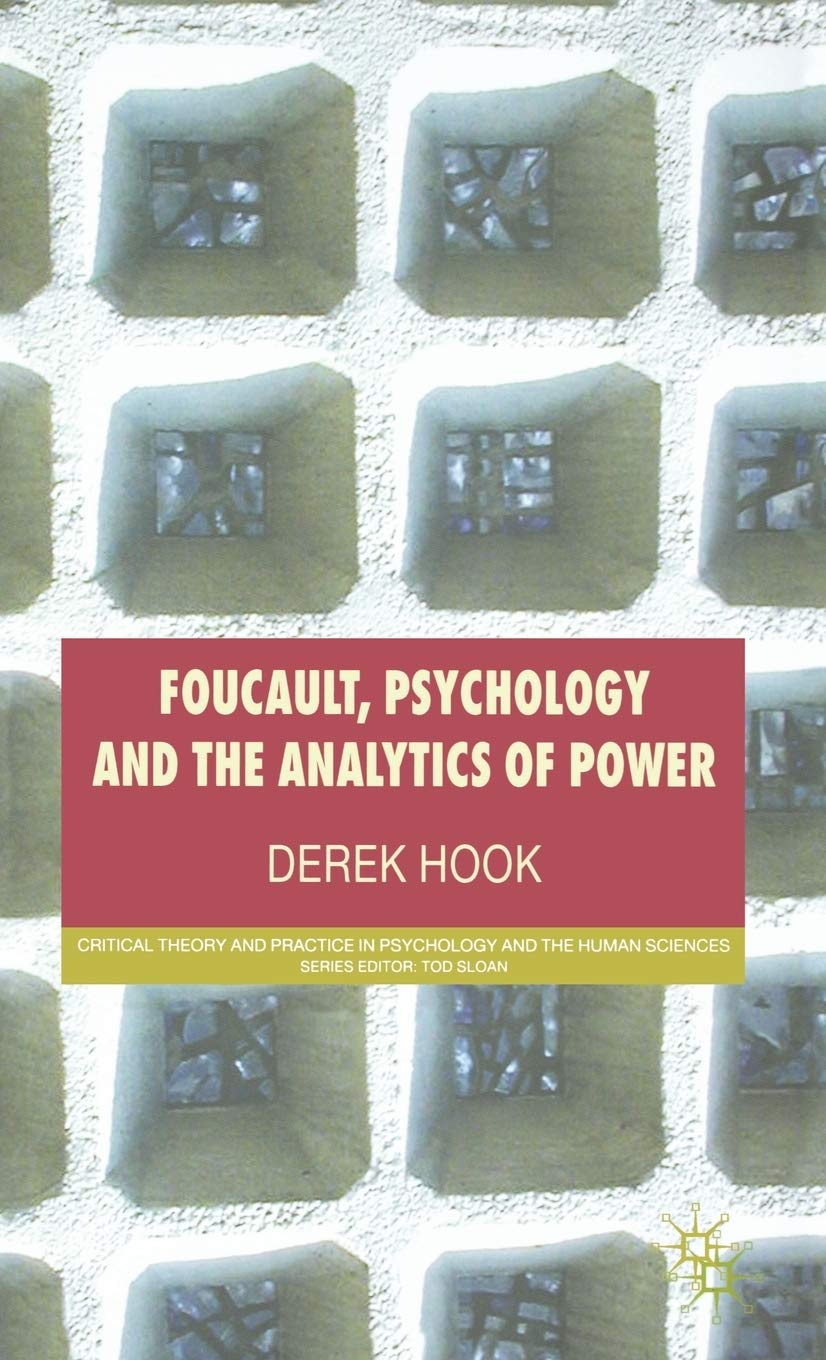
Foucault, Psychology and the Analytics of Power (Critical Theory and Practice in Psychology and the Human Sciences) [Hook, D.] on desertcart.com. *FREE* shipping on qualifying offers. Foucault, Psychology and the Analytics of Power (Critical Theory and Practice in Psychology and the Human Sciences) Review: An important book for psychologists interested in taking Foucault seriously in their practice - A clearly written overview and penetrating critique of how Foucault has been taken up in psychology. More than that, Hook articulates and demonstrates by example the possibilities for a critical psychological practice. Review: Innovative approach - Given Foucault's critique of psychology and the related 'psy-disciplines', it is unsurprising that to date there have been only a few scattered treatments of the topic of 'Foucault and psychology'. Hook's text represents one of the most developed and sophisticated handlings of this theme. Not only does he introduce Foucault's criticisms of psychology, he also uses Foucault's writings on methodology (particularly Foucault's analyses of discourse, space and history) to develop important perspectives on the topics of subjectivity, racism and spatial-identity. There is real originality in Hook's triangulation of a diverse range of psychoanalytic, postcolonial and Foucauldian critics (Adorno, Homi Bhabha, Judith Butler, Frantz Fanon and Nikolas Rose are all called upon), and in his idea of insidious 'affect positions'. Likewise, his critique of Nik Rose's work poses the question of whether any adequate critical analytics can overlook the affective and psychic dimensions of power. The proposed linking of psychoanalytic concepts (fantasy, affect, phobia) to a Foucauldian frame is an innovative contribution, though purist scholars of Foucault and psychoanalysis might resent the intrusion of what has traditionally been to each a rival school of thought. Ultimately the book converts a bold opening assertion - that Foucault is of more use to us today as methodologist than as grand theorist - into a diverse set of approaches to the analysis of power. This is probably its greatest achievement, linking a Foucauldian ethos to a variety of provocative research methodologies, rather than delimiting a Foucauldian approach to the prescriptions of any one analytical strategy.
| Best Sellers Rank | #5,675,980 in Books ( See Top 100 in Books ) #5,890 in Popular Psychology Psychoanalysis #5,891 in Human Geography (Books) #11,556 in Medical General Psychology |
| Customer Reviews | 4.7 4.7 out of 5 stars (5) |
| Dimensions | 5.98 x 0.94 x 8.76 inches |
| Edition | First Edition |
| ISBN-10 | 0230008194 |
| ISBN-13 | 978-0230008199 |
| Item Weight | 1.18 pounds |
| Language | English |
| Print length | 313 pages |
| Publication date | August 16, 2007 |
| Publisher | Palgrave Macmillan |
B**S
An important book for psychologists interested in taking Foucault seriously in their practice
A clearly written overview and penetrating critique of how Foucault has been taken up in psychology. More than that, Hook articulates and demonstrates by example the possibilities for a critical psychological practice.
S**L
Innovative approach
Given Foucault's critique of psychology and the related 'psy-disciplines', it is unsurprising that to date there have been only a few scattered treatments of the topic of 'Foucault and psychology'. Hook's text represents one of the most developed and sophisticated handlings of this theme. Not only does he introduce Foucault's criticisms of psychology, he also uses Foucault's writings on methodology (particularly Foucault's analyses of discourse, space and history) to develop important perspectives on the topics of subjectivity, racism and spatial-identity. There is real originality in Hook's triangulation of a diverse range of psychoanalytic, postcolonial and Foucauldian critics (Adorno, Homi Bhabha, Judith Butler, Frantz Fanon and Nikolas Rose are all called upon), and in his idea of insidious 'affect positions'. Likewise, his critique of Nik Rose's work poses the question of whether any adequate critical analytics can overlook the affective and psychic dimensions of power. The proposed linking of psychoanalytic concepts (fantasy, affect, phobia) to a Foucauldian frame is an innovative contribution, though purist scholars of Foucault and psychoanalysis might resent the intrusion of what has traditionally been to each a rival school of thought. Ultimately the book converts a bold opening assertion - that Foucault is of more use to us today as methodologist than as grand theorist - into a diverse set of approaches to the analysis of power. This is probably its greatest achievement, linking a Foucauldian ethos to a variety of provocative research methodologies, rather than delimiting a Foucauldian approach to the prescriptions of any one analytical strategy.
Trustpilot
5 days ago
2 months ago