
DOWNLOAD THE APP


Customer Services
Copyright © 2025 Desertcart Holdings Limited
DOWNLOAD THE APP

⚡ Power your projects smarter, not harder!
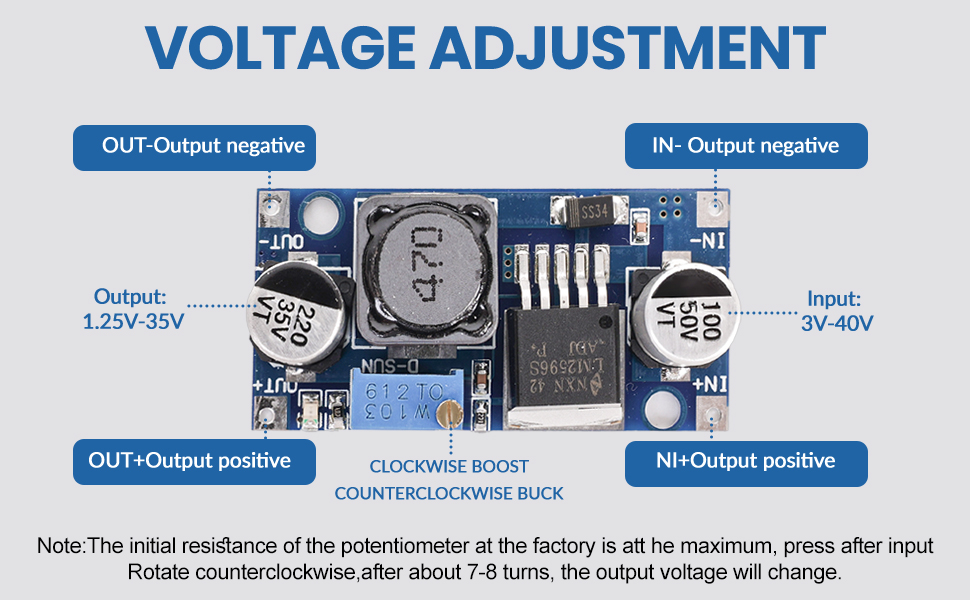
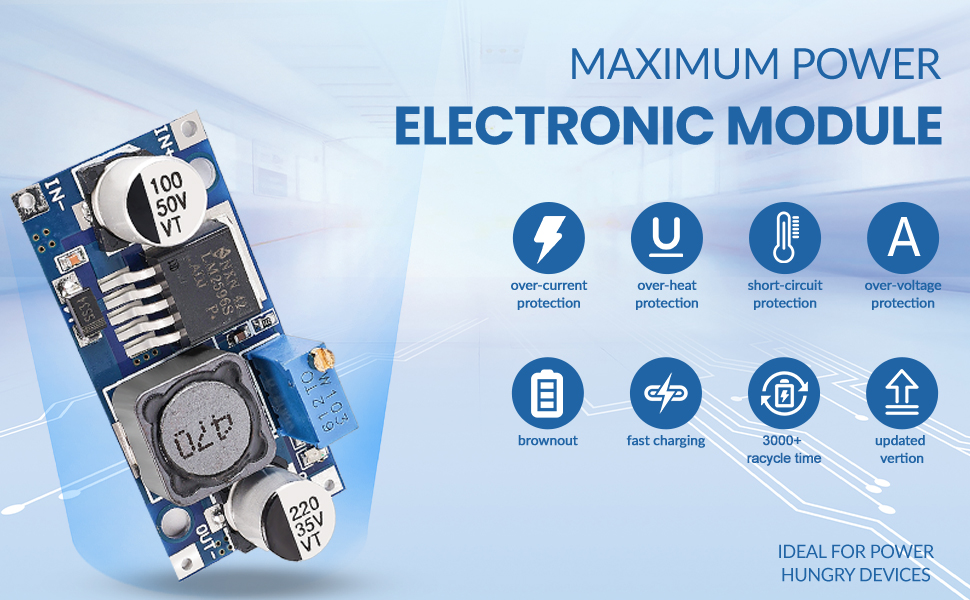
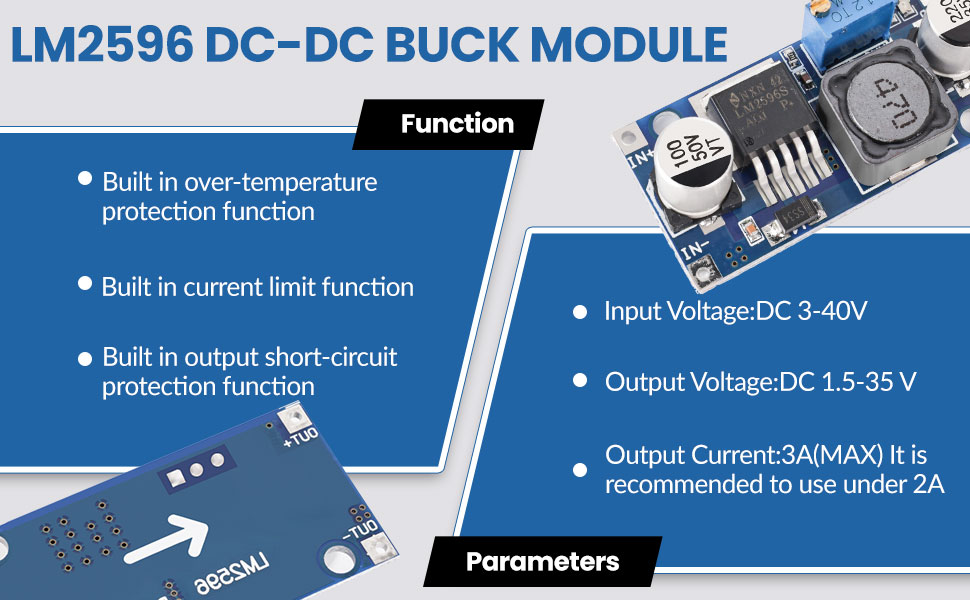
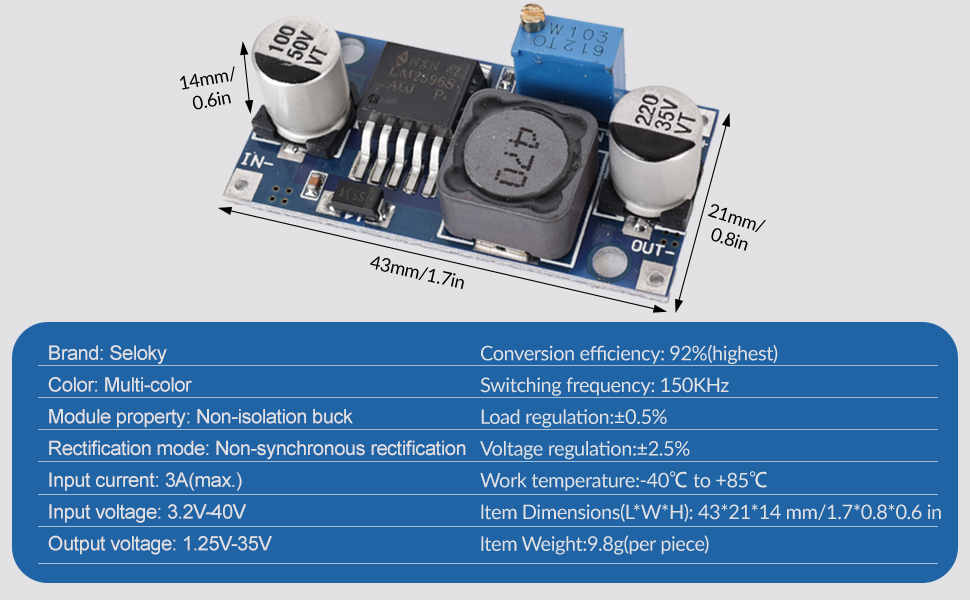
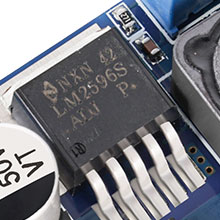
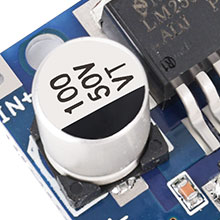
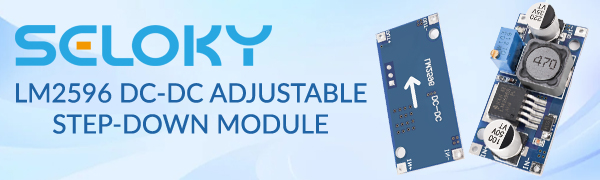
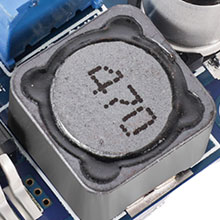
The Seloky 5 Pack LM2596 DC to DC Buck Converters deliver up to 92% efficiency with adjustable output from 1.5V to 35V, supporting a wide input voltage range of 3V to 40V. Built with premium components like SANYO solid capacitors and high-Q inductors on a durable 36μ thick PCB, these compact modules feature integrated thermal shutdown and current limit protection. Ideal for DIY electronics, solar power systems, and communication devices, they offer precise voltage regulation in a space-saving design.
| ASIN | B0DBVYP91F |
| Best Sellers Rank | #13,319 in Tools & Home Improvement ( See Top 100 in Tools & Home Improvement ) #52 in Power Converters |
| Customer Reviews | 4.5 4.5 out of 5 stars (213) |
| Date First Available | August 1, 2024 |
| Item Weight | 2.39 ounces |
| Item model number | SY-LM2596 |
| Manufacturer | Seloky |
| Product Dimensions | 3.94 x 1.97 x 0.67 inches |
N**.
They work, but be aware you have to turn the screw MANY times!
These actually work pretty well for their price point. But, when I first started testing them, I was alarmed to find that turning the adjustment screw on the pot was not doing anything. I tested a few of them, and they all did this. I was super frustrated and going to return them when I happened across an article where someone mentioned that these trim pots sometimes take as much as 30-50 FULL TURNS to go from one end to another. Armed with that knowledge, I started really cranking on the screw, and guess what? They adjusted just fine and worked as described. Now, I can't speak to reliability or long-term voltage stability, but at least at the outset, they have been taking a 24V DC input and converting it to anywhere between 5-12V output which is what I needed for my projects.
K**B
Solid and Useful Buck Regulator
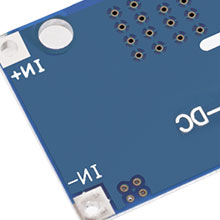
These buck regulators are great. I quickly tested my lot of 5, and they are essentially identical. With a 9V input from a lab supply, I adjusted the voltage to 3.3V with a 581 ohm load, and then checked the output voltage with a 10.2 ohm load. The voltage with 10.2 ohm load dropped to 3.265V +/- 0.008V. The power drawn from the 9V lab supply was 156mA +/- 1mA. Based on these numbers, 1.045W is dissipated in the 10.2 ohm load and 1.404W is drawn from the lab supply, so the buck regulator is 74.4% efficient under these conditions. These appear to be a nice implementation of a variable output buck regulator based on the LM2596. The manufacturing quality is very good, and they function correctly and nearly identically. The connection points for input and output voltages are all on a consistent 0.1" grid, so these are easy to use on a standard prototype board. They also have a couple larger holes that could be used to mount them on nylon standoffs. Paired with a 12V 1A or 2A AC adapter, these make a nice power supply solution for a project requring 3.3V or 5V.
R**E
So far so good
They work great! Don’t get hot and seem efficient based on what I’ve done so far. Haven’t used them long enough, but so far they work.
B**Y
Functional Voltage, Poor for Audio Projects
This adjustable buck converter is a mixed bag, suitable for digital logic but problematic for analog or audio applications. Pros: Size is as expected. Functional: Successfully regulated a 9V input down to a stable 5.00V DC output. The unit stayed cool. Wide Range: Supports wide input and output voltage ranges as advertised. Cons (Key Engineering Findings): Difficult Adjustment: The onboard multi-turn potentiometer required excessive turning to dial in the voltage, which was time-consuming. At one end of the range turning it 4 times produced almost no change, at the other end it was very sensitive. But there are a lot of turns in between. Excessive Noise: Under load, I measured a persistent, high-frequency ripple of approximately 56mv peak-to-peak at 3.7MHz on the 5V rail, even after adding external decoupling capacitors. This ripple caused audible buzz when powering sensitive audio circuits (specifically the BLE receiver). Note - does not come with a header so if you need one you need to provide it and solder it yourself. It does fit standard breadboard spacing if you do this. Verdict: Use this only for powering robust digital loads (like an Arduino or LED strips) where noise doesn't matter. Avoid for high-fidelity audio, RF, or any application requiring a clean power rail.
U**G
Great voltage adjuster
These are perfect for adjusting voltage on an electronic project
A**N
Good product
Does what it needs to do
B**S
Great for projects!
I used 2 of these in my Die-Hard-o-rama I made for the holidays. I wanted all the components to run off the same 12 volt supply that powered the flickering LEDs. The Christmas lights on the outside had a 3-volt battery pack and the motion activated sound board had a 4.5 volt pack. Using a resistor, I dialed in the voltage for each before soldering them in place of the battery packs. Now everything is powered by the same power supply plugged into a smart plug. I added an extra switch on the side for when I want the lights without the sound. Came out great.
M**T
Get a better board than these, no good.
Got these to use a 12v fan on a 3.5v lion battery. Did not work at all. It seemed like it would be easy to use with the adjust screw, but no. Adjusted to top and bottom and voltage did not change, verified with a multimeter. They’re really compact, so they didn’t take up much room in the trash can. Not a good value, no good range and got hot upon use. Not a good quality part. Tested 3 before giving up, even using leads to a power supply. 1/10.
Trustpilot
3 weeks ago
2 days ago