
DOWNLOAD THE APP


Customer Services
Copyright © 2025 Desertcart Holdings Limited
DOWNLOAD THE APP
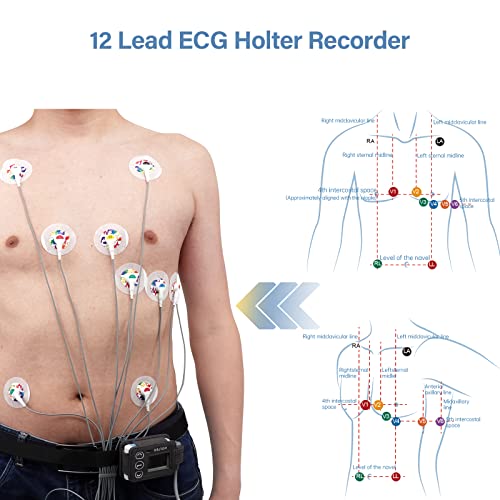


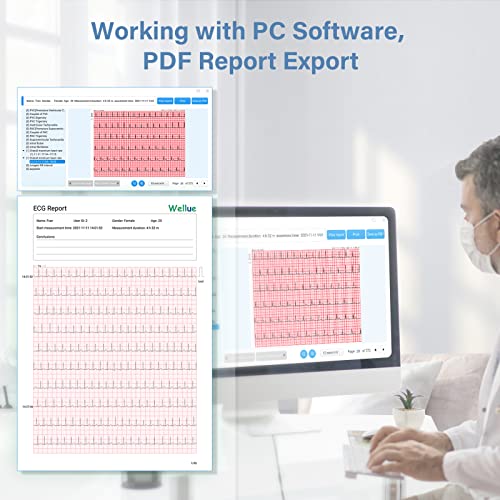
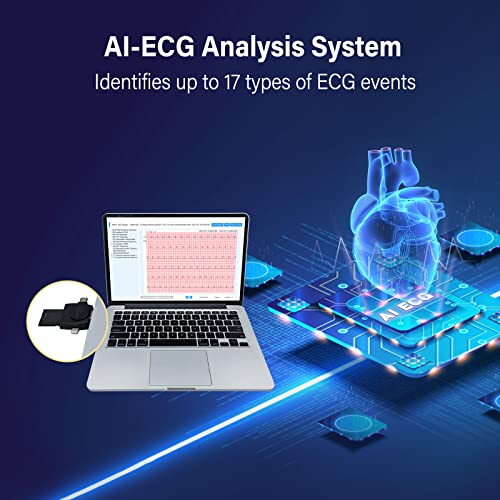
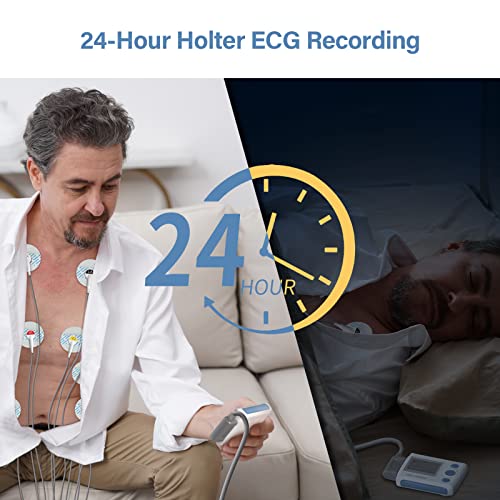


❤️🔥 Catch every heartbeat, anytime, anywhere! ⏱️
The Wellue Holter ECG Monitor is a professional 12-lead cardiac device designed for continuous 24-hour heart monitoring. It records 10 simultaneous ECG channels and leverages AI trained on millions of data points to provide detailed, accurate analysis of up to 17 cardiac events. Portable and lightweight, it supports Mac and Windows PDF report exports, empowering users to track heart health conveniently at home or on the go.


| ASIN | B0B4RYXB4G |
| Batteries Required? | No |
| Batteries included? | No |
| Battery Cell Type | Alkaline |
| Best Sellers Rank | 30,843 in Business, Industry & Science ( See Top 100 in Business, Industry & Science ) 289 in Medical Diagnostics & Screening 2,309 in Diagnostics & Health Monitors |
| Customer Reviews | 4.2 4.2 out of 5 stars (90) |
| Date First Available | 22 Jun. 2022 |
| Item Weight | 920 g |
| Manufacturer | Wellue |
| Manufacturer reference | TH12 |
| Package Dimensions | 22.8 x 16.6 x 8.4 cm; 920 g |
| Part number | TH12 |
K**Y
Great value device
This is review of Wellue 12 lead (TH12 model) Holter Monitor. Although it costs a significant amount of money it still is an astounding value, especially considering it's a 12-lead 24-hour monitor that includes online ECG analysis at no additional cost. In a private medical setting, it could cost the same or more for just one report. The package includes everything, I mean everything including the software on a USB drive, two 10 electrode pack (ten needed for one 24 hour recording) and 6 batteries (one needed for one 24 hour recording). Commendable attention to detail. The most important aspect of the analysis is obtaining a clear ECG recording without any interference. Minimising interference requires meticulous attention to skin preparation and electrode placement. Ensuring clear ECG most of the time is vital to avoid difficulties in interpretation. Reading this fully should help in achieving this. 1. First things first. The device comes with ‘Operator’s Manual’. Read it fully. Although it can look complicated all becomes very easy after the first use. 2. Skin preparation is the essential first step. Shave any hair where electrodes attach to the skin, as hair can hinder electrode contact and fall off. Afterwards, rub the skin with a damp cloth to remove oils and debris, then dry it for better electrode contact. 3. Understanding the leads are helpful. For instance, LL stands for Left Leg, RL for Right Leg, LA for Left Arm, and RA for Right Arm. While a standard ECG involves placing these leads on limbs, for a 24-hour recording, these are necessarily placed on the chest. 4. Pay close attention to the positions outlined in the booklet. Identifying the fourth intercostal space is important. To locate it, run your finger from the front of neck down the breastbone until you feel a bump just a few fingers breadth from neck. Moving to the sides from there, you'll feel the bone, marking the end of the second rib. The space below is the second intercostal space. Count down to the third and then the fourth. V1 is just to the right of the breastbone. Attach V1 electrode on the right and V2 to the left. Next use a mirror to find the mid-axillary line, which is an imaginary line down from middle of the collar bone. V4 is in the fifth intercostal space along this line. V3 goes midway between V2 and V4. Face the left side of your chest in front of a mirror, and place V6 at the same level as V4, in the middle of the left chest in side view. No need to count rib space for V6. V5 is between V6 and V4. 5. Limb leads (LL, LA, RL, RA) have the most potential to give artifacts if placed improperly. Placing electrodes on bony prominences minimises baseline disturbances. LA (left side) and RA (right side) can go on the outer third of collarbones, to minimise artifacts in recordings. For LL and RL leads, feel the lower edge of rib cage on sides of chest and place electrode over the lower ribs in the outer chest on right (RL) and left (LL). Ensure electrodes are sticking well to the skin by pressing all around its edges, avoiding hard pressure on the center to prevent gel from spreading out and thus drying faster which can cause air pockets. 6. When attaching electrode-wires ensure wires are not entangled by separating them. Otherwise they can pull each other and distort recordings. Wear the Holter device around your neck (preferred than belt as there won’t put tension especially on LL, LA wires) and again check there is no tension or pulling of the electrode wires when you move your arms, bend or turn. 7. Accurate lead placement is crucial to obtaining expected typical ECG wave patterns. Incorrect lead placement can result in unusual patterns. Don’t mix up left and right (LL, RL etc.). 8. Despite meticulous attention, some artifacts are inevitable with certain movements but most of the recordings should be clear. That is why the accompanying manual cautions ‘Stay in a resting state during the recording process..’ If you experience symptoms, (that’s when you want to know if symptoms are related to heart) stand still or sit down still to improve recording quality. Despite the right advice in the booklet to rest during the recordings except small amount like walking, I went for a brisk walk for 20 minutes, did several housework and used treadmill walking at 7kph for 30 minutes to see how much interference occurs. See attached images. Image 1 shows what a normal recording looks like. Images 2, 3 and 4 shows interference. Image 5 while brisk walking on treadmill. No heart irregularity in any of these. What you see are all interference due to muscle contractions and electrode movement. Each 24-hour recording uses ten electrodes, which are your main ongoing expense. One can continue to do further two 24 hour recordings on the same set of electrodes by not removing them. Sometimes 3 day recordings gives more useful information. Just take out the battery then the SD card from Holter Recorder without disconnecting other things. I did for 3 days and quality of ECG on third day was as good as the first day, as electrodes didn’t dry out. IMPORTANT: Remove the SD card and analyze data on ‘Wellue AI-ECG Analysis System’ before starting the next 24-hour recording and replace battery with a new one, as one is enough for just one 24-hour recording. Can it be improved further? Yes, and most are software related and one (image 6) hardware. - ‘Event Marker’. At present, it serves no useful purpose as you cannot locate the event marked in the software easily. See event mark in image 2. An event marker tab is needed in the ‘view ECG’ screen. By the way, left panel has a link to ECG of all the arrhythmias the software has identified. Click on ‘►’ next to events on left of screen. The arrow turns downward and if you click it will take to page where the specified arrhythmia seen. At the bottom of the screen click on ‘▼’arrow next to ‘Lead V1’ etc to see patterns in other leads. - Adding a scroll bar to the "View ECG" report to move rapidly through the report would make it easier to navigate. - Displaying heart rate in numbers on each page can provide a quick way to assess heart rate. - Consider a design improvement for the battery compartment to reduce the risk of breaking the metal contact. See image 6. Inserting the battery pushes the contact downwards. This may eventually break. I avoid it by holding thin blade to press it back when inserting the battery.
D**R
Excellent, accurate, easy to use
This is an excellent device. My doctor friend was floored that this is available to just buy on Amazon. Back when he practiced, you needed to go to the hospital or a specialised clinic for this. It's not very hard to put the leads in the right spots. The recording device is small and light. The resulting output was acceptable to both my cardiologists. One of them pointed out that Wellue doesn't have all the medical certifications it might need, but as far as he could tell the ECG was as good as anything he's seen and helpful in diagnosis. The important difference with having this, vs getting a similar kit from a clinic/hospital is: - It's a 12-lead, not a 2-lead, like the Holter monitors they usually give you. - You can start and stop it whenever you want, so if you have a problem that comes and goes, you are more likely to catch it. The AI analysis basically produces a report almost identical to the one from the clinic-provided 2-lead ECG, but in full 12-lead detail. It works well, though it occasionally mis-categorises a shift in posture as an ECG event, but that's rare enough not to be a problem. I used it for tracking down and measuring Paroxysmal Atrial Fibrillation, and it was helpful. In particular, when it was happening frequently, I put it on one evening and was able to catch the whole AF episode from start to finish. And now that the Afib is gone, it's been possible to prove to myself and my doctors that it is gone, by providing a 24h recording that shows very few ectopic beats. So, the device has served its purpose so far and I'm glad I bought it, as expensive as it is. Room for improvement would be: - It doesn't last 24h on rechargeable batteries - Should really be USB-rechargeable with a replaceable USB battery for durability, I think... - Can only use it in 12-lead (10 pads) or 8-lead (6 pads) configuration. For more frequent monitoring it would be nice if there was a mode supporting just 2 or 3 contact points, to just check for frequency of PACs rather than get a full detailed reading. Main reason being that wearing so many contact pads is uncomfortable and leaves lots of glue residue.
P**K
Professional Equipment
Obviously an authentic medical device. Even my wife's consultant was impressed. Once proper placement of the electrodes is mastered the equipment isn't difficult to use correctly. Comes with carry pouch and strap. The LCD screen is small but readable and the instructions clear and concise. The computer download is simple to install and navigate and once the recording is uploaded it takes around 30 minutes to receive the AI assessment of your test. You can then print out either the whole thing or a 'highlights' selection should any anomalies be detected.(Your printer, not provided). Put my wife's mind at rest. Not cheap but worth the investment.
S**A
12 Leads, each on an A4 page. That's a lot of paper
This provides continuous traces from all leads. There does not appear to be a way of printing out a straight forward 12 lead ecg on a single piece of A4
A**D
First Class
First Class
G**I
Ho acquistato questo prodotto per mia mamma che soffre di aritmie e già sono in possesso di altri prodotti della stessa casa con grande soddisfazione ed affidabilità degli stessi. L’apparecchio per Holter a 12 derivazioni è uno strumento si professionale ma è di una semplicità unica nell’utilizzo casalingo anche da parte di persone che non sono del settore sanitario. Ci sono tutte le istruzioni ed illustrazioni per applicare gli elettrodi, l’apparecchio è piccolo e leggerissimo che non da nessun fastidio, perfetta la borsetta per appenderlo alla vita e dimenticarsi di averlo addosso per tutte le 24 ore in cui registra Holter. Semplice utilizzo e comprende anche la lingua italiana che si imposta facilmente , la lettura avviene tramite programma gratuito che si scarica sul pc e ti legge tutti i dati generati dall’esame Holter , strepitosa la funzione di intelligenza artificiale che ti genera un vero e proprio referto , ovviamente è indicativo poiché l’interpretazione deve essere assolutamente fatta dal medico di fiducia per emettere una diagnosi. Che dire per l’autocontrollo ed il supporto del medico è proprio il massimo da utilizzare ad un prezzo molto contenuto per quello che fa. Consigliatissimo questo eccezionale prodotto.
A**R
First of all, this is called a 12-lead ECG monitor but if you start counting the electrodes in the picture you only find 10 leads... Relax, this is normal; certain electrodes are just part of two pairs and thus provide two (extra) leads. So that might look confusing, but it's not. In fact, I had several official 24-hour ECG monitor Holters from my cardiologist and they all had 10 leads too so that's all normal. Those Holters my cardiologist used however didn't have a LCD display to indicate the ECG pulse so that's a great advantage with this Wellue ECG monitor. In fact, those Holters didn't have any feedback at all to indicate during those 24 hours if the measurement went on OK which gave a somewhat uncomfortable feeling because as patient you don't know if something went wrong during that time if due to whatever reason you doubt if the electrodes still make good contact. With this Wellue monitor that becomes a lot easier to check as you just need to press the 'enter' key and immediately the LCD screen pops up showing the live ECG signal as well as the connected electrodes. That is good feedback and reassuring that all is fine during the 24-hour measurement. When I received my Wellue ECG monitor I was surprised to see 6 AAA batteries since the unit itself takes only one AAA battery. Seemingly the unit consumes so much battery power that after one 24-hour measurement the battery is close to empty and can be thrown away. That seemed a bit strange at first but thinking about it I remembered that with all my Holters from the cardiologist they also always used a fresh battery so I guess these types of units simply have to consume a lot of battery power every session. The battery cover is locked with a tiny screw and a small screwdriver is included. Don't know why because leaving the screw out -which saves the hassle of the using that small screwdriver each time- works just as fine. Installation of all electrodes, cables and unit was easy; manual and pictures are clear. The carrying strap & holder are of good quality; even better than the official holter ones I had before. With the previous Holters a doctor installed all; this was the first time I did this myself and it was quite easy to do. Ending the 24-hour session was a bit strange... The day before before I put all on after my shower just before going to bed. Next day I needed to go to bed an hour sooner because of an early appointment the day after so I wanted to end the measurement at 23 hours instead of 24. To my big surprise that was not possible... The unit had an auto switch-off itself fixed at 24 hours with no possibility to end the session prematurely. Well, I had to go to bed, no choice there, so I just unplugged everything anyway hoping that this wouldn't ruin the measurement which it didn't. Very good. [Edited: turns out later that I should have read the manual better... It's stated there that pressing two knobs at the same time ('Down' & 'Enter') will exit the measurement in a correct way. Which again shows that reading the manual in full is highly advised ;-) ] The idea then is that a software program is installed on your PC/laptop which was easy to do. The ECG monitor registered all 24-hour data on an SD-card, take that SD-card out, put it via the (included) adapter in the PC/laptop and upload the data into the PC/laptop. No problems there, this all went smooth. Next that 24-hour data needs to be send via the same software program over the internet to the Wellue server where some huge computer does all data crunching and sends back the full report. Again, piece of cake to send that all over, just pressing a button. Next I had to be patient for about 20 minutes because I guess that computer on the other side of the world was very busy working very hard to analyse my data... ;-) The report that came back was very impressive. In my case, I'm highly interested in the amount of PVC and PAC occurrences which it showed in full detail. Also, it very nicely showed the ECG signals on all electrodes. In all, this is as up to standard as it gets and completely comparable with the Holter reports I received in the past. I know my cardiologist is keen on seeing the ECG signals per electrode as this indicates from where exactly in my heart those ectopic pulses originate in order to determine if they are benign or not. My report had 11 pages; I included 2 of those pages here for reference (just blanked my name & age). The first one shows in a full overview all beats per hour over the full 24 hour; note that the last hour (23:00) only contains zeros because -as mentioned earlier- I needed to abort an hour sooner. This overview contains all data nicely listed per hour; really a great job. The second page showed a detail of a PVC sequence over all leads; something that will interest my cardiologist for better understanding. So in all I'm highly pleased with this Wellue ECG monitor: it's small, complete (more so than the hospital ones), can give feedback regarding the ECG signal while taking the 24-hour measurement (important to me). The software program is easy to install and to use, and the generated report is of excellent quality. If you like to have your own ECG Holter device and be independent of doctors/ hospitals (like me) than this Wellue ECG monitor really is an excellent choice.
F**A
Buen producto tanto para uso personal como profesional. A un muy buen precio, de facil uso y en español¡¡¡
M**O
Questo holter ecg a 12 derivazioni è qualche cosa di eccezionale. Piccolo e facilmente indossabile per un ECG sulle 24 ore. Ma la cosa più bella è che in pochi minuti utilizzando il software a corredo (rapporto di analisi AI), ti elabora tutto il tracciato e ti arriva sul PC il report dettagliato e ben strutturato con indicazioni sullo stato di salute del tuo cuore. In merito alla assistenza post vendita, devo dire che è efficiente e attenta alle richieste del cliente. Tutte le informazioni riportate dai vari report, sono state oggetto di analisi con un professionista del settore, che ha confermato l'esattezza dei dati rilevati. Cosa dire vale quanto costa, sono soddisfatto dell'acquisto.
A**.
Das Gerät wurde gekauft um gewisse Gesundheitsdaten auswerten und überwachen zu können. Das Gerät einzurichten und anzulegen ist kein Problem und auf Grund seiner kompakten Maße nicht störend im Alltag im Zuge einer 24 Stunden Aufzeichnung. Auch die Software zur Auswertung ist recht gut und gibt die komplette Aufzeichnung als Übersicht aus und bietet auch eine Zusammenfassung an. Das Ganze kann dann auch noch Ausgewertet werden mittels einem Algorithmus. Am ende sollte man dann dennoch Ahnung von den gemessenen Daten haben oder im Idealfall das Ganze nochmals von einem Arzt begutachten lassen. Fazit: Ein gutes Hilfsmittel für einen guten Preis. Es kann aber dennoch keinen Facharzt ersetzen aber das ist wohl auch nicht das Ziel des Herstellers.
Trustpilot
2 months ago
3 weeks ago