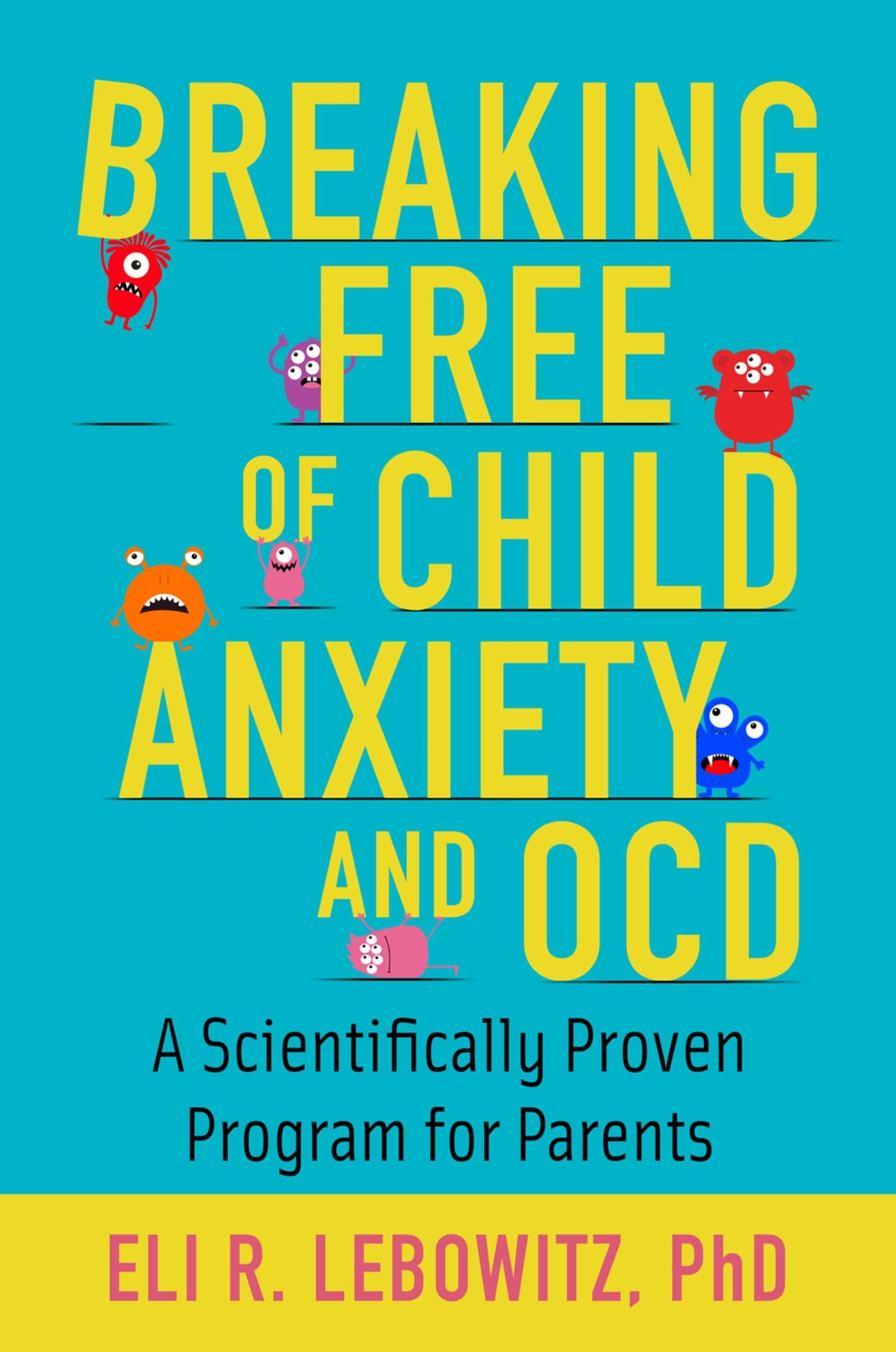
Buy Breaking Free of Child Anxiety and OCD: A Scientifically Proven Program for Parents by Lebowitz, Eli R. online on desertcart.ae at best prices. ✓ Fast and free shipping ✓ free returns ✓ cash on delivery available on eligible purchase. Review: Me and my husband are both reading this, me in paperback, him on Kindle. We're nearly half way through, page 92 of 220ish pages. We've been doing the worksheets together and agreeing combined answers, a rarity. I like that this is about modifying our behaviour, not directly asking for changes or more workbooks or exercises by our child. I like that it recognises that one parent may have a more demanding style, one may have a protective style. I wish it mentioned more (in the first half I've read) about the fact that anxiety and OCD are often co-morbid with neurodivergence, such as ADHD or autism. But that isn't essential, as we know enough about our child after many years and much reading, so can adjust. Just going through these exercises (the part of self help books I usually skip, or half do in my mind) is helping us see things differently and both look at our own learned behaviours. A lot of the parenting strategies widely shared and promoted for children with anxiety, OCD traits and ADHD, are all very well for younger kids. I've seen so many parenting books and the blurb says, the author has learned everything through bringing up their own kids, aged 6 and 9. Hmm, ok, no thanks! Once you're dealing with teens, especially with one approaching adulthood, the game changes. They are still under your roof and may sometimes follow parental advice and house rules. But they also have a lot more autonomy, their own money, their own ideas, do their own online research, cook their own high protein meals and decide when they sleep (within reason). Reward charts are a distant memory and sanctions based on taking devices away are rare now and pretty ineffective. The negotiation skills and patience needed for parenting teens are considerable. They have your number, push your buttons and make you question yourself. It's an exciting time, lots to be proud of, but also daunting, when you see them still struggling with health anxiety, frustrations, anger management and avoidant behaviours, that can affect the family. I have high hopes for these analytic exercises and realistic coping strategies. Great book. Review: This is a great book with good ideas for parents with anxious kids. As a therapist - it’s been good reference and tools for parents.
| Best Sellers Rank | #55,671 in Books ( See Top 100 in Books ) #12 in Obsessive Compulsive Disorder #91 in Anxiety #98 in Psychotherapy, TA & NLP |
| Customer reviews | 4.8 4.8 out of 5 stars (635) |
| Dimensions | 14 x 1.63 x 21.01 cm |
| Edition | 1st |
| ISBN-10 | 0190883529 |
| ISBN-13 | 978-0190883522 |
| Item weight | 1.05 Kilograms |
| Language | English |
| Print length | 216 pages |
| Publication date | 27 May 2021 |
| Publisher | OUP USA |
R**G
Me and my husband are both reading this, me in paperback, him on Kindle. We're nearly half way through, page 92 of 220ish pages. We've been doing the worksheets together and agreeing combined answers, a rarity. I like that this is about modifying our behaviour, not directly asking for changes or more workbooks or exercises by our child. I like that it recognises that one parent may have a more demanding style, one may have a protective style. I wish it mentioned more (in the first half I've read) about the fact that anxiety and OCD are often co-morbid with neurodivergence, such as ADHD or autism. But that isn't essential, as we know enough about our child after many years and much reading, so can adjust. Just going through these exercises (the part of self help books I usually skip, or half do in my mind) is helping us see things differently and both look at our own learned behaviours. A lot of the parenting strategies widely shared and promoted for children with anxiety, OCD traits and ADHD, are all very well for younger kids. I've seen so many parenting books and the blurb says, the author has learned everything through bringing up their own kids, aged 6 and 9. Hmm, ok, no thanks! Once you're dealing with teens, especially with one approaching adulthood, the game changes. They are still under your roof and may sometimes follow parental advice and house rules. But they also have a lot more autonomy, their own money, their own ideas, do their own online research, cook their own high protein meals and decide when they sleep (within reason). Reward charts are a distant memory and sanctions based on taking devices away are rare now and pretty ineffective. The negotiation skills and patience needed for parenting teens are considerable. They have your number, push your buttons and make you question yourself. It's an exciting time, lots to be proud of, but also daunting, when you see them still struggling with health anxiety, frustrations, anger management and avoidant behaviours, that can affect the family. I have high hopes for these analytic exercises and realistic coping strategies. Great book.
C**E
This is a great book with good ideas for parents with anxious kids. As a therapist - it’s been good reference and tools for parents.
S**V
I really enjoyed reading this book - an excellent primer on anxiety and how to approach struggles with anxiety in the family, with kids who are experiencing a lot of it (to the point it's heavily impacting other family members, who are trying to manage it). The initial chapter offers some great education on what anxiety is, in a clear and compassionate manner. It also offers a lot of compassion to parents/caregivers, who likely want to help their anxious children to meet and master their fears, but may struggle with understanding how to do so effectively when those fears seem to be very big and persistent. Honestly, while this book is geared towards parents with young kids/adolescents, I think anyone could learn a lot from it about how to be supportive with someone who is highly anxious, while also self-respecting and maintaining appropriate boundaries. I would love to see the author's write a similar book that is more geared towards parents with teens/young adults who struggled with anxiety/OCD and difficulty launching into their adult lives.
R**N
Absolutely excellent book and resource if you have an anxious child or teenager! I wish I had these tools when my children were younger however as a mom of 5 young adult children (college students) these tools have increased my children’s self confidence and independence! I no longer enable their anxiety responses by changing my responses. Must read and implement the tools!
E**Y
I'm a child family therapist and I recommend this book to all of my clients with anxious kids. It's an easy and enjoyable read with tangible skills. I cannot recommend this enough!
Trustpilot
1 month ago
2 days ago