
DOWNLOAD THE APP


Customer Services
Copyright © 2025 Desertcart Holdings Limited
DOWNLOAD THE APP
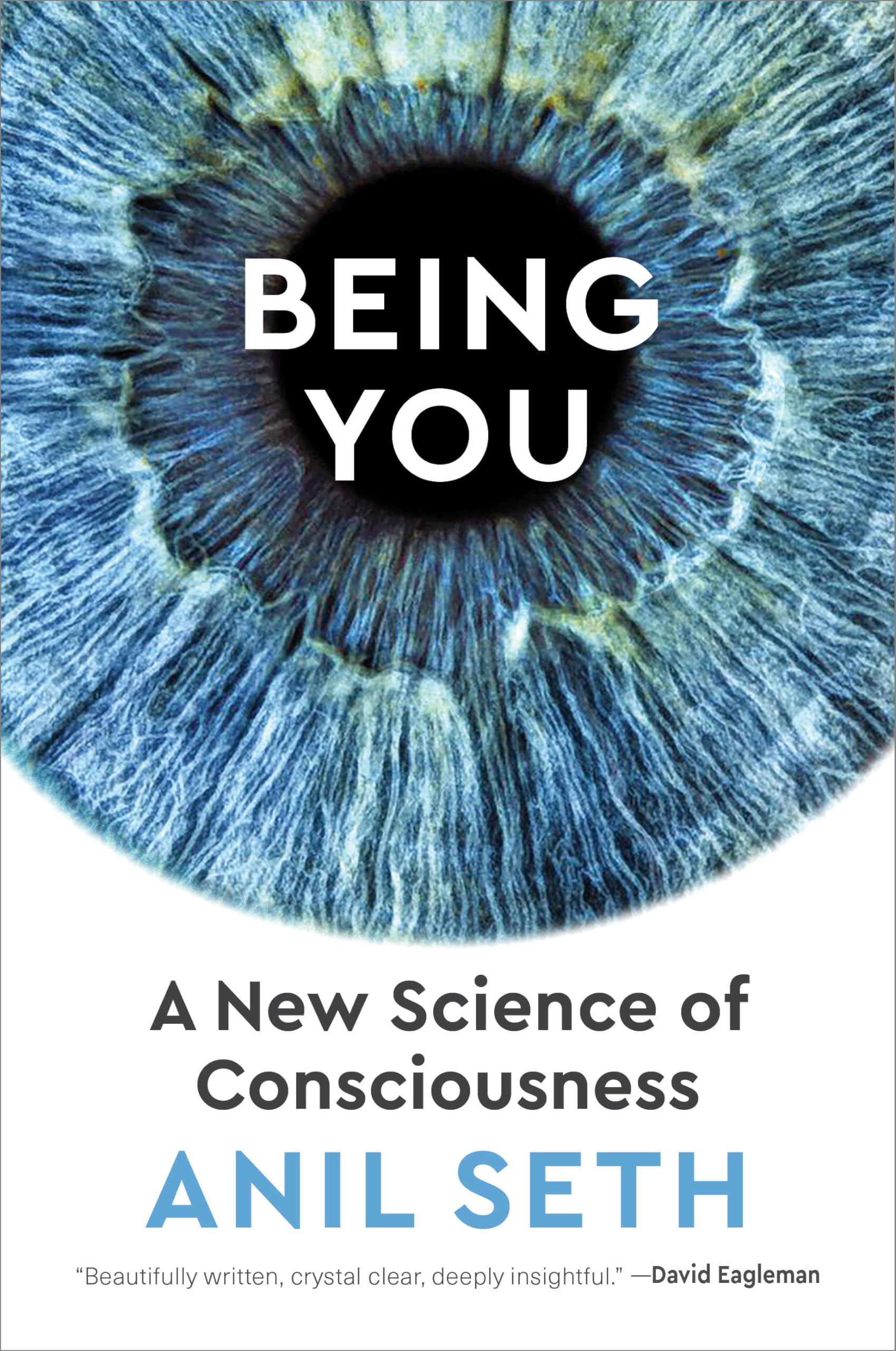
Buy Being You: A New Science of Consciousness on desertcart.com ✓ FREE SHIPPING on qualified orders Review: One of my top two favorite books on the science of human consciousness. - I really like this authors approach To The Mystery of consciousness. A lot of people seem to hold rather fixed assumptions the author is careful to point out how these assumptions most often mask as much as they contribute to science. He gives a positive affirmation towards the issue of the hard problems of Consciousness David Chalmers laid out in the 1990s. He's not so hasty to throw in this out as it is the most salient feature of our experience more so than reality it's self. But be that as it may he uses a very pragmatic approach and consider the possibility that Consciousness can be one of many different aspects which may be amendable to the scientific method. He also does a wonderful job at constructing the current philosophy around the issues of qualia subjective experience and "what it's like" to be YOU. He believes like other phenomena and other questions in science Consciousness may be analogous to the mysteries of temperature and the Very definition of living things all of which eventually become understood in surprising new ways through the use of measurement. He treats the issues of measurement very carefully in his book since this is the basis of science and our ability to quantify phenomena has had a rather successful track record in solving what was previously a mystery. I do appreciate his approach on the conceivability argument and the thought experiment using the philosophical zombie he's definitely changed my perspective on that key topic. I would put this book right alongside the conscious mind by David Chalmers they both compliment each other and they build upon an understanding of the issue of consciousness that is accessible yet weighty. Review: More abstruse, not necessarily more objective. - Anil Seth's "Being You" is a triumph of lucid scientific writing. He tackles the age-old question of consciousness with clarity and a refreshing directness. Unlike many academics, Seth doesn't shy away from providing conclusions, albeit tentative ones, which makes the book both thought-provoking and accessible to a wider audience. The author’s central thesis - that our conscious experience is a kind of "controlled hallucination" constructed by our brains - is novel, even if not immediately intuitive. The framework rests on the theory of Predictive Processing, which posits that our brains are constantly generating predictions about the world based on prior experiences and incoming sensory data. Consciousness, as per this theory, arises from the brain's efforts to minimize "free energy," the discrepancy between its predictions and the actual sensory input. In essence, we are continuously striving to make sense of the world by refining our internal model of reality. While this approach is more grounded in objective, measurable phenomena than, say, Integrated Information Theory, it ultimately falls prey to the same unfalsifiable claims. The very concept of "free energy" hinges on elusive notions of "predictions" and "expectations" that are inherently subjective and difficult to quantify. How do we accurately measure the gap between prediction and reality within the brain? Without a concrete means of measuring these variables, Predictive Processing, despite its elegance, risks becoming another subjective explanation with limited practical utility. Furthermore, as our understanding of the brain advances, with increasingly sophisticated neural mapping techniques, any single-measure definition of consciousness is likely to fall short. We will inevitably face a future where machines surpass any predetermined threshold we set for consciousness, rendering our definitions unacceptable to everyone who would want to keep humanity as something unique. As we delve deeper into the intricate signal-processing mechanisms of the brain, theoretical frameworks like Predictive Processing will face mounting challenges, with each new discovery potentially exposing flaws in their assumptions. Ultimately, our psychological need for a fixed definition of consciousness - something to cling to as machines outpace us in cognitive abilities, just as they did in physical prowess - may force us to keep shifting the definition to ensure we keep calling ourselves superior.


| Best Sellers Rank | #35,654 in Books ( See Top 100 in Books ) #20 in Cognitive Neuroscience & Neuropsychology #61 in Cognitive Psychology (Books) #74 in Biology (Books) |
| Customer Reviews | 4.4 4.4 out of 5 stars (1,927) |
| Dimensions | 6.18 x 1.26 x 9.32 inches |
| Edition | First Edition |
| ISBN-10 | 1524742872 |
| ISBN-13 | 978-1524742874 |
| Item Weight | 1.25 pounds |
| Language | English |
| Print length | 352 pages |
| Publication date | October 19, 2021 |
| Publisher | Dutton |
R**S
One of my top two favorite books on the science of human consciousness.
I really like this authors approach To The Mystery of consciousness. A lot of people seem to hold rather fixed assumptions the author is careful to point out how these assumptions most often mask as much as they contribute to science. He gives a positive affirmation towards the issue of the hard problems of Consciousness David Chalmers laid out in the 1990s. He's not so hasty to throw in this out as it is the most salient feature of our experience more so than reality it's self. But be that as it may he uses a very pragmatic approach and consider the possibility that Consciousness can be one of many different aspects which may be amendable to the scientific method. He also does a wonderful job at constructing the current philosophy around the issues of qualia subjective experience and "what it's like" to be YOU. He believes like other phenomena and other questions in science Consciousness may be analogous to the mysteries of temperature and the Very definition of living things all of which eventually become understood in surprising new ways through the use of measurement. He treats the issues of measurement very carefully in his book since this is the basis of science and our ability to quantify phenomena has had a rather successful track record in solving what was previously a mystery. I do appreciate his approach on the conceivability argument and the thought experiment using the philosophical zombie he's definitely changed my perspective on that key topic. I would put this book right alongside the conscious mind by David Chalmers they both compliment each other and they build upon an understanding of the issue of consciousness that is accessible yet weighty.
N**J
More abstruse, not necessarily more objective.
Anil Seth's "Being You" is a triumph of lucid scientific writing. He tackles the age-old question of consciousness with clarity and a refreshing directness. Unlike many academics, Seth doesn't shy away from providing conclusions, albeit tentative ones, which makes the book both thought-provoking and accessible to a wider audience. The author’s central thesis - that our conscious experience is a kind of "controlled hallucination" constructed by our brains - is novel, even if not immediately intuitive. The framework rests on the theory of Predictive Processing, which posits that our brains are constantly generating predictions about the world based on prior experiences and incoming sensory data. Consciousness, as per this theory, arises from the brain's efforts to minimize "free energy," the discrepancy between its predictions and the actual sensory input. In essence, we are continuously striving to make sense of the world by refining our internal model of reality. While this approach is more grounded in objective, measurable phenomena than, say, Integrated Information Theory, it ultimately falls prey to the same unfalsifiable claims. The very concept of "free energy" hinges on elusive notions of "predictions" and "expectations" that are inherently subjective and difficult to quantify. How do we accurately measure the gap between prediction and reality within the brain? Without a concrete means of measuring these variables, Predictive Processing, despite its elegance, risks becoming another subjective explanation with limited practical utility. Furthermore, as our understanding of the brain advances, with increasingly sophisticated neural mapping techniques, any single-measure definition of consciousness is likely to fall short. We will inevitably face a future where machines surpass any predetermined threshold we set for consciousness, rendering our definitions unacceptable to everyone who would want to keep humanity as something unique. As we delve deeper into the intricate signal-processing mechanisms of the brain, theoretical frameworks like Predictive Processing will face mounting challenges, with each new discovery potentially exposing flaws in their assumptions. Ultimately, our psychological need for a fixed definition of consciousness - something to cling to as machines outpace us in cognitive abilities, just as they did in physical prowess - may force us to keep shifting the definition to ensure we keep calling ourselves superior.
L**L
Not a Simple Book on Brains
Not an easy read for this EE without biological courses. I used Google searches to explain ideas, words and theories in easier to read segments. Overall the book increased my appreciation for the brain on my shoulders. The questions inspired by this book are, who, why and what am I? Those questions will be for the reader to answer. Expect a hard read if your not a neurological scientist but want details on brain functions. Several weeks of exploring the pages left me with satisfaction of just completing it. An easier read can be found in "the hidden spring" by Mark Solms that I read a few years ago on the same theme "The hard problem of consciousness".
R**I
Thought prov owing book
Overall a great book, although some parts like the emergence of consciousness from control perspective (eg to actively position ourselves in better situations) are difficult to follow.
E**I
highly recommended for those who are curious about conscious AI
An excellent book from biology to physics to technology to AI. The book has a rich set of accumulation of scientific evidence to build the case for perception, conscious, controlled and controlling hallucination. Unfortunately, it loses the quality when it reaches the topic of conscious AI towards the end. The author has a bias in this topic and deviates from the scientific rigor in stating so. He should update the book with the recent developments in AI. Regardless, it is going to be part of my library that I would recommend to my friends / colleagues.
P**I
Lot of conjecture, not much science
Not really what I expected. I learned about this book from Quanta magazine and expected something more like a physics of the brain or at least some biology. Instead the book has a lot of ideas and concepts or maybe even hypotheses but few of them are testable (falsifiable) by experiment. The Bayesian idea was interesting but some math might have helped the flesh things out a bit. One nit I need to pick was the strange endnotes which were liked only to a page number and not a location on the page. Kind of hard to follow a citation if you don’t know what it is linked too.
S**M
Great book that helps understand the challenges consciousness poses neuro-scientists when studying the underlying mechanisms . Explanations are provided about the approach based on controlled hallucination and how we experience perceptions. A lot of philosophical questions are presented as well to account for an effort to understand what consciousness and perception are, a feat centuries old. A quote from the book itself may help: "The challenge is to build increasingly sturdy explanatory bridges between mechanism and phenomenology, so that the relations we draw are not arbitrary but make sense. What does ‘make sense’ mean in this context? Again: explain, predict, and control."
V**S
A alucinação controlada é o grande modelo sobre a consciência apresentado aqui. Outros modelos também são abordados e explicados de forma bastante compreensível. Não encontrei aqui um texto fluido, com toques de domínio da escrita e do uso palavra, como por vezes encontramos em outros livros de temática técnico-científicas. Mas é absolutamente fascinante entrar em contato com ideias tão incomuns para teorizar sobre nossos pensamentos, nossa mente.
A**A
This is a scientist's, not a philosopher's, approach to consciousness. It is, without doubt, the most illuminating book on the subject that I have read.
M**E
I came across this book via Anil Seth's 1 hr lecture on YouTube for the Royal Institution, covering the same material. I'm glad I purchased it for the greater depth afforded by the written work. I do agree with most of Anil's views, but even so, they are well explained and considered, so I think it's worth reading even if your views differ. (After all, we have no definite answers on the topic!) The core idea (clumsily summarized here by me) of the self as a constructed hallucination for controlling the body is intriguing. Consciousness, and self-consciousness, is one of the great mysteries and I'm glad talented thinkers are tackling the hard problem in practical ways.
L**O
A must-read book for anyone interested in an up-to-date view of Consciousness. The author explains with frank language the intricacies of predictive perception to draw the image of a controlled hallucination. The same qualifier is used for the self. Consciousness comes from "the bestial machine", and Evolution shaped it to favor the survival of organisms. This way, faced with advances in neuroscience, Chalmer's "hard problem" is increasingly diluted, and Consciousness seems to be closer.
Trustpilot
2 months ago
2 weeks ago