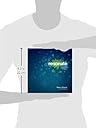

Resonate: Present Visual Stories that Transform Audiences: 8601419323678: Business Communication Books @ desertcart.com Review: Transforms How You Think About Presentations - I’ve read my fair share of books on communication, but Resonate stands out because it’s not just about making slides look better—it’s about changing the way you connect with people. Nancy Duarte shows that the best presentations aren’t data dumps, they’re stories. She walks you through how to structure your talk so it moves like a narrative, pulling your audience in and keeping them engaged. The book is beautifully designed, full of visuals and real-world examples that make the lessons stick. I especially appreciated the breakdown of story arcs—how to balance contrast, tension, and resolution so your presentation has impact instead of falling flat. It feels practical and inspirational at the same time. It’s not a quick skim; some chapters dive deep, and you’ll want to reread sections to really apply them. But that’s part of what makes it valuable—it’s a resource you come back to when you’re building an important talk. Bottom line: If you want to move beyond bullet points and transform your presentations into something memorable, this book delivers. It’s part instruction manual, part creative spark, and one of the few presentation books that practices what it preaches. Review: Vivid insights into potent storytelling - Nancy Duarte has done it again. Her new book, resonate: Present Visual Stories that Transform Audiences, is a prequel to the best-selling slide:ology, which set a new standard for excellence in PowerPoint design. Resonate is the book to read before you read slide:ology, because it explains how to understand audiences, create persuasive content and structure a talk before firing up PowerPoint. The book equals slide:ology's beauty, sharing the same high production standards and stunning graphics. But don't be seduced by its design or the misled by the subtitle. My one complaint with resonate is that the subtitle is too limiting. It's far more than a book on how to "present visual stories"; rather, it's an extensive listing of the secrets and essential truths of the best storytellers and public speakers, whether they use visuals or not. Whereas Duarte's first book explored the intricacies of design and the contrasts of the color wheel, resonate explores the intricacies of storytelling and effective ways to build emotional contrasts into the core of the speakers' message. The book not only opposes the cultural norm that presentations are nothing more than written reports, filled with mind-numbing detail; it also stands firmly on the side of the speaker who tells a story, crafted to produce an emotional response and deliver a memorable experience. Stories, Duarte explains, have conveyed meaning to audiences through the ages. They've been a tool of persuasion since the earliest myths were told around campfires. Hearts and minds The fundamental secret of changing the audience's minds, Duarte tells us, is to tell a story that resonates with them: "The audience does not need to tune themselves to you--you need to tune your message to them. Skilled presenting requires you understand their hearts and minds and create a message to resonate with what's already there." The strength of the book is the clarity with which Duarte explains, step by step, how to change the minds of an audience. From the screenwriter who opens a movie with an inciting incident to an understanding of the stages of the hero's journey in a novel, Duarte explains how to deliver presentations where something magical happens. Of course, that means her suggestions can be used for good or evil; for example, she explains how Enron executives used presentations as a propaganda device to spread lies and defraud thousands. Fortunately, her other case studies describe presentations which change the world for the better, with inspirational messages that convey feeling, emotion and meaning. `Sparklines' Duarte has invented a powerful analytical tool she calls a "sparkline" to map the structure of any speech. A sparkline is a graphical representation of a presentation that shows the points at which it moves between describing "what is" to describing "what could be." Color-coding and text-positioning on the sparkline reveal the "shape" of a particular presentation and map the audience response by noting laughter and applause. No two sparklines are alike, because no two presentations are alike. Sparklines offer communications professionals a way to make an impact in the C-Suite. Anyone with the time (and courage) to create a sparkline analyzing executive speeches in your own organization will now be able to deliver a report on the strengths and weaknesses of the presentation that can be grasped at a glance. Turning information into stories If you are responsible for executive communications in the corporate world, you'll appreciate the practical steps Duarte shares that turn abstract information into emotionally appealing stories. Her case study on how her company--Duarte Design--transformed a single high-tech product slide into a story with a "hero" who faces conflicts and challenges that the product then solves, shows what can be achieved with a little creative effort. The creative process that Duarte Design uses with clients such as Cisco Systems, Google, Adobe and Microsoft is outlined for all of us to learn and apply as we grow in our careers. As Dan Post, the President of Duarte Design, says in the foreword: "If great presentations were easy to build and deliver, they wouldn't be such an extraordinary form of communication. Resonate is intended for people with ambition, purpose, and an uncommon work ethic. Applied with passion and purpose, the concepts in this book will accelerate your career trajectory or propel your social cause .... Few pursuits in professional self-improvement have as much professional leverage." Changing the world Duarte's real heroes are those people who give speeches that change the world, none more so than Dr. Martin Luther King. Her sparkline analysis of his I Have a Dream speech is worth the price of the book. She analyzes the "shape" of King's speech as it moves from what is to what could be, highlighting the use of repetition, dramatic pauses and metaphor to change the minds of his audience and ultimately change the world.
| Best Sellers Rank | #97,689 in Books ( See Top 100 in Books ) #24 in Running Meetings & Presentations (Books) #118 in Communication Skills #136 in Marketing (Books) |
| Customer Reviews | 4.5 out of 5 stars 1,068 Reviews |
D**M
Transforms How You Think About Presentations
I’ve read my fair share of books on communication, but Resonate stands out because it’s not just about making slides look better—it’s about changing the way you connect with people. Nancy Duarte shows that the best presentations aren’t data dumps, they’re stories. She walks you through how to structure your talk so it moves like a narrative, pulling your audience in and keeping them engaged. The book is beautifully designed, full of visuals and real-world examples that make the lessons stick. I especially appreciated the breakdown of story arcs—how to balance contrast, tension, and resolution so your presentation has impact instead of falling flat. It feels practical and inspirational at the same time. It’s not a quick skim; some chapters dive deep, and you’ll want to reread sections to really apply them. But that’s part of what makes it valuable—it’s a resource you come back to when you’re building an important talk. Bottom line: If you want to move beyond bullet points and transform your presentations into something memorable, this book delivers. It’s part instruction manual, part creative spark, and one of the few presentation books that practices what it preaches.
I**N
Vivid insights into potent storytelling
Nancy Duarte has done it again. Her new book, resonate: Present Visual Stories that Transform Audiences, is a prequel to the best-selling slide:ology, which set a new standard for excellence in PowerPoint design. Resonate is the book to read before you read slide:ology, because it explains how to understand audiences, create persuasive content and structure a talk before firing up PowerPoint. The book equals slide:ology's beauty, sharing the same high production standards and stunning graphics. But don't be seduced by its design or the misled by the subtitle. My one complaint with resonate is that the subtitle is too limiting. It's far more than a book on how to "present visual stories"; rather, it's an extensive listing of the secrets and essential truths of the best storytellers and public speakers, whether they use visuals or not. Whereas Duarte's first book explored the intricacies of design and the contrasts of the color wheel, resonate explores the intricacies of storytelling and effective ways to build emotional contrasts into the core of the speakers' message. The book not only opposes the cultural norm that presentations are nothing more than written reports, filled with mind-numbing detail; it also stands firmly on the side of the speaker who tells a story, crafted to produce an emotional response and deliver a memorable experience. Stories, Duarte explains, have conveyed meaning to audiences through the ages. They've been a tool of persuasion since the earliest myths were told around campfires. Hearts and minds The fundamental secret of changing the audience's minds, Duarte tells us, is to tell a story that resonates with them: "The audience does not need to tune themselves to you--you need to tune your message to them. Skilled presenting requires you understand their hearts and minds and create a message to resonate with what's already there." The strength of the book is the clarity with which Duarte explains, step by step, how to change the minds of an audience. From the screenwriter who opens a movie with an inciting incident to an understanding of the stages of the hero's journey in a novel, Duarte explains how to deliver presentations where something magical happens. Of course, that means her suggestions can be used for good or evil; for example, she explains how Enron executives used presentations as a propaganda device to spread lies and defraud thousands. Fortunately, her other case studies describe presentations which change the world for the better, with inspirational messages that convey feeling, emotion and meaning. `Sparklines' Duarte has invented a powerful analytical tool she calls a "sparkline" to map the structure of any speech. A sparkline is a graphical representation of a presentation that shows the points at which it moves between describing "what is" to describing "what could be." Color-coding and text-positioning on the sparkline reveal the "shape" of a particular presentation and map the audience response by noting laughter and applause. No two sparklines are alike, because no two presentations are alike. Sparklines offer communications professionals a way to make an impact in the C-Suite. Anyone with the time (and courage) to create a sparkline analyzing executive speeches in your own organization will now be able to deliver a report on the strengths and weaknesses of the presentation that can be grasped at a glance. Turning information into stories If you are responsible for executive communications in the corporate world, you'll appreciate the practical steps Duarte shares that turn abstract information into emotionally appealing stories. Her case study on how her company--Duarte Design--transformed a single high-tech product slide into a story with a "hero" who faces conflicts and challenges that the product then solves, shows what can be achieved with a little creative effort. The creative process that Duarte Design uses with clients such as Cisco Systems, Google, Adobe and Microsoft is outlined for all of us to learn and apply as we grow in our careers. As Dan Post, the President of Duarte Design, says in the foreword: "If great presentations were easy to build and deliver, they wouldn't be such an extraordinary form of communication. Resonate is intended for people with ambition, purpose, and an uncommon work ethic. Applied with passion and purpose, the concepts in this book will accelerate your career trajectory or propel your social cause .... Few pursuits in professional self-improvement have as much professional leverage." Changing the world Duarte's real heroes are those people who give speeches that change the world, none more so than Dr. Martin Luther King. Her sparkline analysis of his I Have a Dream speech is worth the price of the book. She analyzes the "shape" of King's speech as it moves from what is to what could be, highlighting the use of repetition, dramatic pauses and metaphor to change the minds of his audience and ultimately change the world.
B**K
Good info. Book is way too long
2012-1129: Just 2 years & one month ago I wrote the reviews shown below the double-dash line. After repeatedly reflecting on the book, I think i finally "get it." On a literal level, sound-harmonics can "encourage" sympathetic vibrations of items around it. (Ever been alongside a car with a boombox blaring and your own car started vibrating?) To have that effect on our audience on a heart-motivating, mentally stimulating level is to learn what causes them to "vibrate" with motivated action and then to accentuate that vibration through our words--both WHAT we say and HOW we say it. (People seem to instinctively know how to get their closest associates' "goat" by teasing them. Its the same concept but in a positive way.) ========================================================== I bought Slide-ology and wrote a review of it for peers at work. (I love sharing.) I stumbled across Nancy's new book, "Resonate" quite by accident and immediately ordered it here on Amazon. I have read a little over half(on pg. 126 of 232 currently--back matter constitutes another 15 pages or so). Although I have truly found some material mentally invigorating, I do have two big criticisms: 1) Nancy (the author) uses the terms "resonate" and "frequency" in such vague ways that the reader never really quite figures out what she means. I really wonder if she herself knows what she means. I counted at least 4 contextual meanings, none of which are consistent. Its not that I need just one all-encompassing definition, its just I couldn't get a handle on just how to understand those terms. 2) The book is unnecessarily too long. I reviewed the TOC multiple times. Although it appears structurally logical, when I read the actual content, it seems to bounce around a great deal. I am not the sort of person to casually read a book of this sort. I have a pen with me and make copious marginal notes as well as added sticky-notes. Finally, I transcribe all my notes into a word document to create a summary that I can use as a reference. I found myself flipping back and forth, making cross-reference notes because a concept that was touched on (for example, "The Big Idea on pg. 78) is then expanded on page 120, "From Ideas to Messages." Now, I appreciate the bk seems to intend to start with a "wide-angle" lens and then further in book, "zoom in" to details, but it would have been much more succinct (in my opinion) if all that were presented together at the outset. I would have organized the material in this book much differently. From my perspective, she fails her own advise on page 126 regarding establishing structure by repeatedly returning to the same matters over and over. My recommendation: Read the first 78 pages of the book, and you have the crux of the whole 232 pages. So am I am saying "don't read this"? Not at all. Just know that if you truly want to reap the benefits of Nancy's insight, it will take more than just a casual read. You will need to take notes to glean and make any sense of this book. For example, even though she clearly defines "The Big Idea" on page 78 in the very first sentence, and she further explains WHAT it is in concise example on pg. 79, the chapter misses the mark explaining, how, when, where. The examples given are too terse to make sense of it. I'm sure some will take me to task on this write-up. Just remember, it is only my opinion. Update 2010-1103: I have finished the book, gone back & completed an organized outline (from the disorganized mess this book was in) and even created a graphic that succinctly illustrates the overall "journey." Although I still hold to my stand that the 1st 78 pages IS the book, there are a couple other helpful items beyond that: Developmental Organization of content: pages 142 to 143 Examples of use of tugging on heart-strings to teach a lesson: pages 156-161 I did make several marginal notes throughout the book, but after going through it, if I found what i needed was a checkoff list. So i created my own containing all the questions I need to answer in the development phase. Unfortunately, it would mean nothing to those who haven't read the book, so read it and develop your own checklist.
R**7
I wish I had this book 30 years ago
I am not naturally good at remembering and telling stories although I know from my experience that presenters who convey stories are most effective in conveying a message to me. I always thought this was a natural talent that I lacked. This book has shown me that this is not the case. I simply lacked an understanding of how to think in terms of stories. I learned I can remember and/or create given some simple guidelines on how to do it. This book provides a complete process for creating effective, even powerful, presentations. It follows its own advice in how it is structured and presented so that it is itself an effective and powerful presentation. Because my career has involved many technical and educational presentations I could have greatly benefited from learning this at my outset. I suspect if I had then I would have been more effective. For anyone who has to make any presentations of any sort, and is willing to put almost any effort into considering how effective they are buying and using this book will be a great investment. Rob
N**R
Perfectly pitched for this auditory reader/speaker
My only nitpick with this book is that the word "visual" doesn't belong in the subtitle. It's not a book about how to create compelling visuals. Many of the talks she analyzes didn't even use visuals. Instead, it's about how to make your topic engaging by creating a dramatic storyline that may not even seem like storytelling to the average person in the audience. I loved the analytical tools she provided to chart the structure of a talk, and it was exactly what I was looking for as I plan out an upcoming high-stakes, paid presentation. Even the familiar examples she used came alive in a new way with her commentary. Note that the word "resonate" in the title is an auditory word. And it's well-chosen. By following her advice, you'll be able to craft a talk that keeps the audience's attention, no matter what the subject matter. I tuned down more than 20 pages in the book and plan to reread it a couple times more at different stages of my speech preparation.
J**S
The book needs to be larger
Nancy has a great idea and she set out to present it. I was excited to have gotten this book years ago and I recently pulled it from the shelf again as I wanted to revisit her ideas. Then, I was reminded and came back here to make this review. As she knows, presentation slides that have tiny text are called a “wall of text slide.” The text is so small that the audience cannot read and so they don’t and they tune it out. We’d never want our media to interfere with communicating clearly, right? Imagine then, opening this book of a larger page size format with glossy color pages and there’s so much white space that the text is illegible. I never would have expected Nancy, who wrote slideology before this book to do this in her book. It’s almost like she doesn’t want me to be able to read it! It must be intentional as Nancy has spent decades refining visual communication, right? Amazon should bundle this book with a fresnel lens and a daylight reading lamp. You’ll want one. The information in this book is great, but the medium and visual design will kill you to discover it.
T**L
A Book on Presenting That Left Me Speechless
As a huge fan and disciple of Nancy Duarte and her classic, Slide:ology, I had been meaning to read Resonate since I bought it when it first came out last year. Well I finally got around to it this weekend, and for a book whose subtitle is "Present Visual Stories That Transform Audiences," I have to say that I was literally left speechless. And transformed. Every single page of this visually beautiful, glossy book is colorful, eye-catching, thought-provoking, mind-altering, and awe-inspiring. And I am not exaggerating. From a visual thinking perspective, it truly is one of the greatest works ever created. Even the "Acknowledgements" page - something that is typically ignored by most readers - immediately catches your attention and draws you in for what you can sense right away will be an engaging, entertaining, and mentally stimulating ride. Usually I breeze and skim through business books one after another -- especially books on presenting...which all tend to say pretty much the same thing. But Nancy Duarte's insights, illustrations, and examples are so innovative and illuminating that I actually had to continuously pause to catch my breath and let it all sink in. Calling a book a "page-turner" is typically a compliment, but this book is the opposite of that. It is a masterpiece in the field of presentation design & delivery that needs to be savored page by incredible page. It is a work of brilliance that will forever impact the way I think about, design, and deliver future presentations.
Z**S
The hidden thread through great presentations
I loved Nancy Duarte's 2008 book, Slide:ology. She has now written her first book, Resonate. Yes, you read right. Her second book came out two years ago. (Sort of like how the first Star Wars movies came out a couple of decades after the later films.) Duarte describes Resonate as the prequel to Slide:ology. And she's right. Resonate is the book to read first, because it is about the reason for giving a presentation: to change people's minds, to persuade, to take action. In contrast, Slide:ology is more about design of visuals: the things that you work on once you've know what you want to talk about. At the core of Resonate is her thesis that all good presentations have a common structure. Great presentations start with "the way it is." Then, they make repeated contrasts between "the way it is" and "the way it could be." Finally, great presentations end with a call to action, and a promise that new, greater things are possible. It's simple, but don't dare think for a second that it's stupid. Scientists will probably appreciate the repeated analysis that Duarte has done to show that this structure is variable and rich. It's similar to how stories can follow the same basic plot structure, but differ profoundly in almost every other way. Another unexpected inversion is in how Duarte conceives of the importance of story. She has something more in mind than anecdotes or telling a narrative with a clear beginning, middle, and end. The presenter's role is not to be someone like Sherlock Holmes, who explains and unravels the plot. The presenter's part is to be Ben Kenobi. It takes a little while to get used to this view. At first, it's somewhat paradoxical to think of the person given a presentation as a supporting character. After all, this sort of character is not usually the most popular one in the movie. Everyone wants to be the central character. You are not. These short summaries do not to the justice to the richness of these concepts, and there are many more besides. She talks at length about her work process for developing presentations, and how to persuade people, for instance. Duarte has again written a deep book. Wonderful.
Trustpilot
1 week ago
2 days ago