
DOWNLOAD THE APP


Customer Services
Copyright © 2025 Desertcart Holdings Limited
DOWNLOAD THE APP
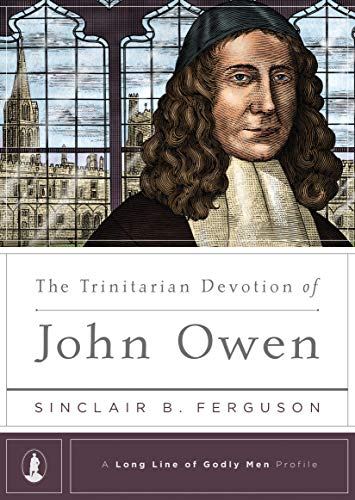
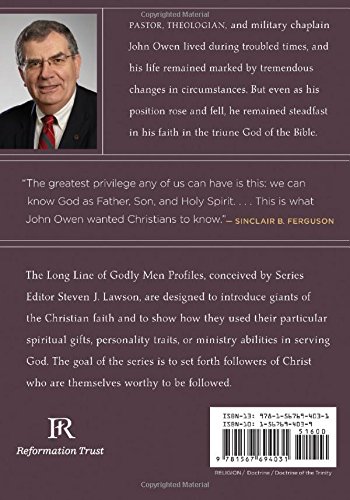
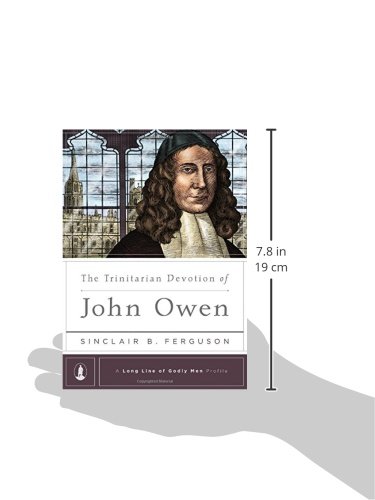
Full description not available
B**E
...in the name of the Father, and the Son, and the Holy Spirit
CHAPTER 1: PASTOR AND THEOLOGIANJohn Owen was born in the same year that William Shakespeare died, 1616. When he was 33, he preached before the English Parliament 24 hours after King Charles I had been executed. At 36, he was appointed vice-chancellor at Oxford University by Oliver Cromwell. In 1662, he was ejected along with 2,000 other ministers from the Church of England for refusing to use the Book of Common Prayer. He served as pastor of Non-Conformist congregations. He died in 1683, leaving behind a legacy of writings that comprises 24 volumes of 600 pages each.Owen was born in Stadham, about 10 miles SE of Oxford. His father was a Puritan minister (The Puritans wanted to restore the Church of England to orthodox Christianity.) At Oxford University he received a classical education in logic, philosophy, ancient history, astronomy, Greek, Hebrew, and Latin. He ran, threw javelin, and played the flute. He studied so much he only slept 4 hours nightly, a decision he later regretted.In 1642, Owen heard a sermon on Christ's words to His disciples after He calmed the storm at sea, "Why are you afraid, O you of little faith?" (Matthew 8:26) From this point on he had a peace and assurance that he belonged to Christ. Owen married Mary Rooke who would bear him eleven children, but only one survived into adulthood. In the summer of 1648, Oliver Cromwell asked Owen to join him in Ireland and serve as his chaplain. When Cromwell laid siege to Drogheda and then slaughtered many of its civilians, Owen preached before Parliament, "How is it that Jesus Christ is in Ireland only as a lion staining all His garments with the blood of His enemies, and none to hold Him out as a lamb sprinkled with His own blood to His friends."In 1651, at the end of the third English Civil War between English Parliament and Charles 1, Cromwell appointed Owen Vice-Chancellor of Oxford. "His personage was proper and comely and he had a very graceful behavior in the pulpit, an eloquent elocution, and could move and win the affection of his admiring auditory almost as he pleased." Owen lived through his expulsion from the Church of England (1662), the great plague of 1665, and the Great Fire of London in 1666. Many Non-conformists believed these events to be God's judgment for their expulsion.Owen suffered much from severe asthma and gallstones and was often too sick to preach. Instead, he wrote and published. The day before he died, he wrote to his friend, Charles Fleetwood, "I am going to Him whom my soul hath loved, or rather Who hath loved me with an everlasting love; which is the whole ground of all my consolation...Live and pray and hope and do not despair; the promise stands invincible that He will never leave thee nor forsake thee." The next day, before he died, he wrote to William Payne, "The long wished-for day is come at last; in which I shall see that glory in another manner than I have ever done, or was capable of doing in this world." John Owen died on August 24, 1683, and was buried in Bunhill Fields, the Nonconformist burial ground outside London. Translated from Latin, his gravestone reads, "And with a disregard for other things, he cherished and experienced that blessed communion with God about which he wrote."CHAPTER 2: IN THE NAME OF THE FATHER, SON, AND HOLY SPIRITChristians are baptized "in the name of the Father and of the Son and of the Holy Spirit" (Matthew 28:19). We have come to know "the grace of the Lord Jesus Christ, and the love of God, and the fellowship of the Holy Spirit" (2 Corinthians 13:14). Jesus said, "This is eternal life, that they may know You, the only true God, and Jesus Christ whom You have sent" (John 17:3).Owen said that to suggest the Trinity is an irrational doctrine is to make man and his reason the measure of all things. We falsely assume that God is like a man, so we just attribute to Him a larger version of ourselves. "Where the substance is finite and limited, there can only be one person in one essence. But that has no place in that which is infinite." The Trinity is not irrational, but suprarational, not against reason, but above reason. Encountering the limits of human understanding should cause us to bow down and worship.Owens believed that God is One (Deuteronomy 6:4), yet the Father, the Son, and the Holy Spirit are each seen as divine. If Jesus and the Holy Spirit are not divine, then Christians are baptized in the name of one God and two creatures! And if the Father, the Son and the Holy Spirit are not one in nature, then we are worshiping three gods!OPERA TRINITATIS AD EXTRA INDIVISA"The external works of the Trinity are indivisible." When God acts, He always acts as God the Trinity. All three Persons helped create the world. "In the beginning God created the heavens and the earth" (Genesis 1:1). The Father is the Creator, yet He makes all things through His Son. "All things came into being through Him, and apart from Him nothing came into being that has come into being" (John 1:3). In Genesis 1:2, "the Spirit of God was moving over the surface of the waters." The Father sent Jesus to become a man and die for our sins (John 5:37). He was conceived by the Holy Spirit in the virgin Mary (Matthew 1:20). After the crucifixion, "Christ was raised from the dead through the glory of the Father" (Romans 6:4). "He was declared the Son of God with power by the resurrection from the dead, according to the Spirit of holiness, Jesus Christ our Lord" (Romans 1:4). Owen says, these Three "know each other, love each other, and delight in each other."Gregory of Nazianzus said, "I cannot think about the One without being instantly surrounded by the splendor of the Three, nor can I discern the Three without being immediately drawn back to the One."APPROPRIATIONES PERSONAEPraxeas was an early heretic who denied the Trinity by adopting the modalistic monarchian view that the Father, the Son, and the Holy Spirit were simply "modes" or appearances of the One God.But each member of the Trinity expresses His specific personhood in relationship to one another and to us. We thank the Father for sending His Son for us. We thank the Son for dying on the cross for our sins (because the Father and Holy Spirit did not die, but Jesus died). And we thank the Spirit that He selflessly revealed Christ to us (John 16:14). Owen's good friend and preaching colleague, Thomas Goodwin, said, "Sometimes a man's communion and converse is with the Father, then with the Son, and then with the Holy Ghost. Sometimes his heart is drawn out to consider the Father's love in choosing, and then the love of Christ in redeeming, and so the love of the Holy Ghost that 'searches the depths of God' and reveals them to us (1 Corinthians 2:10). And so a man goes from one Witness to another distinctly."A one-person God could never express all His attributes within His own being. But the Trinity displays the dynamic interplay of Father and Son and Spirit, what the Greek church fathers called "perichoresis", the moving in and out (like a choreographed dance) of the Three Persons in an eternal, self-sufficient cosmos of loving and knowing and holy devotion."But when the fullness of time had come, God sent forth His Son, born of woman, born under the law, to redeem those who were under the law, so that we might receive adoption as sons. And because you are sons, God has sent the Spirit of His Son into our hearts, crying, 'Abba! Father!'" (Galatians 4:4-6)CHAPTER 3: COMMUNION WITH THE FATHERScripture puts special emphasis on the love of the Father that flows to us through the Son and the Spirit."God shows His love for us in that while we were still sinners, Christ died for us" (Romans 5:8). "God's love has been poured into our hearts through the Holy Spirit who was given to us" (Romans 5:5). God the Father is characterized by His infinitely gracious, tender, compassionate, and loving nature. Outside of Christ, we only know God as full of wrath and judgment. People do not conclude from a history full of tragedy and evil that God loves them. But the Father sending His Son to die for our sins is the pinnacle of His love for us (John 3:16). Jesus told His disciples, "The Father Himself loves you" (John 16:27).Owen distinguished three kinds of God's love, summarized by Francis Turretin. In the love of benevolence, God willed good to the creature from eternity. In the love of beneficence, God does good to the creature in time according to His good will. In the love of complacency (originally meaning "quiet pleasure or satisfaction"), God delights Himself in the creature on account of the rays of His image seen in him or her. By the first, God elects us. By the second, He redeems and sanctifies us. By the third, He gratuitously rewards us as holy and just. Owen believed we should linger over God's love. We should reflect on the love He had for us before we were born, and the purposes He then planned for our lives (benevolence). There is the love He displayed in history doing good to all people (beneficence). And then there is the love, planned in eternity and expressed in Christ, that we now experience (complacency).Owen believed many Christians are not truly convinced that God the Father loves them. They are well persuaded of the Lord Christ and His good will, but not of acceptance by the Father. Yet Jesus taught us, "If anyone loves Me, he will keep My word; and My Father will love him, and We will come to him and make Our abode with him" (John 14:23). Owen said, "How few of the saints are experimentally acquainted with this privilege of holding immediate communion with the Father in love." Why is this true? In the garden of Eden, God created all the trees but one for Adam and Eve. This was exceedingly generous. He gave them only one command, not to eat from one tree. But Satan subtly distorted God's wording and said to Eve, "Did God actually say, 'You shall not eat from ANY tree of the garden?'" (Genesis 3:1). Satan subtly suggested that God didn't love Adam and Eve at all.Before returning to his father in Luke 15, the prodigal son rehearsed his speech. "Make me as one of your hired servants." Rather than being shamed, he never expected his father to breech Jewish etiquette and run to him, embrace and kiss him, and then celebrate his return.Owen says "Many think there is no sweetness in the Father towards us, except what is purchased by the blood of Jesus." People view God the Father as so reluctant and bitter that Jesus had to persuade Him to love us, with His death. This is a misrepresentation of the Gospel, that it begins with Christ. The Gospel begins with the Father. "For God so loved the world that He gave..." Christ died for us BECAUSE the Father loves us. All the love we see in Jesus is already in the Father (John 16:27).Owen's remedy is to restore the wonder of communion with the Father."The Lord your God is in your midst, a mighty One who will save;He will rejoice over you with gladness;He will quiet you by His love;He will exult over you with loud singing."(Zephaniah 3:17)We must fix our eyes on Christ, so that they may be raised through Him to the Father's love that is demonstrated in Him. Then we will find ourselves inevitably, irresistibly, returning His love to the Father through Christ. This all takes place through the ministry of the Holy Spirit. We love the Lord because He first loved us (1 John 4:19). If we only contemplated this love clearly, Owen says, we "could not bear an hour's absence from Him.""So I have looked upon you in the sanctuary...Because Your steadfast love is better than life, my lips will praise You. So I will bless You as long as I live; in Your name I will lift up my hands" (Psalms 63:2-4).CHAPTER 4: COMMUNION WITH THE SONGod the Father calls us "into fellowship with His Son, Jesus Christ our Lord" (1 Corinthians 1:9). Christ comes in to dine with me, and me with Him (Revelation 3:20). Indeed, the grace of God IS Jesus Christ, not a separate entity from Him. In 2 Thessalonians 3:16,18, Paul said, "The Lord be with you all!" and "The grace of our Lord Jesus Christ be with you all."Owen said, "Through the work of the Holy Spirit, the heavenly Father gives you to Jesus and gives Jesus to you. You have Him. Everything you can ever lack is found in Him; all you will ever need is given to you in Him." "From His fullness we have all received, and grace upon grace" (John 1:16). For the Father has "blessed us in Christ with every spiritual blessing in the heavenly places" (Ephesians 1:3). Without Christ, we could do nothing (John 15:5).Owen understood that unless Christ were truly and fully God and truly and fully man, He could not have saved us. It was only as the God-man that the Lord Jesus "had room enough in His breast to receive, and power enough in His spirit to bear all the wrath that was prepared for us." Since all the fullness of God dwells in Him (Colossians 2:9) and He received the Spirit without measure (John 3:34), His bearing the judgment of God on the cross could not exhaust and destroy Him. He is exactly what we need.Through the ministry of the Spirit and by faith, we become united to Christ, "one" with Christ, in a way a man and a woman "become one flesh" in marriage. Owen believed that being a Christian should stir a deep affection for Christ. He is a person to be known, admired, and loved. There is "endless, bottomless, boundless grace and compassion" in Christ of such proportions that Owen says, in a stunning outburst of wonder and praise,"If all the world set themselves to drink free grace, mercy, and pardon, drawing water continually from the wells of salvation; if they should set themselves to draw from one single promise, an angel standing by and crying, 'Drink, O my friends, yea, drink abundantly, take so much grace and pardon as shall be abundantly sufficient for the world of sin which is in every one of you' -- They would not be able to sink the grace of promise one hair's breadth. There's enough for millions of worlds, because it flows into it from an infinite, bottomless fountain."In response to Christ, Owen says,"Lord, I would have had Thee and salvation in my way, that it might have been partly of mine endeavors, and as it were by works of the law. I am now willing to receive Thee and to be saved in Thy way, -- merely by grace. And though I would have walked according to my own mind, yet now I wholly give up myself to be ruled by Thy Spirit. For in Thee have I righteousness and strength, in Thee am I justified and do glory" -- This it is to receive the Lord Jesus in His comeliness and eminency. This is choice communion with the Son Jesus Christ."The Lord your God is in your midst, a mighty one who will save; He will rejoice over you with gladness; He will quiet you by His love; He will exult over you with loud singing" (Zephaniah 3:17).Before we were united to Christ, we could not delight in Him because we were shut up under sin. But now we can approach the throne of heaven with boldness (Hebrews 4:16). "With great delight I sat in his shadow, and his fruit was sweet to my taste. He brought me to the banqueting house, and His banner over me was love" (Song of Songs 2:3,4). Owen: "When once the soul of a believer has obtained sweet and real communion with Christ, it looks about him, watching all temptations, all ways whereby sin might disturb him in his enjoyment of his dear Lord and Savior. It charges itself not to omit anything, nor do anything that may interrupt the communion obtained!"Christ parted with the greatest glory, underwent the greatest misery, did the greatest works that ever were, because He loves believers. We have none in heaven beside Him and none on earth we desire like Him (Psalm 73:25). We value Him above all, and count everything as loss by comparison (Philippians 3:8). He always now lives to make intercession for us (Hebrews 7:25), as Jesus told Peter, "I have prayed for you" when Satan wanted to harm Peter (Luke 22:31,32). In us, there is no lack that He cannot meet, no emptiness He cannot fill, no sin He cannot forgive, no enemy that can withstand Him.In Titus 3:4-7, every word signifies the exceeding rich grace, kindness, mercy, and goodness of God; His benignity and readiness to communicate of Himself and His good things that may be profitable to us; His love and propensity of mind to help, assist, and relieve; His forgiveness, compassion, and tenderness to them that suffer; free pardoning bounty and undeserved love.Our highest privilege is when God adopts us into His family. Then the great exchange takes place. Christ takes what is ours -- our sin, guilt, and shame -- and we take what is His -- His righteousness. We need to grasp that nothing could more delight the Lord Jesus than for us to give our sins and ourselves to Him. I was dead and now I'm alive. I was cursed and now I'm blessed. I was troubled and now have peace. I was sorrowful but now have unspeakable joy.CHAPTER 5: COMMUNION WITH THE HOLY SPIRITThe Holy Spirit made it possible for Mary, a virgin, to conceive Jesus (Luke 1:35). At Jesus baptism, the Spirit anointed Him for His public ministry in the form of a dove (Luke 3:22). He sustained Jesus during His crucifixion (Hebrews 9:14). The Spirit declared Christ to be the Son of God with power through the resurrection (Romans 1:4).The Spirit cannot be known apart from Christ, just as Christ cannot be known apart from the Spirit. He does not bring glory to Himself, but to Christ. "He will not speak on His own initiative, but whatever He hears, He will speak...He will glorify Me, for He will take of Mine and will disclose it to you" (John 16:13, 14). Both the Father and Son sent the Holy Spirit, "whom the Father will send in My name" (John 14:26; 15:26).Our union with Christ includes receiving the same Spirit that dwells in Him (John 17:20-23). To be "led by" or "filled with" the Spirit is to obey the Word of God, the Bible, in which "men moved by the Holy Spirit spoke from God" (2 Peter 1:20,21). The Spirit helps us to understand the Bible (John 14:26; 16:13; 1 John 2:27). He also supports us in our weaknesses, "for we do not know how to pray as we should, but the Spirit Himself intercedes for us with groanings too deep for words" (Romans 8:26).He is the "pledge of our inheritance" "by whom you were sealed for the day of redemption" (Ephesians 1:14; 4:30). He assures us that we belong to God forever. The Spirit sealed Christ as well (John 6:27).How do we distinguish between the leading of the Holy Spirit and the deceptions of Satan?The Spirit uses Scripture to guide us (John 14:26). His guidance, though at times difficult, will not crush our spirits (Matthew 11:28-30). He does not lead through restlessness, but His everlasting covenant is "ordered in all things, and secure" (2 Samuel 23:5). He "pours out within our hearts" the love of God (Romans 5:5).CONCLUSIONThe church fathers developed the doctrine of "perichoresis" or "circumincessio" -- in everything the Trinity does, each of the three Persons indwells and engages with the other two. Our worship of one member of the Trinity never excludes the other two. We are baptized in the name of the Father, and of the Son, and of the Holy Spirit. We have been loved by the Father, reconciled through the Son, and are being transformed into the image of the glory of the Lord "from glory to glory, just as from the Lord, the Spirit" (2 Corinthians 3:18).
J**O
Excellent Devotional Reading
This work succinctly and clearly summarizes Owen’s work on the Trinity. It adds helpful commentary and analysis. It’s devotional tenor is evident throughout. May the grace of the Lord Jesus, the love of God the Father, and the fellowship of the Holy Spirit be with you as you read.
N**Z
Far More than I Expected
I've been reading this series (A Long Line of Godly Men) and had been anticipating this volume. The format is good: general overview and bio, followed by a development of their theology and practice. But this volume offered more.To my knowledge, Sinclair Ferguson completed his doctorate on the work of John Owen and has written other books on him before. However, I was not expecting such a thorough theological education packed so tightly in a 100-page book!The biography section gave just enough, but Ferguson crafted the remaining chapters into developing Owen's expansive Trinitarian theology. One can't help but notice how often Ferguson steps in as teacher, instructing the reader in Owen's place; a mind so obviously influenced by Owen himself.In the end, I found myself wanting to read more from Ferguson. I also found myself wanting to read more from Owen (as Ferguson interacts primarily with vols. 2 and 3 of Owen's 24-volume 'Works'). But most assuredly, I finished the book thinking deeply about my own communion with our Triune God.May God be glorified in the seeking!
S**M
Sinclair Ferguson is brilliantly filled with the Holy Spirit and Trinitarian truth
One delightful reading...Sinclair Ferguson is brilliantly filled with the Holy Spirit and Trinitarian truth...every serious minded believer will be invited to see something of eternal value..." He covers our faults and embellishes our good."
B**T
A rich look at the Christian walk in grace, peace, and faith.
Sinclair Ferguson captures the heart of John Owen’s profound insight into the work of gave as expressed through the fullness of the Triune God. Well worth the read.
K**R
Five Stars
This series is an excellent introduction to some great men of faith. Anything by Sinclair Ferguson will be edifying.
D**D
This is an excellent biography.
Dr. Sinclair B. Ferguson is an expert on John Owen. He wrote his thesis on John Owen. This is an excellent biography.
P**.
John Owens for is for today.
You will grow in your Christian knowledge and understanding. This is a great read and study of a mans life in knowing God.we need to bring back this book as a read in our schools.
M**M
John Owen for Dummies (like me!)
At last... I have found a book that untangles the contorted English language used by this masterful theologian of old. I commend this volume.
R**O
Great summary of the man
Big emphasis on the devotion of John Owen, based on his own knowledge of the redeemer. Well written and interesting to glance at all aspects of Owen's life and writings
Trustpilot
2 months ago
3 weeks ago