We remain fully operational. Our teams are working around the clock to ensure your deliveries continue safely.

DOWNLOAD THE APP


Customer Services
Copyright © 2025 Desertcart Holdings Limited
DOWNLOAD THE APP
Full description not available
D**R
A complex and challenging book
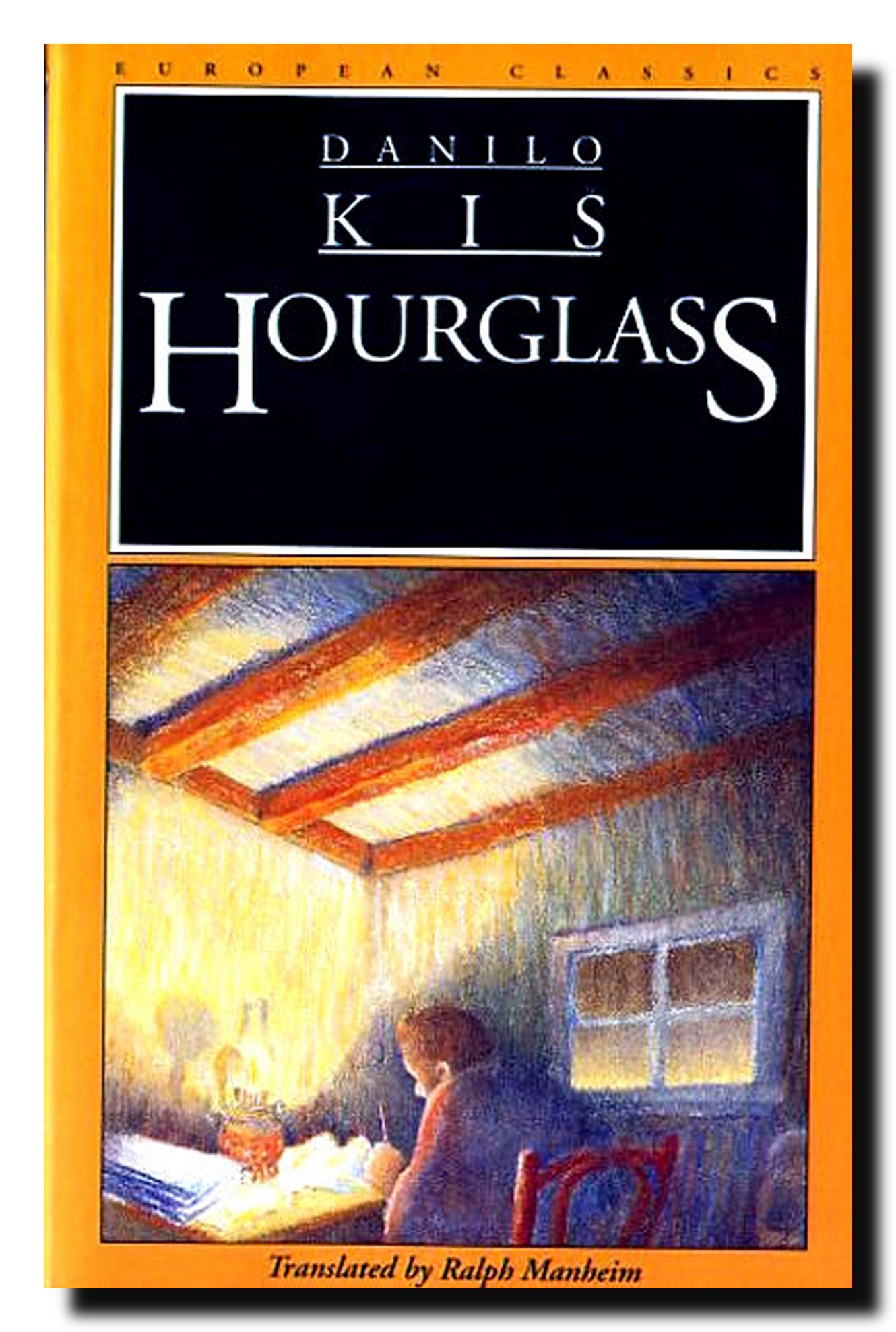
Danilo Kiš, 1935-89, was a Serbo-Croat novelist and academic who lived for much of his life in France. This novel is the final part of his ‘Family Circus’ trilogy and follows ‘Garden, Ashes’ and ‘Early Sorrows’. Published in Serbo-Croat in 1972 it is translated by Ralph Manheim who has dealt admirably with what he admits was an ‘exacting translation’. In 1944 most of Kiš’s family were arrested by the Nazis in Hungary, sent Auschwitz and were killed.In this experimental novel the central character, based on the author’s father, is a retired Inspector of the Hungarian State Railways, the Sephardic Jew E. S. [Eduard Sam], who is in search of his full pension. The novel is divided into 67 sections presented in a variety of styles – notes of a madman, police interrogations, travel scenes and descriptions, and – at the end – a letter, or table of contents, in which Eduard writes from Kerkabarabás in April 1942, to his family complaining at his treatment at the hands of the authorities. It is unclear which of the sections relate specifically to E. S. and this creates an added level of disorder.Given the complexity of the story it is disappointing that there is no [brief] introduction to provide a context since it is surely important, for example, for the reader to be aware that this final letter is closely based on one that Kiš discovered amongst his father’s papers. Literary detectives will find associations with the imagination of two Jewish Central European writers, Bruno Schulz, 1892-1942, and Franz Kafka, 1883-1924, [especially in the interrogation sequences] and the Magic Realism of Jorge Luis Borges, 1899-1986. Kiš demands that the reader work hard and the book required reading and reading even to skim the surfaces of its multiple layers.The prologue is very cinematographic describing a darkened room that is only partly revealed by a flickering candle. The more we are shown the more it becomes illusion, a deceit of the eye. This mysterious opening sets the scene for the ordered confusion of the rest of the narrative. The story element is minimal but the author intersperses apparently disconnected information – at one stage the list of E. S.’s friends extends over a number of pages, each with a brief description that together add up to a summary of the 20th-century social history of the region. Elsewhere we are treated to a discourse on the history of the potato and a comparison of that vegetable with the Jew, a suggestion about Newton’s discovery of gravity and a list of his ‘companions in death’ drawn from a hundred or so professions that include khojas, knackers, elevator operators and dynamiters.Interrogated by an unnamed investigator, E. S. reveals details about his life, family, innermost thoughts and dreams – in one of which he is surrounded by a pack of ravenous dogs who can smell the offal that he has in his briefcase [the contents of which are described in half a page elsewhere]. Associations like this reveal the historical context of the book and the fate that awaits E. S. and of which he is unaware.E. S. is trapped like a fly in a web and, after rather aimless and ineffectual struggling, he sees into madness as an escape from the horrors of contemporary reality. This madness, interspersed with periods of lucidity, is reflected throughout the book but it is up to the reader to decide exactly which is which. The protagonist’s situation is accentuated because his earlier life was dominated and controlled by timetables and ordered regulations, but now these are absent from his personal life and the fractured society in which he now lives.Kiš contrasts the co-existence of races and religions spread across Hungary and the Balkans in the inter-war years with the horrors now evident in the 1940s. Personal animosities are similarly contrasted with the Nazi’s treatment of the Jews and other persecuted minorities.The very last line of this book, presented as a PS to Eduard Sam’s letter to his family states that ‘It is better to be among the persecuted than among the persecutors’. This is a formidable book in terms of both its topic and literary style.
Trustpilot
1 day ago
3 weeks ago