Some deliveries may take a little longer than usual due to regional shipping conditions.

DOWNLOAD THE APP


Customer Services
Copyright © 2025 Desertcart Holdings Limited
DOWNLOAD THE APP
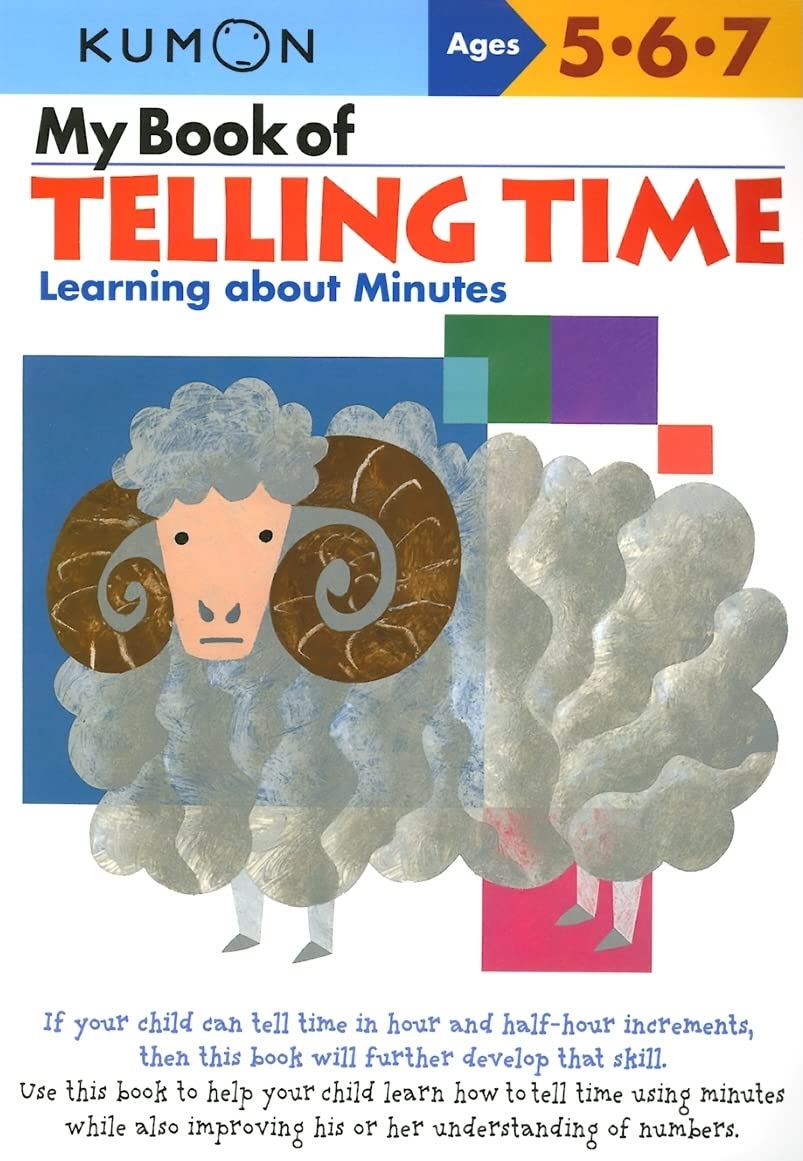
Kumon My Book Of Telling Time: Learning About Minutes (Kumon Workbooks) [Kumon, Kumon] on desertcart.com. *FREE* shipping on qualifying offers. Kumon My Book Of Telling Time: Learning About Minutes (Kumon Workbooks) Review: We like all Kumon books except the language arts - We homeschool, so we use both Kumon and Sylvan books predominantly, because we have found them to be fun and engaging, for the most part. We prefer Sylvan, because with visual learners, their color pages and pictures make it "fun" to do workbooks. Kumon does a great way of explaining concepts, in large print, and in sequential order. The best way to use these books is to start early and go in order by subject. Most subjects have two books, such as Simple Multiplication and Multiplication, kind of like Multiplication 1 and Multiplication 2. If you are unsure about what order to use the books, Kumon provides a "map" on the back of every book to show the order they recommend. You can also see the age range recommended in the upper corner, which is great for homeschoolers who do not necessarily follow grade levels, and it also encourages parents and children to work within their age range but also move ahead or it serves as a guide to tell you what is a normal SOL (standard of learning) for that age range, so you can plan on what you need to work on with your child. Within each subject matter, you will have some review, anywhere from the first 5-10 pages or they will review a previous concept before starting a new one, ie. before you multiply 2x4, they will remind you to "try this" 2+2+2+2 and show you that it is the same thing. When you go to book 2, you will get a hefty review of the previous book, but most of the pages in each workbook are unique and not repetitive. The repetition can be helpful. As my daughter ages, she finds some of the Kumon books to be too repetitive and monotonous in that one she masters a concept, she wants to try it in different ways. Many of the upper level Kumon books will just provide dozens of review pages with the same equations over and over again. My daughter will often ask me, why do I have to do 9x7 if I just did 7x9 on the page before and 9x7 again two pages ago. Although I tell her that it is so these become second-nature in her head, I agree with her - boring. So, we are basically at the end of Kumon anyway, with division, and have preferred Sylvan (and a few others) for her new math. The language arts was not something we used after the first few books. I'm not a fan of books that provide different shape/size boxes to write single letters in. I find it confusing for children rather than teaching them to write an entire word (versus one letter in each box). It does not encourage seeing words as a group of letters or sight words, but I understand that Kumon is encouraging writing/penmanship here, but it wasn't for us. For telling time, even once your child has moved beyond the age level, time and money can still be difficult. These books are great for review before a SOL test or to spot check concepts. Even after my daughter has become bored with a workbook because she has the concept down, I'll keep the leftover pages around for spot "timed testing" - a necessary evil. desertcart has many of the Kumon books with a "look inside" option. You can also look at these at Barnes and Noble, but buy on desertcart, it's cheaper and most have free shipping. Review: Great Book For Learning About Telling Time! - The Kumon series of books works by empowering children to succeed on their own. The books get successively more difficult as they build upon skills learned from the previous pages, so that by the end of the book the child has a sense of accomplishment and be ready to move on to the next level. The instructor is more of a mentor or coach than a teacher in a classroom. This book picks up where the My Book of Easy Telling Time: Learning about Hours and Half-Hours book leaves off. The Easy Telling Time book focused on learning the hour and half-hour. This book is designed to help teach your child about minutes. It starts off with a few pages of review on just telling time with the hour hand, then reviews the numbers 1-60. From there, it progresses in five minute increments in each lesson. So the first lesson covers the first 5 minutes and has the child write in the numbers next to the clock. It has the numbers grayed out under the clock and they can trace over it, then it removes the answer and lets the child figure it out on their own. Each lesson after that adds another 5 minutes and reviews the previous sections, until all 60 minutes have been covered. The last pages go into using the terms "half past", "a quarter past", and "a quarter to" and gives examples and activities of each. At the very end is a fun section where it asks about what time you wake up and eat breakfast and lets them fill in the blank clocks with hour and minute hands. Highly recommended workbook for learning how to tell time, learning numbers 1-60 and pre-writing skills!


| ASIN | 1933241276 |
| Best Sellers Rank | #49,189 in Books ( See Top 100 in Books ) #144 in Children's Arithmetic Books #594 in Children's School Issues #2,288 in Children's Activity Books (Books) |
| Customer Reviews | 4.7 4.7 out of 5 stars (625) |
| Dimensions | 8.5 x 0.25 x 11.75 inches |
| Edition | Illustrated |
| Grade level | Kindergarten and up |
| ISBN-10 | 9781933241272 |
| ISBN-13 | 978-1933241272 |
| Item Weight | 2.31 pounds |
| Language | English |
| Part of series | Kumon Workbooks |
| Print length | 80 pages |
| Publication date | April 1, 2006 |
| Publisher | Kumon Publishing North America |
| Reading age | 5 - 7 years, from customers |
S**N
We like all Kumon books except the language arts
We homeschool, so we use both Kumon and Sylvan books predominantly, because we have found them to be fun and engaging, for the most part. We prefer Sylvan, because with visual learners, their color pages and pictures make it "fun" to do workbooks. Kumon does a great way of explaining concepts, in large print, and in sequential order. The best way to use these books is to start early and go in order by subject. Most subjects have two books, such as Simple Multiplication and Multiplication, kind of like Multiplication 1 and Multiplication 2. If you are unsure about what order to use the books, Kumon provides a "map" on the back of every book to show the order they recommend. You can also see the age range recommended in the upper corner, which is great for homeschoolers who do not necessarily follow grade levels, and it also encourages parents and children to work within their age range but also move ahead or it serves as a guide to tell you what is a normal SOL (standard of learning) for that age range, so you can plan on what you need to work on with your child. Within each subject matter, you will have some review, anywhere from the first 5-10 pages or they will review a previous concept before starting a new one, ie. before you multiply 2x4, they will remind you to "try this" 2+2+2+2 and show you that it is the same thing. When you go to book 2, you will get a hefty review of the previous book, but most of the pages in each workbook are unique and not repetitive. The repetition can be helpful. As my daughter ages, she finds some of the Kumon books to be too repetitive and monotonous in that one she masters a concept, she wants to try it in different ways. Many of the upper level Kumon books will just provide dozens of review pages with the same equations over and over again. My daughter will often ask me, why do I have to do 9x7 if I just did 7x9 on the page before and 9x7 again two pages ago. Although I tell her that it is so these become second-nature in her head, I agree with her - boring. So, we are basically at the end of Kumon anyway, with division, and have preferred Sylvan (and a few others) for her new math. The language arts was not something we used after the first few books. I'm not a fan of books that provide different shape/size boxes to write single letters in. I find it confusing for children rather than teaching them to write an entire word (versus one letter in each box). It does not encourage seeing words as a group of letters or sight words, but I understand that Kumon is encouraging writing/penmanship here, but it wasn't for us. For telling time, even once your child has moved beyond the age level, time and money can still be difficult. These books are great for review before a SOL test or to spot check concepts. Even after my daughter has become bored with a workbook because she has the concept down, I'll keep the leftover pages around for spot "timed testing" - a necessary evil. Amazon has many of the Kumon books with a "look inside" option. You can also look at these at Barnes and Noble, but buy on Amazon, it's cheaper and most have free shipping.
H**A
Great Book For Learning About Telling Time!
The Kumon series of books works by empowering children to succeed on their own. The books get successively more difficult as they build upon skills learned from the previous pages, so that by the end of the book the child has a sense of accomplishment and be ready to move on to the next level. The instructor is more of a mentor or coach than a teacher in a classroom. This book picks up where the My Book of Easy Telling Time: Learning about Hours and Half-Hours book leaves off. The Easy Telling Time book focused on learning the hour and half-hour. This book is designed to help teach your child about minutes. It starts off with a few pages of review on just telling time with the hour hand, then reviews the numbers 1-60. From there, it progresses in five minute increments in each lesson. So the first lesson covers the first 5 minutes and has the child write in the numbers next to the clock. It has the numbers grayed out under the clock and they can trace over it, then it removes the answer and lets the child figure it out on their own. Each lesson after that adds another 5 minutes and reviews the previous sections, until all 60 minutes have been covered. The last pages go into using the terms "half past", "a quarter past", and "a quarter to" and gives examples and activities of each. At the very end is a fun section where it asks about what time you wake up and eat breakfast and lets them fill in the blank clocks with hour and minute hands. Highly recommended workbook for learning how to tell time, learning numbers 1-60 and pre-writing skills!
P**E
Like magic!
Mom approved! My kids went from dreading learning to tell time at school and feeling dumb to asking to do one more section in this book after they already completed 2! They are enthusiastic and now want to help plan our day by making a list of things to do and what time they’ll do it :) like bath time! This telling time book has some kind of magic for kids. They were able to work independently and only needed help when it got to “quarter past” and “quarter to.” The end allows them to document their day (wake up, eat breakfast, school, lunch etc) and also has a certificate of completion. I didn’t know there was an easier version of this book, but it didn’t matter. My kids completed this book in 8 days.
B**A
A goal
My son wants a Mario watch. . . . Told him he completes the book and can tell me what time it is on an analog clock and the watch is his . . . He's blowing thru it. Only downside is the hash marks between 5s leave the numbers VERY TINY and he struggles sometimes. Other than that, it's been great.
M**R
Great way to teach telling time!
Great follow up to My Easy Book of Telling Time. My 5 year old son recently finished the first book and has easily transitioned to this one. He is about 1/4 of the way through this book and has been able to easily grasp the concept of telling time to the exact minute, which I thought would be pretty difficult for him. We have a Melissa and Doug clock that we use as a manipulative in conjunction with this book. We start out our lesson plan out by counting by 5's to 60 and this seems to work rather well. We are huge fans of Kumon books in our house and this one is no exception!
A**Y
good product
great squeal to the other telling time book I do want to mention that it does not start with teaching how to count by 5 and that each number the min hand passes adds up another 5 but i do like the book and it seems to help my kids learn to tell time better, thanks
U**N
I**A
A mi hijo le ha gustado mucho porque le ha ayudado a aprender las horas y le encanta el formato ¡y los dibujitos!
C**C
Finish it when is 5yo easy to follow and learn by herself. And she is happy and encouraged to move on to a harder one.
T**A
Very good book to gradually give your kid an idea about time and how to read clock. Nice exercises with repeating, kid likes to do it and I see the effect already.
M**A
I love these kumon books! They are so helpful for my kids and a great way to keep up the learning in between no homework days , pa days etc
Trustpilot
3 weeks ago
1 month ago