

Desert Online General Trading LLC
Dubai, United Arab Emirates
Desert Online General Trading LLC
Dubai, United Arab Emirates
Full description not available
S**E
Still the best book available on Eishin-Ryu iaido
Novice, intermediate, or advanced practitioner: all will benefit from this wonderful text. The new version does indeed have enough to be a worthwhile purchase for most practioners, with some rewiting and some additions. Covers the widest range of material of any book on Eishin-Ryu iaido out there, from solo and paired forms to a much deeper explanation of the history, foundations, and philsophy of the art, so even practioners of other styles or those just interested in iaido will find this to be a worthwhile addition to their library.For those that practice this style, I imagine that the detailed form sections will be most beneficial, particularly those like the paired kenjutsu forms that are not typically included in other books. While some of the photos are a bit smallish and some of the new ones not quite of the same quality as the older ones, it is still the best out there, and with so many photos it would make a huge impact on the size (and cost) to enlarge them even a little, so it is a reasonable tradeoff and still provides all that is needed.
S**E
I love it!
Great edition, well protected, wow.Great work, thank you guys!
R**H
A remarkable book on swordsmanship, suitable for practitioners or enthusiasts of iaijutsu or iaido
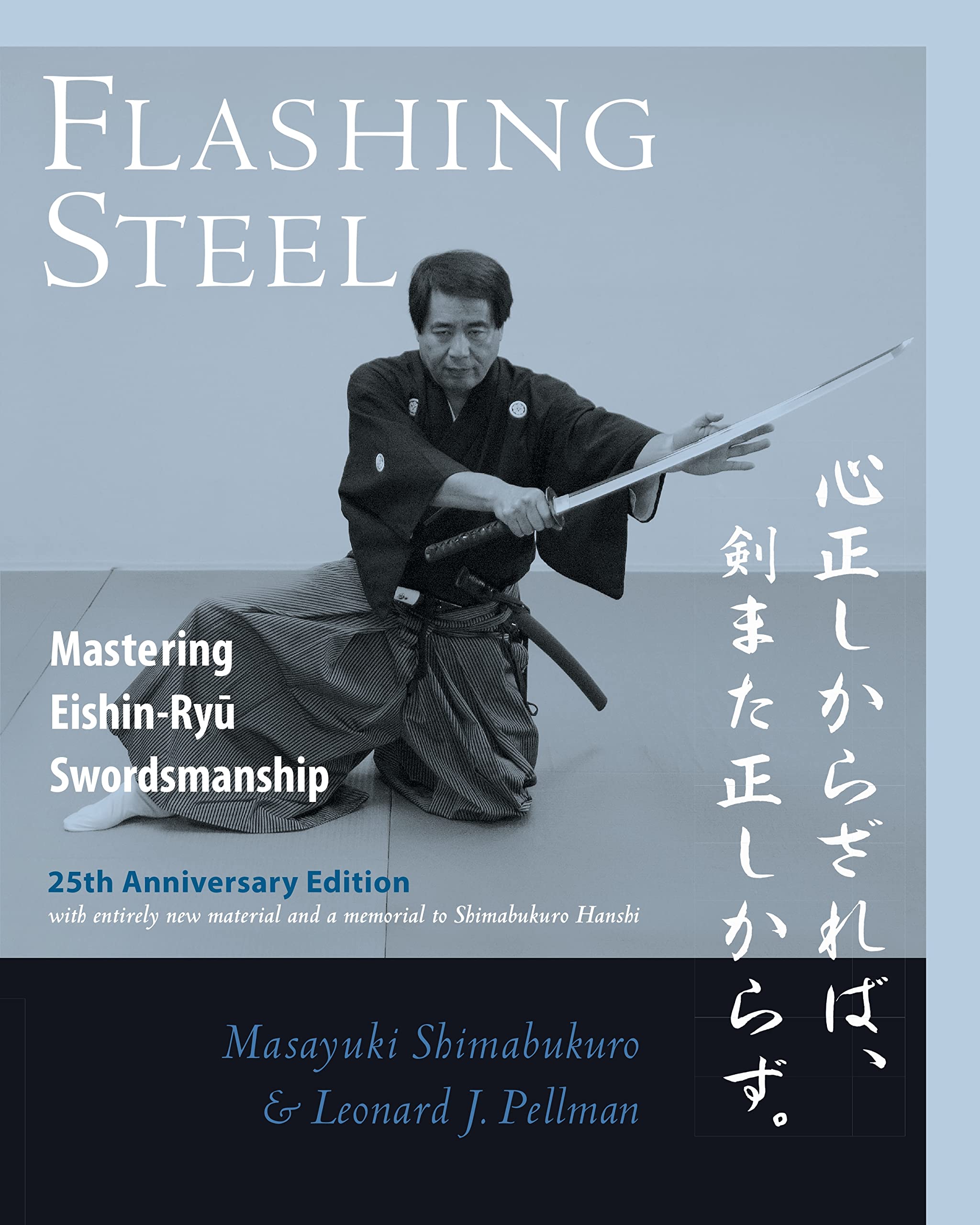
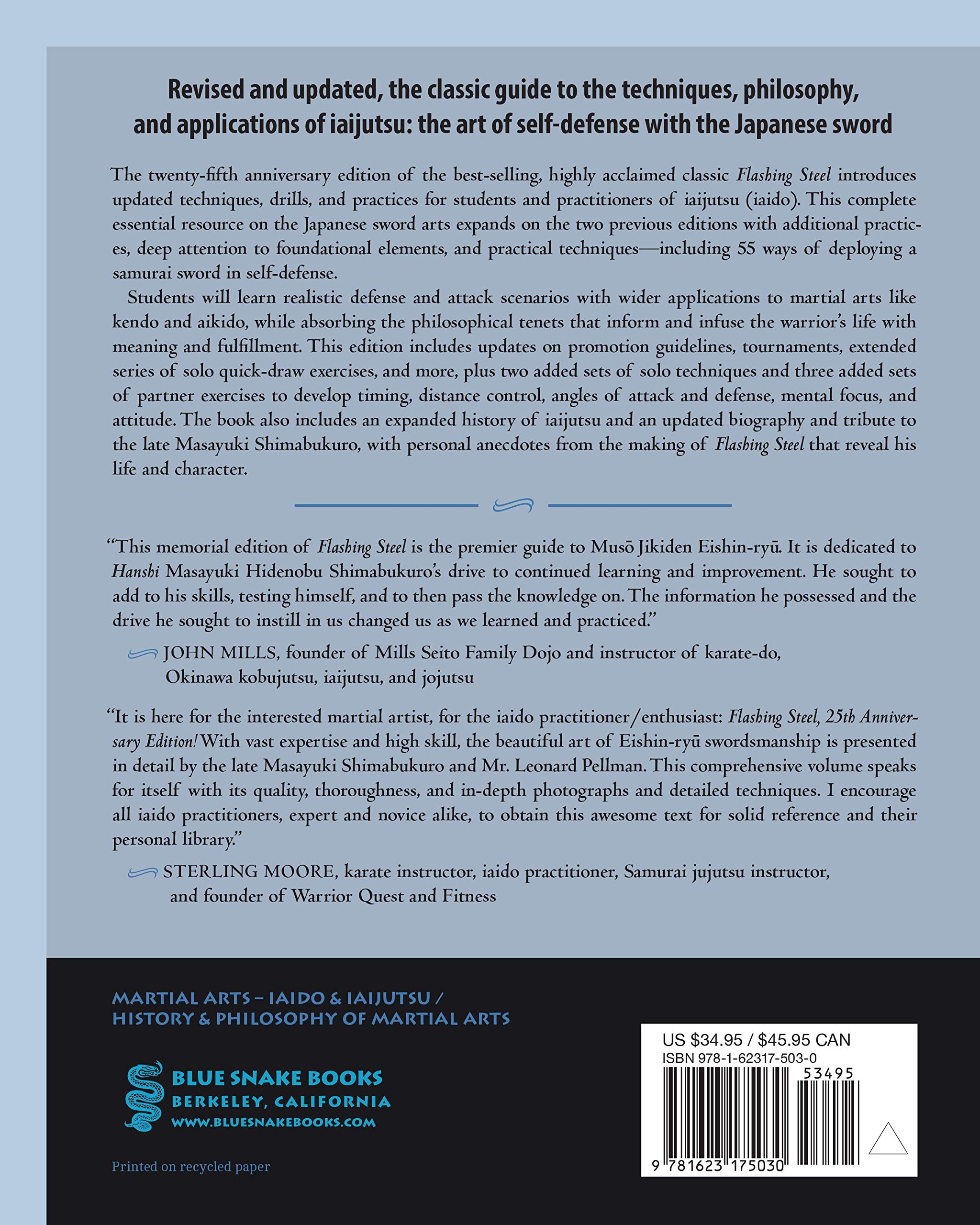
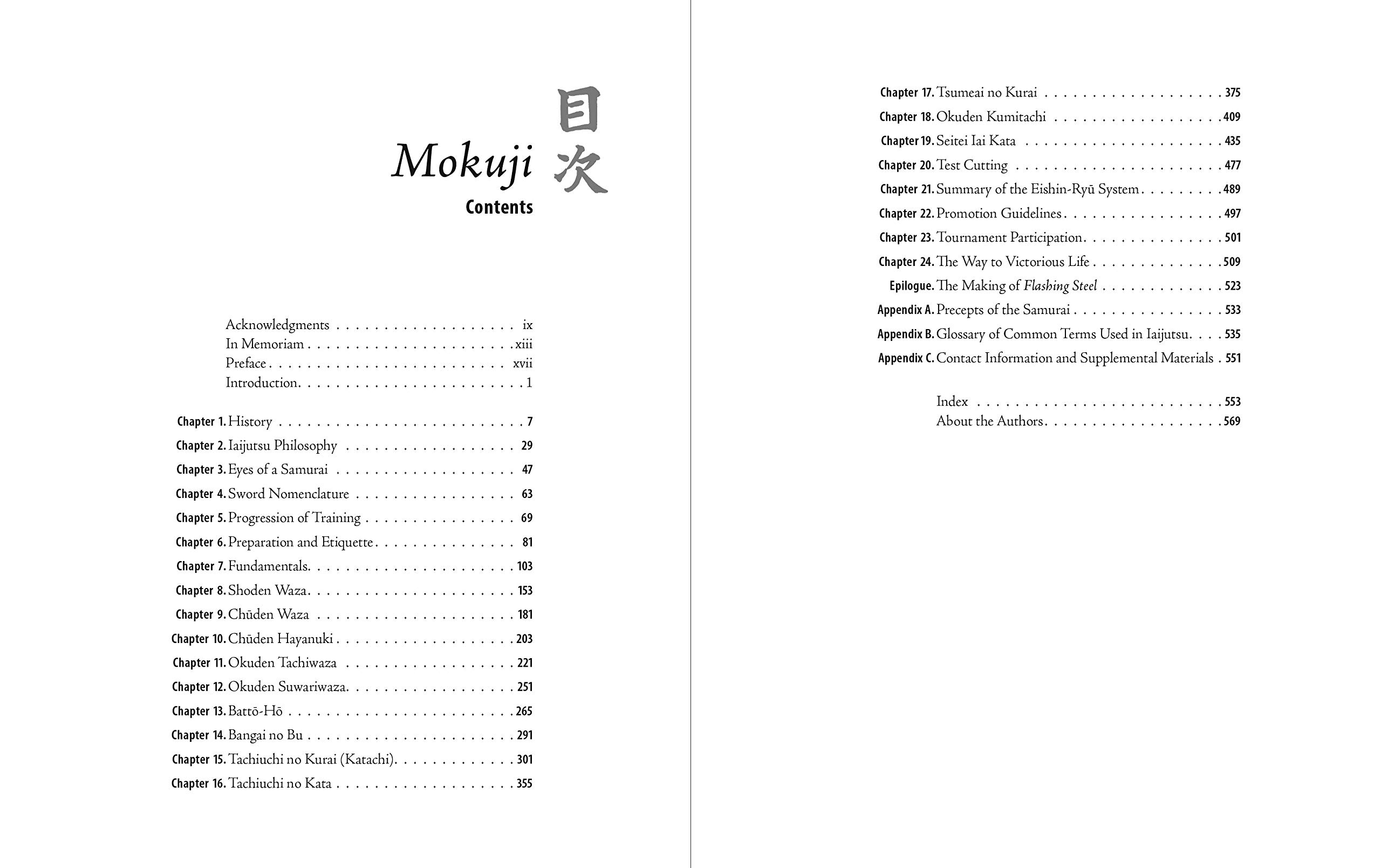
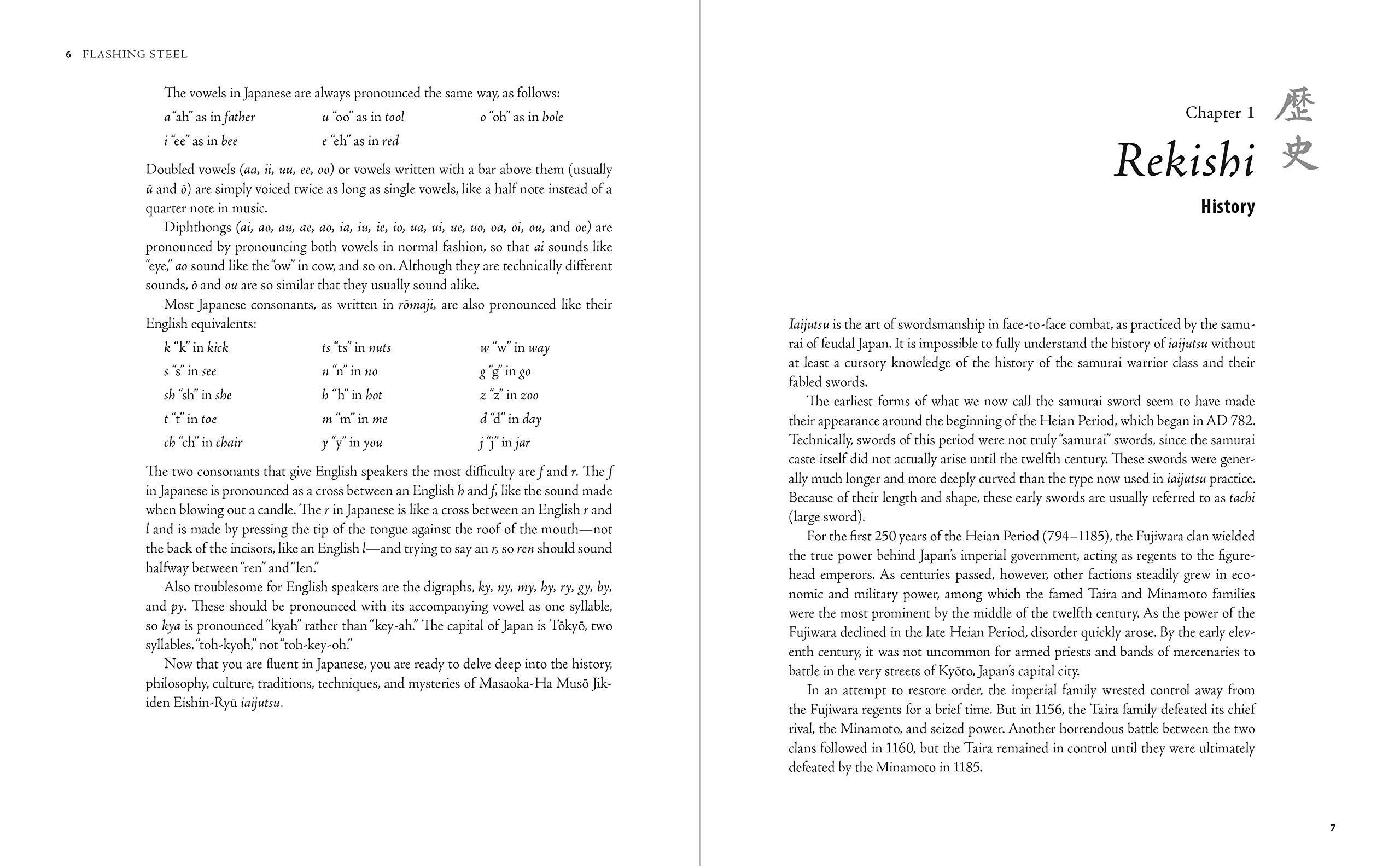
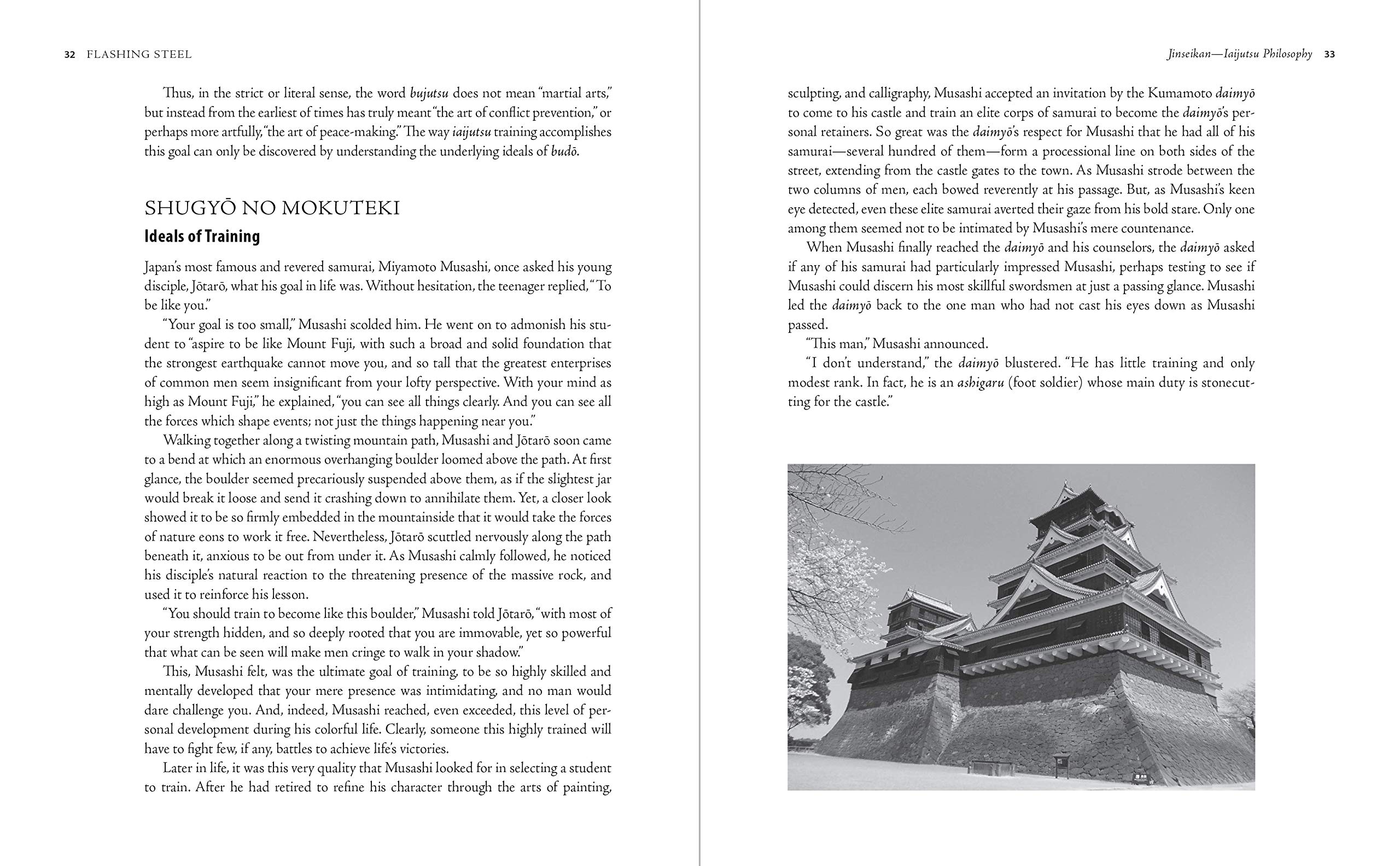
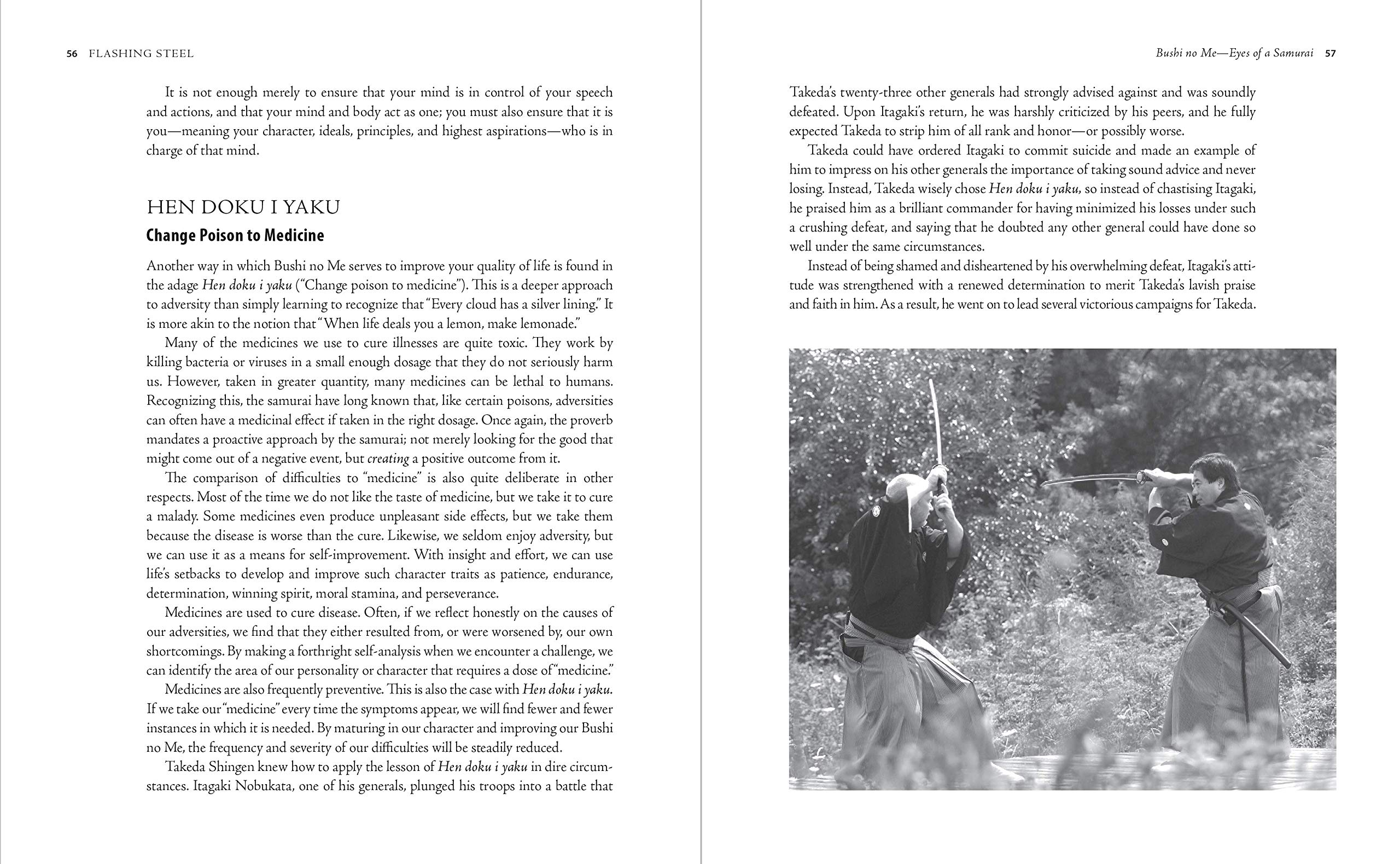
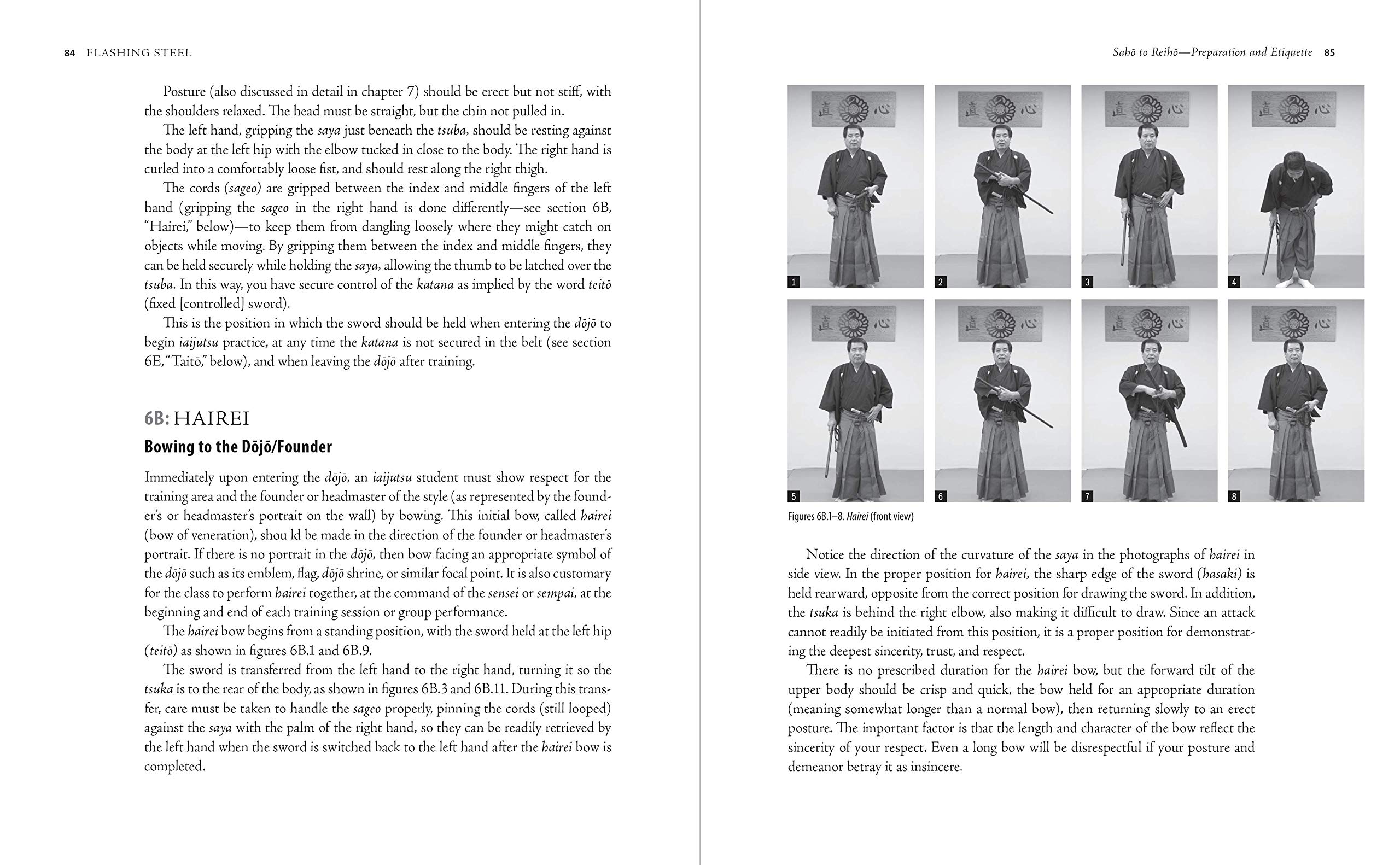
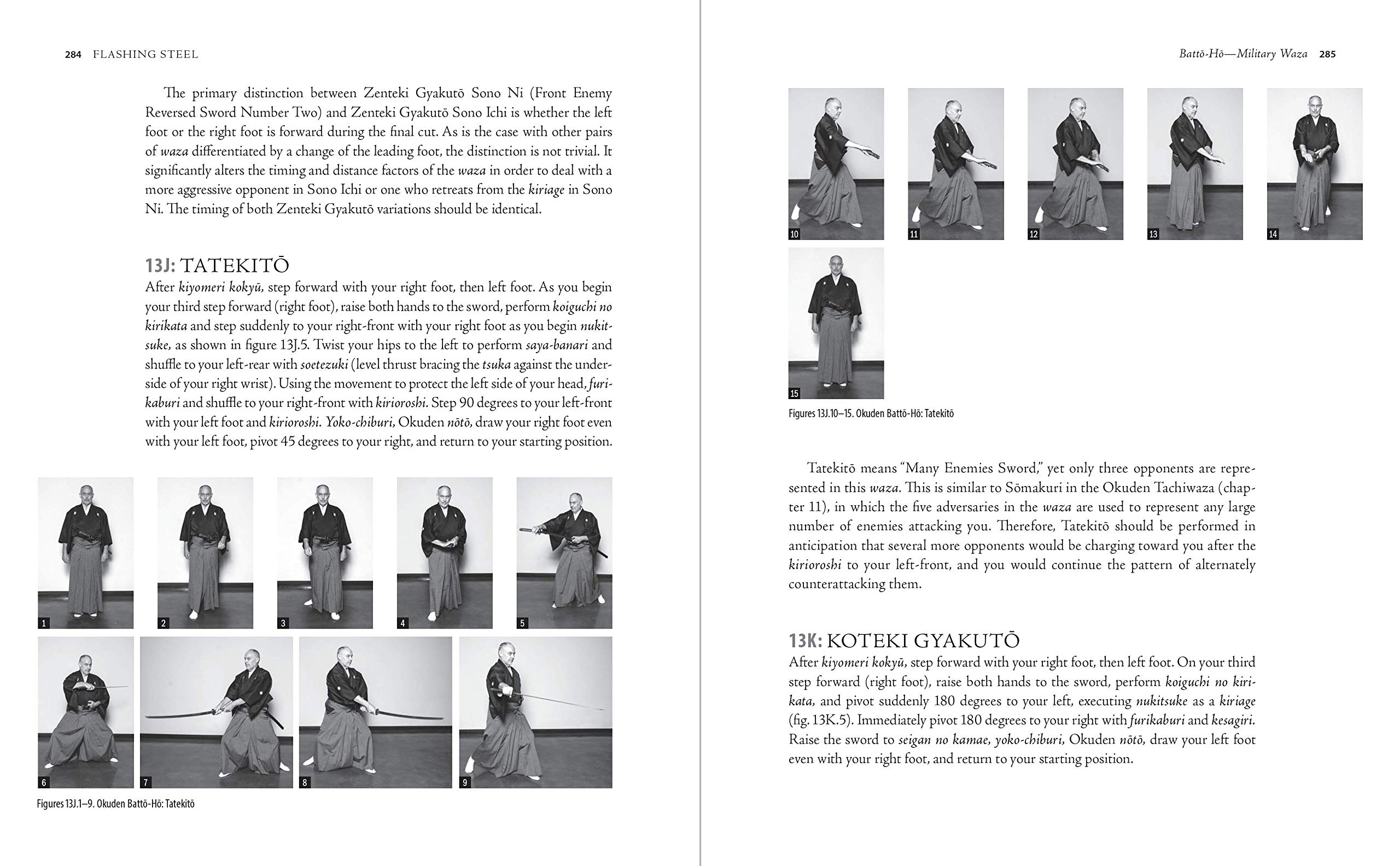
The late Shimabukuro Masayuki Hidenobu (1948-2012) was the 21st sōshihan (headmaster) of Masaoka-Ha Musō Jikiden Eishin-Ryū iaijutsu. Born in Japan but later becoming a naturalized American citizen, professor Shimabukuro trained in jūdō, kendō, and Shōrinji Kempō before beginning Musō Jikiden Eishin-Ryū iaijutsu under the tutelage of the style's 20th sōshihan, Miura Takeyuki Hidefusa. Leonard J. Pellman (1952-) first trained in jūdō in 1966 and began learning kendō as an exchange student in Japan in 1968. He began training iaijutsu with Shimabukuro Hanshi in 1988. He later opened his own dōjō, the Nippon Budō Seishin-Kan, in 1989, and continues to serve as its dōjō-chō (chief instructor), teaching iaijutsu, jōjutsu, kenjutsu, and aiki-jūjutsu, in addition to karate-dō and Okinawa kobujutsu.The pair published the first edition of Flashing Steel in 1995, and a rewritten and re-photographed second edition in 2008. This 25th anniversary edition, published 12 years after the 2008 version, is a massive book. Both the second and third editions feature 10 inch x 8 inch layouts. While the second offers a healthy 338 pages, the third delivers a whopping 572 pages. I'm surprised to see a book of this size with a cover price of only $34.95, especially given the discounts available online! In addition to over five chapters of new content, the entire book has been scrutinized for improvements. Although the second edition was a clean book with clear photographs, the third seems to provide a higher quality paper and ever clearer photographs.Masaoka-Ha Musō Jikiden Eishin-Ryū iaijutsu is a form of sword combat. The book's glossary defines iai as "face-to-face" and jutsu as "art," with iaijutsu then defined as "the art of iai." Readers are probably familiar with iaijutsu as "the art of swordsmanship in face-to-face combat," as defined at the start of the chapter on history. Masaoka-Ha refers to the Masaoka faction or sect, Musō Jikiden means peerless and directly transmitted, and Eishin-Ryū means the school or style of Eishin. Eishin refers to the samurai Hasegawa Chikara-no-suke Hidenobu (circa 1700-1775), known today as Hasegawa Eishin, who founded the system.With the style's name decoded, let's talk about the book! It is beautifully formatted and easy to read. In many places it uses the "small multiples" style for kata photos, such as pages with 12 pictures for single person movements or 8 pictures for two-person movements. The text is clearly written and covers history, philosophy, sword nomenclature, training progression, preparation, etiquette, fundamentals, multiple kata, test cutting, and specifics of the style's operation. The authors are clear that one cannot learn their style from a book alone, but that it serves as a reference for practitioners and a resource for enthusiasts.I have very few concerns with this book. Those of us who already own the second edition might be wondering if it's worthwhile to upgrade. The answer is yes, and I don't even practice iaijutsu! I bought the older edition after an introductory course on kendo. I wanted to learn more about Japanese swordsmanship, and the second edition was highly recommended. This third edition covers even more material and in such a manner that I find its historical aspects attractive enough to purchase.After publishing the second edition of Flashing Steel, professor Shimabukuro passed away. Professor Pellman led the writing of the third edition. In the new introduction, professor Pellman writes "This is likely to be the final edition of Flashing Steel... By the time another edition is due, he [Pellman] may no longer be living." He notes that his "health and stamina are fading," and that the future belongs to the 22nd sōshihan, Carl E. Long. Similar to professor Pellman, professor Long (1955-) trained in Shōrin-Ryū karate-dō and aikidō before also beginning iaijutsu training with Shimabukuro Hanshi. I have seen similar books in the cybersecurity space outlive their original authors, and I would like that tradition to continue with this book!Note: I would like to thank Blue Snake Books for providing me a review copy of the third edition, after hearing I had just purchased a copy of the second edition.
S**
The most comprehensive reference for Muso Jikiden Eishin Ryu Iaido to be found
Having studied several different styles of Iaido this is the most comprehensive reference book on the art that I've seen. It is clear that Pellman Sensei is highly knowledgeable which is why Shimabukuro So-Hanshi chose him to co-author the original edition. I also own "Samurai Swordmanship" co-authored by Shimabukuro So-Hanshi and Carl Long and find "Flashing Steel" to be far superior in content.The personal attacks questioning Pellman Sensei's credentials are somewhat confusing since Shimabukuro So-Hanshi personally selected him to co-author the first edition of this book and I've seen several videos of them together.I hghly recommend this book for the serious Iaido practitioner not just for it's superb content but as a keepsake memorial to Masayuki Shimabukuro So-Hanshi
M**Z
Great quality and expert presentation !!!
Great quality and expert presentation !!!
J**R
Great help for a better list of the waza
So there is allot of controversy surrounding this book, so I will just review its contents..DO NOT buy this book if you are trying to learn the waza or techniques hat are in it.DO buy this book if you have been taught these techniques and you want to know what foot goes next, or jog your memory from a seminar.The fact that it has many of the unlisted and direct linkage waza unique to MJER with pictures, as they are is a great help for a remote student that needs a memory jog.
J**S
1st and 2nd edition are the only true works
Save your money and get the real edition.
I**5
An insult to Shimabukuro Sensei's memory
The only reason Pelman could publish this edition is because many years ago he co-authored the first edition, so he has author's rights. He does not have the teaching credentials...any teaching credentials... to provide this information. Nor does he hold any credentials within Shimabukuro Sensei's Ryu -Ha. Trusting his instruction may be similar in risk to trusting the writings of "Ashida Kim" and the like.
Trustpilot
2 months ago
2 weeks ago