
DOWNLOAD THE APP


Customer Services
Copyright © 2025 Desertcart Holdings Limited
DOWNLOAD THE APP

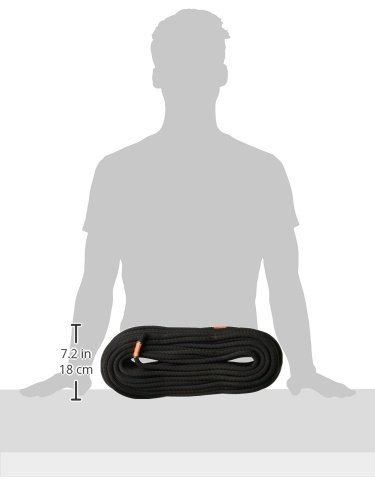
Route 44 technology developed exclusively by Singing Rock. This unique sheath-braiding technology proves there is a better way to make a rope. Route 44 is the only rope in the world to use this patented technique making the rope more perfectly round and giving the sheath a perfect blend of thickness, durability and handling characteristics. Recommended use: rescue operations, work positioning, military and police use, speleo, fixed rope for expeditions, big wall.
M**7
Rope worked great, I purchased 11-mm 300' Black
Bought this for a trip to Moab over Labor Day. Rope worked great, I purchased 11-mm 300' Black. I bought the 11-mm because it was not much more than the 10.5-mm I have now used this rope for 7 Rappels ranging from 100'-170', with virtually no viable wear on the rope.Pro's:Even though it got flung in mud & sand it dried quickly over night and stayed fairly clean.Didn't have any issues tying any bites or knots.Minimal stretch, even on a 170' rap I didn't notice any bounce or stretch.Thick and durable (good mental duck-tape for some of the longer raps)Con's:Buddy said he had a hard time feeding the 11-mm through his ATC. I had no issues, but I tend to like a thicker rope. If your worried about this just get the 10.5-mm.The 300' length hard to wrap up & was heavy to carry around all day, but not sure your can find a lighter rope in the size with the same specs.Overall I have no complaints with this rope, it worked perfect for my needs, and I got what paid for.Update 3/28/17Rope has been through much more abuse and is still in good working condition. Compared to my other ropes I now use, I can definitely feel more bounce on this rope at about the 150'+ raps, but that is not much of an issue for me. The size makes it a good rope for beginners because the amount of friction generated.
A**E
Received frayed ropes
I have ordered several Singing Rock Route 44 ropes before and found those to be outstanding. My latest order of the Orange 150’ 11.2 mm rope, however, had two issues. One relatively minor the other major. First was the rope manufacture date. I ordered in April 2018, the rope I received was manufactured in March 2017 – over one year old. One year effectively reduces the working life of this rope by 10% as working life is reduced approximately ten percent for every year the rope is stored unused. The rope I received was indeed unused, but it was not newly manufactured.The second issue also is related to my latest order mentioned above. The issue has been with two Singing Rock Route 44 150' ropes received from the same seller through AMAZON. The first rope (my April order) was replaced by the seller and the replacement had the same issue. A portion of that first rope I received had striations that ran diagonally across the rope along a four-five foot length, about 60 feet from one end of the rope. The striations occur because the rope has several strands that have been frayed in a diagonal pattern. Running a friction hitch along this section of the rope caused the hitch to "stick" and resulted in exposure of the inner white core of the rope. The hitch ran fine along other non-affected sections of the rope. This rope was replaced with a second rope. Removing it from its bag and inspecting this second rope revealed the exact same frayed pattern (diagonal striations). As with the first rope, these diagonal striations occurred in a 4-5 foot length once again at 60 feet from one end of the rope, but also occurred at 50 feet.These defects are unacceptable for life support equipment. Attempts to contact the manufacturer proved unfruitful. After successful initial correspondence with the U.S. distributor asking for inspection of samples of current stock to determine whether the issue is systemic or confined to a certain lot, follow-up requests for updates have gone unanswered.The problem might be associated with a certain lot, I don’t know. And I may order again since I have had good success with the ropes in the past, but will likely wait a while.ALWAYS inspect your ropes prior to use (!), especially if they are to be used in work that may pose a danger to life and limb.
A**D
Now I'm a Believer
Before getting this rope I was unfamiliar with Czech Republic company Singing Rock, and I was a bit doubtful the rope would meet my outdoor needs (I have used other static ropes before in climbing gyms and they have been a bit stiff and, well, static), but as the company says, the R44 is "compact, soft, light, durable" (and I'd also say strong! - 33.3 kN min. breaking strength with 38% of the mass being in the outer sheath, making it super resistant to abrasion).Now, I just wish I had started using a static line for route development years ago! In the past couple, (probably as I get older, heavier and weaker), I have been tearing up my dynamic work horse ropes pretty quickly. This static line handles almost exactly like my dynamic ropes, and is perfect for use with a Rock Exotica Soloist Solo Belay Device since it doesn't stretch much (<3%, with 0% sheath slippage). The only caveat would be that the 11mm is a bit hard to fit into my ATC rappel device.Of course this kind of rope isn't designed for regular rock climbing (even toproping), but for rappelling, route cleaning, bolting and climbing with a self-belay it can't be beat.Note - To repeat, this rope is NOT meant for climbing/top-rope use. If you want a static line which can be used for top-roping try the Edelweiss Static Caving 10.5mm Rope, which is more of a semi-static rope (3.5% elongation, and a rating of 9 factor 1 falls).Edit 1/16/14 - this rope has gotten noticeably stiffer after a lot of hard use and many machine washings. It still knots and coils easily, but seems very stiff when putting it into a regular belay device (which for a rope like this would only be for rappelling). This may be because it's actually 11.2mm thick (which I didn't notice with my first rope, but just noticed as part of the stats with my recent replacement). The sheath is tough enough to hang from without worrying about abrasion much... (even with the sawing action that comes with pulling oneself up an unclimbable section), but eventually it will get damaged with such abuse (just not nearly as fast as a dynamic rope will), and like any rope needs to be checked regularly for wear and replaced when you aren't 100% confident with it. I like the weight saving 150' length since most of the pitches I work on are 100' or less, and the extra footage helps with rigging, but sometimes it is limiting not having a 200' line...
Trustpilot
2 months ago
1 week ago