We remain fully operational. Our teams are working around the clock to ensure your deliveries continue safely.

DOWNLOAD THE APP


Customer Services
Copyright © 2025 Desertcart Holdings Limited
DOWNLOAD THE APP
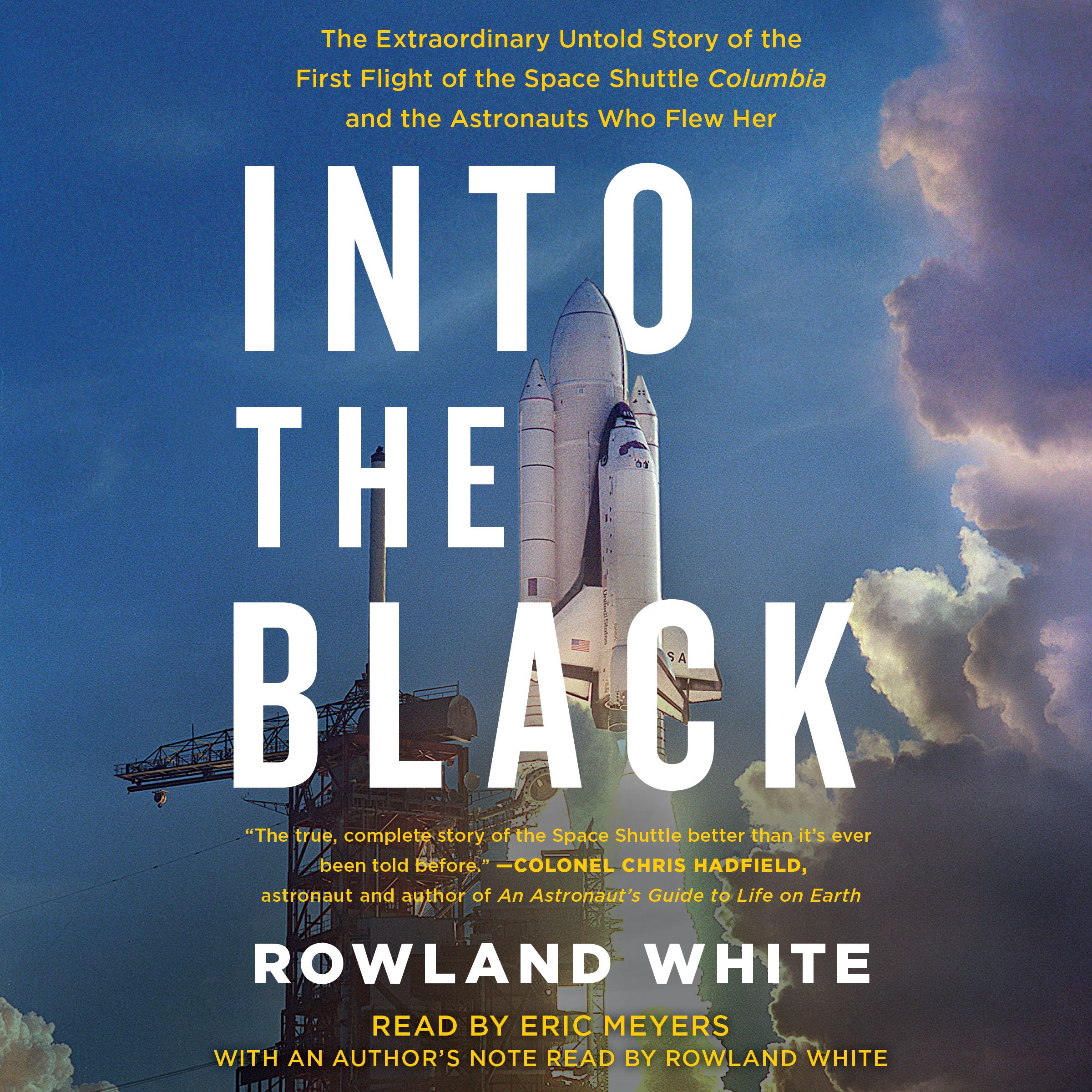
desertcart.com: Into the Black: The Extraordinary Untold Story of the First Flight of the Space Shuttle Columbia and the Astronauts Who Flew Her (Audible Audio Edition): Eric Meyers, Rowland White, Richard Truly - introduction, Simon & Schuster Audio: Audible Books & Originals Review: One of the finest books on the US space program; highest recommendation - I started following the US space program in 1961, at the ripe old age of 8. That peaked with me working on the Space Shuttle flight simulators at NASA/JSC in 1979-80, followed by a stint next door at the Lunar & Planetary Institute. So when a colleague from that time recommended this book to me last week, I ordered it; once I started reading it, I finished it in short order. White has done an outstanding job not only of tracing the history that led to the Space Shuttle, but also of the intertwined history of "America's Other Space Program", the National Reconnaissance Office (NRO). Indeed, the NRO portions of the book are frankly as important and fascinating as the history of the Shuttle itself. White is a great story teller and has lots of technical and personal details from the individuals involved to make the book not just informative but entertaining to read. Some of the details in the book I have long known, but there were vast amounts here that were new to me, that filled in blanks or explained whole new areas of which I was unaware. My time working on the simulators was typically 1 to 3 am on a weekday night, but I still had a chance to meet some of the astronauts; in particular, I remember Kathy Sullivan, who was always kind and gracious to a somewhat awe-struck 26-year-old computer programmer. And, yes, those of us working on the simulator knew about the 'Return To Launch Site' (RTLS) abort procedure and knew that John Young thought it insanity of the highest order. While I saw John Young and Bob Crippen around Building 5, I didn't get to meet them until I had moved on to the Lunar & Planetary Institute next door. Some 48 hours after STS-1 had landed, Young & Crippen had their debriefing session with NASA and other personnel at LPI, in the renovated stone barn building that housed LPI's computer center and photo archives -- and also where I happened to have my cubicle. The reason given was that they were trying to avoid the press, which may have been true; a CBS camera crew, led by (IIRC) Roger Mudd, showed up at LPI, looking for the astronauts, and were asked to leave. In any case, some of us got to talk with Young & Crippen before their debriefing started; Young was still enthusing about the Shuttle. He also talked about all the great photos they had snapped of Soviet territory with a 35 mm camera while flying over it. :-) I have a stock STS-1 pre-mission photo of the two of them, autographed by both, from that visit. Outstanding book; highest recommendation. Review: An Extraordinary Tale Extraordinarily Told - A couple of days ago, I finished reading Into the Black: The Extraordinary Untold Story of the First Flight of the Space Shuttle Columbia and the Astronauts Who Flew Her by Rowland White. Having read and enjoyed two of his books on the Falklands War, I was looking forward to reading Into the Black and I wasn’t disappointed. Rowland goes beyond the subtitle of the book; he not only tells the story of Columbia’s first launch, he tells the story of her first crew, the development of the Space Shuttle Program, and places the program within the context of previous programs. He weaves the stories of Astronauts John Young and Robert Crippen, NASA’s programs, the aborted US Air Force manned space program, and top secret intelligence satellites into a compelling tale of the development of the Shuttle program through Columbia’s first launch and mission in space. What I really enjoyed was how White told the story through the eyes of the astronauts, engineers, and some of the administrators who worked on the program. At first, those separate threads don’t seem to be related, but as the Shuttle program progresses and STS-1 takes place, everything comes together and you learn why White followed these threads earlier. This book tells, as the subtitle says, an extraordinary story – and does it in an extraordinary way. The book is a window into the astronauts’ experiences, what it took to make the Space Shuttle a reality, how the US Government’s space policy changed over time, and what it took to put Columbia into space for the first time and bring her and her crew back home. I had a hard time putting it down and was disappointed when I was finished – I would have loved for it to keep on telling the tales of future missions. I thoroughly enjoyed reading Into the Black and heartily recommend it for anyone, not just those interested in space.
B**R
One of the finest books on the US space program; highest recommendation
I started following the US space program in 1961, at the ripe old age of 8. That peaked with me working on the Space Shuttle flight simulators at NASA/JSC in 1979-80, followed by a stint next door at the Lunar & Planetary Institute. So when a colleague from that time recommended this book to me last week, I ordered it; once I started reading it, I finished it in short order. White has done an outstanding job not only of tracing the history that led to the Space Shuttle, but also of the intertwined history of "America's Other Space Program", the National Reconnaissance Office (NRO). Indeed, the NRO portions of the book are frankly as important and fascinating as the history of the Shuttle itself. White is a great story teller and has lots of technical and personal details from the individuals involved to make the book not just informative but entertaining to read. Some of the details in the book I have long known, but there were vast amounts here that were new to me, that filled in blanks or explained whole new areas of which I was unaware. My time working on the simulators was typically 1 to 3 am on a weekday night, but I still had a chance to meet some of the astronauts; in particular, I remember Kathy Sullivan, who was always kind and gracious to a somewhat awe-struck 26-year-old computer programmer. And, yes, those of us working on the simulator knew about the 'Return To Launch Site' (RTLS) abort procedure and knew that John Young thought it insanity of the highest order. While I saw John Young and Bob Crippen around Building 5, I didn't get to meet them until I had moved on to the Lunar & Planetary Institute next door. Some 48 hours after STS-1 had landed, Young & Crippen had their debriefing session with NASA and other personnel at LPI, in the renovated stone barn building that housed LPI's computer center and photo archives -- and also where I happened to have my cubicle. The reason given was that they were trying to avoid the press, which may have been true; a CBS camera crew, led by (IIRC) Roger Mudd, showed up at LPI, looking for the astronauts, and were asked to leave. In any case, some of us got to talk with Young & Crippen before their debriefing started; Young was still enthusing about the Shuttle. He also talked about all the great photos they had snapped of Soviet territory with a 35 mm camera while flying over it. :-) I have a stock STS-1 pre-mission photo of the two of them, autographed by both, from that visit. Outstanding book; highest recommendation.
M**I
An Extraordinary Tale Extraordinarily Told
A couple of days ago, I finished reading Into the Black: The Extraordinary Untold Story of the First Flight of the Space Shuttle Columbia and the Astronauts Who Flew Her by Rowland White. Having read and enjoyed two of his books on the Falklands War, I was looking forward to reading Into the Black and I wasn’t disappointed. Rowland goes beyond the subtitle of the book; he not only tells the story of Columbia’s first launch, he tells the story of her first crew, the development of the Space Shuttle Program, and places the program within the context of previous programs. He weaves the stories of Astronauts John Young and Robert Crippen, NASA’s programs, the aborted US Air Force manned space program, and top secret intelligence satellites into a compelling tale of the development of the Shuttle program through Columbia’s first launch and mission in space. What I really enjoyed was how White told the story through the eyes of the astronauts, engineers, and some of the administrators who worked on the program. At first, those separate threads don’t seem to be related, but as the Shuttle program progresses and STS-1 takes place, everything comes together and you learn why White followed these threads earlier. This book tells, as the subtitle says, an extraordinary story – and does it in an extraordinary way. The book is a window into the astronauts’ experiences, what it took to make the Space Shuttle a reality, how the US Government’s space policy changed over time, and what it took to put Columbia into space for the first time and bring her and her crew back home. I had a hard time putting it down and was disappointed when I was finished – I would have loved for it to keep on telling the tales of future missions. I thoroughly enjoyed reading Into the Black and heartily recommend it for anyone, not just those interested in space.
R**D
It's Ok. Good source of Info
I'm about halfway through and altogether I'm glad I bought it, it has a lot of very interesting information. The reason for the four stars may seem a little ridiculous but I can't shake the under current of "the wonderful, amazing, talented, important, and etc. Mr Dick Truly"..... It's annoying. He was no better than any other astronaut and definitely no better than the average person, why does the book put such a halo on his head? Again, some may find it ridiculous and not feel the same way, but there is my take for what it's worth, lol.
G**G
The REAL STORY of the Space Shuttle and the men who built and flew her
Today the cliche belief is that the Space Shuttle was a turkey and people question how we could have gone down such a deadend path. If you really care to know the truth, this book will give you the true history of the politics, the engineering decisions and why they were made, and the men who gave their lives and heart to the program. I also read the NASA publication "The Space Shuttle Decision" and this is much more human and readable. Also Nixon's motivations were more clearly explained and in my view he goes from being the villain to being the president who saved the manned space component of our space program. I now understand the backstory behind the cancellation of Dyna Soar and Manned Orbiting Laboratory, as well as why the Russians tried to follow us even though they knew our public rationale for the Shuttle was ludicrous. Great read. Meticulously researched history. After this, you should check out the NASA book Shuttle Retrospective. It gives the outline of each flight. If you read enough of it, you will realise what a truly amazing technological achievement the Shuttle was. Designed and built within 7 years. If only we had built a successor. I think Elon Musk's Starship will be the fruition of the quest to build the ultimate shuttle. This book is definitely worth your time and money if you care about the space program.
M**E
Wonderful but needs some factual edits
Detailed and easy to read. I learned something new on almost every page. There are facts that need to be corrected: First, John Young did not fly on Apollo 17 - he flew on Apollo 16, and second, Neil Armstrong did not pilot Columbia to a landing on the lunar surface. He landed the Eagle. Columbia was the Apollo 11 command module which Mike Collins piloted in lunar orbit while his two fellow astronauts went to the moon's surface. The author or editors should go over this book with a fine tooth comb and find these factual errors and correct them. I'm not done reading yet and there are possibly more to be found or that I simply have not noticed because I was not aware of the information in the first place. As brilliant a work as this is, these mistakes should not have been allowed to go to print without corrections.
T**I
Excellent Read
Great full story of the shuttle development and first flight. Enjoyed reading the back stories, challenges and accomplishments. I have read numerous space related books and this is one of the best. Highly recommend.
H**E
"The rest of the story" on the Space Shuttle Program and one you won't want to miss!
Covers the space shuttle saga from the perspective of a less familiar back ground story. Puts you there right along with the action of the first space shuttle flight and all of the events leading up to it. It was very interesting to hear how not only mechanical issues but also software and computing issues contribute to the expense and scheduling of the fantastically large program of putting man into space. Altogether a well told and interesting story, start to finish. I once stood under the 747 carrying the test article shuttle Enterprise and right next to Deke Slayton. For me, this was a revelation of the 'rest of the story'. If you've read and enjoyed much of the history of NASA and manned space flight, this story ought to rekindle your interest as it did mine.
P**Z
Read this if you love Space Shuttle history
Really loved this book. Wish it was a bit longer though. The most interesting thing in it was the revelation (well at least to me) about how all the original space shuttle astronauts came from the canceled Air Force Manned Orbiting Laboratory project.
Trustpilot
2 months ago
1 week ago