Some deliveries may take a little longer than usual due to regional shipping conditions.

DOWNLOAD THE APP


Customer Services
Copyright © 2025 Desertcart Holdings Limited
DOWNLOAD THE APP
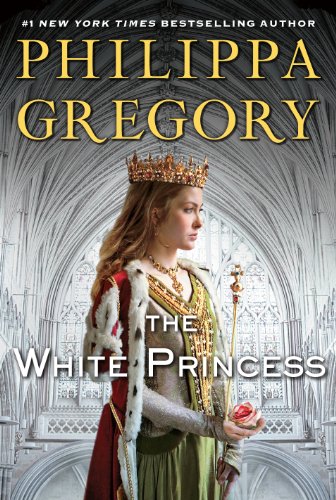
Full description not available
C**8
Interesting...but probably inaccurate
I thoroughly enjoyed this book and read it very fast, unable to focus on much else until the story was done. I must say though that the beginning of the story is much stronger than the end, which was something of a disappointment. Elizabeth lived until 1503, but the story peters out in 1499, leaving out some of the significant events of her life, such as the marriage and death of her eldest child Arthur. I wished the story would have continued until her death, and I found myself wishing the same about Philippa Gregory's other novels. She always seems to end them too early.Although I recommend this book, I think it is very historically inaccurate, and I hate to think that Henry VII's reputation is about to be dragged in the mud just as Richard III's is being rehabilitated.Regarding Henry VII, I believe this story to be an interesting work of fiction. There is much in this story that is pure speculation and will never be proven to be true or false. I am not sure if Elizabeth was ever in love with her uncle Richard III, and sincerely doubt that they ever slept together, however it creates a fascinating jumping off point for her marriage to Henry. It certainly explains his horrible behavior toward her early in their relationship. In truth, Henry was not a perfect man, but he was a good king and a good husband. He may have been anxious and miserly, but all sources indicate that their marriage was a happy one, and he would never have forced himself on his wife or vented his anger towards her. He was a gentle husband and a doting father, and Elizabeth was a mild mannered, contented wife who deferred to her mother in law in all matters. The brief part of the book that shows them happy in each other's arms is probably more accurate than the way their marriage is portrayed in the beginning and end of the story-- though perhaps their passion is a bit exaggerated, but who knows? They may not have been passionate lovers like Edward IV and Elizabeth Woodville, as they married for politics and not for love, but Elizabeth was a beautiful young woman, and surely Henry was proud to have her as a wife. They produced seven children together, and probably found real happiness, stability, and deep love when together as a family, surrounded by their children. I truly believe that they were happy together throughout the entire marriage, and their relationship was not the roller coaster of instability the novel portrays. But that said, this novel is certainly a fascinating read and I enjoyed it.
B**.
Loved it
Philippa Gregory has written yet another fantastic historical fiction novel. This time it centers on Elizabeth of York, the wife of Henry VII and the mother of Henry VIII. She's forced into marriage in order to unite the two sides of the Cousin's War, but rarely feels at peace with her role in the new world her husband is forging. Her story is compelling and rich, and Gregory does an amazing job of telling it.Elizabeth has always known she would be a pawn somehow, someway. As a female, she can't rule, but she can give her husband the authority he needs to rule. So when Henry VII defeats her lover Richard III in battle and takes the title of king, she knows it will be her job to marry the victor. Their relationship starts out on horrible terms, with neither trusting the other or even liking each other. They know their marriage is one for show; Henry must marry Elizabeth to show a united front and Elizabeth must marry Henry to show the country who is king.Even though their relationship starts out on bad terms, they come to form a type of love and respect for each other, even though it can never fully form. Henry doesn't trust anyone who once sided with the York cause, including Elizabeth. There is always someone around the corner trying to take the throne away from him and that makes it hard for him to trust in others. Even when Elizabeth truly does not know anything about the plots surrounding her husband, the fact that she is a York is enough for Henry to distrust her.Elizabeth played a different role in this novel than the women of the previous novels. In the previous novels, the women were determined and worked as hard as they could to secure their line on the throne. The men may have gone off to war, but the women were fighting their own battles. For Elizabeth, the struggle isn't so much for the throne, but for who she is as queen. She is relatively safe with either side on the throne, but she must decide where her loyalties lie. She was raised a York, believing her brothers were the true heirs to the throne. However she creates a new line with the birth of Arthur, the Tudor line. She is played by both sides and must figure out which future she is willing to fight for.I liked this internal struggle as compared to physical battle. There is still fighting and the battles one expects of a war, but getting inside Elizabeth's mind as she is isolated yet loved, respected yet distrusted, fought over yet pushed aside was amazing. As much as Henry never felt secure, Elizabeth was just as questionable. Her fate was tied to people she had no control over, but she still fought to make her own path anyway. I wasn't ready for a character like her, but I'm glad Gregory wrote her the way she did.The White Princess has a different feel to it when compared to the other novels of the series. The fighting between the cousins has slowed, but not ended, and that leaves room for other factors to come into play. Instead of reading about the fight for a crown, this novel feels more like a fight for loyalties. Do you side with the family you are born with or with the family you have created? It's a difficult question to answer but I feel like Gregory did a wonderful job looking at how Elizabeth of York handled that very question. This is yet another fantastic novel in the Cousin's War series and it feels very bittersweet that it's the second to last novel. Almost every story has been told and as much as I hate to see the end, I am looking forward to reading The Last Rose.
S**R
Repetitive and unpleasant
I really disliked the portrayal of Henry as a rapist. Quite nasty of the author to do that without proper references.Henry and Elizabeth have been held up as a loving family, and for the author to change this without evidence is quite unpleasant.I don't believe Margaret Beaufort would have in any way suggested her son rape his bride..Also the dialogue is terrible. It's nothing like Phillipa's early work. So repetitive and going nowhere.There is NOTHING about Elizabeth of York after the Perkin Warbeck and we know from other works how devoted they were...Don't read this. Read Judith Arnopp or Samantha Wilkinson.
M**M
Not a story of the happy marriage between King Henry VII and Queen Elizabeth of York
I bought this book after first seeing the TV series. As is the case with most books that have been adapted for the big or small screen, I expected the book to be the better format. I was looking for a less sensational - albeit fictional - account of historic events in the context of the eventually happy marriage between King Henry VII and Queen Elizabeth of York. This book isn't it. King Henry VII comes across as immature and petulant. If you're expecting a transformation in his character as the story progresses (similar to how this is depicted in the TV series), you will be very disappointed. He is unlikeable throughout the book. This contributes to making the book rather tiresome - quite an achievement since this is a rather exciting time in England's history.
R**Y
Brilliant Read. Cousins War Series (Wars of the Roses)
If you like historic fiction bases on facts (faction) the this is a brilliant series. There are 6 books and, although each book stands alone, if you are going to read all 6 you should/must read them in the right order. Lady of the Rivers, White Queen, Red Queen, Kingmakers daughter, White Princess and Kings Curse. I found each difficult to put down. They all look at the same period of history but each from the view of different women of the time. They are a brilliant read. Each is a great story, brilliantly told, based on historical facts and not a little imagination. Highly recommended.
C**J
Elizabeth of York 's not so happy ever after.
.The White Princess - Philippa GregoryThere are many periods in English history of which one cannot be terribly proud. This is not usually one of them that springs immediately to mind. We were taught in school that 'and the victor of Bosworth, Henry Tudor, married Elizabeth of York thus uniting the red rose and the white, the houses of York and Lancaster, and then followed the Great and Good Tudor dynasty, and there was peace.' Of course, everyone knows that the Tudors and their times were really tyrannical and bloodthirsty. Henry VII comes across as not only a weaselly pretender in this novel, but the spymaster general, the coward in battle, the twisted money -grubbing mummy's boy, the unloved and unlovable scion of Lancaster and Tudor. There must have been a time when he was a normal and joyous young man, but poor lad did not stand much of a chance in the face of his mother's single-minded ambitions. Of course, Tudor is not a Great House yet, and it has fallen to him to make it so. No pressure there then. Knowing that the period was one of propaganda and deceit and tyrannical megalomania did not prepare me for the dripping nastiness of it as portrayed here so well by Gregory. I do not doubt that the past-scape she has created is anything but accurate, the atmosphere of fear, intrigue, violence. I liked the bravery of her assumptions. Less Disney, more Twilight Zone, or even Figes' "The Whisperers". The OGPU could have learned something from Henry VII! Character-wise, I found Elizabeth Plantagenet (the first person protagonist, from whose p.o.v. the narrative is given) wishy washy, and her motivation mainly to just get through it all with her body parts still conjoined. Difficult to say if I felt sympathetic towards her or not, her pity and tenderness for the appalling Henry that manifested from time to time made me want to shake her, but I suppose that the character was solid enough for me to imagine shaking it says something. She must have realised that had she rebelled, there was plenty of support (as indicated in the narrative) out there to protect her. I cannot imagine why she did not poison him and/or his harridan of a mother. It is not as if she could ever have felt safe enough in her position (as per this interpretation of events anyway) not to have risked it and saved the people of all estates from the reign of fiscal and bloody terror of the weak, vindictive and craven Henry Tudor and his appalling mother. Then maybe a whole history of a country would have been so different. What if, what if, what if...?So, the book was obviously a good read to cause such reaction in this reader. I do not know if there is historical evidence for the love affair between Richard III and his niece Elizabeth Plantagenet. That there may have been a political expedient for such an alliance, one understood and encouraged by a rapidly failing (in health) Anne Neville to protect Richard and his crown I have no doubt. Richard obviously did inspire love and loyalty, it is well documented, so not beyond the bounds of belief that his young and embattled niece may have had a crush on him, or even loved him in a romantic and sexual way. I did like this take on it though.As in the preceding novels and reviews of them, there were times when the use of modern idiom and colloquialisms grated somewhat. Of course, one does not expect the novel to be written in high medieval English, or Latin or courtly medieval French, but 'I lied to her face' put the speaker more into the realms of the Facebook status of a chavvy teenager than a well educated 15th century aristocratic woman (never mind a Queen). It is an ambivalent criticism, but when trying to understand the actions, reactions, the way people lived and what they considered normal in historical periods from a first person point of view, I do not consider it works to use modern idiom. I can see that it can work in some circumstances but not in these novels, as otherwise, Gregory is a respected historian and thus even her novels given more credence than an anachronistic fantasy romance.Most readers will know the outcome before reading the novel, and the way in which it was reached struck a good balance between suspense and foreknowledge of doom. The acceptance of fate by Elizabeth throughout the narrative was like someone drifting through life on a high dose of tranquillisers. This made the story so much more poignant, maybe contributed to the underlying anger which built up in this reader towards the injustices and the brutality of a past which has brought us to where we are today. The contrast between the personalities of Elizabeth Plantagenet (Tudor) and her mother Elizabeth Woodville and grandmother Jacquetta Woodville - and that of Margaret Beaufort- gives food for thought as the epochs of history move on, as to how far they are representative of a general era. Elizabeth of York's time was certainly a dark and seemingly hopeless one, and she seems to have moulded herself to that. Interesting, that it seems a constant state of affairs then and now that the people always want a change regime, a change of government, and when it comes, the old one is over and a new one in place, the old one doesn't seem as bad and they want it back.
G**T
Entertaining read.
The fifth in the cousins war series.This book concentrates on Princess Elizabeth, daughter of Elizabeth Woodville(the White Queen) and Edward IV and sister of the princes in the tower.She is a young woman caught between her own mother's rebellious ambitions and her domineering mother- in- law, mother of Henry VII. It is essential for Princess Elizabeth to bear children for the Tudor dynasty and unite the white rose of York with the red rose of Lancaster. Henry brutally makes sure of a pregnancy as soon as their betrothal is arranged.Elizabeth loathes him for killing her beloved uncle, Richard III( remains dug up in Leicester car park very recently)with whom she had been having an affair. The tensions between the main characters are maintained by the possibility that one of Elizabeth's missing, presumed murdered brothers, survived under the guise of Perkin Warbeck. This claim became a threat to Henry VII, dividing loyalties and challenging Elizabeth's husband's and childrens' right to inherit the throne of England.Enjoy this book for what it is,an entertaining romp through history, there are times when it is acceptable to be more interesting than accurate.There is a good bibliography at the end of the book for those who want more to read more scholarly views on the historical accuracy.j
Trustpilot
1 day ago
2 days ago