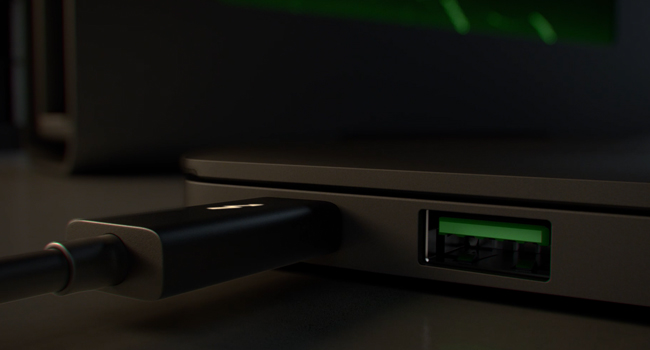
⚡ Power up your laptop, dominate your workspace.
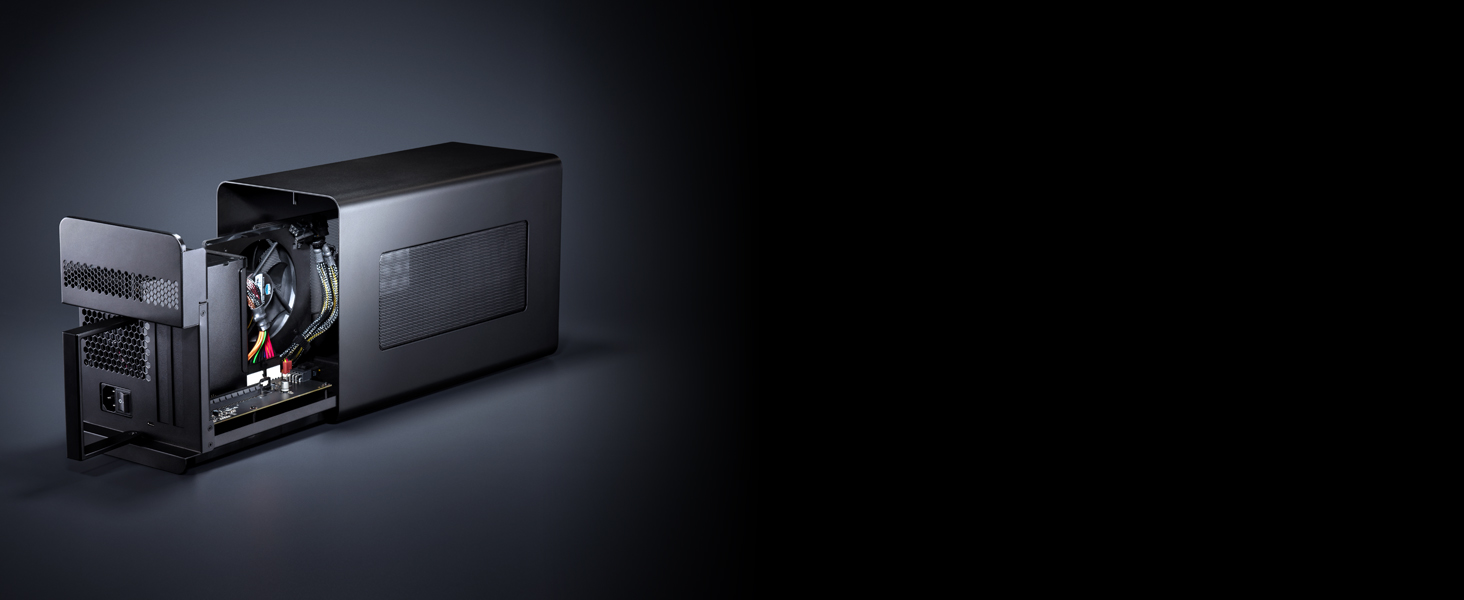
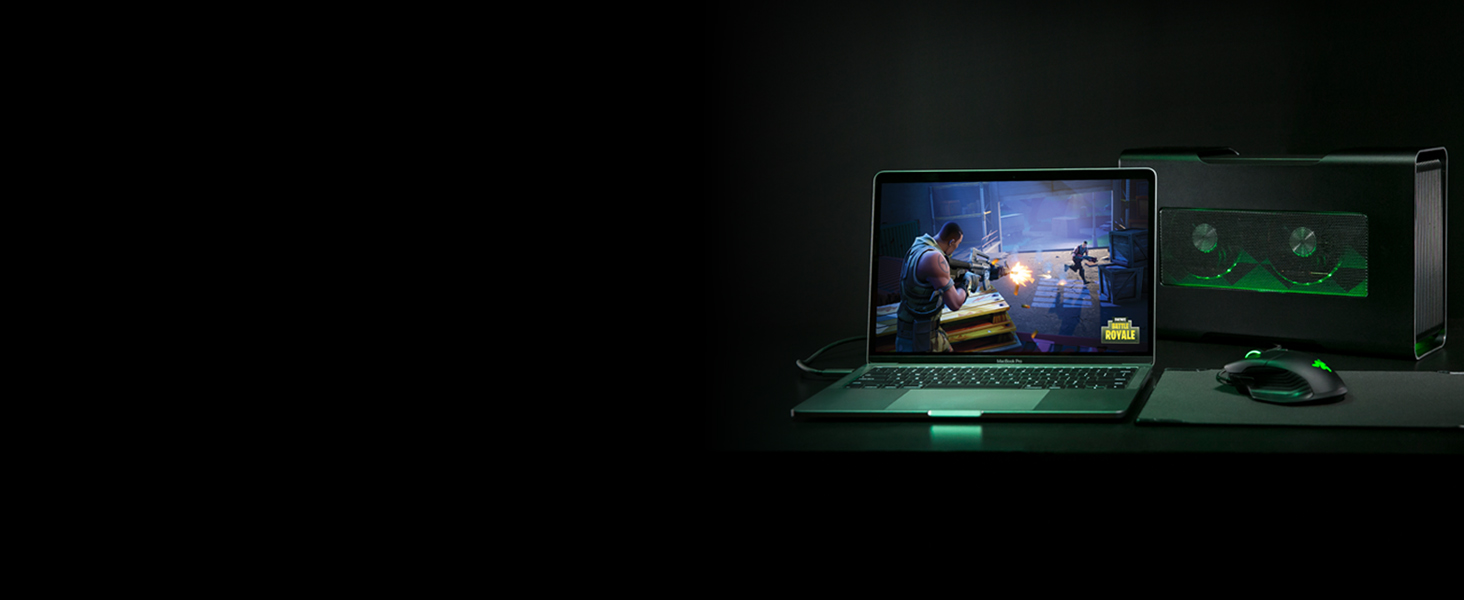
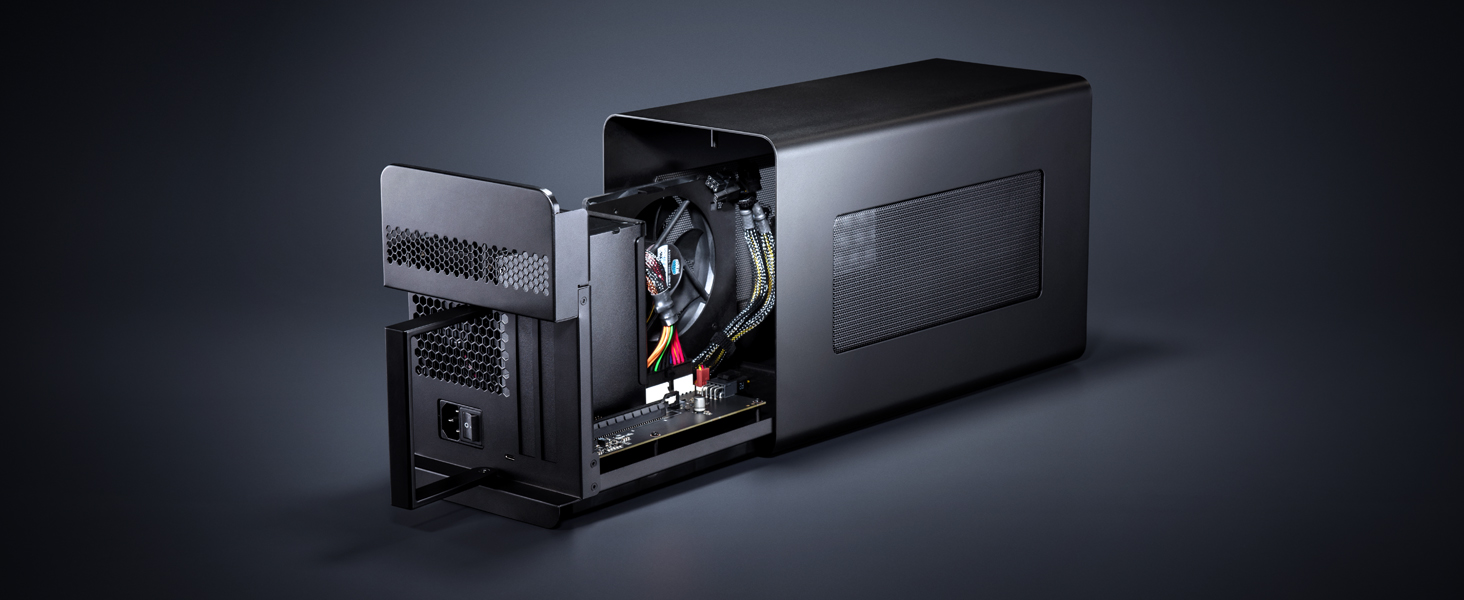
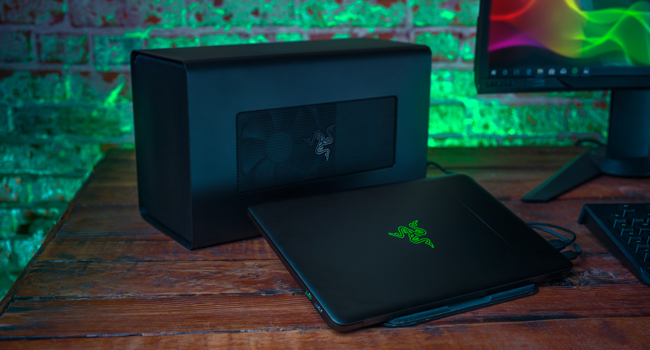
The Razer Core X is a premium aluminum external GPU enclosure that elevates Thunderbolt 3 laptops to desktop-class performance. Featuring support for large 3-slot PCIe NVIDIA and AMD graphics cards, a built-in 650W power supply with 100W laptop charging, and a ventilated design for optimal cooling, it offers seamless plug-and-play compatibility with Windows and macOS (AMD only). Ideal for professionals and gamers seeking a sleek, powerful, and future-ready eGPU solution.


| ASIN | B07CQG2K5K |
| Antenna Location | Gaming |
| Best Sellers Rank | #1,230 in Enclosures |
| Brand | Razer |
| Built-In Media | Razer Core X |
| Case Type | Desktop |
| Color | Classic Black |
| Compatible Devices | Compatibility (Windows): Requires Thunderbolt 3 external graphics (eGFX) support with RS45 or later and compatible NVIDIA or AMD graphics cards. Razer synapse 3 software not available on macOS ; Compatibility (macOS): Requires Thunderbolt 3 and High Sierra 10.13.4 or later and compatible AMD graphics cards only (NVIDIA cards not supported) |
| Cooling Method | Air |
| Customer Reviews | 4.2 out of 5 stars 1,945 Reviews |
| Enclosure Material | Aluminum |
| Global Trade Identification Number | 00814855028016 |
| Hard Disk Form Factor | 3.5 Inches |
| Internal Bays Quantity | 3 |
| Item Dimensions D x W x H | 9.06"D x 14.74"W x 6.62"H |
| Item Type Name | Razer Core X - External Graphics Enclosure |
| Item Weight | 14.29 Pounds |
| Manufacturer | Razer USA Ltd |
| Material | Aluminum |
| Mfr Part Number | RC21-01310100-R3U1 |
| Model Number | RC21-01310100-R3U1 |
| Motherboard Compatability | ATX |
| Recommended Uses For Product | Gaming |
| Supported Motherboard | ATX |
| Total USB 2.0 Ports | 1 |
| Total Usb Ports | 3 |
| UPC | 814855028016 |
| Unit Count | 1.0 Count |
| Warranty Description | 1 Year |
K**E
Premium Build Quality
I don't know about you, but I shopped around and around and around for eGPU cases. I looked at all of the premium vendors for Apple supported devices, and honestly this is the nicest and most practical case out of all of them. Unlike most cases there are vents on 4 sides of the case. It has a 72mm fan pulling in air opposite of the Graphics card and pulling in more are for the PSU... which most cases lack. It comes with a 600w power supply unit. Most cases don't have that and cost much more... Why? I have no clue except they include extra Thunderbolt and USB ports. (Which in my case I don't need slowing down the graphics card's Pipeline Thunderbolt basically already took it to 80% regardless of speed) I know some people love RBG but I hate RGB and I am so glad this case does not factor extra RGB into the cost of the product because it is a waste of electricity and money. Its smooth and black and it hides very well on one of the shelves of my desk. (They don't have sides so air flow is not an issue) Honestly it works really well and at first I was surprised that the 72mm fan was keeping my card so cold that it did not cycle at all until I was in a game for at least a few minutes. Only down side is that the Thunderbolt cable included was a little short... I can make it work but it would have been nice to have a 3 foot cable if that was technically possible with Thunderbolt. Very happy with this purchase and I think Razer really proved they can also make products for the active professionals, not just gamers.
D**2
Works great, plug and play... but heavy
As a part time gamer and full time Mac user, I wanted to play some games to my monitor when I am at home. Firstly, works great with Vega 64 and VII from AMD. These are, as of this review, the most recent GPU cards that both the box and the OS support. Moreover, to game you really need to go bootcamp... games just don't run well on OS X (despite the ports). Being able to reboot my machine into windows without unplugging something was key to my workflow. Plugging in the GPU and connecting this to the system is a breeze. I HIGHLY recommend a longer cord (Zikko makes a 6.6 foot TB3 that works perfectly). The PROS: All of them. I have the non-chroma version because ... I'm not an RGB guy and I don't need all those ports as I already have a big TB3 hub (having multiple TB3s on the MBP makes this a simple set up). The CONS: The thing is heavy... with the longer cord though, you can retire this unit to a safe location. If you are using the Chroma version, you will not be able to do this as the hub is built into the box... just a word of warning. Also, because of how the fans are set up, your GPU fans and the enclosure fan blow toward each other. Make sure the back of this unit is WIDE open as in don't put the back up to a wall. This is the only way the hot air can go to escape. Overall, this is the best eGPU enclosure by far... the power is perfect... The fan issues are minor at best.
C**O
Enclosure works great, Thunderbolt is a nightmare
This works great out of the box and if you have a Windows laptop or NUC or something similar. The nightmares begin on day 1 however. Thunderbolt is to blame here... I spent a while trying to find the "right version" of the Thunderbolt drivers to get this working stably on my HP Spectre laptop. It ended up only really being fully stable when I disabling the internal dGPU video card and turning off power management on random stuff like the ethernet card! It really feels like incantations to get this to just not blue screen the laptop. Worse, it would "plague" it for the duration before it blue screens. I'd unplug the enclosure and then go to a coffee shop and find the laptop already blue screened and on the login screen hot in my backpack. If I didn't plug in for a while, no problems like that. When this works, it's actually REALLY good. The video card, I've used an RTX 2080, and Intel Arc 770, only runs at PCI-e 4x but that's plenty for playing games on that are powered by a laptop. Diablo 4, Dead by Daylight, Overwatch, even Cyberpunk, run ok on this. There's some stutters and dips in FPS, but those really can be mostly attributed to the laptop. PCI-e 4x is just not slow enough for this to matter to gaming. Also, I was running an external display. Running the internal laptop display means you have to copy the framebuffer back to the internal card and it's not variable... the 4 PCI-e lanes are split so 2 go to the card and 2 come back... and that severely limits the framerate, makes things feel laggy, and causes a lot of stuttering and slowdown. I ran CUDA workloads on this as well... and honestly didn't see too much difference with the same video card in a normal PC motherboard. There were times it "felt like" the models being uploaded to the card was running slower, but the actual processing times and numbers really didn't reflect measurable differences. Thunderbolt in general is just super unreliable. My HP Spectre, a few Intel NUCs, a Dell XPS, and some other hardware all have random issues with Thunderbolt docks, VGA passthrough, and all the issues with stability. It's great if you're in a pinch, but terrible if it's your only setup. I'd recommend this only if you want to sit at a desk with your laptop and game every now and then but otherwise have a primary gaming computer setup. I can also recommend using it with an Intel NUC where you're ok with the occasional crash/random reboot.
J**P
Awesome solution for Macbook Pro users with a minor caveat.
Like every Razer item I've purchased, it's top notch quality products and the best bang for the buck. The Razer Core X eGPU seemed quite expensive at first but if you factor in power supply, control board, and quality; it's a great bargain. I've assembled every Win PC gaming rig that I've owned and use Macbook Pros for work. I recently upgraded to 2x BenQ 4K displays since the price was right and the WFH situation made it the right time... which is how I discovered the Razer Core X / eGPUs. My Macbook Pro (15" mid 2015) is "kind of" capable of running 2 4K monitors but noticed performance issues when the 4K resolution is scaled to 1440p. macOS shows a warning for this under display settings when changing the resolution. It's either 1080p or 4K where it doesn't bog down. Well, we all know 4K on a 27" monitor is going to make everything very tiny and the 1080p resolution is going to be in yo face but the picture quality is amazing. I prefer the 1440p with the better image quality reason I went 4K rather than native 1440p. 5K is just still super expensive. Some folks will probably be like why dual 4K?! I'm a software engineer so the extra real estate for the IDE / Text Editor on one screen and the rest on the other is what I've always preferred. The 1440p in high def makes the text look amazing. I know, I know... folks be like, you got a 4K for TEXT and 2 of them?! ... Yes, my eyes are not the same as they were over a decade ago when I started my software development career. Anyway, back to how I got here. The MBP was sluggish due to the GPU. My specific model is described to work with 1 5K external monitor. Makes sense, it's a 5 year old laptop GPU powering dual 4K. I needed to upgrade my GPU and researched some solutions. I was disappointed finding out there's no native macOS support for Thunderbolt 2 and eGPUs but I found purge-wrangler.sh. After following the basic instructions from the purge-wrangler github page, it was plug and play. I installed an AMD RX580... YES, an AMD... I have not purchased a desktop AMD card ever since the whole Bitcoin mining phase, people were forced to turn to NVIDIA cards. It all works great on my MBP. Also, I have this connected to a 4 port DisplayPort KVM for dual monitors. It works, make sure to buy the official Apple TB3 to TB2 since it's bidirectional and get a TB certified cable to plug into the adapter. # Pros - Quality packaging as always (stickers swag) 👏 - Quality product, paint, mesh, design, etc. 🙌 - Works with MBP (15" mid 2015, and a 13" MB Air 2012) TB2 (with install scripts) - Apple's limitation 🤦♂️ - macOS detected my monitors supported HDR and displayed an enable/disable checkbox in the display settings where as before it didn't 🤔 - Might have the highest wattage support compared to other competitors at the time of this review. Can support most high end GPUs but double check the dimensions and power requirements! 🥇 - The swivel / lock handle design - 👌 - It can play games with the RX580 but nowhere close to what my 1070Ti on the PC can do. I'm upgrading to a 5700XT since I got a Prime Day deal on it. - Can play fortnite, cs:go, left4dead, etc. I suggest a better card since the Razer X is designed for some serious gaming GPUs. The RX580 is an insult for what this eGPU enclosure can support. However, if you don't care about gaming in high/ultra settings, software & web development, CAD, video editing etc. then a RX580 paired with this enclosure is a great upgrade. # Cons - Leaving idle state, the fans spin quickly causing some fan noise. It's only like a second or two. Not that big of a deal. Might be the GPU + Enclosure combo. Will find out with the 5700XT swap. # Neutral - Ventilation - can be used as a mini space heater for the winter by playing games at ultra settings. Not sure how much the office will warm up during the summer. It's fall. - Some people complained theirs "didn't power on". You have to plug in a TB3 cable. Most people will assume they would see some kind of light or power when flipping the PSU switch. Wasn't the case and it left me scratching my head a bit. My situation with purge-wrangler had me connect the cable during script install. Razers instructions were to plug in the TB cable THEN flip the PSU switch. - Wish it came with a longer TB3 cable but they sell longer TB cables separately. That's how they can keep the price low b/c a 6.6 FT TB2 cable cost me $45 so be glad it came with one.
A**R
Hope you never need support from Razer
I don't pretend to think that troubleshooting issues with an eGPU is an easy task, but there's essentially 4 possible places for a problem: 1. The GPU 2. The eGPU device 3. The drivers 4. The application accessing the eGPU In my case, I was getting kernel panics when using the eGPU in multiple applications on Mac OS 10.15.7. I could rule out #4, since it was happening in multiple applications. I could plausibly ignore #3, since Apple handles the drivers, they're the most recent available and there aren't widespread reports of issues with my GPU. That leaves just the eGPU and the GPU card. I reached out to the card vendor first, who was frank that they had limited options for troubleshooting Mac-based issues and suggested I talk to Razer, whom they believed would have more tools at their disposal. So I reached out to Razer. That was my mistake. Since I have a day job, I started with chat support. To get to chat, you have to fill out a form on Razer's website that includes things like your name, email and device's serial number. After that, you'll get a chat-based option to select what you want to do. Getting an agent isn't readily apparent, so I just said 'agent' and was asked if I wanted to chat with an agent. Yes, yes I do. Okay, it asks, what is your name, email and device's serial number? Umm... didn't I just answer that? Fine, I'll provide it. I was able to get an agent pretty quickly the first time, who assigned me a case number and asked some pretty standard things - what have you done to try to resolve it, when does it occur, etc... We went through standard troubleshooting steps, which in this case was try connecting the eGPU to a different laptop. So, I went downstairs and grabbed the other laptop, connected the eGPU, starting trying to recreate the problem and... the chat window timed out due to inactivity. Damnit. Okay, it asks if I want to continue the chat and yes, yes I do. But now I'm back at the beginning with no clear way to get to an agent. I type 'agent'... "We're sorry, there's a problem right now." Okay, this is no one's fault. The time out is really short, I'll remember that next time. I refresh the whole page and go back through the form - name, email, serial number - get connected to chat, ask for an agent and put in name, email and serial number again. This time I have a case number, so I add that in the details box. "You are #3 in the queue. The wait time is expected to be 6 minutes." Okay, that's fine. Except... it goes to 1 min, then 30 seconds, then 15 seconds and then... nothing. After a couple minutes of waiting after the countdown has expired, the chat window times out again. Tried typing 'agent' again with the same 'there's a problem' response. So, I did this 11 times over course of my work day. Refresh screen, enter form details, enter same details after asking for an agent, wait in queue and get timed out when the timer runs out. It seems there's a bug where it disconnects the chat if the real wait significantly exceeds the expected wait. I did finally get through late in the day, to a new agent who assigned me a new ticket number. We went back through troubleshooting steps and finally she decided to move me to tier 2 support over email. A day later I got the email from T2 support. Awesome. I have crash logs from the kernel panics, we've eliminated many of the common problems and... nope, don't get too excited. T2 is also reading from a script. But now there's a new wrinkle - the responses are delayed by days. So, now I'm looking at the return window for my GPU card slowly closing. My gut is saying it's a problem with the GPU, but I want Razer to say so before I start that process. But Razer is drawing it all out. Each email is infuriating, asking information I've already provided in chats (or even in earlier emails), providing only the next step but not subsequent steps so it drags on with a step every few days. I've provided all the info they've asked for, provided crash logs - which they clearly haven't looked at - and answered their questions. I've faithfully tried every futile step they've provided. Finally, the response that broke me: "[f]or additional troubleshooting. Try connecting without the GPU and check if the same issue occurs. Just to set you an expectation that the GPU is not part of the listed supported GPU of the Core X Chroma. Also, try to contact Marc and ask for their feedback and to check if they can provide additional troubleshooting as well." Okay, let's look at the number of problems with this response: - What do you think the chances are they continue troubleshooting if I say it works fine without the GPU? - Does anyone really think that acting as an expensive USB hub is really validating that the bus, logic boards and power supply are working correctly? - The AMD XConnect category of cards is listed as supported - The specific card is listed as supported in the list on Razer's site - The card is supported by Apple - Apple officially recommends the Razer Core X Chroma for the card - Also, who is Marc? I assume that's Mac (which isn't even the company name and don't get me started) The truth is that everything that Razer is doing, the way their support is setup and the language you click through to get support - that any warranty repair/replacement will be based off your purchase date and how long support takes will not impact that - just screams that they're trying to run out the clock. This is not an organization that wants to solve your problem, they want to get you off the chat and close the ticket. It's incredibly frustrating. If it works for you, you'll probably be happy. But I will never purchase another Razer product.
B**E
Not all USB-C cables are created equal.
The usb-c/Thunderbolt 3 cable you use to connect the Razer Core X to your compatible laptop MUST be able to deliver at least 60W of power and deliver data transmission speeds of 40Gbps. Razer provides a very short version of this cable with the Razer Core X. Be aware that the Apple Thunderbolt 3/USB-C Cable does not work for this function. I tried to use the one that comes with the Apple MBP 16 and it didn't work. The Razer Core X will not actually turn on unless a compatible video card is installed, Razer Core X power switch is on, and the right USB-C/TB3 cable is in place plugged in to your computer. If it is, then it will light up as soon as your connected compatible laptop computer turns on. It works great and the installation process on my 4 year old Razer Blade 17 laptop was almost immediate as it recognized it and asked me to follow through on installing the necessary drivers for both the video card and the Razer Core X. This device works as advertised. 2022 update. I originally ran an ASUS ROG STRIX GeForce RTX 2060 Advanced Overclocked 6G in this unit. The card worked great, but was starting to feel underpowered in certain high object count situations. I have since upgraded it to an EVGA GeForce RTX 3090 FTW3 Ultra Gaming, 24GB GDDR6X, iCX3 Technology. The Razer website lists the 3090 as compatible with the Razer Core X Chroma. This GPU card requires 350W to work and needs 3 GPU PCIe connections. Doing the math, the card would require a minimum 116.6667W per PCIe connector to function. The Razer Core X Chroma feeds 500W to the GPU but only has 2 PCIe connectors. With 250W to one connection, and 125W and 125W via a splitter to the 2nd and 3rd, this card turns on, works, and is recognized by the now 6 year old Razer Blade 17. However the card does throw a decent amount of heat so I wouldn't run it without AC on a hot day and I would let the fans on the eGPU run for about a minute or two after the laptop is shutdown before I shut the Core X Chroma off. Finally as I learned more about performance bottlenecks, I found that in retrospect this card is overkill for this rig setup because of the data bottleneck through the Thunderbolt 3 cable. A GPU in a PC tower has a much faster data rate than Thunderbolt 3 can provide. So generally if you play games in FHD (1920X1080) with the settings turned up then a rig set up with an eGPU will work for you. It also means you will never be running the card at its full potential. If you want to be able to play at higher resolutions, you will want the GPU card in the PC tower wired into the motherboard. Don't use an eGPU. So the moral of the story is do your homework. I would recommend anyone looking at GPUs for a Razer Core X Chroma to look at GPUs that only require 2 GPU PCIe's first and read the reviews. They'll use less power, and may get you the same FHD performance for less.
J**N
Works Flawlessly on MacOS 10.14.x - Perfect AMD Vega 64 & Radeon VII
When I first purchased the Razer Core X, the goal was to allow me to fully utilize 4x 4K displays with my (late 2018) Mac Mini (which is limited to Intel onboard graphics). After having read through numerous reviews, I paired it with an AMD Vega 64 (reference card) and it just worked out of the box. Now I've purchased a second to pair with a Radeon VII (keep reading for details) so I could power additional displays and benefit from passing video to virtual machines. Now, there's one caveat to using an eGPU, and it's not specific to Razer or any other brand. If you're using disk encryption (APFS, Encrypted) on a Mac Mini, you will need to swap to the default HDMI port on the Mac Mini when booting and/or rebooting, and then back to the eGPU once the system is online. # Workarounds 1). If you have a monitor with an extra DisplayPort or HDMI port, connect your primary to the graphics card within the eGPU and the secondary to the HDMI port on the back of the Mac Mini. When you boot, swap to the HDMI port on the Mac Mini using the display settings. Once the Mac Mini is booted, swap back to the port on the graphics card. 2). Backup your data, and reinstall MacOS (making sure you format the disk before reinstalling) and select APFS (not APFS Encrypted). The issue only impacts boot when disk encryption is used and by removing that from the boot sequence, the eGPU will be used by default. If you don't absolutely *need* encryption enabled, I would go with #2 to minimize the hassle. # Radeon VII Notes For those wanting to use a Radeon VII, this eGPU enclosure *does* work, very well, though as of this review, you will need to make sure you are using the *beta* of MacOS (currently 10.14.5 Beta). The Radeon VII does not currently work with the default (non-beta) version of 10.14 as Apple doesn't include the drivers for the card in versions prior. Much like the issue with disk encryption, you will see a black screen if you're not using the beta release. # Overall The larger question here is, at nearly $300 (at the time of this review), is the Razer Core X worth it? What about when paired with a $400-$700 card? I'd say absolutely. If you have a MacBook Pro or Mac Mini with Thunderbolt 3 and you need something that you can quickly and easily upgrade with a new card in the future, this is an amazing enclosure. I originally bought mine for a Vega 64, though recently swapped in a Radeon VII. I've bought a second one for the Vega 64 so it still gets used on the same Mac Mini (as the Mac Mini will support 2x eGPU's -- for best results, I'm adding them to the first and third TB3 ports).
P**M
eGPU itself works fine in macOS. USB and Ethernet are terrible. Get the non-chroma model.
First experience with an eGPU and I probably should have done more reading before I purchased anything. Currently having difficulties getting it to work with Bootcamp on a 16" Macbook Pro. This is not the fault of the Razer Core X Chroma, but I think it's worth mentioning to anyone thinking about going done this road. That said, with a Radeon card in it, it's plug and play (at least for GPU purposes) on the macOS side which was very nice. Performance with my 5700 XT seems about where I'd expect given the limitations. The thing that IS the fault fo the Razer Core X Chroma though is how bad the USB and Ethernet ports are. The ethernet port requires an extra driver in macOS which isn't clear but not necessarily a problem in itself, but I could only get it to work for a few minutes before my system decided it no longer had internet access through that adaptor. Switching to WiFi fixed things, back to the Razer's Ethernet and I only got a couple minutes again. Worse than the ethernet though is that the USB devices seem to not get the correct/consistent power and connectivity they should. My keyboard kept disconnecting and reconnecting, my mouse didn't act right and my FiiO K3 headphone amp cut out regularly. If you want an eGPU for a Macbook Pro (running macOS), this works great for just that. Do yourself a favor though and save some money by getting the non-chroma version and a cheap USB-C hub.
J**S
Excelente compra para montar una gpu externa.
Es perfecta para mi, tengo una laptop con procesador core i5 11a gen. con gráficos integrados Iris Xe, pero no es buena con la mayoría de juegos actuales. Con este adaptador puse una RTX 3060 y los juegos van a máxima calidad en 1080p sin problema. Montarla es muy fácil y lo único que se requiere es conectarla y abrir el administrador Thunderbolt y listo. La computadora instala automáticamente los controladores de Nvidia y la mayoría de juegos reconocen en automático la gráfica, si ya tienes un juego con una configuración previa toca reconfigurar el juego o bajas la aplicación GeForce experience y esta te los configura, esta también sirve para que mandes tus juegos a streaming con el "moonlight" en el celular. Excelente compra, vale la pena al 100% el costo.
D**L
Great machine!!!! Superb looking with RGB
Absolutely great eGPU... I personally love the synapse app for the Razer products, its a one stop shop if yiu want to configure all Razer products bought and plugged to the Core X. The RGB looks really good, customizable as well!!! Im very satisfied with the product eapecially since i can always takenout the graphic card and replace it with a newer one. Theres 4 usb ports in the back, the plate begind is removable to plub your screen with the graphic card. Super product!!!
R**S
Excelente para MacBook Pro 2017
Funciono muy bien en la MacBook Pro 2017 lo resultados al ponerle una Quadro RTX 4000 fueron simplemente impresionantes, pero cuidado lo probé en la laptop workstation Dell Precision 5520 y los resultados fueron pésimos, en mi opinión si lo vas a comprar que sea para una MacBook Pro con procesador intel desde 2016.
D**N
Works well with an Asus Zenbook Deluxe 8th Gen i7
EDIT April 06/2019: I've upgraded my rating because the product really does deserve 5 stars. I am having great success with this Razer Core X external GPU enclosure attached to an Asus Zenbook Deluxe 8th-gen i7 ultrabook. I am NOT gaming, I'm primarily running the Adobe Creative Cloud usual suspects: Photoshop, Premiere, Illustrator, Dreamweaver as well as Autocad and Revit. I installed a NVidia Quadro P620 card in the enclosure. Everything is far faster than before - very pleased with the upgraded performance. Installation in Windows was painless for the most part, but you should be aware that there was a very long delay while Windows detected the enclosure and set up the software for it, and there is absolutely no indication that anything is happening. If I didn't have patience I may have rebooted too early and screwed the whole thing up, but I checked Task Manager and could see the process taking about 20-30% cpu so I just let it go until it calmed down. Still no indication that it finished when it finished, I just waited a few minutes more then rebooted. Then I downloaded the latest card drivers from NVidia (ODE version not QNF) and installed them. Rebooted again. Then I plugged in the actual Display Port cables from four Asus 2560 × 1440 monitors and everything came up roses. The enclosure is practically silent - virtually impossible to tell it's even getting power. And huge. In fact it's bigger than most of the desktop computers in our offices. But that doesn't matter because it just sits behind the screens and does its job quietly out of sight. I docked one star because I could not believe that I had to pull out the cordless drill and drill a hole to be able to secure the Quadro card in its slot. This won't be an issue for those with dual-width or wider video cards, but the Quadro P620 is a single-slot card and there's no hole to fasten the card's bracket to the enclosure case. Easy fix by drilling and tapping a hole in the case, but now I have to find a slot adapter cover plate to fill in the gaping hole beside my Quadro card, since the adapter cover that comes with the enclosure cannot be used as it's designed to be discarded once a card is installed. It's too wide to use. Kinda lame. If it weren't for this deficiency in design I would award this enclosure with 5 solid stars. I hope this helps. UPDATE MARCH 2/2019 This enclosure is still working perfectly. I use it every work day. Great product.
B**+
Works great with NVIDIA RTX 2080 GPU and ASUS Zenbook Pro
I wanted to add an additional GPU to ASUS Zenbook Pro UX550GE mainly for graphics and video processing. I got this enclosure together with a RTX 2080 GPU card, which is still quite hard to find, and they are perfect match. Just needed to install the driver for the GPU and the monitor was identified with no trouble at all. The overall system runs quite fast and almost noiseless. Also it works fine with NVIDIA Broadcast so I can use the system for videoconferencing, too. Just note that it only works with laptops with Thunderbolt 3 port and not USB-C. Definitely recommended.
Trustpilot
1 month ago
3 weeks ago