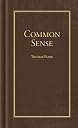
Common Sense (Books of American Wisdom)
Product ID: 8650495
Desertcart purchases this item on your behalf and handles shipping, customs, and support to South Africa.
The revolutionary pamphlet that helped light the fire of American Independence in an elegant hardback gift edition. Thomas Paine arrived in America from England in 1774. A friend of Benjamin Franklin, he was a writer of poetry and tracts condemning the slave trade. In 1775, as hostilities between Britain and the colonies intensified, Paine wrote Common Sense to encourage the colonies to break the British exploitative hold and fight for independence. The little booklet of 50 pages was published January 10, 1776 and sold a half-million copies, approximately equal to 75 million copies today. Review: "He was a filthy little atheist!"---Theodore Roosevelt on Thomas Paine - I usually admire Colonel Roosevelt, but he missed the mark with his blistering assessment of the author of this brief, world-changing, history-making book. COMMON SENSE is master propagandist Thomas Paine's (1736-1809) compelling argument for American independence. Anyone who wants to understand the true intent of the Founders must read Paine. Paine had previously written in defense of tax collectors (while still in Britain) and his writings had impressed Benjamin Franklin. Published in February 1776, COMMON SENSE sold over 500,000 copies in the Colonies (out of a free population of two-and-a-half million), and was republished throughout Europe. Paine's writings created the necessary groundswell for the American Revolution, the French Revolution, and the Irish Rebellion of 1798. In clear, concise and simple language COMMON SENSE begins with a general reflection about government and religion. It then progresses onto the specifics of the colonial situation. Paine draws a strong distinction between Government and Society. In Paine's view, "Society" is everything constructive that people work together to accomplish, while "Government" is a structure designed specifically to protect human beings from ourselves. Government arises because of human evil; therefore Government is itself a necessary evil. According to Paine, Government exists to protect life, liberty and property. A successful Government accomplishes these ends, and no others. Paine states that a people constrained by Government will be far more satisfied if they themselves are responsible for the creation of the laws that their Government enforces, thus endorsing a form of representative Government in America. Paine has no truck with the British system of Government, or of Monarchy in any form, which he says is an unnatural relation between inherent equals. Paine then sets out the details of his view of the American situation. Paine points out that the American Colonies have evolved into an independent political and economic association that no longer needs Britain's protection or Britain's exploitation. Paine points out that Britain has been suppressing the Colonies rather than encouraging their growth, even for the Mother Country's own benefit. Such abuses make Great Britain undeserving of American loyalty. Paine further argues that it is necessary to seek independence immediately, since the problems that exist between Britain and her Colonies are endemic, and unresolvable. Simply put, America has matured beyond Colonialism. Paine was a hero of the American Revolution. He wrote an ongoing publication "American Crisis" during the Revolutionary War, but has become a "Forgotten Founding Father." A better theorist than a pragmatist, Paine was a strong-willed and opinionated man who alienated many former friends. A true revolutionary rather than a politician, unlamented he left America for France. He was marked for death a number of times during The Terror, but managed to escape by claiming American citizenship. After fleeing Paris, he went back to England for a time. Considered a rabble-rouser by the British for his association with the Irish patriot Wolfe Tone he returned to America again. He was this nation's first true internationalist. By the early 1800s however, Paine's writings, particularly his Deist writings, had alienated the growing Christian Fundamentalist movement of The Second Great Awakening, and he was treated with derision. Thus, when "Citizen Tom Paine" died in New York, it was in near obscurity. Review: Uncommon Sense - Common Sense is one of the greatest articles of argumentation ever written. Paine was the finest pamphleteer of his age and was able to turn the discontents of the colonists and, especially, the intellectual leaders of the revolutionary movement into arguments that were easily understood by ordinary colonials and which inspired them to rally to the cause of independence. I first read Common Sense more than fifty years ago and remember well being impressed with Paine's ability to carry arguments and to anticipate those of his opponents before his tract even hit the street. Over the course of my lifetime, I was inspired by the author and became a pamphleteer of sorts myself. I always told my colleagues that I wanted to become a poor man's Tom Paine. But after reading the piece once again, I realize that almost all who aspire to follow in his footsteps, if not fill his shoes, are doomed to become but very poor copies of the original. Other reviewers have noted the fluidity of his writing; it reads as simply, directly and forcefully today as it must have nearly a quarter of a millennium ago. Obviously, one did not have to be a great reader to be swayed by the force of Paine's words or to be inspired to the side of those wishing to throw off the English yoke. I was struck by echoes of Paine in many great American speeches that were running through my mind as I read. A number of quotes from Robert F. Kennedy seemed to have been directly inspired by Common Sense, and I hastily looked them up and offer these two for your consideration: "It is not enough to understand, or to see clearly. The future will be shaped in the arena of human activity, by those willing to commit their minds and their bodies to the task." "All of us might wish at times that we lived in a more tranquil world, but we don't. And if our times are difficult and perplexing, so are they challenging and filled with opportunity." The Declaration of Independence itself is a direct offspring of this great tract. Jefferson and the others charged with developing the document were well aware of Paine and had the opportunity to evaluate his words and to use his methods in creating our declaration, and this takes nothing away from their genius. This is a document that can be read in short order, and it is free at the Kindle Store. How can you say no to giving it a try?

| Best Sellers Rank | #81,627 in Books ( See Top 100 in Books ) #59 in General Elections & Political Process #65 in U.S. Revolution & Founding History #68 in Historical Essays (Books) |
| Customer Reviews | 4.6 out of 5 stars 5,269 Reviews |
K**I
"He was a filthy little atheist!"---Theodore Roosevelt on Thomas Paine
I usually admire Colonel Roosevelt, but he missed the mark with his blistering assessment of the author of this brief, world-changing, history-making book. COMMON SENSE is master propagandist Thomas Paine's (1736-1809) compelling argument for American independence. Anyone who wants to understand the true intent of the Founders must read Paine. Paine had previously written in defense of tax collectors (while still in Britain) and his writings had impressed Benjamin Franklin. Published in February 1776, COMMON SENSE sold over 500,000 copies in the Colonies (out of a free population of two-and-a-half million), and was republished throughout Europe. Paine's writings created the necessary groundswell for the American Revolution, the French Revolution, and the Irish Rebellion of 1798. In clear, concise and simple language COMMON SENSE begins with a general reflection about government and religion. It then progresses onto the specifics of the colonial situation. Paine draws a strong distinction between Government and Society. In Paine's view, "Society" is everything constructive that people work together to accomplish, while "Government" is a structure designed specifically to protect human beings from ourselves. Government arises because of human evil; therefore Government is itself a necessary evil. According to Paine, Government exists to protect life, liberty and property. A successful Government accomplishes these ends, and no others. Paine states that a people constrained by Government will be far more satisfied if they themselves are responsible for the creation of the laws that their Government enforces, thus endorsing a form of representative Government in America. Paine has no truck with the British system of Government, or of Monarchy in any form, which he says is an unnatural relation between inherent equals. Paine then sets out the details of his view of the American situation. Paine points out that the American Colonies have evolved into an independent political and economic association that no longer needs Britain's protection or Britain's exploitation. Paine points out that Britain has been suppressing the Colonies rather than encouraging their growth, even for the Mother Country's own benefit. Such abuses make Great Britain undeserving of American loyalty. Paine further argues that it is necessary to seek independence immediately, since the problems that exist between Britain and her Colonies are endemic, and unresolvable. Simply put, America has matured beyond Colonialism. Paine was a hero of the American Revolution. He wrote an ongoing publication "American Crisis" during the Revolutionary War, but has become a "Forgotten Founding Father." A better theorist than a pragmatist, Paine was a strong-willed and opinionated man who alienated many former friends. A true revolutionary rather than a politician, unlamented he left America for France. He was marked for death a number of times during The Terror, but managed to escape by claiming American citizenship. After fleeing Paris, he went back to England for a time. Considered a rabble-rouser by the British for his association with the Irish patriot Wolfe Tone he returned to America again. He was this nation's first true internationalist. By the early 1800s however, Paine's writings, particularly his Deist writings, had alienated the growing Christian Fundamentalist movement of The Second Great Awakening, and he was treated with derision. Thus, when "Citizen Tom Paine" died in New York, it was in near obscurity.
W**N
Uncommon Sense
Common Sense is one of the greatest articles of argumentation ever written. Paine was the finest pamphleteer of his age and was able to turn the discontents of the colonists and, especially, the intellectual leaders of the revolutionary movement into arguments that were easily understood by ordinary colonials and which inspired them to rally to the cause of independence. I first read Common Sense more than fifty years ago and remember well being impressed with Paine's ability to carry arguments and to anticipate those of his opponents before his tract even hit the street. Over the course of my lifetime, I was inspired by the author and became a pamphleteer of sorts myself. I always told my colleagues that I wanted to become a poor man's Tom Paine. But after reading the piece once again, I realize that almost all who aspire to follow in his footsteps, if not fill his shoes, are doomed to become but very poor copies of the original. Other reviewers have noted the fluidity of his writing; it reads as simply, directly and forcefully today as it must have nearly a quarter of a millennium ago. Obviously, one did not have to be a great reader to be swayed by the force of Paine's words or to be inspired to the side of those wishing to throw off the English yoke. I was struck by echoes of Paine in many great American speeches that were running through my mind as I read. A number of quotes from Robert F. Kennedy seemed to have been directly inspired by Common Sense, and I hastily looked them up and offer these two for your consideration: "It is not enough to understand, or to see clearly. The future will be shaped in the arena of human activity, by those willing to commit their minds and their bodies to the task." "All of us might wish at times that we lived in a more tranquil world, but we don't. And if our times are difficult and perplexing, so are they challenging and filled with opportunity." The Declaration of Independence itself is a direct offspring of this great tract. Jefferson and the others charged with developing the document were well aware of Paine and had the opportunity to evaluate his words and to use his methods in creating our declaration, and this takes nothing away from their genius. This is a document that can be read in short order, and it is free at the Kindle Store. How can you say no to giving it a try?
A**R
Interesting historical perspective
This little book is an easy way to get a brief glimpse of the time of the American Revolution, the way it sounded and felt to people then. PROS: It's a primary source, more direct than a history book, yet it's short and easy to read. Of course it's an emotional propaganda piece (for the American side, against the English king) and there are many holes in Paine's arguments, but that's part of the fun of reading a primary source -- you can analyze for yourself. Also, this little edition is nicely printed with a lovely cover. CONS: A few historical endnotes on some of the contemporary references would have been nice; this edition is purely the original text.
D**S
Five stars should be default! Required reading for a true Patriot!
It is quite unfortunate that the maladroit public school system has failed to have this as a required reading. Thomas Paine has obtained immortality with these words in the minds of true conservative Constitutionalists-that of which has been obscured by both the Republicrats and Demopulicans. Having not read this in high school, I am glad I did. In a time when America is in an aberration from her fundamental principles I find myself genuflecting to her Constitution for insight-for that I am ridiculed, receive derision, and considered a conspiracy theorist and unpatriotic. Lamentation is among those of us who see the force that is reverting this country to a fusion between Fascism and Communism-a new hybrid of government. Fortunately, this is a REPUBLIC and we can fire back through political intervention and fiscal boycotts. We find it facile to intervene where we must, but that ability is shifting to arduousness with laws such as the Patriot Act-which makes docile dissent an act of terrorism. What Paine wrote in this pamphlet is very well applicable to our relationship to the Federal Government in the present. For me, this book gave me the boon to spread the message of what America was founded upon, the Constitution. There are those men/women that are born from the process of reproduction that go beyond the mere existence of flesh and truly lubricate their being into the gears of this Machine we call life. From the conception of their ornate thoughts to the inoculation of their fluid into our being, at times we can overlook them in the present, but in the future, we revere them for their message. How many of these individuals have we murdered, assassinated, tortured, ostracized or allowed their message to become senescent in society? The recoil can at times prove that we are indeed merely in duress by the masses, but there are those of us that see the profundity in the present. Thomas Paine was not one who was ostracized or murdered for his ideologies, but it calls forth a siren in the present that is commensurate to Ron Paul's The Revolution: A Manifesto. If I am not mistaken, I am sure I can be indicted for an act of terrorism, have Storm Troopers breach my home without warrant, be shipped to Guantanamo Bay for torture and denied rights to Due Process, all for exercising my right to free speech by writing this review; and, not to mention, for saying that the Federal Government is subordinate to the Constitution and must yield to the States; States yield to Counties; Counties to Cities; Cities to Communities; and Communities to Families-that is "the REPUBLIC for which we stand!"
C**E
A must read for every American
This is a "pamphlet" that every American should read, at minimum for its critical historical value as a major factor in convincing the colonies of declaring their independence from England. It is written in the language of its time, so while it is written in "plain English" for the common colonial citizens (those that could read and owned property, primarily) it is a little cumbersome in terms of those of us used to current writing. But it is still easy to understand. Mr. Paine states his case clearly, logically, and emphatically. The first section speaks to the logical shortcomings of the English Monarchical form of government in clear terms. The "King" (or Queen, but King George was on the throne at the time) had no qualifications for leading a government beyond the happenstance of having been born into the royal family line. This left the fate of government, not only of England but the colonies, at risk of being governed by a madman, a child, or similar circumstances of nature that had nothing to do with their talent, knowledge, or skill in running their own country, much less the colonies. Secondly, he makes the argument that England takes actions entirely for their own benefit - primarily the commerce and natural goods and resources of their colonies, which means that any and all actions were to the DETRIMENT of the Colonies and to the BENEFIT of the Crown, and would never deviate from that course as long as we were a a group of colonies. Thirdly, he spoke strongly that the TIME WAS RIGHT (Paine used all caps to emphasize his key points throughout the pamphlet) to declare independence. 30-40 years earlier than 1776 we were not strong enough to win our independence. Waiting beyond 1776 only entrenched the American population to become accustomed to Colonial status. But in 1776 we had the population, resources, arms, might, and will to win our independence. He described our options - keep the status quo and be forever under the thumb of England, i.e. onerous taxation without representation; delay the decision, or act now. He artfully describes the pros and cons of each option, and of course makes the compelling case for the latter course. After reading it, putting yourself in that time period, you would be hard pressed not to agree with his call to action. This pamphlet (around 100 pages), when put in terms of the portion of the population that read it (or had it read to them), is the most read 'book' (excepting the Bible) in American history. It was that popular, and universally claimed as a key pillar in precipitating our declaration of independence from England literally months after its publication. I would urge all who have an interest and curiosity into the mindset and actions that formed the foundation for the war of independence read this book.
J**S
A necessary evil
It is easy to understand why this book, which was initially published anonymously in January of 1776, had such a great influence in steering Americans away from reconciliation and toward independence. In four concise chapters, plus an introduction and appendix, Thomas Paine demonstrates uncommon wisdom to build a strong case for going to war to fight for independence. Chapter 1 - On the Origin and Design of Government in General, With Concise Remarks on the English Constitution This chapter starts with a perceptive assessment of government, “in its best state is but a necessary evil; in its worst state is an intolerable one.” This conclusion remains true today even though governments are presided over by politicians who get elected by making themselves appear benevolent. Chapter 2 - Of Monarchy and Heredity Succession Paine cites historical examples to demonstrate the problems with both the existence of kings and hereditary succession. Some of the strongest arguments are those of Samuel from the Old Testament showing that kings will both exploit their subjects and interfere with their relationship with God. Paine concludes that it is a “manifest injustice” for one generation to acquiesce to hereditary succession and give away the rights of posterity to select their leader. Chapter 3 - Thoughts on the Present State of American Affairs For many, if not most Americans, the choice between independence and reconciliation was difficult because choosing independence involved risking, and in many cases, sacrificing their lives. In this chapter, Paine appeals to their honor and logic by pointing out the problems of reconciliation. Among the more serious problems of reconciliation was that it would make Great Britain’s enemies into America’s enemies, and France and Spain could be significant enemies. As someone who enjoys the freedoms and the legacy of being an American 240 years after Common Sense was written, I am humbly thankful that Paine’s appeal was successful and that so many sacrifices were made. Chapter 4 - Of the Present Ability of America, With Some Miscellaneous Reflexions Forming a navy and becoming independent would require significant investments and involve going into debt. Paine justifies this investment from a financial, self-defense, and moral basis. He does this in several ways, including pointing out the vast resources of the American continent. Paine uses figures of speech cleverly to make his arguments clear to his readers. Perhaps the most effective metaphors are the two involving prostitution. In the first chapter, he compares the predisposition of some colonists toward Britain’s unfavorable constitution, which makes them unable to recognize a good constitution, to the inability of someone affiliated with a prostitute to select a good wife. And in the third chapter, he concludes that trying to reconcile the interests of Britain and America is like restoring the lost virtue of a prostitute. The word colonist is not used in this book. Thomas Paine refers to his readers as Americans, not colonists, because he wants that to be their mindset. It works.
R**.
Necessary in its time but shows the limits of common sense. (AmazonClassics Edition)
As a disclaimer I am not a U.S. citizen and I live in a far away country. But then again Thomas Paine too. He moved to America only two years before the U.S. independence from the United Kingdom, so it is clear that he explains his thoughts in base of what he takes as common sense rather than reality. Among the phrases that I found could be easily refuted are the following: * "...there were not kings; the consequence of which was there were no wars." Wars to get resources always have existed and if not they are exceptions to the rule. In our present day without kings there are more wars because many groups profit from them. Rome waged wars under the SPQR banner: people and senate of Rome united. * "How impious is the title of sacred majesty applied to a worm, who in the midst of his splendor is crumbling into dust." I love this phrase as poetry, but I disagree in its concept. Certainly kings are men and women as any other, but not less than any other. Of course its intention was to negate the authority of the king what was useful for the interests of independence. * "Monarchy is ranked in scripture as one of the sins of the Jews" this is cherry picking. The Bible was written by the sacerdotal order of Israel. As so there is a bias against to the kings that didn't follow the whims of their priests. In other parts of the bible some kings are exalted as sent by God. * "...that your children and your children's children shall reign over ours for ever." This is against the idea of hereditary monarchies. I agree it is ridiculous, but then again the times in which it was needed were different. * "A French bastard landing with an armed banditti, and establishing himself king of England against the consent of the natives" hehe here I cannot avoid to smile. I am indigenous, from an ethnia in the Andes. If I would subscribe to this thought the consequence would be the expulsion of any person in the Americas of European ancestry, because it applies to us, natives, that with the use of weapons our former lands were taken away without our consent. But I don't believe this and I don't believe in Paine. I think there are wars and sometimes one group losses and the other wins, and if something is lost in war then should be recovered with war, not begging. * We claim brotherhood with every European Christian" this is evidently false and is only said to negate the cultural heritage from England. In some other part it seems he only recognizes as European and Christian the persons from "England, Holland, Germany, or Sweden." this means mostly Northwesterner Europeans whose Christian faith is other than Catholicism and whose cultural heritage is not Latin but Norse and Germanic heritage. What Thomas Paine doesn't say is that those other populations work and contribute in the cultural frame set by England, and they do it in English language, with English names. Nevertheless I understand this argument was useful to point that there is no bond with the English royalty. * "The first king of England (...) was a Frenchman, and half of the peers of England are descendants from the same country; wherefore (...) England ought to be governed by France." The issue is that actually both England and France had wars about the right to rule over each other, the English kings fought for the right to rule France. Paine ignores or choose to ignore the rules of vassal kings. * "The reformation was preceded by the discovery of America, as if the Almighty graciously meant to open a sanctuary to the persecuted in future years." Rolling my eyes here xD America was already populated and discovered thousands of years before. Actually one of the reasons of independence is that the English king didn't allow the original colonies to expand over native lands due to treaties with the crown. So, in a sense, Paine agrees in persecute other persons, he is unaware of it and, for the norms of the age, that is okay. In the end my understainding is that he tries to replace the authority of the king not with the authority of the people but (his interpretation) of the bible. Also I think the invisibility blanket he throws to American natives is not due to racism but simply by kinship for what he understand as civilization, and this being a shared baggage of cultural, religious and idiomatic affinities; is natural he can only see Northwestern Europeans of non Catholic affiliation and with a Norse and Germanic background as the only ones meant to be called civilization. Common sense is a useful tool to think and take good choices. But it is only in a context of familiarity where traditions by trial and error have proven what works and what not. Outside that frame, as for example a revolution, common sense can end in the election of poor choices and we require a more rigurous framework as it is the scientific method or, even, embracing chaos and turning to instinct. The value of this document (a high one indeed) is measured rather by its emotional encouragement for the independence of the thirteen colonies than by the soundness of its reasoning, even judged by what I think were the standards in those times.
C**E
a must read for our time
Very poignant piece of work. An American patriot with common sense. Made me even more patriotic to be and American.
M**N
A Man for all seasons - Wisdom for all times.
Like Edmund Burke, and others from a time of enlightenment and a greater honesty and seeking of wisdom, Thomas Paine's writings stand out as a beacon of hope and light. In a time where few can be trusted; and few stand out as leaders or iconic statesmen it is good to be able to look back to a promise of hope.
R**O
Calidad
Todo me gusto
珈**琲
アメリカ独立を実現した文章の力と事実
サムエル・モリソン『アメリカの歴史』を読んでトマス・ペインの存在を知り、アメリカの独立に大きく貢献したとされるThomas Paine, “Common Sense”を読むことにした。 60ページ程度のごくみじかい英文パンフレットだが、内容は濃い。最初に、あらゆる人民は暴政に対して反乱する権利がある、とおそらくルソーの思想から説く。続いて当時のアメリカの宗主国たるイギリスの王政を、キリスト教の立場からそもそも神の意志に反する不当な制度であって、王位の世襲制がきわめて不合理なことを一般論として指摘したうえで、現実に無能で暴虐であることを指摘する。そして、アメリカがイギリスの支配を受けることの愚かしさと独立の利益を、具体的に指摘する。アメリカ大陸は宗教改革の寸前に発見され、世界の迫害を受ける人民の避難地として神から与えられた地であり、すでにイギリスのみならずヨーロッパ全体から人々が到来している。それなのにイギリスだけに服属し、イギリスから貿易・外交の制限を受け、その意のままに収奪されることの愚かしさをよく考えなければならない。遠く離れてアメリカ大陸の状況をよく把握する術も意欲もないイギリスに、これからもあらゆる重要なことを時間をかけて請願し、遠いところの他人事としか考えない連中のいい加減な判断に従い続けるのか。われわれはアメリカ大陸に居住する人間として、子孫に良い生活環境、国家、政治体制を残さなければならない。われわれは自らの判断で自分たちのための法律を作らなければならないが、それここそが「独立」なのである。さらに単に独立の必要を叫ぶのみでなく、アメリカの現状を詳しく分析して、経済的にも、政治的にも、軍事的にも独立することが可能であることを具体的に説明する。そしてアメリカの新しい政治体制についても提案している。 イギリスの田舎町に職人の子として生まれたトマス・ペインが、仕事にも結婚にも失敗してアメリカにわたった時、すでに37歳になっていた。当時アメリカ大陸内では、独立推進派、イギリスとの和解派、さらに日和見派の3つに分かれて議論があり、当初トマス・ペインは和解派であった。それが、1775年4月のレキシントン・コンコードの戦いでイギリス軍の暴虐とアメリカ民兵の勇気を見て、完全に独立派に変わったという。レキシントン・コンコードの戦いの直後からトマス・ペインは『コモンセンス』の著作に着手したが、流動的な情勢を鑑みて、また引き受けてくれる出版社を探して、出版は1776年1月になった。発売されるとこのパンフレットは空前のベストセラーとなり、50万部をアメリカ大陸で売った。当時アメリカ大陸の人口は250万人ほどというので、文章を読むことができる人々のほぼ全員が読んだことになる。そして半年後のアメリカ独立宣言に、この内容がかなり踏襲されていた。 論述はごく冷静で論理的であり、予想したより扇動的な感じが少ない。内容は新しい理論や思想などのように抽象的ではなく、現状を詳しく観察し分析して、わかりやすく具体的に解説している。これはまさに優れたジャーナリストのものである。さらにありがちな「いわゆるジャーナリスト」や「いわゆる識者」とまったく異なるのが、改革の必要性の指摘だけでなく、改革の方法とその実現可能性の検討、さらに改革後の政治運営のビジョンまで綿密に考察して具体的に提案していることである。本来ジャーナリストというのは、こうあらねばならないのだろう、と改めて思った。わが国の「いわゆる識者」や「いわゆるジャーナリスト」たちには、真摯に反省して少しでもトマス・ペインに近づく努力を求めたいが、おそらく能力不足なのだろう。 また、このパンフレットが対象とする場所も時代も異なるものの、日本の現状にてらして考えると、決してひとごととして放置できない指摘がある。わが国は、憲法で軍事力の保持を否定して、安全保障をアメリカの軍事力に依存しているが、アメリカは当然ながら自国の利益以上に他国たる日本を護る義務などないのである。そのような根本を蔑ろにしたまま現状を継続することの危うさを、われわれ日本国民は真剣に考えなければならない。 Thomas Paine, Common Sense (Amazon Classics Edition) Kindle版は、現代英語とは少し違って古語的語彙・表現もあり、私にはいささかむずかしかった。総じて文章が長く、構文をとらえるのに苦労することもあった。岩波文庫版の小松春雄訳『コモン・センス』1976の助けを借りながら、ようやく読み終えた次第であった。 ともかく、現実の政治を大きく変革したパンフレットの力と事実に、あらためて感動する。
C**A
Common Sense (Inglés) Tapa blanda – 28 may 2013
Edición de bajo coste con algunos fallos de maquetación. La composición de los párrafos es en bandera (las líneas no están justificadas a la derecha). Está ilustrado con dibujos de la época.
B**N
Book to read
Short but helpfull
Trustpilot
1 day ago
1 month ago