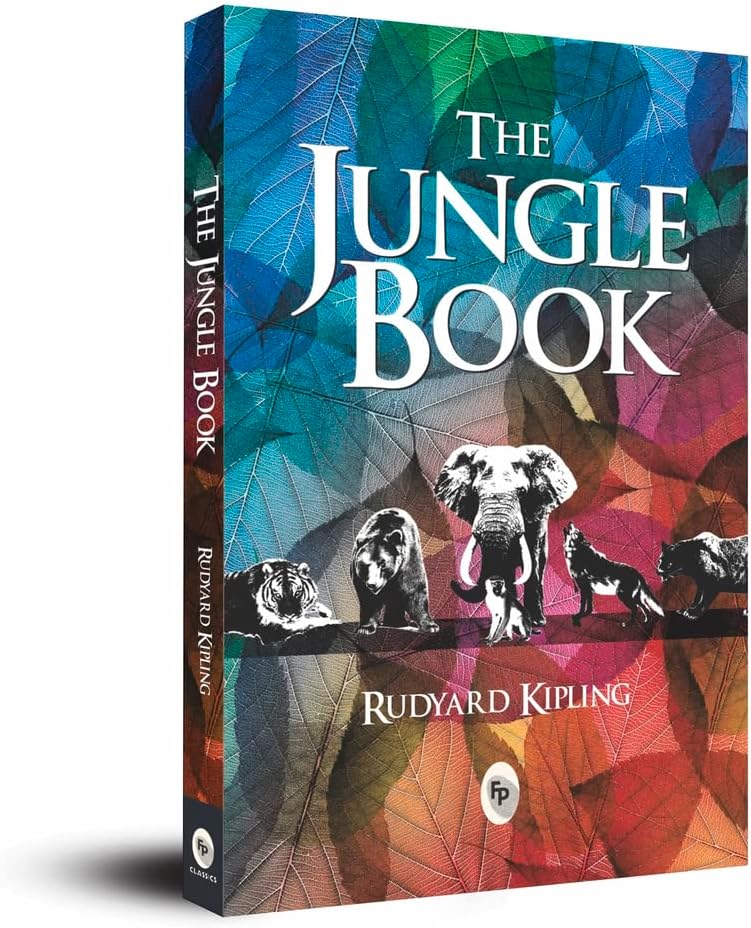
Jungle Book - Classics , The
Product ID: 580453044
Buy anything from 5,000+ international stores. One checkout price. No surprise fees. Join 2M+ shoppers on Desertcart.
Desertcart purchases this item on your behalf and handles shipping, customs, and support to South Africa.
Step into the heart of the Indian jungle and follow the unforgettable journey of Mowgli, the man-cub raised by wolves. The Jungle Book by Rudyard Kipling is a timeless collection of tales that explore the delicate balance between man and nature, filled with enchanting characters like Baloo the bear, Bagheera the panther, and the formidable Shere Khan. Rich with wisdom, action, and a deep respect for the wild, this classic is both a thrilling adventure and a profound reflection on identity, belonging, and the laws of the jungle. A magical blend of storytelling and moral lessons that captivates readers of all ages. A classic tale of courage and companionship. Explore the thrilling world of Rudyard Kipling’s classic jungle tales. Delve into timeless lessons of bravery, friendship, and identity. Discover iconic characters who have shaped generations of storytelling. Reflect on the harmony and conflict between man and nature. Perfect for young readers and literary enthusiasts alike. Themes Explored: Survival and the natural order Identity and self-discovery Friendship, loyalty, and mentorship The clash between civilization and the wild Courage and personal growth Review: Great movie - Love this movie, good quality, appreciate that it came with the slipcover Review: Kipling's Fables - "The Jungle Book" is a collection of stories (or fables) and songs/poems by Rudyard Kipling, and was originally published in 1894. The book consists of 7 short stories, separated by seven poems. The first three stories involve Mowgli, but the other four stories are not part of that series, nor do they all take place in the same jungle or any jungle at all. What these stories do have in common is the anthropomorphizing of animals as characters in these stories. As with all fables, these stories impart a moral message to the reader. "Mowgli's Brothers" is the first story in the book and was originally published in January of 1894 in "St. Nicholas Magazine". The story is about Mowgli being adopted by the wolf family which then raises him. With Shere Khan hunting in their area of the jungle, the Father Wolf (Akela) and the mother (Raksha) find and take in a human baby. At the wolf council, Baloo speaks for the cub, and Bagheera buys his life with a fresh kill. As time passes, Shere Khan turns most of the wolves against Mowgli, and they plot to overthrow Akela as the leader. Mowgli is then sent away from the wolves, vowing to return with Shere Khan's hide. This story is followed by the "Hunting-Song of the Seeonee Pack". "Kaa's Hunting" is a short study from March-April of 1894. It takes place sometime during the period covered in "Mowgli's Brothers", though it isn't mentioned in that story. It is a story about Mowgli's abduction by monkees, a.k.a the Bandar-log. Baloo and Bagheera, rescue Mowgli with the aid of Kaa. This story is followed by the "Road Song of the Bandar-Log". "Tiger! Tiger!" was a short story published in February of 1894 in magazines before being published in this collection. This covers the confrontation between Mowgli and Shere Khan. Mowgli has been kicked out of the jungle and has been adopted by a couple who believe he is Nathoo, the child that they lost. Mowgli tries to fit in, but he alienates himself from the others because he doesn't accept their misconceptions about the jungle. Shere Khan returns and is plotting to kill Mowgli, but he is warned by one of his wolf friends (Grey Brother) whom he goes to visit regularly. Mowgli comes up with a plan to kill Shere Khan, but when successful he gets into an argument with Buldeo, the hunger. Buldeo tries to take Shere Khan's skin, but Mowgli refuses to give it to him, so Buldeo turns the entire village against him and Mowgli finds himself an outcast of both the jungle and the village. This story is followed by "Mowgli's Song". "The White Seal" is a short story published in August of 1893. The story is about Kotick, a rare white-furred seal who spends his life searching for a home where seals will not be hunted by humans. He is isolated from the other seals by his goal, but he finally discovers a place that the Sea Cows know which is free from man. This story is followed by "Lukannon". "Rikki-Tikki-Tavi" is a story from November of 1893. In this story an English family save a young mongoose (Rikki Tikki) who becomes their pet. Rikki Tikki first saves the families young boy Teddy from a dust brown snakeling. Rikki Tikki takes to patrolling the house while the family sleeps, and it is during this that he is warned by Chuchundra that there are two cobras (Nag and Nagaina) that are planning to kill the family. Rikki Tikki first takes on Nag, waking the father who kills Nag. Nagaina then swears vengeance, but Rikki Tikki gets help from Darzee (a tailor bird) and locates Nagainaj's nest and then uses the eggs to distract Nagaina to save Teddy again. This story is followed by "Darzee's Chant". "Toomai of the Elephants" is a short story from the December of 1893. In this story little Toomai is told that he cannot be an elephant handler unless he sees the dance of the elephants. When the great elephant Kala Nag hears the call of the elephant from far off in the jungle, he goes to find the elephants, taking little Toomai with him. This story is followed y "Shiv and the Grasshopper". "Her Majesty's Servants" was originally published in March of 1894. This story is about the various animals used to support Her Majesty's armed forces in India. The animals discuss their roles in the army, each taking pride in the function they perform. This is followed by "Parade-Song of the Camp Animals" which closes out the book. This is a good collection of short stories, though there is a definite variability in the quality, and of course they don't all take place in the jungle. Rudyard Kipling wrote poems, short stories, and novels. Having lived in India, England, and the United States, and also spent a fair amount of time in South Africa. He drew on the rich cultural history that he enjoyed to create some wonderful tales. He remains one of the best known writers of the late 19th and early 20th centuries. "The Jungle Book" is one of his best known works, though most know it through films which do not accurately represent the stories within. It blends his short fiction with some of his poems, but I find it a bit too uneven to give it five-stars.


| Best Sellers Rank | #1,307,163 in Books ( See Top 100 in Books ) #37 in Indian Literary Criticism #995 in Coming of Age Fiction (Books) #1,216 in Classic Literature & Fiction |
| Customer Reviews | 4.2 out of 5 stars 9,895 Reviews |
J**A
Great movie
Love this movie, good quality, appreciate that it came with the slipcover
D**2
Kipling's Fables
"The Jungle Book" is a collection of stories (or fables) and songs/poems by Rudyard Kipling, and was originally published in 1894. The book consists of 7 short stories, separated by seven poems. The first three stories involve Mowgli, but the other four stories are not part of that series, nor do they all take place in the same jungle or any jungle at all. What these stories do have in common is the anthropomorphizing of animals as characters in these stories. As with all fables, these stories impart a moral message to the reader. "Mowgli's Brothers" is the first story in the book and was originally published in January of 1894 in "St. Nicholas Magazine". The story is about Mowgli being adopted by the wolf family which then raises him. With Shere Khan hunting in their area of the jungle, the Father Wolf (Akela) and the mother (Raksha) find and take in a human baby. At the wolf council, Baloo speaks for the cub, and Bagheera buys his life with a fresh kill. As time passes, Shere Khan turns most of the wolves against Mowgli, and they plot to overthrow Akela as the leader. Mowgli is then sent away from the wolves, vowing to return with Shere Khan's hide. This story is followed by the "Hunting-Song of the Seeonee Pack". "Kaa's Hunting" is a short study from March-April of 1894. It takes place sometime during the period covered in "Mowgli's Brothers", though it isn't mentioned in that story. It is a story about Mowgli's abduction by monkees, a.k.a the Bandar-log. Baloo and Bagheera, rescue Mowgli with the aid of Kaa. This story is followed by the "Road Song of the Bandar-Log". "Tiger! Tiger!" was a short story published in February of 1894 in magazines before being published in this collection. This covers the confrontation between Mowgli and Shere Khan. Mowgli has been kicked out of the jungle and has been adopted by a couple who believe he is Nathoo, the child that they lost. Mowgli tries to fit in, but he alienates himself from the others because he doesn't accept their misconceptions about the jungle. Shere Khan returns and is plotting to kill Mowgli, but he is warned by one of his wolf friends (Grey Brother) whom he goes to visit regularly. Mowgli comes up with a plan to kill Shere Khan, but when successful he gets into an argument with Buldeo, the hunger. Buldeo tries to take Shere Khan's skin, but Mowgli refuses to give it to him, so Buldeo turns the entire village against him and Mowgli finds himself an outcast of both the jungle and the village. This story is followed by "Mowgli's Song". "The White Seal" is a short story published in August of 1893. The story is about Kotick, a rare white-furred seal who spends his life searching for a home where seals will not be hunted by humans. He is isolated from the other seals by his goal, but he finally discovers a place that the Sea Cows know which is free from man. This story is followed by "Lukannon". "Rikki-Tikki-Tavi" is a story from November of 1893. In this story an English family save a young mongoose (Rikki Tikki) who becomes their pet. Rikki Tikki first saves the families young boy Teddy from a dust brown snakeling. Rikki Tikki takes to patrolling the house while the family sleeps, and it is during this that he is warned by Chuchundra that there are two cobras (Nag and Nagaina) that are planning to kill the family. Rikki Tikki first takes on Nag, waking the father who kills Nag. Nagaina then swears vengeance, but Rikki Tikki gets help from Darzee (a tailor bird) and locates Nagainaj's nest and then uses the eggs to distract Nagaina to save Teddy again. This story is followed by "Darzee's Chant". "Toomai of the Elephants" is a short story from the December of 1893. In this story little Toomai is told that he cannot be an elephant handler unless he sees the dance of the elephants. When the great elephant Kala Nag hears the call of the elephant from far off in the jungle, he goes to find the elephants, taking little Toomai with him. This story is followed y "Shiv and the Grasshopper". "Her Majesty's Servants" was originally published in March of 1894. This story is about the various animals used to support Her Majesty's armed forces in India. The animals discuss their roles in the army, each taking pride in the function they perform. This is followed by "Parade-Song of the Camp Animals" which closes out the book. This is a good collection of short stories, though there is a definite variability in the quality, and of course they don't all take place in the jungle. Rudyard Kipling wrote poems, short stories, and novels. Having lived in India, England, and the United States, and also spent a fair amount of time in South Africa. He drew on the rich cultural history that he enjoyed to create some wonderful tales. He remains one of the best known writers of the late 19th and early 20th centuries. "The Jungle Book" is one of his best known works, though most know it through films which do not accurately represent the stories within. It blends his short fiction with some of his poems, but I find it a bit too uneven to give it five-stars.
T**.
Classic for Children, Classic for Adults, Classic Influence on later writers
This collection is probably the single best starting place for reading Kipling, especially for younger or teen readers (though the very youngest would probably enjoy his _Just So Stories_ more). These stories are great reads, enjoyable by all ages. Fans of the movie will find a more complex work here -- not "darker," but more ambiguous; the three stories from this collection that have generally been adapted into other media, and that most readers think of when they think of "The Jungle Book", focus on outcast human infant, Mowgli, who is abandoned as an infant in the jungle and raised by wolves, and primarily tell the story of his search for a "place" within the wolf pack, the Jungle, and the human world, and his outsider status in all three realms. Perhaps because they focus almost entirely on the Indian jungle, or perhaps because they're aimed at children, these stories are also largely free of the undertone (overtone?) of imperialism that runs through much of Kipling's work for adults. It has, of course, been massively influential on later writers, from Edgar Rice Burrough's _Tarzan_ to Neil Gaiman's _The Graveyard Book_. The various morals contained within the "Mowgli" stories were also taken as a motivational book within the Scouting movement (reading this helped me understand why I had to memorize "Akela" when I was a cub scout). While only three stories in this collection focus on Mowgli, Kipling did write a second collection, "The Second Jungle Book," which is almost entirely comprised of Mowgli stories, and which I would highly recommend if you like these tales. If you want to read more of Kipling's work for adults, I'd recommend either "The Man Who Would be King" or the short story collection "Plain Tales from the Hills," both of which should be available for free online. As to formatting of this kindle edition: there are blocks of Kipling's poetry in between the stories, some of which was difficult to read as the formatting had not carried over well to this Kindle edition. Not a critical issue, but Kipling's poetry is excellent and the formatting errors were annoying.
S**K
Collection of Colonialism and Jungle Stories
This is the first work I’ve read by Kipling. I thought/assumed it was a novel, but it’s more of a random collection of stories. I took a star off (perhaps unfairly) for that. The second star came off because while each story has merit, and intrigued me as I slid into these worlds, the plots can be random and end abruptly. However, what I love about story is character and Kipling could bring to life a wild boy or mongoose with equal skill. The first story is about Mowgli the boy taken by a tiger from his village and raised by wolves. Kipling’s insight into India during the time of his life is a pleasure to read, except when occasional painful truths from the past glare out (like an occasional racist take). Even though I haven’t read Kipling before, these stories weren’t unfamiliar. Of course I recognized Mowgli and Baloo. I liked that the savagery of the jungle wasn’t glossed over like in the Disney version. For instance Baloo beats on Mowgli—it strikes me as a more truthful version of life in the jungle. The story of Rikki Tikki Tavi was also familiar although it must have been something from childhood because I can’t place where I heard it before. The story of the mongoose is delightful, as is the elephant tale. I loved Kipling’s insight into the intelligence of elephants! Reading The Jungle Book made me curious about Kipling’s other works, some of which make me even more uncomfortable (both If and especially White Man’s Burden). I’m curious now to read the Just So Stories because we’re all a product of the times we live in and it serves no purpose to judge based on our timeline. If we do we lose the chance to learn from the past.
S**R
A beautiful edition
I love Ingpen's work with Sterling Illustrated Classics. This edition of The Jungle Book is going to be my daughter's literature book next year (3rd grade, 9 years old). This is our third volume illustrated by Ingpen. I intend to add as many of them as I can find to my kids' permanent collections. Kipling's original jungle stories were published as serials in a magazine. They were later collected into The Jungle Book, Books 1 and 2. I have four copies of The Jungle Book, and they each have a different selection of stories in them! The Mowgli stories that most people are familiar with - from his early life until he leaves the jungle - make up most of Book 1. Each story was also published with a poem. This edition has all of the original stories from Book 1 and the accompanying poetry. A couple commenters have called the pictures "too graphic." This is such a personal distinction that I can't really comment, other than to say that I will hand the book off to my daighter with no concern. There are plenty of drawings of Mowgli that show half or all of his naked booty. There is a picture of him tanning Shere Khan's hide. There is a picture of the Indian god Shiv. There are two scenes of animals fighting - Baloo being attacked by monkeys, and Rikki Tikki Tavi attacking a cobra. There is no gore that I noticed, nor any particularly frightening or violent images. The books itself seems like good quality - the paper is thick, the binding is tight, the printing is crisp, and there is a sewn-in ribbon bookmark. The Wind in the Willows has held up nicely to regular, light use during school time. The two-page illustrated spreads are especially beautiful. The pictures have a very true-life feel; they aren't cartoonish at all. On the other hand, I have wondered if such so many beautifully detailed illustrations prevent the imagination from forming it's own pictures. Overall, we love the volumes that we have so far, and we look forward to collecting more of them.
R**.
Exotic and masterly jewel of oriental fulgor. (AmazonClassics edition)
I don't know if the India that Kipling transmits is the India of his time. But it's a meaningless question. Art, with time, remains more real than the debris left by history: we love and know more about Don Quixote than Charles V. And so the India of Kipling is totally real to me, as are my Indian friends. Except that in Kipling with a touch of the British spirit of its time to, not only control the world, but to make it theirs. If you read the fiction of most of writers from the former countries of the Spanish Empire you will notice that, despite centuries of ancestors living there, they write about nature and natives as if they were something terrible and alien; Kipling instead embrace, and makes us embrace, the whole of India with deep love. Although Disney movies could make you think otherwise, this is a unique book of tales and songs with different protagonists, mostly animals, and certainly not only Mowgli. An exotic book as Bollywood movies are today, with their stories and their dances in between. I loved so much the descriptions of Bagheera, a sensuous shadow of velvet. The jungle so dense and so old. The ocean and the wars to survive in "The white seal." Conflicts fueled by familiar bonds in "Rikki-Tikki-Tavi," a tale in which I don't think there is really an enemy. The almost supernatural call in "Toomai of the Elephants." The last one, "Her Majesty's servants", I consider it more comical and maybe satirical. It was nice, but I didn't liked so much as the rest. This AmazonClassics Edition has X-Ray, although when I consult the entry for Rann the kite, it gives me instead the description of a place instead of the character. Also, with many exotic terms, some of them are not explained in the X-Ray section. Maybe they are evident for most of the readers but I would liked to have a bit more data. In the end there is a short biography and that's all. There is no intermediary to spoil the fun, with introductions or studies, to read this great book that you can enjoy and learn at any age.
S**N
Would have been five-star if not for one missing piece.
Phenomenal recording and brilliant reading. I searched through dozens of audios of The Jungle Book and this is now my definitive version. Patrick Tull did an incredible job, with perfect inflections and masterful interpretations of the text, both poetry and prose, and never saddled each character with its own "voice" (other than as delineated already by Kipling's dialog) like so many others did (too many readers were howling, growling, hissing, etc when reading for the various animals. Some listeners might enjoy this but to me it is distracting and I am thankful Tull did not.) I docked one star for one reason: although this title claims to be unabridged, and is indeed the closest one to unabridged I have been able to find, I did notice one instance where last several paragraphs of The King's Ankus are missing. The story ends in a logical place, but rather abruptly, and it made me wonder if there might be text missing in other stories that I simply did not know well enough to notice. It was extremely annoying, in an otherwise perfect reading and in a product advertised as unabridged, to have such a large portion edited out. In entirety, though, the exceptional quality of this recording makes the omission forgiveable. This set will go down in my family favorites permanently. Even my young kids love it, justifying my belief that it is not necessary to water down classic literature to appeal to youngsters. Skip the "storyteller's" version of The Jungle Book and spring for the real thing. Kipling's language should be enjoyed as intended.
S**N
What a great story! I just saw the movie and the book has so much more detail
This is a wonderful all time story which had been wonderful to learn once again soon after being raised with happy memories of the story and movie. I really like the numerous heroes and the descriptive details of the interactions and also of the forest establishing the phase of the more immersive experience. This really is a terrific way to enterprise in to a fantastic tale to seize the audience of various years. I'd advise this to friends and family that are in need of this kind of product. I am just less than no burden to give a positive evaluation or ranking and get received no bonuses or rewards for accomplishing this. I truly do not work with any brand names or advertising firms. My only goal is usually to emphasize drawbacks and features which i may wish to understand about like a customer, not buzz the merchandise for the company to enhance income. I look at the accuracy and reliability of your outline and shown features, after which increase details and descriptions regarding the merchandise and my makes use of of this during my assessment. These reviews are helpful to others as I would like an insight as well on items that I would like to purchase but am unsure of its positive features as well as its negative features. That is i hope. If you have enjoyed them, please mark yes for my comments being helpful. I'm only a standard Amazon online marketplace consumer who got this product, I did so have this item at a discount or free of charge in exchange for my sincere overview,evaluation and feedback, and remarks gathered from actual use and experiences with all the object.
S**A
Worth it
Good product and my toddler is enjoying
M**A
A Classic Worth Reading
The Jungle Book is a timeless adventure filled with memorable characters like Mowgli, Baloo, and Bagheera. Kipling's storytelling is rich and imaginative, making it enjoyable for both kids and adults. A must-have for any classic literature collection!
M**O
¡Amo esta película!😍
Me la regalaron en VHS cuando era niño y desde entonces la amo, mi película favorita de Disney. Luego me compré la edición especial en dvd. No pude resistir y me compré ahora el bluray.😆 No llegó con cartoncito (ni sé como se llama) que va arriba de la caja de plástico, pero a mí no me importa eso. 10/10 😎👍
A**N
Schön zum Lesen und Hinstellen
Ich muss wirklich sagen, ich war zunächst sehr skeptisch ob ich das Buch wirklich lesen sollte, aber da es so schön aussieht habe ich mich dann entschieden es zu kaufen. Das Dschungel-Buch ist ein zeitloser Klassiker, der nicht nur für Kinder schön ist. Die Geschichte unterscheidet sich sehr von dem alten Disney Film, den die eigentliche "Mogli-Geschichte" spielt nur eine kleine Rolle. Was diese Geschichte so einzigartig macht, ist die Unschuld die hinter den einzigen Handlungen steckt, so werden Menschen von den Tieren in Ruhe gelassen, weil diese keine Krallen haben um sich zu wehren und das wäre ja unfair. Alles in Allem hat sich der Kauf wirklich gelohnt, da das Buch sowohl zum Lesen als auch zum Ansehen sehr schön ist.
M**.
Lovely book
Beautiful version of this Rudyard Kipling classic. The colouring of the cover is a little different than pictured and there is less colouring in than I had expected but in all a great book.
Trustpilot
2 days ago
4 days ago