
Desertcart purchases this item on your behalf and handles shipping, customs, and support to South Africa.
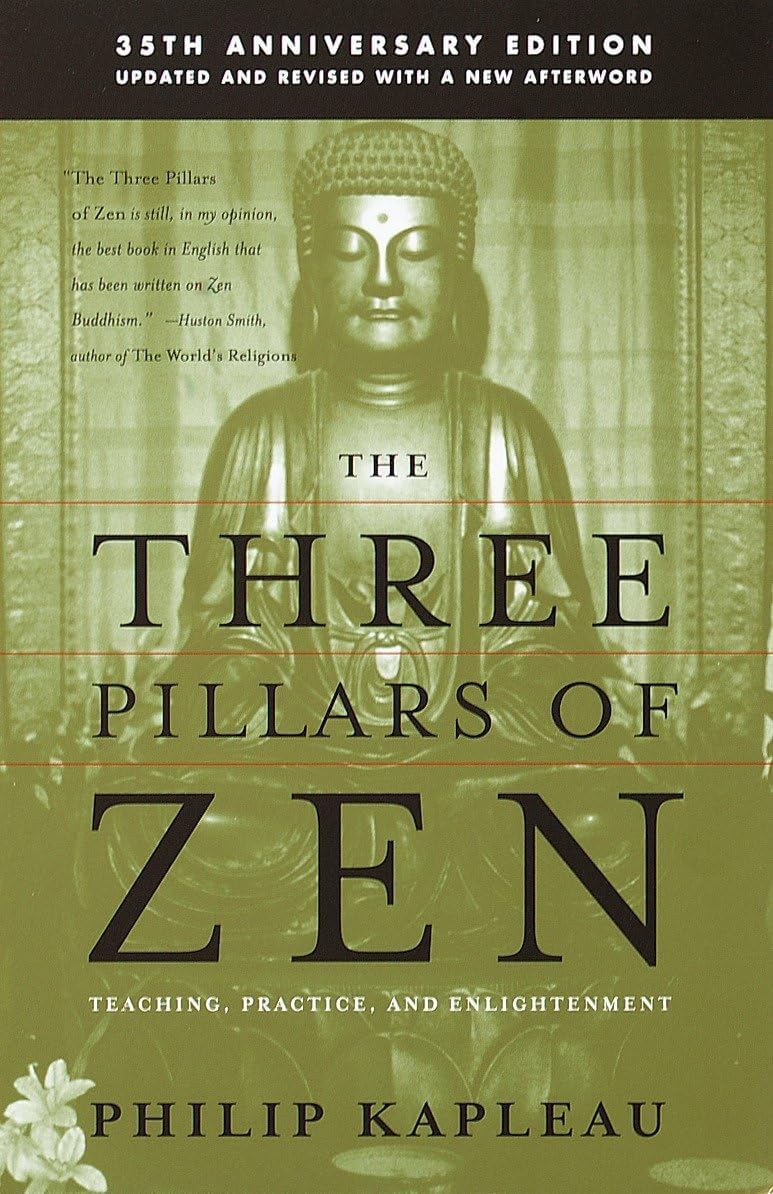
Exploring the three pillars of Zen—teaching, practice, and enlightenment—the founder of one of the most influential Zen centers in the U.S. gives readers invaluable advice on how to develop their own practices. "The Three Pillars of Zen has been the wellspring of Zen teachings for practitioners in the West, remaining as vital and fresh today as it was when it was originally published. It truly ranks among the timeless classics of Zen Buddhism." —Roshi John Daido Loori, Abbot, Zen Mountain Monastery Roshi Philip Kapleau, founder of the eminent Rochester Zen Center, offers a personal account of his own experiences as a student and teacher, and in so doing presents a comprehensive overview of Zen Buddhism that includes practical guidance, insights from Zen masters, integration of Eastern and Western perspectives, and inspiration for personal transformation. A moving and eye-opening work in eleven sections, including Yasunati-roshi's Introductory Lectures on Zen Training and Commentary on the Koan Mu, The Three Pillars of Zen is the definitive introduction to the history and discipline of Zen. Revised and updated, this 35th anniversary edition features new illustrations and photographs and a new afterword by Sensei Bodhin Kjolhede (who succeeded Kapleau as spiritual director of the Rochester Zen Center), in addition to the following features: • Foreword by Huston Smith, Professor of Philosophy at MIT • Preface by Philip Kapleau • Notes on the Anniversary Edition by Kenneth Kraft • Notes on Zen Vocabulary and Buddhist Doctrine Review: Zen Buddhist Practice - The editor, an American Zen Buddhist teacher, presents a collection of personal experiences, letters, and lecture transcriptions to show the reality of Zen practice. This is different from many other books on Zen, which instead focus on the philosophical side of Zen rather than its praxis. There are three main features of Zen practice -- zazen (meditation), teisho (formal commentary on Buddhist teachings) and dokusan (personal meeting with the master (roshi)). Zazen is at the heart of Zen practice though, as it is through meditation that one is expected to focus the mind and break through illusions. Zazen is often coupled with koans, in particular koans centering around the concept of "Mu" (nothingness). Through zazen and koan practice, the individual aims to eliminate the primary illusion -- the illusion of duality -- and come to realize the oneness of all beings and time. Interestingly for me, there is not one stage of enlightenment. Rather, enlightenment is a process, such that individuals can be "more" enlightened than others. I found the stories of individuals attaining enlightenment to be simultaneously an interesting and skepticism-inducing section of the book. Several of the stories come from Americans who seem interested, in addition to Zen, in various other forms of "woo": yoga, Jungian psychology, birth trauma, etc. This makes me skeptical of the veracity and depth of their "enlightenment", a skepticism that is only heightened by the backdoor conceit that individuals have different levels of enlightenment. The book is well-written and an interesting introduction to Zen Buddhist practice, especially how it was understood by Americans in the early-1960s. Review: One of the best book on Zen for Westerners - This is on of those books that were great for its time and still informs and illumines today. A timeless classic. Not only does it go thorough the Buddhist Mahayana teachings from the Zen school but gives practice methods and tips for the Un-monastaried and Un-sanghaed practitioner. If you truly want a beginners work which is shorter and to the point but in the same vein buy The Rinzai Way by Meidro Moore. Both works are very well written, give great advice and a large helping hand on the Zen path. Note: Soto Zennist's have a tendency to hate both books as they are "critical" of those in the Soto Zen way who misunderstand the phrase by awakened masters who have said "sitting is just it," like Dogen. They account for the lower star ratings. Both books go on to mention the correct understanding from the practice/awaking viewpoint of the true practice of Shikan-taza. So dont let bias form those who do not comprehend fully the depth of the dharma from buying either of these two books.


| Best Sellers Rank | #36,086 in Books ( See Top 100 in Books ) #33 in Zen Spirituality #33 in Zen Philosophy (Books) #83 in Religious Philosophy (Books) |
| Customer Reviews | 4.6 out of 5 stars 916 Reviews |
C**S
Zen Buddhist Practice
The editor, an American Zen Buddhist teacher, presents a collection of personal experiences, letters, and lecture transcriptions to show the reality of Zen practice. This is different from many other books on Zen, which instead focus on the philosophical side of Zen rather than its praxis. There are three main features of Zen practice -- zazen (meditation), teisho (formal commentary on Buddhist teachings) and dokusan (personal meeting with the master (roshi)). Zazen is at the heart of Zen practice though, as it is through meditation that one is expected to focus the mind and break through illusions. Zazen is often coupled with koans, in particular koans centering around the concept of "Mu" (nothingness). Through zazen and koan practice, the individual aims to eliminate the primary illusion -- the illusion of duality -- and come to realize the oneness of all beings and time. Interestingly for me, there is not one stage of enlightenment. Rather, enlightenment is a process, such that individuals can be "more" enlightened than others. I found the stories of individuals attaining enlightenment to be simultaneously an interesting and skepticism-inducing section of the book. Several of the stories come from Americans who seem interested, in addition to Zen, in various other forms of "woo": yoga, Jungian psychology, birth trauma, etc. This makes me skeptical of the veracity and depth of their "enlightenment", a skepticism that is only heightened by the backdoor conceit that individuals have different levels of enlightenment. The book is well-written and an interesting introduction to Zen Buddhist practice, especially how it was understood by Americans in the early-1960s.
C**T
One of the best book on Zen for Westerners
This is on of those books that were great for its time and still informs and illumines today. A timeless classic. Not only does it go thorough the Buddhist Mahayana teachings from the Zen school but gives practice methods and tips for the Un-monastaried and Un-sanghaed practitioner. If you truly want a beginners work which is shorter and to the point but in the same vein buy The Rinzai Way by Meidro Moore. Both works are very well written, give great advice and a large helping hand on the Zen path. Note: Soto Zennist's have a tendency to hate both books as they are "critical" of those in the Soto Zen way who misunderstand the phrase by awakened masters who have said "sitting is just it," like Dogen. They account for the lower star ratings. Both books go on to mention the correct understanding from the practice/awaking viewpoint of the true practice of Shikan-taza. So dont let bias form those who do not comprehend fully the depth of the dharma from buying either of these two books.
N**L
now i know what zen actually is in practice!!!!
Ive been reading about zen for over ten years and never had a real idea of exactly how zen is practiced! The ancient texts are generally specific talks on the idea of Zen or seemingly odd conversations and actions. Neither of which give a clear picture of zen in action. This book clearly explains how zen is practiced and taught. It also gives modest instruction on meditation and koan study. With diagrams and detailed posture instructions. A really amazing thing is that it gives actual conversations (dokusan) between students and the roshi! Ive never seen these before. After reading these one understands how zen is practiced in sesshin. It also gives enlightenment experiences of practitioners. Also this lineage is both soto and rinzai which is really great because it displays the full arsenal of zen teachings without leaning to hard on just shikantaza or just koans. Oddly enough this makes this school unique but in reality the soto school used to teach more like this but for some reason decided to drop kensho focused koan study in the 1800's. I fully recommend this book ESPECIALLY as an intro to zen!!!
J**H
Comprehensive and Worthwhile ...
This is the third book I had read in my life on Zen; D.T. Suzuki's "Introduction to Zen Buddhism" was first, and Shunryu Suzuki's "Zen Mind, Beginner's Mind" was second ... followed years later by "Three Pillars". This is really a comprehensive overview of Zen history and practice, with unique and powerful stories of "normal people" achieving enlightenment (which has drawbacks as people new to Zen then have notions regarding what enlightenment "is") . As an "overview book" it's excellent! Ultimately I found Uchiyama Roshi's "Opening the Hand of Thought" (the 4th boon on Zen I read) more intuitively informative and ultimately the best "overview" book on Zen I have read). Over time I personally have come to feel much more aligned with the Soto Zen School, and Japanese Buddhism overall, preferring to sit Shikantaza, without an "object of meditation", and thus the most useful and most meaningful book has been "Opening the Hand of Thought" by Kosho Uchiyama, as well as works by Shohaku Okumura, Kodo Sawaki and Dogen Zenji. Kapleau's work is a Soto/Rinzai/Americanized version of Zen. Some minor issues for me have to do with the fact that Kapleau is credited with being the author, when he's really the editor or, at most, a co-author, and the the fact that, though Kapleau was authorized to teach Zen, he himself never received Dharma transmission or completed Koan study, but instead (in brief) really helped found "Western Zen", creating his own school and carrying on the Harada-Yasutani Lineage. This will likely not be a problem for most people, and Kapleau and his successors have made many contributions to Zen, especially in America. Lastly, all of this complaining about this work not being like Alan Watts is really ill informed; Watts was NOT a transmitted Zen teacher and didn't even practice Zazen. Do I love a lot of Watts' talks and books? Sure. But it has very little to do with actual Zen practice, Watts' work is really primarily philosophy. Also, Zen and drugs don't mix.
M**Y
Makes Sense to Me
Loved reading this book. Not only learning about Zen and best practices, but to be able to read actual stories of individuals just like you and me with their trials and transformative tribulations is sublime. I couldn't put this thing down. Spirituality is something that I've dabble with for sometime, but this book help motivate me to step it up a notch. I do think it helps that I'm from Rochester, NY and have recently moved back, which is where Philip's Zen center is located. Helps me frame things in my mind a little better. Anyways - highly recommended that you get yourself a copy or go check out the local library for one.
M**E
Three pillars
Great view into the eye of the Buddha
J**C
Good book in poor condition
Good book but came in poor condition.
B**B
Excellent overview of Zen Buddhism practice and philosophy.
I've taken my precepts and been an active practitioner of Soto Zen Buddhism for 5 years now. This is an ideal book if you are already involved in a Zen practice and want a deeper understanding of what the practice involves. It's a little dated in some places (or maybe that just depends on your temple and teacher), as it details some very early western student encounters with Zen. Overall, I have found it to be a wonderful resource and reference.
S**N
Absolute Empfehlung
Eines der besten Bücher über Buddhismus die ich je gelesen habe. Faszinierende Einblicke in die Praxis von Zen.
F**O
Un libro eccezionale
Come curioso e persona attratta dall'Oriente, questo è un libro che mi ha avvicinato molto al Buddismo Zen. Chiaro, con concetti ben spiegati, è una base per chiunque voglia avvicinarsi a questo modo di vivere e pensare.
P**Y
Great
A serious book that quietly rearranges your brain This isn’t a “light read before bed” kind of Zen book unless you enjoy existential awakenings at 2am. It’s deep, authentic, and incredibly well put together. The teachings feel real, grounded, and surprisingly practical.
B**Y
Good fresh book
Good
C**Z
A must have for me
Very interesting in regards to the philosophy and the practice of step to step how to meditate, interesting records of conversations student master and reports of people who attained enlightenment
Trustpilot
5 days ago
1 week ago