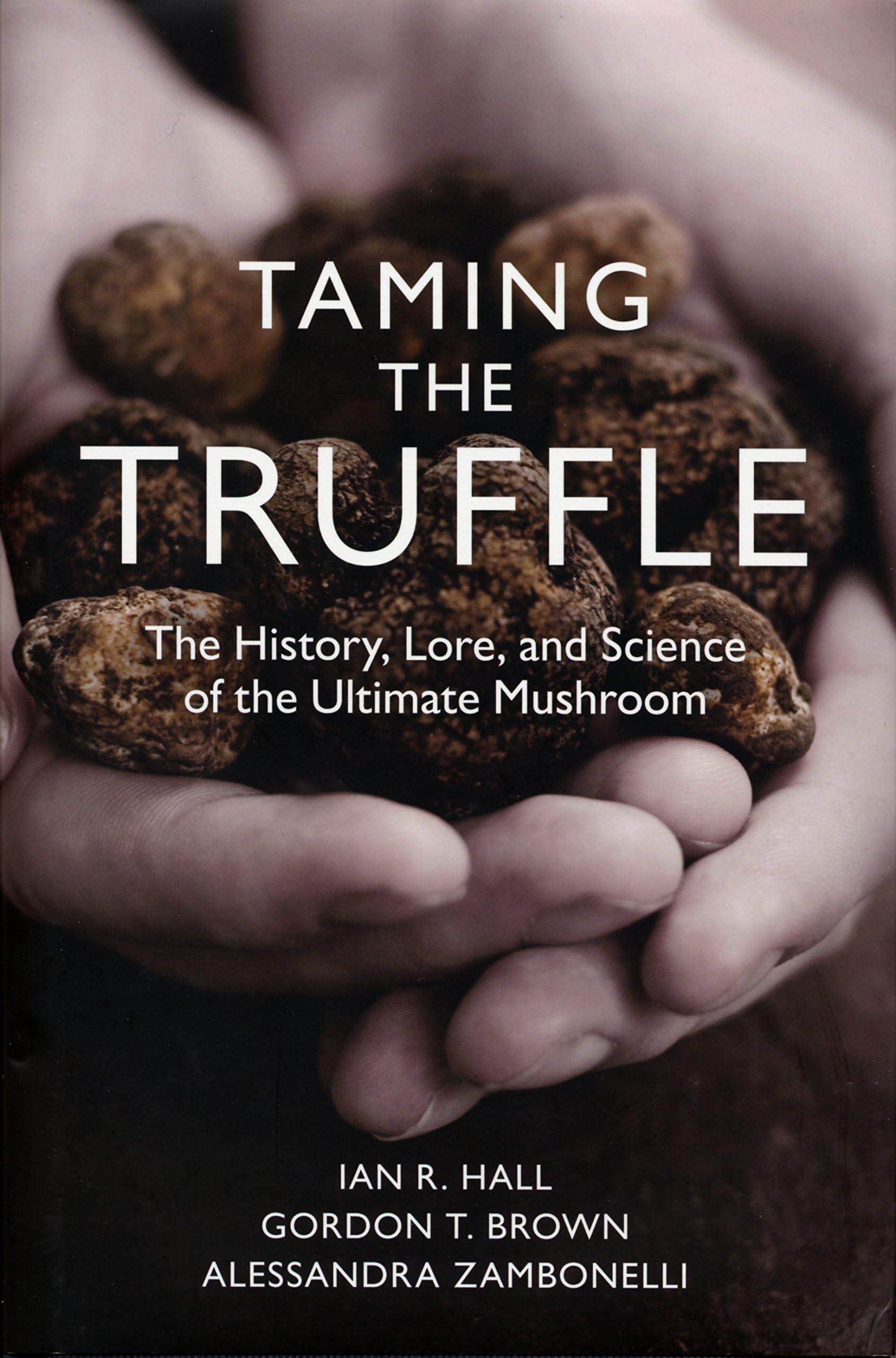
Taming the Truffle: The History, Lore, and Science of the Ultimate Mushroom
Product ID: 5130489
Desertcart purchases this item on your behalf and handles shipping, customs, and support to South Africa.
Whether the world's best truffles come from Piedmont or Périgord inspires impassioned debate, but the effects of dwindling supply and insatiable demand for the elusive mushroom are unquestionable: prices through the roof, intrigue and deception, and ever more intensive efforts to cultivate. As international mycologist Ian Hall and his colleagues have written, 'Attempts at taming the truffle, of ordering its growth and harvest, now span the globe, and there has been some success in unlocking the secrets of what French researchers have aptly referred to as la grande mystique ." The secrets of when, how, and where to collect truffles have been passed from generation to generation since ancient times, but artificial cultivation remains the holy grail. Here, in the most comprehensive practical treatment of the gastronomic treasure to date, the art and science of the high-stakes pursuit come together. This extensively illustrated volume brings the latest research and decades of experience to enthusiasts and professionals alike, with coverage of the leading truffle areas including France, Italy, Spain, and Asia, and the newcomers: Australia, New Zealand, and the United States. The authors leaven their enthusiasm and expertise with wry humor, exploring the history and newest techniques. They describe in detail the commercial species and their host plants, natural habitats, cultivation, and maintenance, pests and diseases, and harvesting with pigs, dogs, truffle flies, and even the electronic nose. Production in truffle plantations can begin after only three years, but often the rewards may take more than a decade. So there is plenty of time to read and prepare, and no better resource than this one. Review: ALMOST enough information to enable one to plant a truffiere - This is a superlative book: well written, nicely printed and bound, and with a reasonable price for the value. More particularly, it is THE definitive work, so far, as regards the black Perigord truffle (or tuber melanosporum) and the white Italian truffle (or tuber magnatum), not to mention the many world regional variants such as African desert truffles or Oregon native truffles. As the black truffle currently runs about $1,000.00 per pound, and the Italian white runs about $3,000.00 per pound, this book would obviously be of interest to anyone wanting a legal high cash crop. "Taming the Truffle" is, in addition, filled with fascinating information, not limited to such tidbits as the name of the French chef who first paired the Perigord truffle with foie gras, or the unsettling fact that in the 1970s, French scientists did such an inadequate job of isolating t. melanosporum spores that they mistakenly inoculated thousands of hectares of tree seedlings with the less valuable and more virulent t. brumale spore system, thus ruining France's attempts at restoring her indigenous truffieres. Most valuable, at least for the prospective grower, is that this book gives the clearest information that I have seen as to the terroir and growing conditions of t. melanosporum and t. magnatum, together with an exhaustive bibliography of just about everything written (popular or scientific) on the subject of truffles. This is not to say, however, that with this book, thousands of dollars worth of inoculated seedlings, and a few tons of calcium carbonate strewn on the ground, one will start digging up truffles in five to ten years. As the book points out in elaborate detail, the planting and care of a truffiere (or truffle farm) is a very knowledge intensive process, requiring an extensive practical experience in, among many other things, soil science, microbiology, mycology, arboriculture, agricultural management, plant pathology, and marketing. But this book does a better job than anyone else I've seen of indicating the problems involved and the knowledge and skill set necessary to start a working truffiere. While some reviewers have taken exception to the fact that the book does little to speak of U.S. truffieres, I look upon this as a feature, not a bug. The book's emphasis has been on the largely successful work of introducing truffle producing trees to Australia, Tasmania, and New Zealand. One could do far worse than the authors of "Taming the Truffle" have done. I do not see how they could have done any better than they have. Review: Highly Recommended (5 Diamond out of 5 stars) - What a superb literary work of art! This book is SO informative! I fancied myself well-updated on all things Truffle but this book had quite a bit of knowledge that I did NOT have prior to reading. Fascinating right down to what would otherwise be considered the "boring technical bits" - I just reread it for the fourth time. Highly suggested. 5 Diamond out of 5 stars (I believe restaurants are ranked beginning with standard stars, then up into the premium diamonds - this book deserves diamonds.)
| Best Sellers Rank | #320,408 in Books ( See Top 100 in Books ) #85 in Horticulture (Books) #132 in Mushrooms in Biological Sciences #290 in Vegetable Gardening |
| Customer Reviews | 4.8 out of 5 stars 90 Reviews |
B**T
ALMOST enough information to enable one to plant a truffiere
This is a superlative book: well written, nicely printed and bound, and with a reasonable price for the value. More particularly, it is THE definitive work, so far, as regards the black Perigord truffle (or tuber melanosporum) and the white Italian truffle (or tuber magnatum), not to mention the many world regional variants such as African desert truffles or Oregon native truffles. As the black truffle currently runs about $1,000.00 per pound, and the Italian white runs about $3,000.00 per pound, this book would obviously be of interest to anyone wanting a legal high cash crop. "Taming the Truffle" is, in addition, filled with fascinating information, not limited to such tidbits as the name of the French chef who first paired the Perigord truffle with foie gras, or the unsettling fact that in the 1970s, French scientists did such an inadequate job of isolating t. melanosporum spores that they mistakenly inoculated thousands of hectares of tree seedlings with the less valuable and more virulent t. brumale spore system, thus ruining France's attempts at restoring her indigenous truffieres. Most valuable, at least for the prospective grower, is that this book gives the clearest information that I have seen as to the terroir and growing conditions of t. melanosporum and t. magnatum, together with an exhaustive bibliography of just about everything written (popular or scientific) on the subject of truffles. This is not to say, however, that with this book, thousands of dollars worth of inoculated seedlings, and a few tons of calcium carbonate strewn on the ground, one will start digging up truffles in five to ten years. As the book points out in elaborate detail, the planting and care of a truffiere (or truffle farm) is a very knowledge intensive process, requiring an extensive practical experience in, among many other things, soil science, microbiology, mycology, arboriculture, agricultural management, plant pathology, and marketing. But this book does a better job than anyone else I've seen of indicating the problems involved and the knowledge and skill set necessary to start a working truffiere. While some reviewers have taken exception to the fact that the book does little to speak of U.S. truffieres, I look upon this as a feature, not a bug. The book's emphasis has been on the largely successful work of introducing truffle producing trees to Australia, Tasmania, and New Zealand. One could do far worse than the authors of "Taming the Truffle" have done. I do not see how they could have done any better than they have.
W**H
)
What a superb literary work of art! This book is SO informative! I fancied myself well-updated on all things Truffle but this book had quite a bit of knowledge that I did NOT have prior to reading. Fascinating right down to what would otherwise be considered the "boring technical bits" - I just reread it for the fourth time. Highly suggested. 5 Diamond out of 5 stars (I believe restaurants are ranked beginning with standard stars, then up into the premium diamonds - this book deserves diamonds.)
Y**.
Help to make truffle growing decision
This book have more then I could find from online search. Enough for me to decide if I can to go for growing truffles.There are charts and references to refer about truffle identification, host species, competing organisms, host planting site, climate requirement, planting and harvesting, and climate information of the successful truffleries around the world, so that I can have ideas if I could grow truffles in certain area. This is like a review of available information with necessary techniques described briefly. Not a protocol book like Molecular Cloning I edition, but I think people into this area should be able to find more detail protocols in the area of microbiology, molecular biology, plant tissue culture, and horticulture hand books.
J**S
If you are considering growing truffles, you need this book
I am an extension specialist who works with new crops. Truffles are one of the "hot new crops" that I answer questions about every week. I also maintain a small, young truffle orchard; it is not yet producing. There aren't many "truffle experts" in the U.S. right now. If you want to grow truffles, most of the information you get will be from the people who want to sell you the inoculated seedlings. The information from the agricultural extension system is still quite limited. So this is the book that I recommend to anyone who is considering growing truffles. Establishing a truffle orchard is expensive; this book is a small price to pay for valuable information on truffle biology, history, the industry, and cultivation around the world.
M**T
Taming The Truffle
This Truffle books\ is well done & a Handy Tool of Learning/Understanding & Lore.. A Beautifully done book exploring the History & Lore plus the need & process of Cultivating Truffles right now.
K**9
Good book
Everything I was hoping for!
J**E
Five Stars
Amazing, well write book. I would recommend it for anyone that wants to learn anything technical about truffles.
D**S
Great book very informative and a lot of depth into an area that has very little information
I have been trying to find information about truffels. This book seems to be a great place to start the quest into a little known area of farming. Lots of indepth ideas and many many things to think about.
J**N
Libro para estudiosos a las trufas
Libro para especialistas a la trufas de verdad, no a las de chocolate. Para lo epicúreos de la cocina y amantes de la naturaleza.
D**.
Trüffel Buch
Eines der absolut besten technischen Bücher über Trüffel, Biologie, Habitat und Anbau. Leider in Englisch, aber gut lesbar mit ein bisschen Übersetzerhilfe. Es gibt auf der Welt kein zweites solches Buch. Ich brauche es heute noch in meinen Trüffelkursen und empfehle es absolut, wenn man tiefer in die Welt der Trüffel eintauchen möchte.
T**T
Good book for Truffle newbies like myself
This is a great book for people like myself, who knows nothing about gardening or growing truffles, but have a great interest in doing so. The book is very detailed and covers a lot and includes a lot of good tips and advice. My only criticism is that I feel like it can go on for a bit too long about certain topics, I wish it would have to the point in certain places. But that’s minor stuff, and that’s just me personally, others might disagree with me on that. But overall great book, and would highly recommend
R**.
As discribed.
As discribed.
D**L
Very good book.
It has an intermediate level, suitable for beginners in the subject. It begins with a bit of history and characterization of the most popular truffles, to continue with the techniques to establish and maintain a truffiere.
Trustpilot
4 days ago
1 month ago