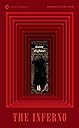
The Inferno (Signet Classics)
Product ID: 51271881
Desertcart purchases this item on your behalf and handles shipping, customs, and support to South Africa.
Belonging in the company of the works of Homer and Virgil, "The Inferno" is a moving human drama, a journey through the torment of Hell, an expression of the Middle Ages, and a protest against the ways in which men have thwarted the divine plan. Review: excellent, excellent - easy to read translation without losing poetry, great intro to each chapter, and excellent notes, recommend one hundred per cent Review: Divinely nasty - "Midway life's journey I was made aware/that I had strayed into a dark forest..." Those eerie words open the first cantica of Dante Alighieri's "Inferno," the most famous part of the legendary Divina Comedia. But the stuff going on here is anything but divine, as Dante explores the metaphorical and supernatural horrors of the inferno. The date is Good Friday of the year 1300, and Dante is lost in a creepy dark forest, being assaulted by a trio of beasts who symbolize his own sins. But suddenly he is rescued ("Not man; man I once was") by the legendary poet Virgil, who takes the despondent Dante under his wing -- and down into Hell. But this isn't a straightforward hell of flames and dancing devils. Instead, it's a multi-tiered carnival of horrors, where different sins are punished with different means. Opportunists are forever stung by insects, the lustful are trapped in a storm, the greedy are forced to battle against each other, and the violent lie in a river of boiling blood, are transformed into thorn bushes, and are trapped on a volcanic desert. If nothing else makes you feel like being good, then "The Inferno" might change your mind. The author loads up his "Inferno" with every kind of disgusting, grotesque punishment that you can imagine -- and it's all wrapped up in an allegorical journey of humankind's redemption, not to mention dissing the politics of Italy and Florence. Along with Virgil -- author of the "Aeneid" -- Dante peppered his Inferno with Greek myth and symbolism. Like the Greek underworld, different punishments await different sins; what's more, there are also appearances by harpies, centaurs, Cerberus and the god Pluto. But the sinners are mostly Dante's contemporaries, from corrupt popes to soldiers. And Dante's skill as a writer can't be denied -- the grotesque punishments are enough to make your skin crawl ("Fixed in the slime, groan they, 'We were sullen and wroth...'"), and the grand finale is Satan himself, with legendary traitors Brutus, Cassius and Judas sitting in his mouths. (Yes, I said MOUTHS, not "mouth") More impressive still is his ability to weave the poetry out of symbolism and allegory, without it ever seeming preachy or annoying. Even pre-hell, we have a lion, a leopard and a wolf, which symbolize different sins, and a dark forest that indicates suicidal thoughts. And the punishments themselves usually reflect the person's flaws, such as false prophets having their heads twisted around so they can only see what's behind them. Wicked sense of humor. Dante's vivid writing and wildly imaginative "inferno" makes this the most fascinating, compelling volume of the Divine Comedy. Never fun, but always spellbinding and complicated.
| Best Sellers Rank | 181,029 in Books ( See Top 100 in Books ) 48 in Italian Poetry (Books) 349 in Classical, Early & Medieval Poetry |
| Customer Reviews | 4.5 out of 5 stars 2,209 Reviews |
J**H
excellent, excellent
easy to read translation without losing poetry, great intro to each chapter, and excellent notes, recommend one hundred per cent
E**S
Divinely nasty
"Midway life's journey I was made aware/that I had strayed into a dark forest..." Those eerie words open the first cantica of Dante Alighieri's "Inferno," the most famous part of the legendary Divina Comedia. But the stuff going on here is anything but divine, as Dante explores the metaphorical and supernatural horrors of the inferno. The date is Good Friday of the year 1300, and Dante is lost in a creepy dark forest, being assaulted by a trio of beasts who symbolize his own sins. But suddenly he is rescued ("Not man; man I once was") by the legendary poet Virgil, who takes the despondent Dante under his wing -- and down into Hell. But this isn't a straightforward hell of flames and dancing devils. Instead, it's a multi-tiered carnival of horrors, where different sins are punished with different means. Opportunists are forever stung by insects, the lustful are trapped in a storm, the greedy are forced to battle against each other, and the violent lie in a river of boiling blood, are transformed into thorn bushes, and are trapped on a volcanic desert. If nothing else makes you feel like being good, then "The Inferno" might change your mind. The author loads up his "Inferno" with every kind of disgusting, grotesque punishment that you can imagine -- and it's all wrapped up in an allegorical journey of humankind's redemption, not to mention dissing the politics of Italy and Florence. Along with Virgil -- author of the "Aeneid" -- Dante peppered his Inferno with Greek myth and symbolism. Like the Greek underworld, different punishments await different sins; what's more, there are also appearances by harpies, centaurs, Cerberus and the god Pluto. But the sinners are mostly Dante's contemporaries, from corrupt popes to soldiers. And Dante's skill as a writer can't be denied -- the grotesque punishments are enough to make your skin crawl ("Fixed in the slime, groan they, 'We were sullen and wroth...'"), and the grand finale is Satan himself, with legendary traitors Brutus, Cassius and Judas sitting in his mouths. (Yes, I said MOUTHS, not "mouth") More impressive still is his ability to weave the poetry out of symbolism and allegory, without it ever seeming preachy or annoying. Even pre-hell, we have a lion, a leopard and a wolf, which symbolize different sins, and a dark forest that indicates suicidal thoughts. And the punishments themselves usually reflect the person's flaws, such as false prophets having their heads twisted around so they can only see what's behind them. Wicked sense of humor. Dante's vivid writing and wildly imaginative "inferno" makes this the most fascinating, compelling volume of the Divine Comedy. Never fun, but always spellbinding and complicated.
M**N
dante - inferno
A brilliant classic, the translation is excellent as are the notes which tke up almost half the book. This title deserves a place on any bookshelf, it gives a feeling of the 13th century and the heresy that dante must have been accused of.
L**Y
Careful which translation you actually order
I wanted the Ciardi translation of Inferno, published in the 1960s, of which I have a dodgy downloaded copy. I found his translation lucid, uncontrived, and accessible, and his notes informative and even amusing at times, when he apologises for the shortcomings of his own work. However when I went to buy the paperback edition I did not realise I was ordering the translation by Sibbald which unlike the Ciardi is still in print. I am not as keen on Sibbald's take, as translation seems a little strained and contrived in places, but I am particularly unimpressed by this edition. It is cramped, with small typeface and tiny margins, as if the publisher wanted to save on paper. The text is laid out in lumps, with no separation of each three-line rhyme -- however the text is forced apart here and there to allow for inserted footnote numbers. And on some pages, those footnotes take up half the page. It really is a very ugly layout that makes it hard to savour the text or even the notes; Dante's masterpiece deserves better treatment. Nothing wrong with the footnotes themselves, which are crammed with insight and fascinating background information, but really, this is the sort of edition that a reluctant student on a tight budget would buy. I'd dig around for a second hand copy of Ciardi if was me (and in fact I have.)
L**N
Check for yourself
Just to say that Ray Thompson's review above does not represent the translation which is being sold on this page. Check for yourself using the 'search inside this book' function! The translation in the book is much more modern and comprehensible. I have not yet read it (note: I was obliged to give a stars rating anyway), but will order it as it looks very readable.
A**N
the translation is super, quality problems with the edition
Quality problems with the edition. A few html tags just stuck in the text for no apparent reason - font tags. Once again one has to break out Sigil to get a proper quality edition. The translation however is the only decent one in English. The choice of two rimes and not terza rima, which is impossible to do in English without compromises, is obviously right.
S**B
A Rewarding Read
This Ciardi translation is very readable and maintains the meter and rhyme scheme of the original triplet form. The introductions to each Canto are very helpful and the notes at the end of each canto are excellent. For the non-scholar who still wants to go a little deeper than the poetry at it's face value, this is a rewarding read.
D**S
Brilliant.
A terrific translation. Before each canto there is a summary of the events and at the end of each canto there are notes about certain words, themes, people, choices and history to better assist people in understanding the brilliance of the divine comedy. This is definitly the best copy of The Inferno that I have found so far.
M**O
Interesting
“He will not wake again until the angel trumpet sounds the day on which the host shall come to judge all men.” As someone whos not fond of poems or poetry, I honestly had a hard time reading this. 🥹 An interesting take on Hell through Dante’s imagination, political satire, Christianity and mostly Greek mythology. It was frightening and thrilling, and there were witty moments too. Though I didn’t have extensive knowledge of the historical references from before Dante’s time, it was hard for me to comprehend the context behind them. Through John Ciardi’s notes, I got to know all these random names. But it was brilliantly put together and I suppose he really dug deeper!
A**F
Great translation, great simple printing and binding
Signet edition: Great translation. Good printing and binding that is easy to keep open and read through. Pages don't bleed to the other side. Quite a pleasure to go through. Happy with this edition.
J**Y
Nearly Perfect Work; Nearly perfect translation; Extremely poor OCR!
Rating: I gave this five stars only because it is the best translation of perhaps the finest literary achievement outside of the Bible. However, I MUST express my concerns as below: The original: TEN stars out of Five for it is unparalleled. The Translation by John Ciardi: FIVE stars out of FIVE for it is in itself a work of art! The OCR conversion: MINUS TEN out of FIVE; for numerous, glaring, disconcerting and inexcusable OCR errors!! I have been a dedicated fan of John Ciardi's inspired translation of Dante's Commedia for many years. The original work; The Commedia, by Dante is perhaps the closest thing to perfection outside of the Bible (which, I believe firmly was God-Authored, so, it would not be fair to compare any Man's work to that too closely). The appellation of 'Divine' to Dante's extraordinary allegory is a statement to its almost perfect quality. Now, the problem for me is that it is written in Italian. I speak English. So, I cannot read this work in its original form. The next best thing is to read a translation into English. Again, no matter the quality of the original, the translation can provide an experience near to that which the author intended, or it can mar the work beyond recognition. For this work, Dante's Commedia; the Inferno, Purgatorio and Paradiso, there exist several translations into English. For my dollar, John Ciardi's is the best. Others may disagree on this count, but there is no arguing that his translation is masterful. The added bonus is his short prose summaries of each canto (chapter) and his extensive footnotes for illumination of the text. Added together, John Ciardi and Dante Alighieri present, in this translation, a reading experience of scintillating excellence. Each and every reading from the first to the thousandth is wonderful, rich and even fresh. Now along comes the Kindle. Being an extreme bibliophile, I never thought I would like the ebook experience. Suffice it to say that I was quite wrong on that count. However, this is not a review of the Kindle or any e-reader. So, naturally, loving this translation and work like I do, I purchased the Kindle version without blinking. To my utter dismay, the text is sorely corrupted by errors. The OCR output does not seem to have been reviewed, edited or otherwise corrected at all. Having read this work as many times as I have, each canto, each stanza, each verse, and every word are precious and like old friends. (I re-read it for the same reasons one keeps returning to their favorite ice cream flavor, or their favorite song). But, in this case, the amount of error contained in this electronic copy is jarring and unpleasant and all too frequently encountered. So, if the nice folks at Penguin publishing should happen to read this review; I can only say: You have a gem on your hands, so why smear it with mud? Please, Please, correct the text errors, which are legion and most disconcerting, and restore this literary diamond to its original and deserved luster and brilliance and re-publish the work as it should have been done from the start.
Trustpilot
1 month ago
2 months ago