Buy anything from 5,000+ international stores. One checkout price. No surprise fees. Join 2M+ shoppers on Desertcart.
Desertcart purchases this item on your behalf and handles shipping, customs, and support to South Africa.
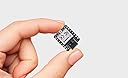
🚀 Tiny Titan: Power-packed microcontroller that fits in your palm and fuels your innovation!
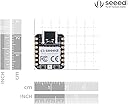
The XIAO RP2040 is a compact microcontroller featuring a dual-core ARM Cortex M0+ processor clocked at 133MHz, 2MB onboard Flash memory, and 264KB SRAM. It offers a rich set of interfaces including digital, analog, PWM pins, and communication protocols like I2C, UART, and SPI. Designed for flexibility, it supports Arduino, MicroPython, and CircuitPython, making it ideal for wearable tech and small-scale projects. Its small footprint and compatibility with Seeeduino XIAO expansion boards make it a top choice for professionals seeking powerful yet compact embedded solutions.


| ASIN | B09NNVNW7M |
| Best Sellers Rank | #140 in Single Board Computers (Computers & Accessories) |
| Brand | seeed studio |
| Built-In Media | / |
| Compatible Devices | Seeeduino XIAO and its Expansion Board |
| Connectivity Technology | I2C |
| Customer Reviews | 4.6 4.6 out of 5 stars (262) |
| Item Dimensions L x W x H | 0.79"L x 0.67"W x 0.14"H |
| Manufacturer | seeed studio |
| Memory Storage Capacity | 2 MB |
| Mfr Part Number | 500230492 |
| Model Name | XIAO RP2040 |
| Model Number | 500230492 |
| Operating System | MicroPython or CircuitPython (or similar embedded operating system) |
| Processor Brand | ARM |
| Processor Count | 2 |
| Processor Speed | 133 MHz |
| RAM Memory Installed | 264 KB |
| RAM Memory Technology | SRAM |
| Total Usb Ports | 1 |
| Warranty Description | / |
| Wireless Compability | 802.11b |
G**V
Great choice for small electronic devices
RP2040 has recently become my favorite microboard for building relatively simple and compact electronic devices (which usually contain a couple of inputs, a couple of outputs, a couple of buttons, a potentiometer or two and an I2C OLED display). For simple status signaling, it has a very bright built-in RGB LED which doesn't use any of the onboard pins, of which there is a limited number. I have already made a laser control box, a temperature control board for a custom-built 3D printer and a spot welder based on this board, and all of them work well. Sure, this board is not as powerful as Teensy 4.0, but it is not as expensive either, and noticeably more compact. Kudos for including the USB-C port, which is much more convenient than Teensy's micro USB. RP2040 can be soldered to one side of a PCB, leaving the other side completely free to run traces for other components, without pin holes getting in the way. For the types of devices I mentioned before, it has more than enough processing power. If such power is not needed, the clock speed of the CPU along with power consumption can be dialed down at compile stage, which helps RP2040 to run much longer when powered by battery. The PWM library is not what you would call an Arduino standard, but once you're familiar with it it's just as fast and capable. Overall, nice and very usable microboard.
D**D
A bit expensive, but very small and quality
Very small, can't complain. Performs as expected. A bit expensive on Amazon but can be worth it in a pinch. Hopefully USBC port instead of micro b good documentation on Seeee Studio website.
S**L
Great device so far!
Updated review. Found more information and I'm quite pleased with the Xiao Rp2040. So far it works with SSD1306 Oled display. See attached video of 3D plotter I wrote. Using the U8g2 library configured for SSD1306. I also tried an SH1106 display. the 1306 driver in the u8g2 library works with minor glitches, the 1106 config doesn't work at all. I'm trying to find libraries for use with ST7735 and 7789 displays. I also wrote a sketch that generates random color on the internal RGB LED, when fades from one color to the next. Doesn't require any external connections. That LED is bright! It's a work in progress of course.
R**S
Works fine, good for small
I really the rp2040 and rp2350 series. That being said, I've moved on to the waveshare which follows the raspberry pi pin footprint. The xiao is for when you need some REALLY SMALL. It's a great series of products (save for the R1M1A, that bricked on me almost immediately and became unusable). So yes, the xiao rp2040 is easy to use and really geared toward small footprint work. If you need more pins and don't feel like multiplexing, then get something larger
O**N
This is the future
Tons of processing power in a package the size of your thumb. So tiny that any USB cable plugged into it has to be secured as it weighs more than the MCU itself. Barely uses any power even while operating at full tilt, and absolutely just barely sips on a battery while in standby mode. You’d think that the GPIO would leave something to be desired, but given its size I wouldn’t say that’s much of an issue. If you need more pins, get an expansion board or use a different model. Super useful if you’re trying to shrink down your projects - pairs well with displays and other components from Adafruit, Waveshare, etc.
S**E
Fast, small and basic
I like these little SAMD boards. There are more capable boards out there for similar money (ESP based), but if you need just basic IO in a small footprint, these will outperform any AVR board and won't give you any headaches. There were a few minor quirks but the ADC is accurate, Arduino IDE support is good, and and they run fast. SPI displays won't leave you many pins so if I'm using SPI, I go with something else.
R**L
I love this board!
I just got the Seeed RP2040 board, and it's a great improvement over the previous generation (the Seeed XIAO). The older Seeed XIAO was fun and easy to use, but this new RP2040 is even easier to reboot, to move into CircuitPython mode, and to code for! I can power 7 LEDs and a small motor all at the same time! I'm going to buy more soon :)
R**R
Cool little device!
Purchased this to create a circuitpython gift for a friend. This is the first microcontroller I’ve purchased and it was pretty easy to figure out how to flash it with circuitpython. Both Visual Code and Mu make it easy to connect to and update the code on it. I don’t know circuitpython but I’m learning as I go and enjoying it.
M**E
was not very good to work with.. software and arduino coding doesnt work right with it.. i dont recommend get something like an esp32 device
T**R
Wenn man weiß, wie ein Raspberry Pico PI programmiert wird, dann kann man diese Board in ähnlicher Weise nutzen. Das Board hat genügen RAM/Flash Speicher, um es auch mit FreeRTOS zu betreiben.
G**N
It is painful one to avoid at all costs
さ**そ
特に使いづらさなどもなくよかったです。
U**R
小型で使いやすいです。
Trustpilot
3 days ago
2 months ago