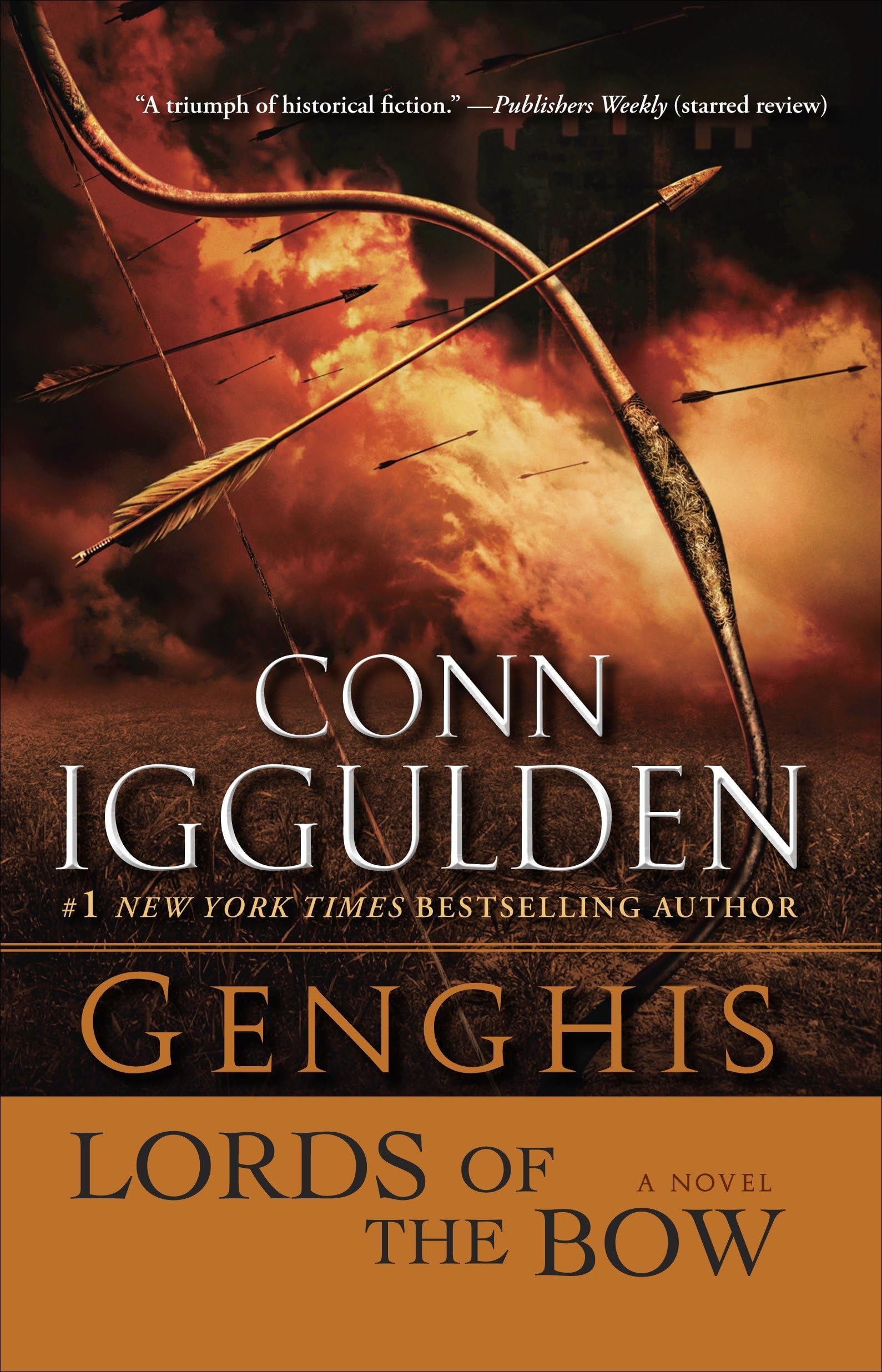
Genghis: Lords of the Bow: A Novel
Product ID: 393488555
🌍English language
📅Published 2010
📚Paperback edition
Desertcart purchases this item on your behalf and handles shipping, customs, and support to South Africa.
🔥 Unleash the warrior within with Genghis: Lords of the Bow!
Genghis: Lords of the Bow is a 2010 paperback historical novel published by Bantam, written in English. It chronicles the brutal and strategic unification of tribes under Genghis Khan, blending fact with gripping storytelling. Highly rated by readers, this book is a thrilling continuation in a celebrated series that captures the raw power and drama of Mongol conquests.
| Best Sellers Rank | #293 in Historical Fiction |
| Customer Reviews | 4.7 out of 5 stars 526 Reviews |
V**F
LORDS OF THE BOW
Lords of the bow (eng.): Zum Buch selbst muss ich sagen, dass ich erfreulich überrascht war. Trotzdem das ich die englische Version genommen habe, ist das Buch so geschriben das es sehr leseleicht ist. Ich habe den ersten Teil (Wolf of the plains) auf deutsch gelesen, hatte beim zweitein jedoch keine Erwartungen. Umso fesselnder war das Buch zum lesen. Habe viele historische Romane von James Clavell gelesen, muss gestehen dass die Charakter entwicklung im Lords of the bow nicht so ausgeprägt ist, aber die Erignisse im Buch auf "ausgevorzüglichem" Niveau sind und sie den Leser beim Buch bis zu letzer Seite Festhalten. Was es zum historischen zu sagen gibt, manche Erignisse sind wahrscheinlich von Author selber erfunden, jeodch haben die meisten wirklich stattgefunden und alle sind sehr packend beschrieben. Für alle die abenteurliche spannende Bucher mögen ein muss. Werde im auf jedem Fall noch den 3. Teil besorgen.
T**S
Can’t go wrong
Can’t go wrong with this one, a continuation to an amazing series. 100% recommend this one and while you’re at it get the rest as well because damn will you have a rollercoaster of an experience.
M**Y
Gritty & Powerful Historical Fiction
The second book in the Conqueror series is an outstanding contribution to the historical fiction genre. Following on from Wolf of the Plains, Lords of the Bow begins with the Mongol nation having been united under the rule of Temujin, the Genghis Khan. Fighting and conquering rival nomadic factions, the tribes are drawn together under the leadership of one man for the first time. This momentous turning point in history is given a superb treatment from Iggulden. Temujin's character, his flaws and his abilities follow on without halt from book 1 and the character development of those around him is of the very highest order. In particular, it is the relationships that form and ebb throughout the book that knit the whole together. The narrative of battle, conquering, and violence is well known history but Iggulden's characters are believable. Iggulden understands that being ruthless was a fundamental part of the success of Genghis. He is tested as are his brothers by those who have seen their own authority diminished by the rise of Temujin. The differences between the characters are intriguingly drawn for the modern audience - Temuge for instance is derided consistently for his lack of abilities but he is the one who most closely represents the modern day aesthetic and he who is relied on to take care of the pragmatic busines of running a nation. Temujin's other brothers Khasar and Kachuin form differing characters - Khasar the traditional barbarian, perhaps the model to which we still view the Mongol hordes as a savage and unstoppable brute. Kachuin though is the more subtle picture, his worldview coloured by the events of book 1 and the bond established during that time with Temujin. It is the relationship with women though that is the most impressive. Not pandering to our current world views, the Mongols are unapologetic for the role of women in their society. Temujin's wife Borte is loyal and strong but Temujin is the great conqueror and in reality there are countless millions who claim descent from Genghis Khan. The second wife Chakahai is unlike Borte - she is feminine, submissive, and beautiful. The role of women in our own society is yet to resolve itself between these two positions. Iggulden's story also develops the politics of tribal affairs. The shaman Kokchu is the explicit recognition of this. His tale is of power lust, something most probably underplayed elsewhere amongst the characters. He is undoubtedly a villain but the way he treats his own female slave is just a step on the continuum of behaviour away from the main heroic characters. Kokchu questions the reader - where does the line of acceptable and unacceptable fall and what can realistically be done to impose that distinction? The bulk of Lords of the Bow details the campaign against the Chinese Xi Xia kingdom. Genghis learns to adapt his warriors fighting style to meet opponents hiding behind city walls. The battles are not those of the Steppe, they are sieges and as such have to be conducted very differently. They are also epic in scope, not the personalised fights of Wolf of the Plains. Here nameless hundreds die. This is war. It is painful at times but the underlying morality is that of all existance - the only way to stop violence is to be strong enough to fight it. Not all of the book is perfect though. I had serious quibbles with the descriptions of the Uighurs. The concept of nationhood is built on ethnicity and I think this an anachronistic interpretation. Uighurs are not Mongols, they are more closely related to the Tartars the Mongols claim to hate. This is glossed over presumably for the sake of the readership as our nations were typically forged through an ethnic national identity. The side adventure into China featuring Khasar, Temuge, and Ho-Sa did not make a great deal of sense but was good fun. Equally the introduction of Tsubodai as a grinning optimist wasn't quite the set up for one of the greatest generals of all time to have his tale start considering how skillfully drawn out most of the other characters are. Overall, this difficult second book in a trilogy is outstanding. The narrative is fast paced, thoughtful, and fascinating. The first real conquests of the settled world bring Genghis into international recognition, and the story that started out in Wolf of the Plains as a struggling outcast is carried on here as the young leader finds his way in warfare, in the challenges of leadership, and most of all in the national identity and culture he forges. This is excellent historical fiction.
B**R
It’s a book.
Good book; easy read. Fabulous delivery.
A**R
Kalitesiz baski!
Kitabın arka kapağı yırtık geldi. Hadi buna bişey demeyeceğim, ama basım kalitesini de hiç beğenmedim herhalde mürekkepten kısmak için çok soluk bastılar. Ayrıca harfler de çok küçük basılmış. Korsan kitap aldık sanki!
Trustpilot
1 month ago
1 week ago