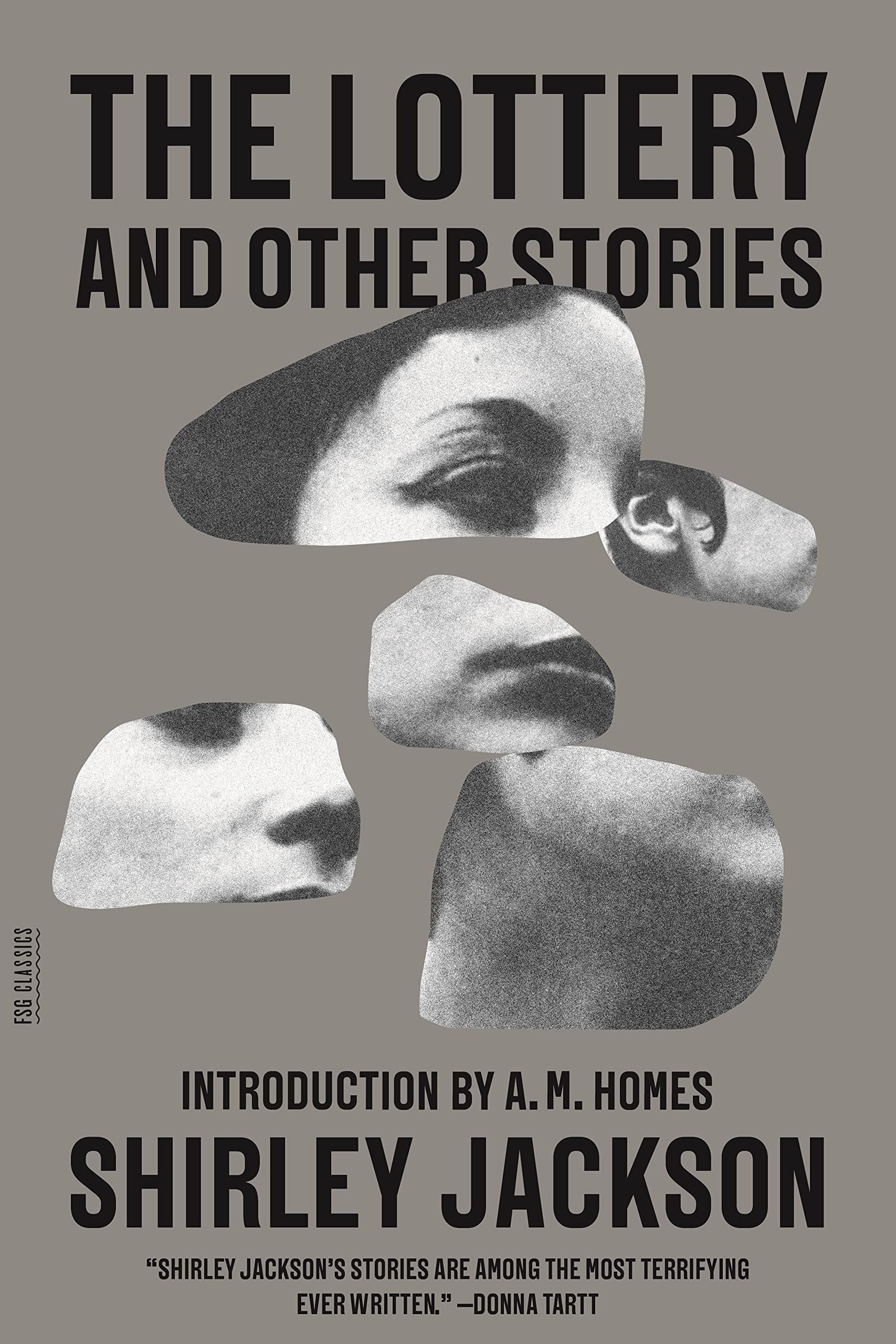
The Lottery and Other Stories (FSG Classics)
Product ID: 3524803
Desertcart purchases this item on your behalf and handles shipping, customs, and support to South Africa.
One of the most terrifying stories of the twentieth century, Shirley Jackson’s “The Lottery” created a sensation when it was first published in The New Yorker in 1948. "Power and haunting," and "nights of unrest" were typical reader responses. Today it is considered a classic work of short fiction, a story remarkable for its combination of subtle suspense and pitch-perfect descriptions of both the chilling and the mundane. The Lottery and Other Stories , the only collection of stories to appear during Shirley Jackson's lifetime, unites "The Lottery" with twenty-four equally unusual short stories. Together they demonstrate Jackson's remarkable range―from the hilarious to the horrible, the unsettling to the ominous―and her power as a storyteller. Review: Amazing short stories with fantastic endings - Read this book for one reaction: gasping "whaaaaaat!" or perhaps "whaaaaat?" (punctuation varies) after reading the final sentence of every story. Shirley Jackson is the indisputable master of the "whaaaaaat!/?" Some stories end ambiguously, leaving you scrambling back through the pages searching for a clue or alternately racing to open Google to read others' wise analyses. Other stories end completely and absolutely unambiguously, leaving you to question not what actually happened but to wonder how such a terrible ending could come to pass. ("The Lottery," Jackson's most famous tale, falls in the second type.) But no matter if the ending is ambiguous or unambiguous, what I want to emphasize is that Shirley Jackson knows how to end. I have now read dozens of her short stories and one of her novels and I am convinced that I know of no author who finishes every piece with such decisive flourish. It's an incredible skill, knowing how to end something. I often find short stories forgettable. Any novel of 300 pages will indubitably engrave itself in my mind by mere virtue of the hours required to read it. A story of less than 20 pages, however, is at a clear disadvantage. A short story must shock to be memorable. Luckily for us, Jackson has one setting: shock the reader. On the last page, or more often, the last sentence. But her shocking endings are of the mild, ungratuitous variety. Two of my favorite stories--"The Daemon Lover" and "Like Mother Used to Make"--finish with the protagonists questioning their sanity and autonomy. They don't run screaming to mental hospitals; rather, they stay quietly and desperately in their homes, wondering who they are and if this is--if this truly can be--their life, and to me, such an ending is much more powerful than any louder alternative. There is something so mundane to Jackson's writing, which makes the fact that most of the stories are categorized in the horror genre more, well, horrifying. Because it suggests that the quotidian is horror. Jackson is wonderfully aware of the fact that the everyday lives of the normalest of the normal are the most frightening things in the world. No need for ghosts or murderers, everything you need is right there inside of us. For Jackson, horror is the casual racism of a small New England town, the irrepressible distress of a 30 year old unmarried woman searching for a husband, the monotonous daily routine of a department store salesperson, a badly misbehaving child and his oblivious parents, the terrifying anonymity of an individual in a metropolis of millions. In short, horror is real life. These stories have a rare rereadable quality. I know that I will reread this collection for the rest of my life, and at the end of every story for the rest of my life, I will say "whaaaaat!/?" Review: Make Sure to Read to the End - At first, having read and loved The Haunting of Hill House and the Lottery, I was disappointed. The early stories, although well paced and possessed of Jackson's anthropological eye for dissecting social convention as well as her acute, Woolf like attention to a character's inner monologue, despite all this I was...bored. In the early stories, we follow the repercussions of a revealing event in a character's life. We see how the character reacts and is changed by this strange and important junction. The man you are supposed to marry doesn't show up, and you go looking for him. A single mother moves into the house you always wanted, and your friendship with her is tested and broken by racism. A literary agent, you discover that your whole life is founded on a foolish hope you had when you were young, and you don't know how else to operate, so you gather your cynicism around you as a shield, but continue to supplant one foolish hope with another. The conclusions of these stories, often about social convention, the double-sided and impossible expectations of women, the incredibly nosy and judgmental circles in which they move, ended on abrupt, depressing notes. Though I appreciated Jackson's style, pace, and unique attention to detail, it seemed to me that even the early stories ached to be...well, weirder. She had such a talent for the uncanny, the slowly building feeling of unease. My favorite stories in this collection were the stories in which Jackson got really weird with it. I gave this book 4 stars because I think any aspiring writer should read it. Jackson's way of reminding us of our frenzied, most irrational thoughts is something to be studied. The way she builds unease, the way she picks her situations, there's a lot to learn from. As a reader, my favorite stories, the weirdest ones, are: "The Witch"--acknowledgement of the dark, macabre side of the child's nature, also, very funny. "The Daemon Lover"--Kelly Link took her inspiration from Jackson, or from the Scottish ballad about James Harris, the demon lover. James Harris happens to the be the name of a man in many of the stories. The stories skirt around James Harris, or Mr. Harris, the --he's never the main character, but is often the shadowy catalyst of the story's action. Anyway, this is the story that I think represents the bridge between an anxious litfic story that wants to be uncanny, and the minute psychological shifts in a decaying psyche. "Pillar of Salt" Describes the claustrophobic, frenzied psychosis of a small-town woman in a big city. "The Tooth" My second favorite! Listen to this: "It was when she stepped a little aside to let someone else get to the basin and stood up and glanced into the mirror that she realized with a slight stinging shock that she had no idea which face was hers." "The Lottery" Nothing to be said about this one that hasn't already been said. Classic, brilliant, disturbing, so disturbing, one of the cannon of greats.
| Best Sellers Rank | #1,562,020 in Books ( See Top 100 in Books ) #777 in Classic Literature & Fiction #1,908 in Literary Fiction (Books) #11,538 in Contemporary Literature & Fiction |
| Customer Reviews | 4.2 out of 5 stars 3,991 Reviews |
J**L
Amazing short stories with fantastic endings
Read this book for one reaction: gasping "whaaaaaat!" or perhaps "whaaaaat?" (punctuation varies) after reading the final sentence of every story. Shirley Jackson is the indisputable master of the "whaaaaaat!/?" Some stories end ambiguously, leaving you scrambling back through the pages searching for a clue or alternately racing to open Google to read others' wise analyses. Other stories end completely and absolutely unambiguously, leaving you to question not what actually happened but to wonder how such a terrible ending could come to pass. ("The Lottery," Jackson's most famous tale, falls in the second type.) But no matter if the ending is ambiguous or unambiguous, what I want to emphasize is that Shirley Jackson knows how to end. I have now read dozens of her short stories and one of her novels and I am convinced that I know of no author who finishes every piece with such decisive flourish. It's an incredible skill, knowing how to end something. I often find short stories forgettable. Any novel of 300 pages will indubitably engrave itself in my mind by mere virtue of the hours required to read it. A story of less than 20 pages, however, is at a clear disadvantage. A short story must shock to be memorable. Luckily for us, Jackson has one setting: shock the reader. On the last page, or more often, the last sentence. But her shocking endings are of the mild, ungratuitous variety. Two of my favorite stories--"The Daemon Lover" and "Like Mother Used to Make"--finish with the protagonists questioning their sanity and autonomy. They don't run screaming to mental hospitals; rather, they stay quietly and desperately in their homes, wondering who they are and if this is--if this truly can be--their life, and to me, such an ending is much more powerful than any louder alternative. There is something so mundane to Jackson's writing, which makes the fact that most of the stories are categorized in the horror genre more, well, horrifying. Because it suggests that the quotidian is horror. Jackson is wonderfully aware of the fact that the everyday lives of the normalest of the normal are the most frightening things in the world. No need for ghosts or murderers, everything you need is right there inside of us. For Jackson, horror is the casual racism of a small New England town, the irrepressible distress of a 30 year old unmarried woman searching for a husband, the monotonous daily routine of a department store salesperson, a badly misbehaving child and his oblivious parents, the terrifying anonymity of an individual in a metropolis of millions. In short, horror is real life. These stories have a rare rereadable quality. I know that I will reread this collection for the rest of my life, and at the end of every story for the rest of my life, I will say "whaaaaat!/?"
S**B
Make Sure to Read to the End
At first, having read and loved The Haunting of Hill House and the Lottery, I was disappointed. The early stories, although well paced and possessed of Jackson's anthropological eye for dissecting social convention as well as her acute, Woolf like attention to a character's inner monologue, despite all this I was...bored. In the early stories, we follow the repercussions of a revealing event in a character's life. We see how the character reacts and is changed by this strange and important junction. The man you are supposed to marry doesn't show up, and you go looking for him. A single mother moves into the house you always wanted, and your friendship with her is tested and broken by racism. A literary agent, you discover that your whole life is founded on a foolish hope you had when you were young, and you don't know how else to operate, so you gather your cynicism around you as a shield, but continue to supplant one foolish hope with another. The conclusions of these stories, often about social convention, the double-sided and impossible expectations of women, the incredibly nosy and judgmental circles in which they move, ended on abrupt, depressing notes. Though I appreciated Jackson's style, pace, and unique attention to detail, it seemed to me that even the early stories ached to be...well, weirder. She had such a talent for the uncanny, the slowly building feeling of unease. My favorite stories in this collection were the stories in which Jackson got really weird with it. I gave this book 4 stars because I think any aspiring writer should read it. Jackson's way of reminding us of our frenzied, most irrational thoughts is something to be studied. The way she builds unease, the way she picks her situations, there's a lot to learn from. As a reader, my favorite stories, the weirdest ones, are: "The Witch"--acknowledgement of the dark, macabre side of the child's nature, also, very funny. "The Daemon Lover"--Kelly Link took her inspiration from Jackson, or from the Scottish ballad about James Harris, the demon lover. James Harris happens to the be the name of a man in many of the stories. The stories skirt around James Harris, or Mr. Harris, the --he's never the main character, but is often the shadowy catalyst of the story's action. Anyway, this is the story that I think represents the bridge between an anxious litfic story that wants to be uncanny, and the minute psychological shifts in a decaying psyche. "Pillar of Salt" Describes the claustrophobic, frenzied psychosis of a small-town woman in a big city. "The Tooth" My second favorite! Listen to this: "It was when she stepped a little aside to let someone else get to the basin and stood up and glanced into the mirror that she realized with a slight stinging shock that she had no idea which face was hers." "The Lottery" Nothing to be said about this one that hasn't already been said. Classic, brilliant, disturbing, so disturbing, one of the cannon of greats.
K**K
Classic
Do you like words? Do you like reading them? If so - this book is for you! It's got thousands of words! And if that was not enough dear reader, well - you are not going to believe it -- they are put together in sentences, which then become paragraphs. That's right - these words are put together so that they express ideas and concepts, which tell a story. This book in fact contains MANY STORIES. What a value! In all seriousness, this book is full of great stories that you will just zip through. It's that true marvel - entertaining, engaging writing that expresses real ideas - with empathy for its characters and revulsion at the traps they find themselves in.
L**N
Great Character Development But Little Plot
Am not a big short story fan to begin with. What attracted me to this book was reading a blurb somewhere referring to "The Lottery" as the best short story (ever written) - and yet, at 68 and a voracious reader, I'd never heard of it. Anyway, after reading the whole book, I find that while I was overall very impressed with the author's "character development" skills and descriptive narratives, I found the absence of plots to be a "let down". (I'm one of those people that an author has to spell things out for.) Anyway, I will be keeping the book for re-reading (and re-evaluation) at a later time.
S**F
Timeless Relevance & Wicked Irony
Shirley Jackson’s short stories are gems, reflecting facets of society and humanity. Each story included captures a snapshot in time reflected in familiar circumstances with credible characters reaching some expected unexpected conclusions. Unforgettable!
I**H
A lovely, entertaining traveling companion!
“Because it was raining and the day seemed unimportant she put on the first things she came to; a grey tweed suit that she knew was shapeless and heavy on her now that she was so thin, a blue blouse that never felt comfortable." The main character mentioned above from the short story "Elizabeth" really unsettled me, as did many of the seemingly simple stories about Homelife and suburbia. A.M. Homes wrote in her introduction to this collection by FSG: "Her stories take place in small towns, in kitchens, at cocktail parties...These stories chart intention, behavior—they are an intimate exploration of the psychopathology of everyday life, the small-town sublime." I spent two weeks trying to decide which books to pack with me on my month long trip to Ireland, and at the very last moment (the night before), I opted to leave my huge Jackson omnibus at home, and travel with my Kindle editions of her stories, novels, and essays. I'm so glad I chose her as a traveling companion. I love to travel but the "getting-there" part can sometimes unravel me. Her stories were such a comfort! I know everyone loves the title story of the collection, but I was most impressed with so many of the other subtler stories. Favorites included "Like Mother Used to Make," "The Daemon Lover," and "The Flower Garden." When I reached the conclusion of "The Dummy," I gasped and then immediately started laughing hysterically! I then reread the story to my husband who usually humors me, but he too had to admit that it was pretty hilarious. She's a new favorite author—a kindred spirit. I can't wait to read more of her work. Hopefully more while I'm here in Ireland. I don't know how I got out of reading this collection in high school, as I saw many fellow students toting this volume around, but I know I couldn't possibly have appreciated Jackson's keen eye or dark humor back then.
R**S
Chilling Fantastic
This is such a formidable collection of short stories with such an imaginative and well-constructed universe of creeping figures and bizarre, complex but at the same time silent and subtle situations that I felt totally compelled to read more of Shirley Jackson's (have just started We Have Always Lived in the Castle). To be completely honest, I only came to her name because she ranks nicely in the list of books under 100 pages in GoodReads with "The Lottery", and that was the first story I read and didn't really ring the bell (maybe, for today's standards, too obvious?). But there are much more on Jackson's writing, and I really found it intriguing how skillfully she builds tension in her stories and how conflict emerges dramatically, typically at their final third: "The Dummy" does that pretty well, changing the focus from Mrs Wilkins all of sudden to the ventroliquist and his partner. Her writing is crystal clear, linear and free of any crutches, and still she envelops the reader in a mist of discomfort and restlessness. "Something is always fuzzy, a little off," I saw someone describe her, and that is exactly it. Some stories are very subtle and elegant in their way to express hidden prejudice or morally-reprehensible behavior: "After You My Dear Alphonse", "The Flower Garden", "A Fine Old Firm" and "Seven Types of Ambiguity" (a favorite!) or even "The Renegade". But I guess what really makes her shine are the most bizarre and emotionally complex stories, which escalate in a very creepy way (and I guess Neil Gaiman and Stephen King had them as influence): "Pillar of Salt" and "The Tooth" are chilling fantastic.
A**L
The Dark Side of Main Street
26 short - and often disturbing- stories. Shirley Jackson lures you into a rose coloured Walt Disney /Bells of St Mary all American world, then with the slightest poke she reveals the petty hatreds , bigotries , prejudices and lust for cruelty; made all the more shocking as you can recognise them-sometimes in yourself. These "Hits" are often brutal. A young boy on a train with his mother and baby sister. A man chats to the boy telling him he cut his sister into pieces, and he's "Just joking" but the effect on the boy is untold by Jackson. She leaves you in the nightmare. Then there's the well intentioned-initially-Mrs Wilson towards Boyd, her sons young black friend, where her deep rooted racism surfaces when the boy tells her his family are doing well and don't need the worn clothes she is offering. There is the constant out casting of people who are "different"; don't share the bigotries of the mob society or the class etiquettes. Then at the end you have "The Lottery"... Shirley Jackson's themes and style of portraying them are unique. No one else can write stories like these in this way. Main Street was never so dark and disturbing.
T**M
Perfection!
I’ve always loved Shirley Jackson and “The Lottery” has stuck with me since I first read it. As relevant today as ever, maybe even more so.
A**A
good stories
interesting stories
B**A
A fantastic writer!
Shirley Jackson is a marvellous writer! Not out right horror, but it makes you very uneasy!
D**L
Excelente
Gran libro de historias cortas con una perspectiva diferente, Shirley Jackson logra una tensión tan identificable del día a día que es fácil relacionarse con sus personajes
Z**D
Good one
I enjoyed reading this book.
Trustpilot
2 weeks ago
1 day ago