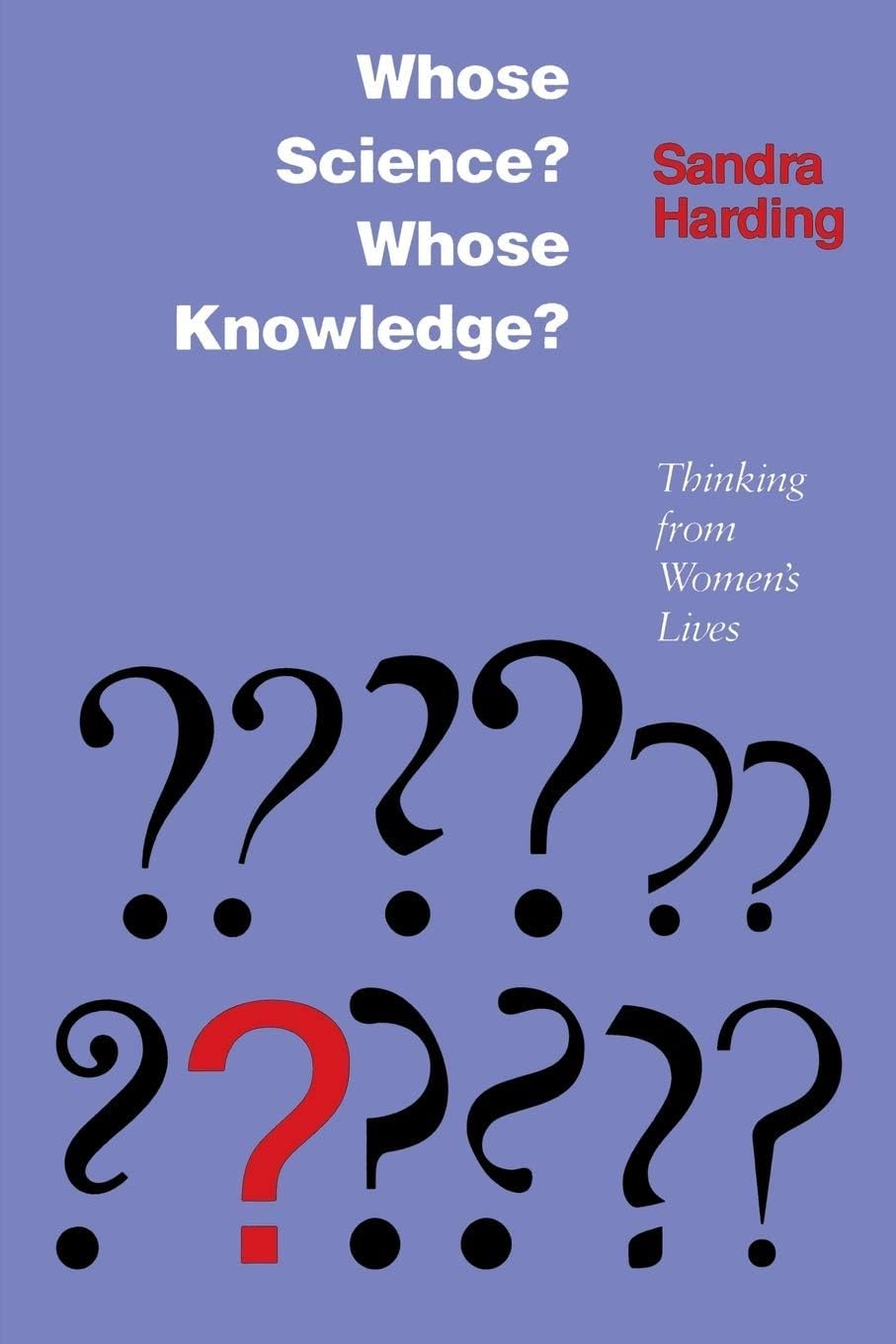
Whose Science? Whose Knowledge?: Thinking from Women's Lives
Product ID: 33671596
Buy anything from 5,000+ international stores. One checkout price. No surprise fees. Join 2M+ shoppers on Desertcart.
Desertcart purchases this item on your behalf and handles shipping, customs, and support to South Africa.
Whose Science, Whose Knowledge? represents a transition from gender to power considerations in Harding's continuous efforts to raise questions about the theory and practice of science. ― Shulamit Reinharz ― Gender & Society Harding's is a richly informed, radical voice that boldly confronts issues of crucial importance to the future of many academic disciplines. Her book will amply reward readers looking to achieve a more fruitful understanding of the relations between feminism, science, and social life. Sandra Harding here develops further the themes first addressed in her widely influential book, The Science Question in Feminism , and conducts a compelling analysis of feminist theories on the philosophical problem of how we know what we know. Following a strong narrative line, Harding sets out her arguments in highly readable prose. In Part 1, she discusses issues that will interest anyone concerned with the social bases of scientific knowledge. In Part 2, she modifies some of her views and then pursues the many issues raised by the feminist position which holds that women's social experience provides a unique vantage point for discovering masculine bias and and questioning conventional claims about nature and social life. In Part 3, Harding looks at the insights that people of color, male feminists, lesbians, and others can bring to these controversies, and concludes by outlining a feminist approach to science in which these insights are central. "Women and men cannot understand or explain the world we live in or the real choices we have," she writes, "as long as the sciences describe and explain the world primarily from the perspectives of the lives of the dominant groups." Review: Good deal - Although used, the book is in perfect condition Review: Wonderful and needed critical thinking - I've struggled with issues in my attempts to operate within the domain of "science" (soiology) - and I have formulated many critiques on my own, and then I came across this book, which gave me a vocabulary of critique and connected a lot of the thoughts I had been having, with new ones. Harding's work is original, fair, and very thought-provoking. It's a deconstruction of the concept of "objectivity" as it often is understood (implicitly) by practitioners of science. She explains that supposedly "value-free" science is actually very much situated and biased. She offers the beginnings of a new paradigm or epistemology, which she calls "strong objectivity". This is a mode of knowledge production that is more self-aware of its own situatedness, and, for this, generates more reliable, more responsible and more useful knowledge.
| Best Sellers Rank | #1,802,917 in Books ( See Top 100 in Books ) #639 in Epistemology Philosophy #1,200 in Feminist Theory (Books) #11,548 in Sociology Reference |
| Customer Reviews | 4.9 out of 5 stars 13 Reviews |
R**L
Good deal
Although used, the book is in perfect condition
S**Y
Wonderful and needed critical thinking
I've struggled with issues in my attempts to operate within the domain of "science" (soiology) - and I have formulated many critiques on my own, and then I came across this book, which gave me a vocabulary of critique and connected a lot of the thoughts I had been having, with new ones. Harding's work is original, fair, and very thought-provoking. It's a deconstruction of the concept of "objectivity" as it often is understood (implicitly) by practitioners of science. She explains that supposedly "value-free" science is actually very much situated and biased. She offers the beginnings of a new paradigm or epistemology, which she calls "strong objectivity". This is a mode of knowledge production that is more self-aware of its own situatedness, and, for this, generates more reliable, more responsible and more useful knowledge.
E**E
Good example of feminist philosophy of science
A feminist critique of the mainstream themes in the philosophy of science. Argues for a 'stand-point' approach, which entails the explicit incorporation of value-judgements into science and giving greater weight to the 'subjects' of study in social science. It is argued that by taking the stand-point of the subjective and lived-experiences of the oppressed into one's theories and practices, one's understanding of social phenomena can be both more 'objective' (in a special sense) and potentially empancipatory.
M**T
This book makes you think about a lot of issues around misogyny.
What an important book!
Trustpilot
3 days ago
2 weeks ago