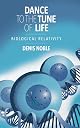
Dance to the Tune of Life: Biological Relativity
Product ID: 319980535
📚Cambridge University Press quality
🔥Top 200 in Biochemistry & Genetics
🧬Challenges gene-centric biology
Desertcart purchases this item on your behalf and handles shipping, customs, and support to South Africa.
🧠 Unlock the future of biology—don’t get left behind!
Dance to the Tune of Life: Biological Relativity, published by Cambridge University Press, presents a groundbreaking relativistic theory of biology that challenges traditional gene-centered views. With a 4.5-star rating and strong rankings in Biochemistry and Genetics, this book offers an accessible yet profound exploration of cutting-edge biological research, making it essential reading for professionals eager to stay ahead in the life sciences.
| Best Sellers Rank | #352,258 in Books ( See Top 100 in Books ) #180 in Biochemistry #245 in Genetics #460 in Plant Ecology |
| Customer Reviews | 4.5 out of 5 stars 64 Reviews |
W**.
Beautiful and informative
I enjoyed reading the books from this writer. His style allows him to explain complex items in an easier and enjoyable way. Definitely worth it.
J**A
A very important book on the frontline of research on biology
A open mind work! A like it so much I order a second one to offer to a friend.
D**M
A revolution in understanding how evolution works
This exciting new book is a magisterial overview of the latest developments in understanding evolution. A beautifully written and illustrated work that brings revolutionary new ideas and results into a coherent reforming of our undestanding of the mechanisms contributed to the evolution of species. Denis Noble is one the leading biomedical researchers in the UK, world-renowned for his own fundamental work on the natural pacemaker in the heart. His approach in 'Dance to the Tune ...' to what is known as Systems Biology throws new light on the established evolution consensus known at Neo-Darwinism. Much of the approach shows how the DNA-based, 'gene-centric' view of the last half century now demands overhauling. The demonstrable importance of the cellular material, necessarily inherited together with nuclear DNA, puts the functioning cell much more 'centre-stage' than heretofore where the 'DNA as blueprint' model has dominated. As one plank, epigenetic phenomena are key to re-establishing a role for the inheritance of acquired characteristics. This is almost an heretical idea, a feature explicitly sidelined by the Neo-Darwinian synthesis. So too, the role of 'mobile elements' in permitting the re-arrangement of large 'functional' sections of the DNA sequence. This allows for a 'strategy' for the species, especially prominent when under environmental stress. It can look very like 'targeted mutation' being 'deployed', as it were, to 'solve' the challenge to the species faster than 'random' accumulation of improvements can allow. There is a deep and broad philosophical reach to this authoritative book. Anyone interest in biology and evolution needs to read it and take the often startling new evidence and Noble's provocative conclusions into consideration. As Noble himself cites, this is an approach that heralds what Nobel Laureate Sir James Black announced (in 1993) as 'the 21st Century witnessing the triumph of physiology over molecular biology’.
P**S
Biological Relativity
Fascinating presentation of the idea that genes are not the only biological cause - rather causes occur at every level from the cell to the whole organism and indeed the wider environmental ecology. Persuasive and well argued - a wonderful book - I would recommend it to anyone interested in the future of biological science.
D**N
Important and insightful book!
An illuminating book that faces a heroic task: overthrowing the gene-centric fallacy. With this book, Professor Noble opens the doors to a new and wonderful conception of life.
Trustpilot
1 week ago
1 week ago