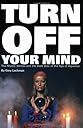
Turn Off Your Mind: The Mystic Sixties and the Dark Side of the Age of Aquarius
Product ID: 30225027
How did a decade of love and peace end in Altamont and the Manson Family bloodbath? Gary Lachman explores the sinister dalliance of rock's high rollers and a new wave of occultists, tying together John Lennon, Timothy Leary, Mick Jagger, Brian Wilson, Charles Manson, Anton LaVey, Jim Morrison, L. Ron Hubbard and many more American cultural icons. Review: Incredibly Detailed Examination of the Occult in the Sixties - A narrative account of the mystic sixties usually isn't my idea of exciting bedside reading or a harrowing page turner; however, Gary Lachman's Turn Off Your Mind manages to surprise you in more ways than one. First let me start with the negative. Lachman has a tendency of drowning his paragraphs with sentences. Long and wordy, sometimes, you as the reader, feel like you're getting lost in the shuffle of facts and narrations. You begin to notice several instances where Lachman could have alleviated the reader by breaking up the paragraph, but instead, he opted to slide from one event to the next in a single contraption. Lachman also has a tendency to produce relatively long sentences structured in a sometimes confusing way. Maybe he's spent too much time in England, or is so excited about his writing that he drones on in glee (which would be justified in this case), but a few more commas or semi-colons, and he would have reduced much of the strain on his audience. With that said, let me just state one thing: if you are interested in the occult in any way, you must buy this book - more than that, you must READ this book. Lachman, despite my few complaints, manages to weave an intricate web of occult influence for an era that is dramatically affecting the youth of today. Turn Off Your Mind might be an account of the "mystic sixties," but every figure that he discusses holds great influence in the shaping of the youth of the modern era. This book is invaluable. At first - before reading this book - I was skeptical of Lachman because of quoted harsh words I had read of his reactions to Aleister Crowley. After reading his tome, I must say: harsh words indeed. Lachman doesn't pull a single punch. Leary, Watts, Huxley, Lennon, Jagger - nobody leaves without a no-holds-barred interrogation into their professional AND personal lives. Lachman brings the myth back down to Earth and shows you the real heart and soul of the man behind it. Oftentimes we place our heroes way above ourselves into an archetypal demi-god role and we forget just how all-to-human these figureheads really are. Lachman shows us. On occasion, I was made to wonder whether Lachman was letting too much of his own bias enter into his reflections. I'm sure some bias leaked in, but he does his best to maintain nothing more than a factual narrative account. As an example, despite admitting how he finds Anton LaVey's philosophy "revolting," LaVey is actually one of the few figures that come out of Lachman's book looking better than when they came in. Lachman does his best when keeping things short. He throws fact after fact at you about the daily lives and influences of major thinkers, and then quickly connects them to yet other thinkers, and so forth. His account of the Beatles and their trek with the Maharishi is laughingly serious. We see how manipulative gurus can truly be. His longest accounts focus on Timothy Leary and Charles Manson. In Leary, you discover many instances of wreckless abandon and wanton disregard for moderation. In Manson, you find a shallow manipulator who literally scared Beach Boy Dennis Wilson out of his own home. Lachman's work is something that you really can't show appreciation for by writing a glowing review. It's not something that can be communicated in an awe-inspiring way. Turn Off Your Mind must be read. Read it from cover to cover like it was a textbook requirement in a pop culture class - and indeed it should be. Colin Wilson is often given credit for adding credibility to the esoteric with his existential examination of it in The Occult. Lachman's book is just as revolutionary, except his adheres to an examination through popular culture, which is a more relative philosophy. Review: tomorrow knew, huh? - "Whenever in doubt, turn off your mind, relax and float downstream" are the first words John Lennon read in 1966 when he opened The Psychedelic Experience, a sleek, black volume by Timothy Leary, Richard Alpert, and Ralph Metzner (New York: University Press, 1964). The Beatle Lennon inserted the concept into his song "Tomorrow Never Knows" for the transitional Beatles' album Revolver released later that year. Lennon listened to a recording of himself reading the Tibetan Book of the Dead when he wrote that song while tripping on LSD. The first lyrics are: Turn off your mind, relax and float down stream, It is not dying, it is not dying Lay down all thoughts, surrender to the void, It is shining, it is shining. I was eighteen and a Beatles' fan when Revolver appeared. I listened to it and that song over and over when it came out but I had little experience with the burgeoning occult movement and mystical drug cultures that inspired it. I had only a vague idea of what Lennon was singing about but I knew it had something to do with drugs. That changed dramatically in following years. I began "experimenting" with some drugs and sought out exotic spirituality too. For many of us coming of age in the sixties the Beatles were guideposts. John Lennon and George Harrison especially seemed to be on the cutting edge of popular fashion in everything from hairstyle to spiritual philosophies. In college I became an art student among the hippie milieu. We were reading Hesse, Jung, Camus, McLuhan, Heinlein, Rimbaud, Tolkien, Marcusse, Mailer, Yogananda and Blake. Some of us went deeper and darker. We read Blavatsky, Lovecraft, Crowley, Gurdjieff, Hubbard, and even LaVey. Despite the Vietnam War, there was an incredible romanticism and idealism if not rebelliousness alive on campuses across America and Europe then. It culminated in the now infamous `summer of love' in 1967. But the bright sunshine of Aquarius waned quickly. Woodstock notwithstanding, Charles Manson and his drugged-up, murderous Family became the image of all that was decadent in hippie culture by 1969. The sixties were over. However, as Gary Lachman writes on pages 392-93 of Turn Off Your Mind, "Manson didn't `kill the sixties' as some have suggested. They committed suicide, ODed on excess, high expectations, and a belief that in getting rid of all repression--what I've called `giving away to strange forces--some pure, natural soul would emerge. They were wrong." At age 18 Gary (Valentine) Lachman was a founding member and songwriter for the punk-rock group Blondie. He was born in 1955 in New Jersey. Just out of high school he went to New York to be a poet. Eventually he moved to London in 1996 where he yet resides. His early contacts with the music industry during the 70s placed him in the midst of many significant persons who were "there" during the 60s `revolution.' In another book, Lachman mentions his serious dalliance for several years with a Gurdjieff group. After two years with Blondie Lachman continued as a musician with other bands including Iggy Pop but music eventually gave way to his career as a journalist and writer. He is a literary critic for many publications including The Fortean Times. Lachman is the latest among astute commentators on the modern occult revival and New Age sects in the genre of James Webb (The Occult Establishment, The Harmonious Circle), Bruce Campbell (Ancient Wisdom Revived), Peter Washington (Madame Blavatsky's Baboon) and especially Colin Wilson (The Occult). Turn Off Your Mind is an early work in a series by Lachman that includes In Search of P.D. Ouspensky: The Genius in the Shadow of Gurdjeff (2006) and Rudolf Steiner (2007), both of which I recommend. In this book Lachman plunges into his topic with the story of Charles Manson. He describes how the hippie "wizard" was able to maneuver among famous people and manipulate followers using ideas he gleaned from Scientology, The Process Church of the Final Judgment and years of incarceration. From there we revisit the Woodstock and Altamont music festivals that were seminal events in 1969. Lachman then discusses the roots of the sixties occult revival in 19th century figures like Madame Blavatsky and Eliphas Levi. Lachman revisits these themes and personalities throughout the book. Lachman exposes occult influences in the lives and writings of significant sixties heroes including Hermann Hesse, Aldous Huxley, L. Ron Hubbard, and Aleister Crowley (whose face made it onto the cover of the Beatle's Sergeant Pepper album). He especially credits The Occult by Colin Wilson (who wrote the introduction to Lachman's 2003 Secret History of Consciousness) and The Morning of the Magicians by Bergier and Pauwels as particularly influential in his personal grasp of just what was going on in the mystic sixties. More characters he covers in depth are H.P. Lovecraft, Alan Watts and the Beats, Tim Leary, L. Ron Hubbard and Anton LaVey who founded the Church of Satan. The book also offers insight into the mystical pursuits and substance abuse that affected the Beatles, Marianne Faithful, Rolling Stones, Doors, Beach Boys and so many others. Less well known but influential characters include the mystical artist and writer Brion Gysin whose "cut-up" approach to writing revived an interest in Surrealism and influenced Beat writers like William Burroughs. The Beats aimed for "elimination of the rational ego." There was Aldous Huxley's friend, the "sociopathic English con man" Michael Hollingshead whose "mayonnaise jar containing water, powdered sugar, and roughly 5,000 hits of LSD" gave Timothy Leary, Paul McCartney, singer-songwriter Donovan, and countless others their first doses of acid. When they finally had enough of the schemer, Leary and Alpert dismissed Hollingshead from the Harvard LSD project. In retaliation Hollingshead threatened to reveal Alpert's homosexuality. And there was the Solar Lodge of the OTO (a spin off of Crowley's Ordo Templi Orientalis cult) founded by Jean Brayton and her husband Richard, a philosophy professor at University of Southern California. The Braytons "sought absolute control over their devotees" by what some writers called "acid fascism." The Brayton's ran afoul of the law around the time of the Manson murders in 1969 when visitors to their Colorado center found a small boy chained to the ground in a crate in 110-degree heat. He had been there for days. Jean Brayton devised the punishment because the boy inadvertantly set fire to their house thus burning rare Crowley manuscripts. The Braytons were thought by the FBI to be connected to Manson. I most appreciated Lachman's ability to ferret out the back-story to many songs, personalities and communes that influenced the mystic sixties. For example, Leary based his esoteric community International Federation of Internal Freedom on Aldous Huxley's last novel Island (1961) which "depicts a psychedelic Pacific island paradise threatened by the incursion of Western materialism" (p.177). In the spirit of Jung's synchronicity (meaningful coincidence) that Lachman says inspired many sixties' notions of be here now, I read Island just prior to reading Turn Off Your Mind. The IFIF eventually found a home in 1962 in Zihuatanejo, Mexico where Leary and a company of several dozen followers experimented with their LSD based religion. Huxley's Island provided a blueprint. Residents of Huxley's Pala limit mechanization, control overpopulation by training young males in yogic retention of semen during pre-marital sex, and practice ritual ecstasy with moksha medicine based on Huxley's personal experience of mescaline. Taoism, Buddhism and Hinduism combine to form the utopian religion of the Palanese who disdain theistic faiths, especially Christianity. Lachman points out that parrots throughout Pala randomly shout "attention" to remind residents to remain in the eternal present and to continually assess consciousness. In that spirit Be Here Now is the title of Richard Alpert's seminal hippie manual that he wrote as Ram Dass in 1971. Alpert, Leary's colleague at Harvard and co-champion of LSD, synthesized the LSD experience with ideas that with Leary and Metzner at IFIF he gleaned from Gurdjieff and Ouspensky. They added Gurdjieff's `Work' rituals to IFIF programs. "Gurdjieff would bellow "Stop!" without warning" (p.184) at his Parisian commune, the Prieuré, where cult members would have to stop in whatever position they were and hold it till let go by Gurdjieff. That meant while holding a hot cup, lifting a shovel of dirt, or with mouth open in the midst of speech. Leary and company would ring a bell four times an hour when each participant would stop, then immediately write down their thoughts and location. Lachman does not point out that `stop everything now' at the sound of a bell is also one of the exercises during a thirty-day retreat in the training of a Catholic Jesuit since the 16th century. Leary, a sensationally lapsed Catholic, was `trained' at a strict Jesuit college. That is one general weakness I find in Lachman's finely written narrative. It is his lack of attention to thematic Christian influences on the sixties that I think were pervasive as a subtext for the hippie revolution through `peace and love.' Sixties rebels identified with Jesus who also stood up large against "the establishment." Many communal experiments that had roots in the sixties emulated the primitive Christian rule to "share all things in common" or at least they tried to. Lachman's concentration on the anti-establishment, reactionary themes of that era might account for this oversight. He was after all writing about the "dark side." Or, perhaps Lachman's personal philosophy of consciousness bends orthodox Christianity to fit a modernist paradigm that retrofits Christ into Gnostic and neo-occult notions. Christian Science, the Rosicrucian movement and Anthroposophy are examples. As to the latter movement, he writes favorably if fairly about Rudolf Steiner in his recent book by that title. Furthermore, in Turn Off the author positively entertains the legends that Jesus traveled and lived in India and England: "Christ spent time in India. Those feet...may have walked in England's mountain green..." (p. 80). If you are interested in his personal philosophy, read A Secret History of Consciousness by Lachman (2003). No matter what you choose to read by Lachman, you will be thoroughly entertained if not enlightened by this fine writer. I highly (no pun intended) recommend Turn Off Your Mind.
| Best Sellers Rank | #1,158,434 in Books ( See Top 100 in Books ) #4,215 in Popular Culture in Social Sciences #4,745 in Cultural Anthropology (Books) #11,839 in Historical Study (Books) |
| Customer Reviews | 4.4 out of 5 stars 61 Reviews |
M**.
Incredibly Detailed Examination of the Occult in the Sixties
A narrative account of the mystic sixties usually isn't my idea of exciting bedside reading or a harrowing page turner; however, Gary Lachman's Turn Off Your Mind manages to surprise you in more ways than one. First let me start with the negative. Lachman has a tendency of drowning his paragraphs with sentences. Long and wordy, sometimes, you as the reader, feel like you're getting lost in the shuffle of facts and narrations. You begin to notice several instances where Lachman could have alleviated the reader by breaking up the paragraph, but instead, he opted to slide from one event to the next in a single contraption. Lachman also has a tendency to produce relatively long sentences structured in a sometimes confusing way. Maybe he's spent too much time in England, or is so excited about his writing that he drones on in glee (which would be justified in this case), but a few more commas or semi-colons, and he would have reduced much of the strain on his audience. With that said, let me just state one thing: if you are interested in the occult in any way, you must buy this book - more than that, you must READ this book. Lachman, despite my few complaints, manages to weave an intricate web of occult influence for an era that is dramatically affecting the youth of today. Turn Off Your Mind might be an account of the "mystic sixties," but every figure that he discusses holds great influence in the shaping of the youth of the modern era. This book is invaluable. At first - before reading this book - I was skeptical of Lachman because of quoted harsh words I had read of his reactions to Aleister Crowley. After reading his tome, I must say: harsh words indeed. Lachman doesn't pull a single punch. Leary, Watts, Huxley, Lennon, Jagger - nobody leaves without a no-holds-barred interrogation into their professional AND personal lives. Lachman brings the myth back down to Earth and shows you the real heart and soul of the man behind it. Oftentimes we place our heroes way above ourselves into an archetypal demi-god role and we forget just how all-to-human these figureheads really are. Lachman shows us. On occasion, I was made to wonder whether Lachman was letting too much of his own bias enter into his reflections. I'm sure some bias leaked in, but he does his best to maintain nothing more than a factual narrative account. As an example, despite admitting how he finds Anton LaVey's philosophy "revolting," LaVey is actually one of the few figures that come out of Lachman's book looking better than when they came in. Lachman does his best when keeping things short. He throws fact after fact at you about the daily lives and influences of major thinkers, and then quickly connects them to yet other thinkers, and so forth. His account of the Beatles and their trek with the Maharishi is laughingly serious. We see how manipulative gurus can truly be. His longest accounts focus on Timothy Leary and Charles Manson. In Leary, you discover many instances of wreckless abandon and wanton disregard for moderation. In Manson, you find a shallow manipulator who literally scared Beach Boy Dennis Wilson out of his own home. Lachman's work is something that you really can't show appreciation for by writing a glowing review. It's not something that can be communicated in an awe-inspiring way. Turn Off Your Mind must be read. Read it from cover to cover like it was a textbook requirement in a pop culture class - and indeed it should be. Colin Wilson is often given credit for adding credibility to the esoteric with his existential examination of it in The Occult. Lachman's book is just as revolutionary, except his adheres to an examination through popular culture, which is a more relative philosophy.
J**T
tomorrow knew, huh?
"Whenever in doubt, turn off your mind, relax and float downstream" are the first words John Lennon read in 1966 when he opened The Psychedelic Experience, a sleek, black volume by Timothy Leary, Richard Alpert, and Ralph Metzner (New York: University Press, 1964). The Beatle Lennon inserted the concept into his song "Tomorrow Never Knows" for the transitional Beatles' album Revolver released later that year. Lennon listened to a recording of himself reading the Tibetan Book of the Dead when he wrote that song while tripping on LSD. The first lyrics are: Turn off your mind, relax and float down stream, It is not dying, it is not dying Lay down all thoughts, surrender to the void, It is shining, it is shining. I was eighteen and a Beatles' fan when Revolver appeared. I listened to it and that song over and over when it came out but I had little experience with the burgeoning occult movement and mystical drug cultures that inspired it. I had only a vague idea of what Lennon was singing about but I knew it had something to do with drugs. That changed dramatically in following years. I began "experimenting" with some drugs and sought out exotic spirituality too. For many of us coming of age in the sixties the Beatles were guideposts. John Lennon and George Harrison especially seemed to be on the cutting edge of popular fashion in everything from hairstyle to spiritual philosophies. In college I became an art student among the hippie milieu. We were reading Hesse, Jung, Camus, McLuhan, Heinlein, Rimbaud, Tolkien, Marcusse, Mailer, Yogananda and Blake. Some of us went deeper and darker. We read Blavatsky, Lovecraft, Crowley, Gurdjieff, Hubbard, and even LaVey. Despite the Vietnam War, there was an incredible romanticism and idealism if not rebelliousness alive on campuses across America and Europe then. It culminated in the now infamous `summer of love' in 1967. But the bright sunshine of Aquarius waned quickly. Woodstock notwithstanding, Charles Manson and his drugged-up, murderous Family became the image of all that was decadent in hippie culture by 1969. The sixties were over. However, as Gary Lachman writes on pages 392-93 of Turn Off Your Mind, "Manson didn't `kill the sixties' as some have suggested. They committed suicide, ODed on excess, high expectations, and a belief that in getting rid of all repression--what I've called `giving away to strange forces--some pure, natural soul would emerge. They were wrong." At age 18 Gary (Valentine) Lachman was a founding member and songwriter for the punk-rock group Blondie. He was born in 1955 in New Jersey. Just out of high school he went to New York to be a poet. Eventually he moved to London in 1996 where he yet resides. His early contacts with the music industry during the 70s placed him in the midst of many significant persons who were "there" during the 60s `revolution.' In another book, Lachman mentions his serious dalliance for several years with a Gurdjieff group. After two years with Blondie Lachman continued as a musician with other bands including Iggy Pop but music eventually gave way to his career as a journalist and writer. He is a literary critic for many publications including The Fortean Times. Lachman is the latest among astute commentators on the modern occult revival and New Age sects in the genre of James Webb (The Occult Establishment, The Harmonious Circle), Bruce Campbell (Ancient Wisdom Revived), Peter Washington (Madame Blavatsky's Baboon) and especially Colin Wilson (The Occult). Turn Off Your Mind is an early work in a series by Lachman that includes In Search of P.D. Ouspensky: The Genius in the Shadow of Gurdjeff (2006) and Rudolf Steiner (2007), both of which I recommend. In this book Lachman plunges into his topic with the story of Charles Manson. He describes how the hippie "wizard" was able to maneuver among famous people and manipulate followers using ideas he gleaned from Scientology, The Process Church of the Final Judgment and years of incarceration. From there we revisit the Woodstock and Altamont music festivals that were seminal events in 1969. Lachman then discusses the roots of the sixties occult revival in 19th century figures like Madame Blavatsky and Eliphas Levi. Lachman revisits these themes and personalities throughout the book. Lachman exposes occult influences in the lives and writings of significant sixties heroes including Hermann Hesse, Aldous Huxley, L. Ron Hubbard, and Aleister Crowley (whose face made it onto the cover of the Beatle's Sergeant Pepper album). He especially credits The Occult by Colin Wilson (who wrote the introduction to Lachman's 2003 Secret History of Consciousness) and The Morning of the Magicians by Bergier and Pauwels as particularly influential in his personal grasp of just what was going on in the mystic sixties. More characters he covers in depth are H.P. Lovecraft, Alan Watts and the Beats, Tim Leary, L. Ron Hubbard and Anton LaVey who founded the Church of Satan. The book also offers insight into the mystical pursuits and substance abuse that affected the Beatles, Marianne Faithful, Rolling Stones, Doors, Beach Boys and so many others. Less well known but influential characters include the mystical artist and writer Brion Gysin whose "cut-up" approach to writing revived an interest in Surrealism and influenced Beat writers like William Burroughs. The Beats aimed for "elimination of the rational ego." There was Aldous Huxley's friend, the "sociopathic English con man" Michael Hollingshead whose "mayonnaise jar containing water, powdered sugar, and roughly 5,000 hits of LSD" gave Timothy Leary, Paul McCartney, singer-songwriter Donovan, and countless others their first doses of acid. When they finally had enough of the schemer, Leary and Alpert dismissed Hollingshead from the Harvard LSD project. In retaliation Hollingshead threatened to reveal Alpert's homosexuality. And there was the Solar Lodge of the OTO (a spin off of Crowley's Ordo Templi Orientalis cult) founded by Jean Brayton and her husband Richard, a philosophy professor at University of Southern California. The Braytons "sought absolute control over their devotees" by what some writers called "acid fascism." The Brayton's ran afoul of the law around the time of the Manson murders in 1969 when visitors to their Colorado center found a small boy chained to the ground in a crate in 110-degree heat. He had been there for days. Jean Brayton devised the punishment because the boy inadvertantly set fire to their house thus burning rare Crowley manuscripts. The Braytons were thought by the FBI to be connected to Manson. I most appreciated Lachman's ability to ferret out the back-story to many songs, personalities and communes that influenced the mystic sixties. For example, Leary based his esoteric community International Federation of Internal Freedom on Aldous Huxley's last novel Island (1961) which "depicts a psychedelic Pacific island paradise threatened by the incursion of Western materialism" (p.177). In the spirit of Jung's synchronicity (meaningful coincidence) that Lachman says inspired many sixties' notions of be here now, I read Island just prior to reading Turn Off Your Mind. The IFIF eventually found a home in 1962 in Zihuatanejo, Mexico where Leary and a company of several dozen followers experimented with their LSD based religion. Huxley's Island provided a blueprint. Residents of Huxley's Pala limit mechanization, control overpopulation by training young males in yogic retention of semen during pre-marital sex, and practice ritual ecstasy with moksha medicine based on Huxley's personal experience of mescaline. Taoism, Buddhism and Hinduism combine to form the utopian religion of the Palanese who disdain theistic faiths, especially Christianity. Lachman points out that parrots throughout Pala randomly shout "attention" to remind residents to remain in the eternal present and to continually assess consciousness. In that spirit Be Here Now is the title of Richard Alpert's seminal hippie manual that he wrote as Ram Dass in 1971. Alpert, Leary's colleague at Harvard and co-champion of LSD, synthesized the LSD experience with ideas that with Leary and Metzner at IFIF he gleaned from Gurdjieff and Ouspensky. They added Gurdjieff's `Work' rituals to IFIF programs. "Gurdjieff would bellow "Stop!" without warning" (p.184) at his Parisian commune, the Prieuré, where cult members would have to stop in whatever position they were and hold it till let go by Gurdjieff. That meant while holding a hot cup, lifting a shovel of dirt, or with mouth open in the midst of speech. Leary and company would ring a bell four times an hour when each participant would stop, then immediately write down their thoughts and location. Lachman does not point out that `stop everything now' at the sound of a bell is also one of the exercises during a thirty-day retreat in the training of a Catholic Jesuit since the 16th century. Leary, a sensationally lapsed Catholic, was `trained' at a strict Jesuit college. That is one general weakness I find in Lachman's finely written narrative. It is his lack of attention to thematic Christian influences on the sixties that I think were pervasive as a subtext for the hippie revolution through `peace and love.' Sixties rebels identified with Jesus who also stood up large against "the establishment." Many communal experiments that had roots in the sixties emulated the primitive Christian rule to "share all things in common" or at least they tried to. Lachman's concentration on the anti-establishment, reactionary themes of that era might account for this oversight. He was after all writing about the "dark side." Or, perhaps Lachman's personal philosophy of consciousness bends orthodox Christianity to fit a modernist paradigm that retrofits Christ into Gnostic and neo-occult notions. Christian Science, the Rosicrucian movement and Anthroposophy are examples. As to the latter movement, he writes favorably if fairly about Rudolf Steiner in his recent book by that title. Furthermore, in Turn Off the author positively entertains the legends that Jesus traveled and lived in India and England: "Christ spent time in India. Those feet...may have walked in England's mountain green..." (p. 80). If you are interested in his personal philosophy, read A Secret History of Consciousness by Lachman (2003). No matter what you choose to read by Lachman, you will be thoroughly entertained if not enlightened by this fine writer. I highly (no pun intended) recommend Turn Off Your Mind.
B**D
"Let The Sunshine In" ~ Exploring The Shadow Side Of The Aquarian Age
I found `Turn Off Your Mind' by Gary Lachman to be an enlightening and thoroughly reverting read. Even with a text of 397 pages in length, plus notes, selected biography and index expanding the volume to 430 pages, I plowed my way through the book in just a couple of days. As a long time student of things occult and esoteric I've always been fascinated by the sixties and the major role that generation played in bringing such ancient, socially ignored knowledge and practices back into the light of day. Author Gary Lachman has provided a veritable smorgasbord of anything and everything one could possibly imagine that could have been influenced society and the status quo to reassess ancient magical systems and beliefs and how they affect the manner in which we view the world and life our lives. It's all there; religion, philosophy, psychology, art, science, politics, fashion and stirred vigorously together in a boiling caldron peppered with a hefty dose of social unrest and outright anarchy. You might say the proverbial cat has been let out of the bag and now there's no going back. The author's exhaustive research is nothing short of impressive and does his audience a great service by making all this information available in one volume. On the negative side, as several other Amazon reviewers have already mentioned the Lachman definitely appears to have an axe to grind at times and his narrative on the implication of the recorded events does take on a highly conspiratorial flavor throughout the work. However the real strength and value of this book is found in the author's ability to bring together the myriad influences percolating just below the surface of mainstream society for the last one hundred and fifty years or so and show in detail just how these schools of thought rose to the surface and coalesced into a singular unity of purpose that ultimately brought about the paradigm shift that is the world as we know it today. Well done!
A**R
Unfortunately or fortunately, most people don't see most things through
I have spent some time studying religion, esotericism and mysticism. I was born in 55 and didn't have the full 60s experience. I came in at the tailend. what is fascinating is that this book goes a long way to explaining what was going on in the background of the 60s. Unfortunately or fortunately, most people don't see most things through, and what people grasped onto was the surface meaning of the occult/esoteric underflow and made many superficial, dangerous and immature decisions based on very little information. Traditional religious ideas weren't successful in capturing the imagination of a generation recently emerged from two very destructive wars and a successful economy that allowed for more leisure time to discuss new ideas. Many of the old ideas weren't holding water, and esotericism helped to feed the void. This book is deeper than the cover looks. If you are at the very least interested in the culture of the 60s this is a must and unique read. I'm sending a copy to my buddy who teaches a college course in rock and roll history.
C**R
Turn On to Turn Off
In my late teens and early 20s, I became obsessed with mysticism. While I was never much good at meditation or ceremonial magic, and never had the guts to ask anyone for hallucinogens, I made up for that in my volume of reading. Alan Watts, Ken Wilber, Aleister Crowley, Israel Regardie, G.I. Gurdjieff, P.D. Ouspensky, Donald Michael Kraig, Carlos Castaneda, Anton LaVey, Michael Aquino, Don Webb, Stephen Flowers, Robert Anton Wilson, Timothy Leary, Robert Thurman, Herman Hesse, Ram Dass, Lama Surya Das, Reginald Rey, Dion Fortune, Peter J. Carroll, and Phil Hine were just a portion of the authors on my voracious reading list. Disinformation (publisher of Turn Off Your Mind) was, to my high school self, a doorway into the unknown, away from the mundane world that I felt condemned to living in a small city in the decidedly mundane upper midwest. What especially intrigued me was not only the states of consciousness that people could achieve, but the unconventional lifestyles many led. I wanted to lead a life like that, too! So did Gary Lachman (nee Valentine, who recounts his "roccult" lifestyle in New York Rocker: My Life in the Blank Generation with Blondie, Iggy Pop, and Others, 1974-1981 ). Born too late for the decade he recounts in Turn Off Your Mind, he embraced the backlash of 1970s punk (which set the scene for the gothic and industrial soundtrack of my own youthful rebellion), only to become jaded by the consequences of a life lived without limits that he saw play out around him. This book is a recounting of the roots of the 1960s countercultural explosion in the re-emergence of, of all things, late Victorian and early Edwardian occultism- the boom in western spirituality brought on by the emergence of the Theosophical Society, which, after receeding into the shadows during the tumult of the 1930s and 1940s, saw flickers of life again in the 50s- and a bonfire in the 60s. Lackman's style is rambling, a rapid-fire narrative of biographical details and anecdotes, which sometimes leaves some narrative threads sadly hanging and incomplete. He quickly weaves connections from one thinker or movement to another; despite the sensationalist appearance of the book's cover and title, he's actually rather fair to most of the characters he treats in the book (except Alan Watts, though my issues with his characterization must wait for another day). He makes a pretty good case that many of the leading lights of rock were much more deeply involved in occult matters than I'd previously been lead to believe; while most of the territory was familiar ground to me, Mick Jagger's relationship to thelemic filmmaker Kenneth Anger was definitely a new one, and Charles Manson- a figure I'd never found terribly interesting- came to life as an avatar of how the conflation of nondual mysticism, drugs, and radical politics and social liberation could go together to form a very toxic brew. Other stories were fun to revisit- the rises and falls of Timothy Leary and Carlos Castaneda; the influence of Aleister Crowley and Aldous Huxley on the 60s; Anton LaVey and his Church of Satan; the encounter between the counterculture and Indian gurus; and the intersection of the counterculture with fantasy and science fiction literature. While the book gets four stars for content, it was clearly an early effort for Lachman, whose style has matured in more recent works. I don't think his treatment was completely even-handed in this one and, while not as sensational as the book's jacket or some of the reviews would have it, he still has a pretty negative take on most of the events and characters of the time. It is still worth reading as a great narrative history of people and ideas that shaped our culture, however, and I highly recommend it on that basis alone.
A**R
how come that something that seemed so good (brotherhood of men
Gary Lachman undertakes a very thorough research about questions that are puzzling a lot of people until this very day: how come that something that seemed so good (brotherhood of men, harmony and understanding...) went so wrong? The initial idea of the sudden awakened generation "with the new explanation" and with flowers in their hair, ended in massacres, satanism and bad trips... Where did it all go wrong? A breathtaking walk through high influential books of the sixties such as The Morning of Magicians or Steppenwolf, through music of the age, theories that origin in the era of the fin de siecle and are reborn in the sixties.... A book that gives an idea about what really went wrong back in those days, but also draws us very vividly back to those days, and, the most important part of it all, gives a lot of references to other important and influential books, worth to be read.
J**A
Urban Legends
I'm about 2/3 of the way through this book and I have to say it's okay to read for the fun of it, but it is riddled with misinformation. On the first couple of pages Lachman makes reference to Charles Manson's audition for the Monkees; there was no such audition. He also goes on and on about Anton LaVey, all of whose stories about his life have been debunked. (You can find the truth about him elsewhere on the internet). This kind of stuff kills the credibility of the rest of it, for me, anyway. Go ahead, if you're bored, though. Give it a read
P**D
This might be my favorite book by Gary
This book is excellent,I read maybe 10 books by the author and this one is a gem.He usually picks a particular person or a summary of occult thoughts through the ages.But in this one he concentrated on the 60s era and all the currents and cross currents of thought before the time.He does an especially interesting chapter on H. P . Lovecraft and ties him in with Colin Wilson (Gary is a major fan of Wilson).He also incorporates books like “Morning of the Magicians “,”The Hobbit “ and many other authors of fantasy fiction including Robert Howard.So all that hippie peace and love came out of weird fiction,horror and fantasy,no wonder it went all bad.At the end of the book a few chapters focus on post sixties music and his thoughts on “Dark Enlightenment “ and what the sixties themselves might produce are interesting.But this book if you like music or the occult,great work.
Trustpilot
4 days ago
1 month ago