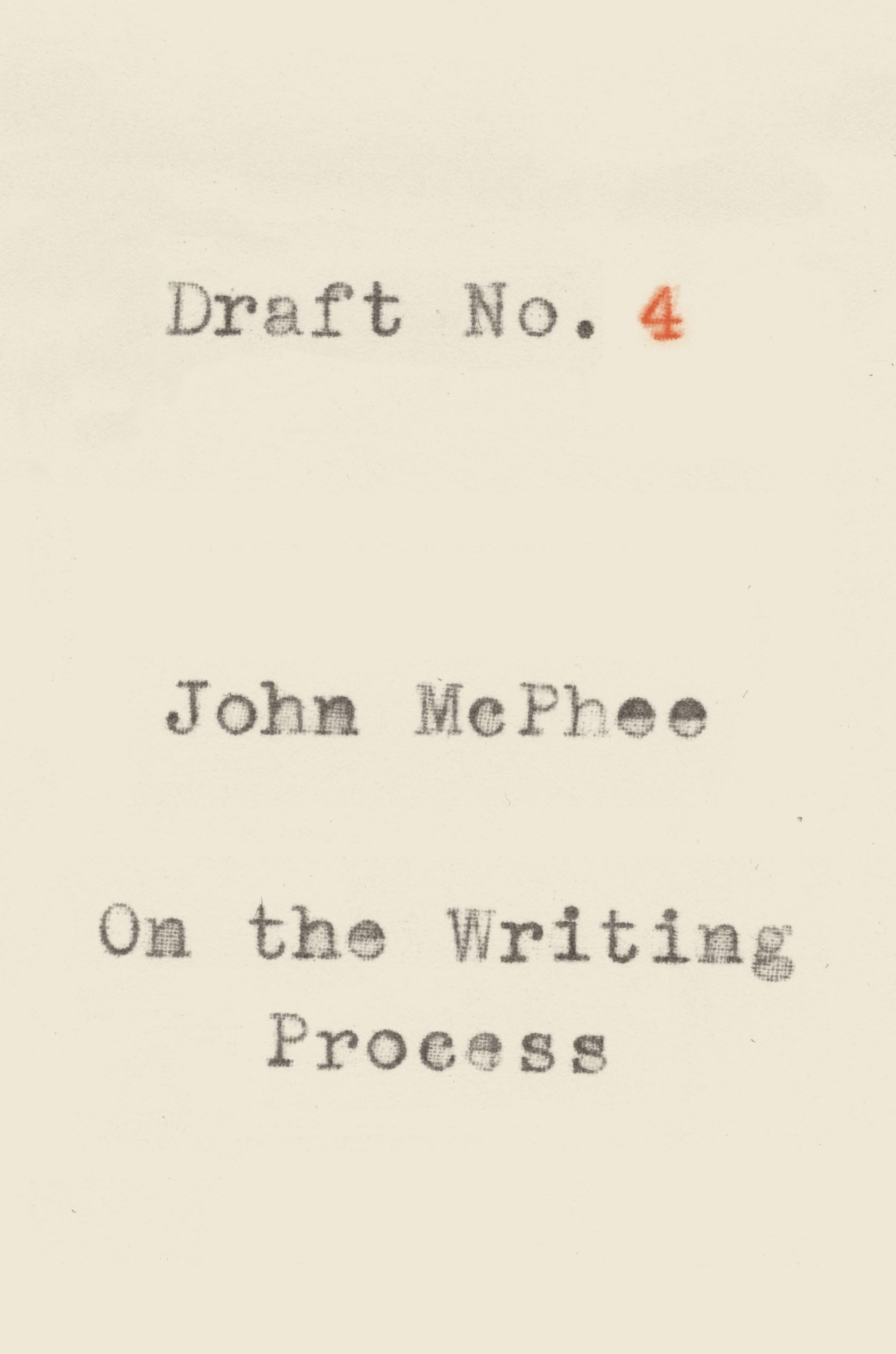
Draft No. 4: On the Writing Process
Product ID: 275323679
Buy anything from 5,000+ international stores. One checkout price. No surprise fees. Join 2M+ shoppers on Desertcart.
Desertcart purchases this item on your behalf and handles shipping, customs, and support to South Africa.
The long-awaited guide to writing long-form nonfiction by the legendary author and teacher Draft No. 4 is a master class on the writer’s craft. In a series of playful, expertly wrought essays, John McPhee shares insights he ha Review: Inspiring if you are learning to write a book - This man is a clever writer and puts his story into useful ideas. Hard to put down Review: I have a new favorite book about writing - Shortly after I started my first editorial job (as opposed to writing only), my boss gave me a copy of Blundell's _The Art and Craft of Feature Writing_. (I'm still grateful, Peter.) Ever since, Blundell's book has been on my short list of most-useful books for writers because of its practicality and encouragement. As Blundell pointed out, a good feature writer can make ANY subject interesting -- even, say, oranges, about which (Blundell pointed out) John McPhee wrote an entire book. Now, Blundell's #1 spot on my writer's bookshelf has been replaced by McPhee's own book about the writing process. (Though really, get both.) McPhee is a brilliant writer -- as evidenced by his ability to keep a reader's attention all the way through a 60,000-word New Yorker article, and to make those readers keep turning pages on any number of non-fiction books. He also is a superb instructor. The book covers such topics as structure, progression (in what order you present events), dealing with editors, elicitation (such as how to take notes while the source is staring at you; "display your notebook as if it were a fishing license," he suggests), frames of reference, and fact checking. Nobody taught me these things; I had to learn all of them from experience. Now you don't have to. Oh my, that sounds like a college course (and I guess it is, since McPhee has a long professorship at Princeton). But this is fun, engaging, full of "oh wow that's a good idea" practicalities. I wish I had a buck for every time I said, "McPhee captured that idea so much better than I ever could." Case in point: "The lead -- like the title -- should be a flashlight that shines down into the story. A lead is a promise." Or the advice that, when you can't find the end of a piece, look back upstream. "Run your eye up the page and the page before that. You may see that your best ending is somewhere in there, that you were finished before you thought you were." (As an editor with nearly 20 years of experience, now, I call affirm that some authors keep writing well after they're done. Fortunately they have me and my red pen.) McPhee has plenty of praise for the editors who guided him and anecdotes that made me smile. Shawn breaking in new writers, "but not exactly like a horse, more like a baseball mitt." The idea that "editors are counselors and can do a good deal more for writers in the first-draft stage than at the end of the publishing process." The copy editor and fact checker in the urgency of an issue closing including McPhee's article about geology, leading to him commenting, "so many rocks were flying around in my head that I would have believed Sara if she had told me that limestone is the pit of a fruit." I said aloud to the book: I want to be the kind of editor who is worthy of this kind of admiration and appreciation. (I have a long way to go.) Can you tell I love this book? I really do.
| Best Sellers Rank | #29,510 in Books ( See Top 100 in Books ) #21 in Writing Skill Reference #23 in Book Publishing #26 in Academic & Scholarly Writing |
| Customer Reviews | 4.5 out of 5 stars 423 Reviews |
F**N
Inspiring if you are learning to write a book
This man is a clever writer and puts his story into useful ideas. Hard to put down
E**R
I have a new favorite book about writing
Shortly after I started my first editorial job (as opposed to writing only), my boss gave me a copy of Blundell's _The Art and Craft of Feature Writing_. (I'm still grateful, Peter.) Ever since, Blundell's book has been on my short list of most-useful books for writers because of its practicality and encouragement. As Blundell pointed out, a good feature writer can make ANY subject interesting -- even, say, oranges, about which (Blundell pointed out) John McPhee wrote an entire book. Now, Blundell's #1 spot on my writer's bookshelf has been replaced by McPhee's own book about the writing process. (Though really, get both.) McPhee is a brilliant writer -- as evidenced by his ability to keep a reader's attention all the way through a 60,000-word New Yorker article, and to make those readers keep turning pages on any number of non-fiction books. He also is a superb instructor. The book covers such topics as structure, progression (in what order you present events), dealing with editors, elicitation (such as how to take notes while the source is staring at you; "display your notebook as if it were a fishing license," he suggests), frames of reference, and fact checking. Nobody taught me these things; I had to learn all of them from experience. Now you don't have to. Oh my, that sounds like a college course (and I guess it is, since McPhee has a long professorship at Princeton). But this is fun, engaging, full of "oh wow that's a good idea" practicalities. I wish I had a buck for every time I said, "McPhee captured that idea so much better than I ever could." Case in point: "The lead -- like the title -- should be a flashlight that shines down into the story. A lead is a promise." Or the advice that, when you can't find the end of a piece, look back upstream. "Run your eye up the page and the page before that. You may see that your best ending is somewhere in there, that you were finished before you thought you were." (As an editor with nearly 20 years of experience, now, I call affirm that some authors keep writing well after they're done. Fortunately they have me and my red pen.) McPhee has plenty of praise for the editors who guided him and anecdotes that made me smile. Shawn breaking in new writers, "but not exactly like a horse, more like a baseball mitt." The idea that "editors are counselors and can do a good deal more for writers in the first-draft stage than at the end of the publishing process." The copy editor and fact checker in the urgency of an issue closing including McPhee's article about geology, leading to him commenting, "so many rocks were flying around in my head that I would have believed Sara if she had told me that limestone is the pit of a fruit." I said aloud to the book: I want to be the kind of editor who is worthy of this kind of admiration and appreciation. (I have a long way to go.) Can you tell I love this book? I really do.
S**R
A lovely read
The book is for slightly advanced learners of the writing process and best suited for feature writers
D**H
Interesting but not exactly practical
This book is more about McPhee's life as a writer than it is a book of advice on writing. Not exactly practical, but – like everything McPhee writes – interesting reading.
Y**S
Gut
Sehr gut Einleitung zu schreiben
Trustpilot
2 months ago
2 weeks ago