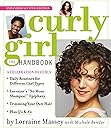

Desertcart purchases this item on your behalf and handles shipping, customs, and support to South Africa.
๐ Embrace your curls, ditch the damage, and own your unique style!
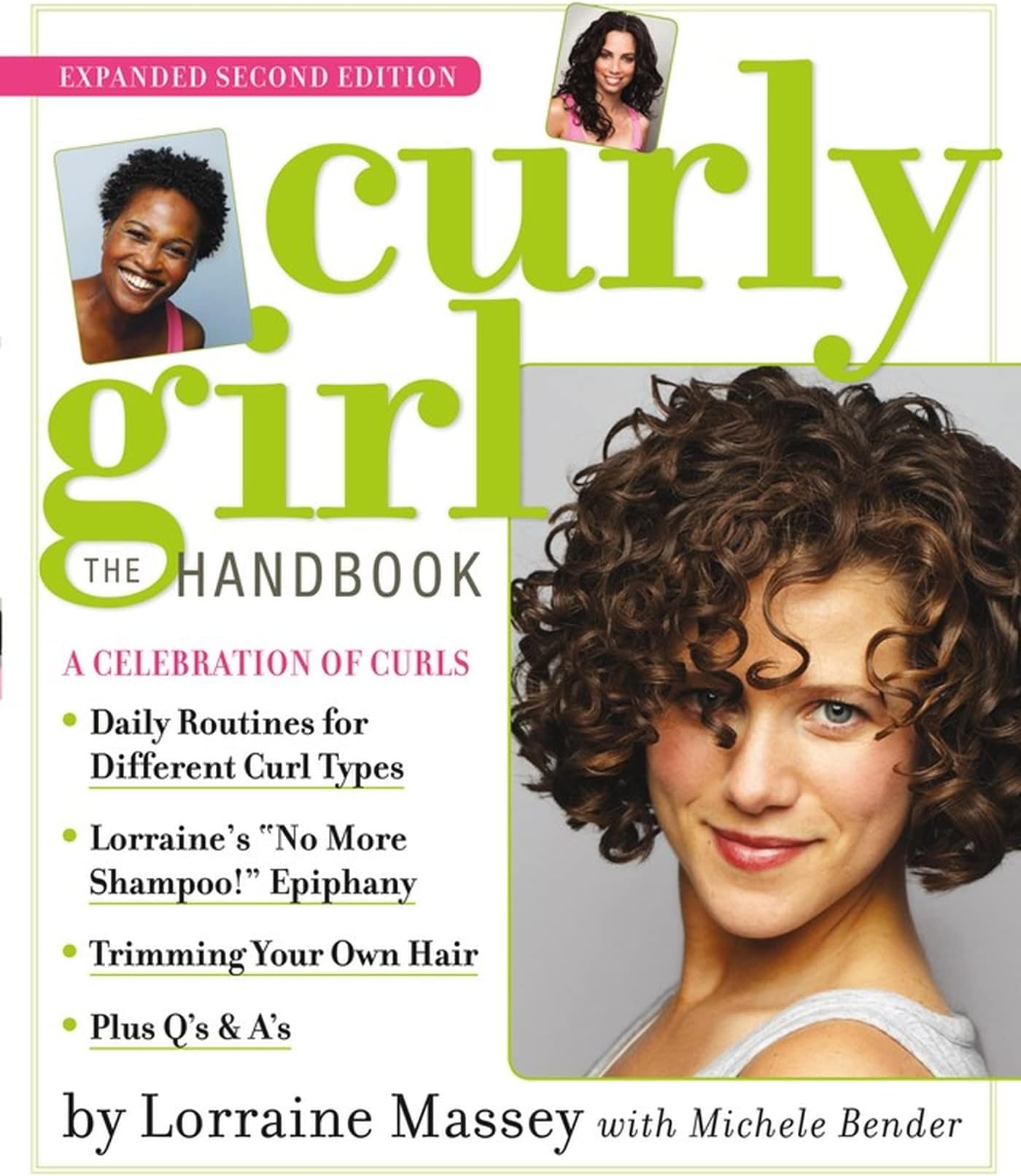
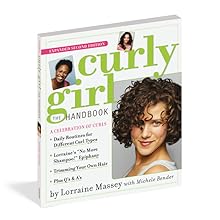
Curly Girl: The Handbook is the definitive paperback guide by Lorraine Massey that revolutionizes curly hair care with sulfate-free routines, chemical-free product advice, and empowering styling techniques. It offers tailored daily regimens for all curl types, DIY trimming instructions, and expert tips for maintaining healthy, frizz-free curlsโmaking it a must-have manifesto for anyone ready to celebrate and transform their natural hair.







| Best Sellers Rank | #44,140 in Office Products ( See Top 100 in Office Products ) #6 in Aging Grooming & Style #3,868 in Office Electronics Products |
| Customer Reviews | 4.5 out of 5 stars 7,653 Reviews |
C**.
Awesome and very educational
I am a Devacurl convert as of about 4 months ago. I have very delicate cherub curls, and my hair has been breaking off like it's going out of style for the past many years. I have been brushing, combing, blow drying and flat ironing my hair to death. By fighting my natural texture, I was killing my hair. I decided to try something new, because I have spent thousands of dollars following my hair dresser's suggestions, and all of those suggestions have not helped me successfully grow my hair out. I have very fine hair but lots of it, and it tends to break once it gets to my chin. After doing EXTENSIVE research, including reading several clinical research papers, I concluded that sulfates were the reason for my hair breakage. It isn't that sulfates are bad themselves, but its the fact that they strip my hair of the natural oils that protect each strand and keep them hydrated. By stripping the hair of moisture, frying it and brushing it, my hair was brittle and totally destroyed by the time it reached my chin. Washing hair with sulfates remove oil and more protein from the hair than using non-sulfate shampoos. When I was doing all this on a daily basis, my hair was half broken off by the time it reached my shoulders. This made growing my hair out nearly impossible. I started using the Devacurl Lowpoo/One condition, and after about a month, I moved on to use the Devaurl NoPoo and One Condition every other day. I have completely stopped brushing my hair. I follow the curly girl method almost perfectly, and my hair has never looked better. It's hydrated and it looks full and thick. My hair is finally happy, and I now get compliments on it often. My hair routine only takes 2 minutes, as apposed to 45 minutes that I used to spend killing my hair with various torture devices (blow dryer and flat iron). Here is my routine that I swear by: I get in the shower and wet my hair with warm water, apply nopoo to my fingertips and then massage it into my scalp for an entire minute. I do not bring it through the ends of my hair. I don't touch the ends of my hair when I am cleansing my scalp. I then rinse my hair under the water of the shower for about 30 seconds. Then I apply the One Condition from the roots to the tips of my hair, and I use a Mason Pearson wide tooth comb to distribute the conditioner and detangle my hair while in the shower. I also use the comb to make a straight part in my hair (if I don't do this, my hair is kind of a mess at the top). I wash out the conditioner and I gently cup my hair with a microfiber towel once I get out of the shower. I use the microfiber towel to dry my hair with the gentle up motions; it's not really scrunching, it's more like scrunching with an open hand. I then put a little bit of Devacurl Foam on the roots, and a tiny bit of Devacurl Angel on the tips. I let my hair air dry and I don't touch it until it's totally dry. The products help the hair stick together while it's drying, so it maintains the curl pattern without frizz. When my hair is totally dry, I then gently shake the hair at the roots, and fluff up the ends by going around my head with open palmed "scrunches." I never rake through my hair from roots to tips with my fingers when it's dry as this leads to a fluffy/frizzy mess. The Devacurl products also don't have silicones that aren't water soluble, so you don't have to use harsh cleansers to avoid product buildup. This is a VERY important piece of information. If you are going the no sulfate route, make sure that you are using products that have ingredients that are water soluble. If not, you will have a massive buildup of products in your hair. I was using a silicone mousse, and it made my hair look about three shades darker. I thought the color change was because of my natural oils, but after I used a clarifying cleanser, the silicones washed out and my hair went back to it's normal texture and color. Silicones are great for my hair, but I can't easily wash them out of my hair without using drying shampoos, so I now avoid them. It takes awhile for curly hair to get used to not being abused, so you should expect a period of chaos on your head for a bit, but once that period is over, you will be so happy you did this. I am never going back to regular shampoos, and I don't plan to brush my hair ever again (even though I truly love my Mason Pearson brush, I will have to find another use for it). UPDATE: Since I started (several months ago) applying the curly girl method to my hair, I have not found ONE broken hair anywhere; yes, I actually check when I find them to see if the root is attached. I used to find broken off ends everywhere but those days are over :)
L**E
It Finally Made Me a Believer!
One afternoon as I was browsing the shelves in my local county library I suddenly saw the words, "Curly Girl" and I was intrigued enough to check it out and bring the book home. All my life I have battled, hated, and been ashamed of my *ugly* naturally curly hair. I am the only curly girl in a family of people with stick-straight hair. When I was a child, my mother always complained that my hair looked "like it was combed with an egg-beater." I so wanted to feel long, swinging hair on my shoulders that I pinned scarves to my head. My mother always threatened that if I didn't take better care of my hair; i.e.,control its unruliness, she would cut it off. And just before my 3rd grade field trip to take a boat cruise in the harbor, that is exactly what she did! I was humiliated to discover that with the ocean's humidity I looked like a poodle! In my teens I slept on rollers as big as orange juice cans and even subjected my hair to a home-straightening kit, which ruined it and caused it to break off and thin. In my 20's I learned that if I kept my hair cut really short and used a big round brush to blow-dry it, my hair would be smoother. But the results never were exactly as I'd hoped and never lasted. Give me a rainstorm, fog, sweatiness, or too much handling, and it would all come undone. For years I wouldn't allow my husband to touch my hair for fear that my hair would revert to its natural state. (Not too romantic, heh?) About 15 years ago at my *staight-haired* sister's urging, I tried using a diffuser when blow-drying my hair. Unfortunately I knew nothing about technique. I was living in the Desert Southwest and was still dutifully shampooing my hair every morning to remove the ton of hair products I loaded onto it the previous day and then blow-dying it before I went to work. The result of my efforts with the diffuser was that my hair was dry and brittle and frizzy. When I would unexpectedly catch a glimpse of myself in a mirror or window I would think, "who's that!" Massey's book was a revelation from the beginning and I actually read it through in one sitting. The next day I followed her suggestions and was amazed at how much curl I actually had in my hair, even short. The 2nd day I read the labels on my haircare products and tossed out the ones with the drying ingredients, and even bravely disposed of my round styling brushes. Once I embraced my curliness, I decided that I really needed to grow it out some since without blow-drying, it looked really short! Each day my hair seemed to get shinier and by following the styling advice in Massey's book, my technique improved too. I haven't gotten a single negative comment or look from my friends and family. (Indeed, they are relieved that I am no longer so hair-crzed and dissatisfied with its appearance.) But best of all, I have come to terms with my curls and even discovered that I like the way they look and I am proud of them. I am so glad that I discovered "Curly Girl: the Handbook" that day in the library. I wish there had been a book like it years ago when I was really young. It has changed my life for the better.
J**N
Curly Hair Meets Identity Politics
It is not possible to give advice about care for every type of curly hair, since individuals' hair varies widely. However, this book attempts to classify several different types of curls and gives some general principles that the reader can apply, through trial and error, to find out what works best for her (or his) own curly head. If not properly cared for, much curly hair does not appear curly but just frizzy, poufy, flyaway, and out of control. If this describes your hair, it's possible that you have curls and don't know it. Much of the hair care advice that we get for straight hair is actually the opposite of what should be done for curly hair, so if you start the Curly Girl regimen, you might be surprised to find that you actually do have natural curls. But that's only half the book. The other half is a sort of manifesto. Apparently, very many people with curly hair have had traumatic experiences where they did not know how to care for their hair nor did anyone else (such as their mothers and hairdressers). Some were told their hair was unruly, wrong, "I can't do anything with it," or "unprofessional." Curly hair is treated as a problem to be solved. There is a strong ideological component to this book, to help naturally curly folks get over the mental block caused by this societal attitude. Sprinkled throughout the book are testimonies by men and women about how they came to accept their curls. There is even a tongue-in-cheek "12 Steps" at the back (some of them somewhat contrived) to lead the reader accept his or her curly hair and commit to care for it as such. There are also numerous "curl" puns sprinkled throughout. The tone is light, like a woman's magazine article extended to book length. I thought the curly-as-identity stuff was a little heavy-handed. One of the women, in her testimony, even refers to it as the "curly girl religion" (unless that was a typo for regimen), and that's not too far off the mark. I am naturally curly, but I don't think of myself as belonging to a victim class. Still, the book has good information about hair care, and I can imagine that some people might have a very hard time giving up straightening their hair, and would need all the identity stuff as an encouragement. The strong ideological tone grew out of the author's own experience of starting out hating, and then learning to love, her hair. According to the book, an estimated 65% of women have hair that has some amount of natural curl to it (varying from waves to "fractal" curls). I can only imagine that very many of them must be straightening theirs. Although I don't by any means think of straight-haired folks as oppressors nor do I want anyone with straight hair to feel inferior either, I do hope that an increasing number of curly-haired women decide to go natural, so that curly hair can become as normal, professional, and serious a look as straight.
C**N
This lady knows her stuff and it works
It's hard to believe after a lifetime of frustration I've actually found a system that's not only helped me love my curly hair, I absolutely no longer covet straight hair. I now feel like the one who is to be envied! Every (no exaggeration) single time I go out I now get compliments on my hair...what a wonderful feeling. And those compliments come not only from those who've known me forever; the most gratifying compliments come from total strangers. Wow. When you try this method, all I can say is absorb the advice and follow it--doing so has indeed changed the way I feel about myself. It has SO boosted my self-confidence. I have been going 'natural' for years and had terrible frustrations over the omnipresent frizz and dried-out hair. No longer--even on rainy, humid days. I have my hair colored--soon after initially getting it colored I started having a terrible time with extreme dryness. My hairdresser insisted the coloring had nothing to do with it, but I know better now. This book confirmed my suspicions, but the dryness is in the past now, after using the types of products suggested, and understanding more about my hair. The book does not push a particular brand of products but explains ingredients to avoid. Having said that, I have to admit I now use nothing but the product line developed by the author--DevaCurl. Some products of the line I like better than others, and they are not inexpensive, but they work--along with following what the book tells you to do. I started out trying one of their 'kits', which included smaller (8 oz) bottles of cleanser, conditioner and a small microfiber towel because it was a less expensive way to try the products...at least that way I could see if they worked without going overboard. They worked. I also have tried lots of additional DevaCurl products by buying when they offer specials--where your purchase also gets you small containers of other DevaCurl products. As I stated earlier, some I like better than others, but that you must determine for yourself. Rather than buying a large microfiber towel, I use a large cotton man's t-shirt, as suggested in the book, and that works great. The book also provides recipes so you can make your own products--I haven't tried that, but I certainly love the DevaCurl stuff, so I just buy those. The lady who wrote this book has become a hero (or heroine) to thousands, and rightfully so. She is certainly one of mine. I even went to the website and found an area that shows you where to find hairdressers who have been trained in using her method (which includes dry-cutting your hair--makes such perfect sense--read the book--when hair is cut wet you have no idea how each curl is going to dry). I live in a rural mountain area and now drive 75 miles each way to get my hair cut/colored by someone who understands and gives a s**t about how to deal with curly hair. Fortunately, I only have to go every 10-12 weeks...part of the benefit of a proper cut, and the curl helps hide the roots. Didn't mean to write so much, but the method this book describes should be mandatory for every hairdresser and every curly-haired person out there. I don't think you can go wrong if you use this system. I'd almost pay people to read this book.
C**S
Pleasantly Surprised
I have been pleasantly surprised by this book. I thought about buying it last year, but decided to put it off. Lucky for me, they came out with the updated version during that time and I bought, for about $8, the book and a DVD that came with it! I find it wonderful, that for such a small investment you receive so many great recipes (I've already tried 4 of them and have loved them all) and incomparable advice. I was born with straight hair, but when I hit adolescence, it turned wavy/curly. My hair type is some kind of mixture of both wavy (to about my ears) and botticelli curls according to the book, with a few other curl types thrown in, which is not at all uncommon (made me feel less weird to learn this). The book encourages you to embrace your natural hair type and shows you how to identify what types of curls you have and how to care for them in a way that won't drive you nuts. I don't feel like I've had a bad hair day since I first followed the advice for my closest hair type (wavy). I make my own flax seed hair gel for dirt cheap and use an inexpensive, cone-free conditioner for my routine. Ever since adolescence hit I've hated my hair, and on very few days have I actually felt happy with how it looked when I didn't do anything to it (and I like my hair low-maintenance, which meant I was unhappy with it but stuck most of the time). Since I have waist-length hair I gave up straightening a long time ago because the results never lasted long and took me 45 minutes or longer to do it. Only because of this book have I really started enjoying my hair. I have to admit - the scariest thing for me was "getting rid of" (I gave them to my husband to use!) my natural bristle hair brushes and combs and just using my fingers and oil to moisturize the length of my hair. But the improvements have been amazing and it is so nice not to need brushes anymore, believe it or not! My husband loves my newly more-pronounced, healthy-looking curls! My advice: buy the book! I'd be really surprised if you regretted it. The recipes are inexpensive and easy to try (my favorites are the exfoliating cleanser, lavender spray, and lemon aid) and the method only takes a couple of days to get the hang of (especially if you watch the DVD method a couple of times and then compare it with your hair type in the book)! For the first time my hair is so easy to do and I don't have to worry about it! This is a truly empowering book.
R**S
Inexpensive, good tips - so-so curls on me
I delved into this book and the methods outlined with such enthusiasm. I'm a little disappointed for myself. Positives: My daughters have 3c and 4a (if you are into the hair typing system) already definable curls. Their hair responds well to the sulfate-free shampoo, feels softer after ditching the silicone-laden conditioners and looks fuller and less frizzy after donating my Denman brush - again per Massey's advice. Lorraine Massey in her book and during interviews does not advocate the use of combs and brushes - not even brushes supposedly designed for curly hair. In one interview, she said that Denman brushes cause frizz, breakage, and disperses your curls causing your curls to have to find their way again. From my experience, I have found this to be true about Denman brushes. I would add that using those brushes also causes your curls that do clump to shrink further onto themselves - making your curls appear shorter. But that's a different subject. IMPORTANT FOR THOSE OF US WITH SMALLER OR TIGHTER CURLS: If you are using the Curly Girl method and have 3c or 4a curls, finger-combing your hair en masse or in two sections per the photographs in Massey's book may make your hair look frizzy and your curls probably won't clump properly. That was my experience on myself and my daughters. My daughters' natural curls looked better defined once I divided their thick hair and mine into more sections and finger-detangled each section separately. For my tween daughters after a month of trying the Curly Girl method, I have no negatives to report. They have beautifully defined shiny curls, I didn't have to buy an avalanche of trendy, pricey curl-defining products to get this look. Hair care is fairly simple, cheap (you don't have to use the $30 a bottle DevaCurl Products Massey touts - any sulfate-free shampoo or silicone-free product that you like should be fine), and my daughters get tons of compliments. Their hair responds well to leaving conditioner in the hair as Massey suggests. For me - different story. My hair looks okay while it's wet or damp. The curls clump. My hair feels soft, softer than it did when I used silicones but it's not gleaming. It looks powder-dull and a little brittle. I'm not sure why. I am under 40, I don't have any chemicals in my hair. I don't use heat. I don't have heat damage anymore since my haircut. My hair just doesn't look as good as it did when I was simply wearing twist-outs, bantu knot-outs, braid-outs or up-do's. The curls on me (not on everyone) look sort of dated, and little severe. I just feel I look unflattering wearing a cap of curls (my hair is about four inches long all over stretched). Massey said that your natural curls can make you look younger. Well, not me. Perhaps my hair will look better once it's longer? I don't know. I feel now they make me look mousy or like a throwback from an 80's poster. This is not the image I want to project. Am I crazy? Does anyone else have this experience? Also, should people born with curly hair only wear it curly whether it suits them or not? I don't think so. For now, because I do like how my curls clump, I like finger-detangling (I lose less hair) and I like how soft my hair feels I will continue using the Curly Girl method but I will only be wearing my hair in twist-outs, braid-outs, etc. until it grows out a little more. Perhaps my curls will look better when my hair is longer. That said, I'm glad that she has inspired and helped others, including my daughters.
D**O
A must have book for any curly haired guy/gal who has gone through frustrations with their hair
This is definitely a must have book for anyone who has curly hair that has never really known how to properly take care of it. I grew up with a mother who has pin straight hair, an older sister with pin straight hair, and a father and little sister who has curly hair. You'd think since the curlies are dominant in the family that we would all know how to take care of our hair right? Wrong. Since my father was never the one to "doll" me up as a kid my hair was always straightened and styled as my mother had done her own hair. It wasn't until middle school that I discovered I actually had curly hair, but still I didn't have much help. Most days I just slathered gel into my hair and put it up in a pony tail high on my head. It wasn't until high school that I discovered the wonderul world of flat irons and blow dryers! Oh the awful things I did to my hair to make it as straight as I could, and I dreaded PE class and rainy days. I spent almost a good 10 years straightening my hair until I finally decided to give in and wear it curly because I had realized how ridiculous it was to spend so many hours on my hair! I've been wearing my hair curly for about a year now and it's definitely been a battle. I've spent a lot of hours on the internet trying to do my own research watching many many youtube videos, reading blogs, etc. I was a product junkie, buying things left and right thinking they did wonders on others hair, maybe they will do wonders on my own! It wasn't the case. It wasn't until I moved from Phoenix, AZ to Seattle, WA that I decided I had had enough, the amount of frizz I was dealing with because of rain or humidity was super frustrating. This book hasn't "solved" my problems, but it definitely gave me a lot of useful information towards helping care for my hair properly - basically every product I'd been using on my hair was a big no-no. If you can relate to any of my story, and are still struggling, I strongly recommend you purchase this book and give it a read. My hair isn't perfect yet, but I've only been at it for about a week or two, but I've noticed dramatic change in the shape of my curls. My hair is extremely dry and damaged from blow drying and dying so it will be a bit of a process. Bottom line...those that know me well, know I've struggled my whole life trying to tame this mane, and it's not been easy... oh the crazy things I've done, the many hours I've spent trying to make sure every strand was perfectly in place - and oh the many terrible haircuts from stylists having no idea how to manage my hair... the many tears shed. I've finally decided to embrace my crazy hair and start loving it how it should be loved. This book has a lot of useful information for curly hair. Please understand what works for some, may not work for everyone, but it's a learning experience! Don't expect this book to be a miracle worker and solve all your problems for you. It's meant as a guideline to help learn what works best for you, and remember it's going to take time a lot of practice, but I know once we get the hang of this it will all be worth it!
J**.
Must read if you have curly hair!
The Curly Girl Handbook is all about how to properly take care of naturally curly or wavy hair. I found some great insights while reading the first chapter like the preference for straight hair is a subtle form of racism and that 65% of women have curly hair. Yet most hair products are made for women with straight hair and thousands of hair straighteners are sold every year. I felt a big shift in attitude as I was reading about my own curly hair and how I should accept my hair (and ultimately me) for who I am and stop trying to change myself. I related a lot to the stories of women throughout the book that felt different and ugly. There's a quiz at the beginning of the book to help you find out if you need a paradigm shift in your life. I answered yes to half of the questions. I didn't think it would be that many. I answered yes to things like almost always being unhappy with the way my hair looks, having constant frizz, and blow-drying my hair then not washing it for a week. I dog-eared so many pages of this library book and referred to it so much that I went ahead and bought it. I refer a lot to the homemade hair product recipes and I want to try them all. So far, I've only made the Lavender Water to spritz your hair to recurl it and I love it. The book helps you identify your curl type and the specific hair-care routine that goes along with it. I have wavy hair! I have always wanted wavy hair like Megan Fox and I have wished for the longest time to find some way to harness my pretty waves. I'm going to grow my hair out again and I'm feeling more pretty and confident every day. I thought it was so funny how she describes hair stylists straightening girl's hair for a special occasion and then curling it with a curling iron. That's how my hair was done for my wedding! The writing is kind of cheesy. The author sticks in the words "curl" "mane" and "hair" in lots of places that they don't belong. And there was a lot of focus on long curly hair - not a lot of extra tips for short curly hair. But other than that I love this book. I've stuck to this hair-care method for 4 months now. I love that I don't have to worry so much about my hair. It's looking better and better every day. Major changes I made from reading this book: *No brushing. I go through my hair with my fingers while it has conditioner in while I'm showering instead of brushing. *Use a t-shirt instead of a towel to dry my hair. A towel will catch and pull your curls apart and make it frizzy and dry. *No shampoo. I used conditioner instead of shampoo for a month. I use sulfate free shampoo now because my hair type does well with it. *Use gobs of conditioner. Curly hair is dry and that's why it will frizz out - it's trying to get moisture. Use lots of conditioner to moisturize it and your hair will be curly instead of frizzy. *Use the right products. I use alcohol free gel in my hair, silicone-free conditioner and sulfate-free shampoo. If you have naturally curly hair, you need to read this book!
S**H
Trรจs utile
Ce livre m'a permis de mieux comprendre mes cheveux ondulรฉs, qui doivent รชtre traitรฉs diffรฉremment que les cheveux bouclรฉs. Sur internet on trouve de tout et rien, ce livre est beaucoup plus claire. J'y ai trouvรฉ beaucoup d'informations que je n'avais pas trouvรฉ sur internet.
M**L
Amazing book
I can't imagine how many curly girls got help from this book. Love the part about the horoscopes amazing book
B**E
Mi ha cambiato la vita
Questo libro รจ favoloso. Mi ha cambiato i capelli e la vita. ร proprio una filosofia. Lo amo.
A**R
A curly girl essential!
This book is eye-opening and incredibly informative! I would definitely recommend it to anyone who has issues styling their hair - and thatโs the reason why I became interested in it in the first place - because it is packed with instructions, amazing tips and wonderful stories from people who have won the battle against their own natural hair. Curly girls unite!
N**I
Great book!
Extremely informative and with some lovely pictures
Trustpilot
2 months ago
2 weeks ago