
Desertcart purchases this item on your behalf and handles shipping, customs, and support to South Africa.
🌿 Cultivate abundance and join the permaculture revolution—your garden, your legacy!
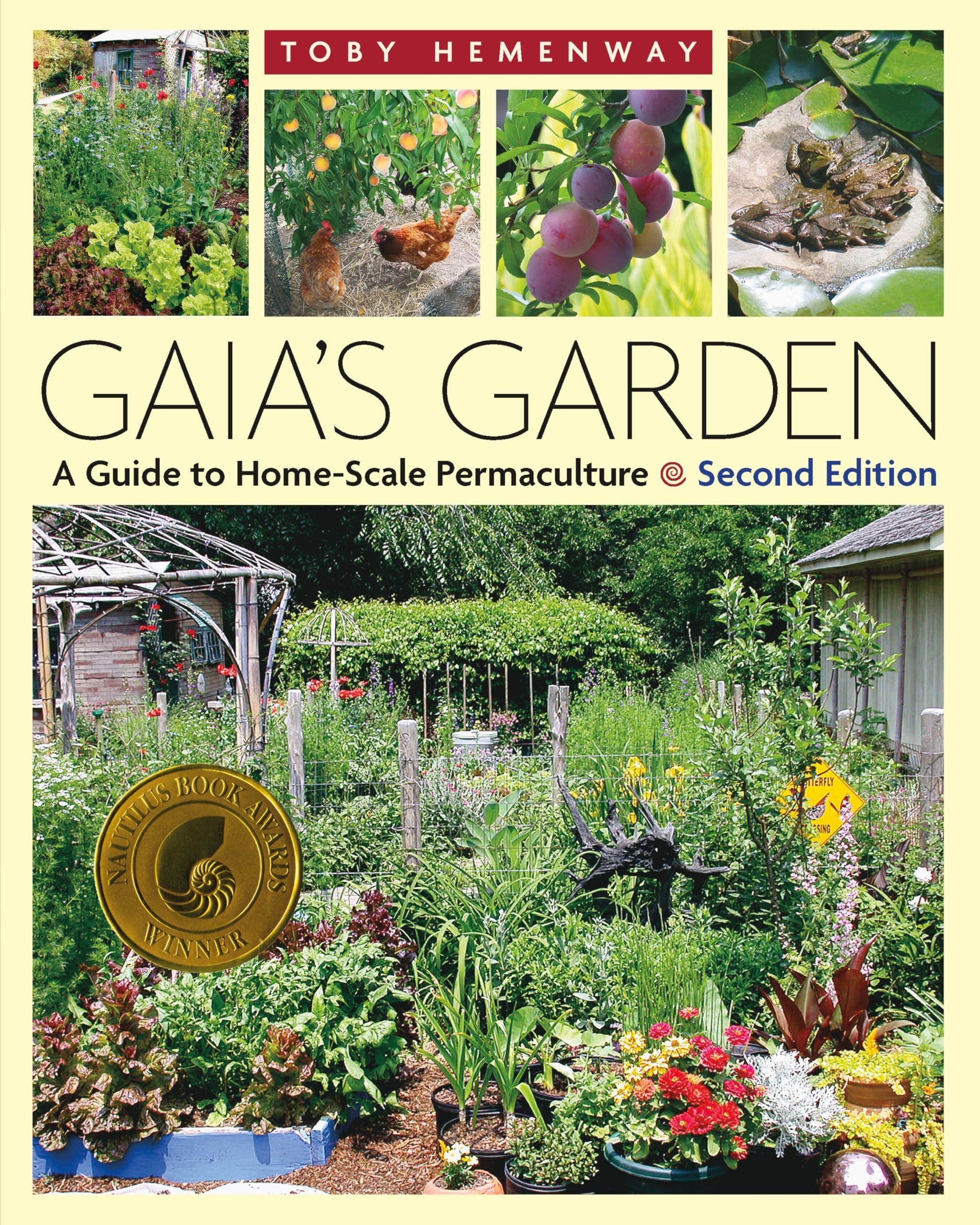
Gaia's Garden, 2nd Edition, is the definitive guide to home-scale permaculture, offering updated, practical strategies for creating beautiful, productive, and ecologically harmonious gardens of any size. With a focus on urban-friendly techniques, soil health, water conservation, and biodiversity, this bestseller empowers gardeners to transform their outdoor spaces into resilient ecosystems that reduce labor and support sustainable living.


| Best Sellers Rank | #15,207 in Books ( See Top 100 in Books ) #10 in Organic & Sustainable Gardening & Horticulture #136 in Home Improvement & Design Books |
| Customer Reviews | 4.8 out of 5 stars 2,464 Reviews |
C**5
Best gardening book. And I’ve read a lot of them…
This book was a requirement for a sustainable agriculture class. I received the book a week before the class started and read it cover to cover in 3 weeks. I understand that I’m a little bit of a gardening nerd, but there is some great info in this book. I won’t loan it out because I fear not getting it back. Anyone looking for a better way to garden should get this book.
T**S
An Essential Manual for All Gardeners on the Planet
If you have room on your shelves for only one book on gardening, this should be it. Toby Hemenway, who unfortunately passed away last December, was simultaneously a master gardener, a superb writer, and a man of immense knowledge and decency. His book is a comprehensive gardening manual for suburbanites, but it is much more--it is a roadmap to a revolution. Not, of course, a revolution as it is normally imagined--storming the barricades and all that. But rather, a deeper, more fundamental revolution in the way we live and think, starting, quite literally, from the ground up. (His chapter on topsoil will fundamentally change the way you look at the stuff under your feet!) Until this book came along, Permaculture was widely marginalized and stereotyped as a kind of quaint hippie agrarian movement, a vestige of the 70s, for folks who wanted to abandon modern industrial civilization to go back to the land, buy a few acres, and grow their own food. But Hemenway understood that this movement was not just about growing food, and not simply for hippie farmers, but a fundamental shift in orientation for our civilization with practical implications for everyone--including and especially city dwellers and suburbanites. For those who simply seek detailed gardening advice, on what to plant, when, and where, this book has copious information, practical advice, and suggestions, along with tables and charts galore. But it is much, much more. It introduces us to Permaculture as a way of thinking, a way of understanding design as a regenerative process, and of understanding ourselves as a part of, rather than apart from, the natural world we inhabit. Read it closely and carefully, and you will never be the same--you will transform not only your backyard, but also your understanding of life itself, and of your place in it. You will find yourself as part of a worldwide movement of quiet revolutionaries who are healing our planet one backyard at a time, and not only growing delicious, abundant food, but sowing the seeds of a regenerative future for all our children. Toby Hemenway has passed away--a great loss to our planet--but in this book, he has preserved and transmitted the essence of his practical knowledge and wisdom to all the rest of us. Read it, learn it, consult it, and then join the revolution, the healing process for our sick and dying planet, starting in your own back yard.
S**H
Shows how to leverage the power of natural ecosystems to make gardening easy!
There is a lot to absorb from this book. After having spent the last two months reading it and applying tips from it, I wish I'd read the last chapter first since it summarizes everything. It takes the mountain of overwhelming knowledge and gives a simple path forward. Since reading this book, I have a more holistic view of my yard. I can see I've already made some mistakes in my yard, but it is exciting to begin to see results already. Instead of following the usual route of planting rows of veggies, I've started working on symbiotic blends of nitrogen fixers, vines, and other roles. Today I picked up a cheap bird feeder and post from a hardware store and put up a quick bird feeder over a dry, weedy patch in the back. I look forward to seeing how well the author's claim that doing this will lead to passive, ongoing returns in the form of birds' fertilizing the barren area with their poop and their weeding the area as some scratch around the ground looking for fallen seeds. His urban ideas are incredible, too. Don't miss out on that chapter, even though it's tucked in just before the end. He has a few pages devoted to what you can do with the "hell strip" between the road and sidewalk (usually just used for a mailbox and cable tv lines). Don't skip the observation step he gives in an incredible several pages and sidebar. While we did some of this work, I wish we'd done even more extensive up-front observation. It turned out we had to overhaul our plans once the people came out and marked the utility lines. They weren't where we thought they were originally. But I'm so glad this book showed us how to find out these things early on. It would be a shame to plant an expensive tree and pour water and resources into it only to have it uprooted later on. If there is one reason to buy this book, it's because it will shift your perspective away from seeing gardening as a chore with unending maintenance. Instead, by working with nature instead of against it, problems can become signals, temporary obstacles, or just part of the normal flow. The book is pragmatic, realistic, backed with science and research, and a lot of fun. Get it, read it, and try it out.
C**E
Great useful book
I haven’t read the book all the way through but my garden is doing so good already. My climate is really dry and hot and my plants are still thriving thanks to the tips in this book very informative and so many great resources.
H**R
A nice starting point
Gaia's Garden does a nice job of making the basic principles of Permaculture clear without being boring. I've read several other books on the subject and this is by far the most accessible. Perhaps most interesting to me was the advice on developing plant guilds and cultures from the principles up. That's something that most other permaculture books tackle only by example (coming off as bragging, as well), and I found the treatment here to be exemplary. That could be especially useful if you, like me, live in an area that hasn't received a lot of attention yet from the permaculture movement. If you're looking into permaculture, I'd recommend this as a good starting place, a lot of bang for the buck. The only thing holding me back from giving it five stars is that some of the plant lists and tables are rather short. While the book doesn't advertise itself as the end-all be-all book of permaculture data, I sometimes felt a few more table rows or pages would have gone a long way. On the other hand, if you're pioneering permaculture in your area, you'll have to do some research anyway. Its not difficult research, as much of it is available online (often from Ag extension offices or similar government services, although often the plants are considered weeds) and Gaia's Garden does provide more than adequate instruction on how to evaluate the performance of your selections. Of course, as with a lot of permacultural things, patience is key.
S**R
Gaia's Garden - a workable plan that works
I don't think I can say anything here that hasn't already been said except to add that I'm not even finished with the book and I'm implementing alot of the ideas. Its the most perfect blend of food production, wildlife habitat and minimizing labor that I've ever found. This is my first introduction to permaculture and the reading is easy and interesting. Lots of details but not boring in any way. I have alot of plans and this book has helped me pull all my ideas together into a cohesive plan that will benefit people (my family), wildlife and my little corner of the world. I had already started planting to encourage birds but now I know how to make that a part of my garden and not a separate entity in some far corner of the property. I live in the heartland of big Ag and chemical farming so I see the results of that on the soil and the loss of habitat. Luckily I was raised on a farm in the era before big Ag and I knew there was a better way. This book not only tells you how to do things - it tells you why those methods work. There are ideas, solutions to problems (hungry deer) and encouragement to try your own ideas. You may not implement every idea the author has but there are enough different ways to use the system - you just need to experiment with what works within your lifestyle. If you don't read it for any other reason - the "how and why" behind how ecosystems work together is worth your while. You'll never apply chemicals again without thinking twice about it (or better yet - finding an alternative). I would have to say its my favorite read amongst all of my garden books and I will be referring to the tables and charts often. I will be giving friends copies of this book.
K**N
Truly Amazing Book
I knew literally nothing about Permaculture gardening when I bought this book - my mother mentioned it to me and said to check it out, so I came to Amazon where the description intrigued me......fast forward 3 weeks later and my front water guzzling lawn has now been sheet mulched in preparation for a wonderful, sustainable, garden, and I have 5 baby chickens being delivered next week! I'm not kidding when I say that this book was transformational in my views on gardening - I live in the city with very limited space, and our lawn was the best in the neighborhood. I have a raised bed for a garden in the back, and did produce some good veggies, but not near enough to eliminate buying any items at the grocery store. My first 10 minutes with this book I learned what I was doing wrong in my raised bed - and as I dug deeper it was one "Aha!" moment followed by another. I am a scientist, and I can't believe none of this had ever occurred to me! The book is very in depth and gives wonderful examples with specific plants (not just general concepts) - the only thing I would have liked to see more of was pictures of actual permaculture gardens. I'm a very visual person and like to have something to imitate when designing my own project, so I'm still searching for design examples to incorporate (once again with specific plants). Just know that if you get this book you're going to be inspired to make some drastic changes in your landscape - as evidenced by my "Bomb Proof Sheet Mulched" lawn - the recipe in the book for this was extremely helpful! I will admit that my first initial thought upon opening the book was - oh no, this is too in depth and not being a professional gardener, I'm never going to understand - trust me when I say, pick a chapter that sounds interesting to you and start there - that is what I did, and it migrated to many of the other chapters and just kept going!
J**R
Greatly broadened my vision of what's possible
Very, very pleased with this book. Before I read Gaia's Garden, I would look out on my 1 acre lot and think, "I sure wish we had more room to grow more food." After reading this book, I look out and think, "WOW! Look at all this SPACE we've got!" This book guides you through the process of assessing your existing lot, giving you loads of ideas of what you could do, and then assist you in planning out exactly what you want to do. In the back of the book, the chart of food-bearing trees, plants and vines alone was worth the cost of the book. It was extraordinarily helpful in coming up with my plans for my lot. This book has not only given me the ability but also the confidence that I can successfully create a sustainable forest garden in my own backyard. Sure, it will be a lot of work up front, however, I am confident it will produce more food than we could possibly consume, year after year without having to replant, use herbicides, or insecticides. On a philosophical level, this book helped me to understand that Nature works in numerous overlapping networks of mutually-beneficial systems. We can pit ourselves AGAINST Nature, by using today's agricultural methods, or, we can work WITH Nature to produce literal Gardens of Eden. Google "offgridders" to find my blog where I'll be posting updates on my implementation of the ideas in this book.
F**N
excellent for understanding permaculture
excellent book for getting into permaculture and understanding the philosophy
R**F
inspirational
Okay, introduction to the topic with lots of great, practical, applicable tips and an enjoyable and inspirational read with lots of ideas
C**I
If you’re curious about permaculture, this book is an absolute must ⭐⭐⭐⭐⭐
Gaia's Garden is, without a doubt, one of my all-time favorite books. As someone deeply immersed in permaculture and sustainable gardening, I can honestly say this guide has been a game-changer for me. I absolutely love how it empowers gardeners of any skill level to create their own thriving ecosystems, no matter the size of their garden space. Toby Hemenway's passion for permaculture shines through on every page, and his clear, down-to-earth explanations make complex concepts so easy to grasp. The practical tips, beautiful illustrations, and thoughtful design strategies have definitely improved the health and productivity of the gardens I work in. The plant lists in this book are extremely helpful and I have referred back to them countless times. If you’re curious about permaculture, this book is an absolute must. I simply can’t recommend it enough!
P**T
The perfect introduction book to permaculture
Filled with very useful information and covers a wide range of subjects in the permaculture field.
T**.
Theoretische und praktische Einführung in die Permakultur für den Hausgarten
Schritt für Schritt legt der erfahrene Autor die Prinzipien der Permakultur dar: Gärtnern im Einklang mit den Prinzipien, welche die Natur seit Jahmillionen anwendet. Das Buch ist daneben prallvoll mit praktischen und konkreten Vorschlägen, wie ein Hausgarten unter verschiedenen klimatischen Voraussetzungen erfolgreich zu gestalten, zu bepflanzen und zu bewirtschaften ist. Je naturnaher, umso weniger Arbeit für die Gärtnerin und den Gärtner - das ist ein angenehmer Nebeneffekt der Permakultur.
Trustpilot
2 weeks ago
1 month ago