
Desertcart purchases this item on your behalf and handles shipping, customs, and support to South Africa.
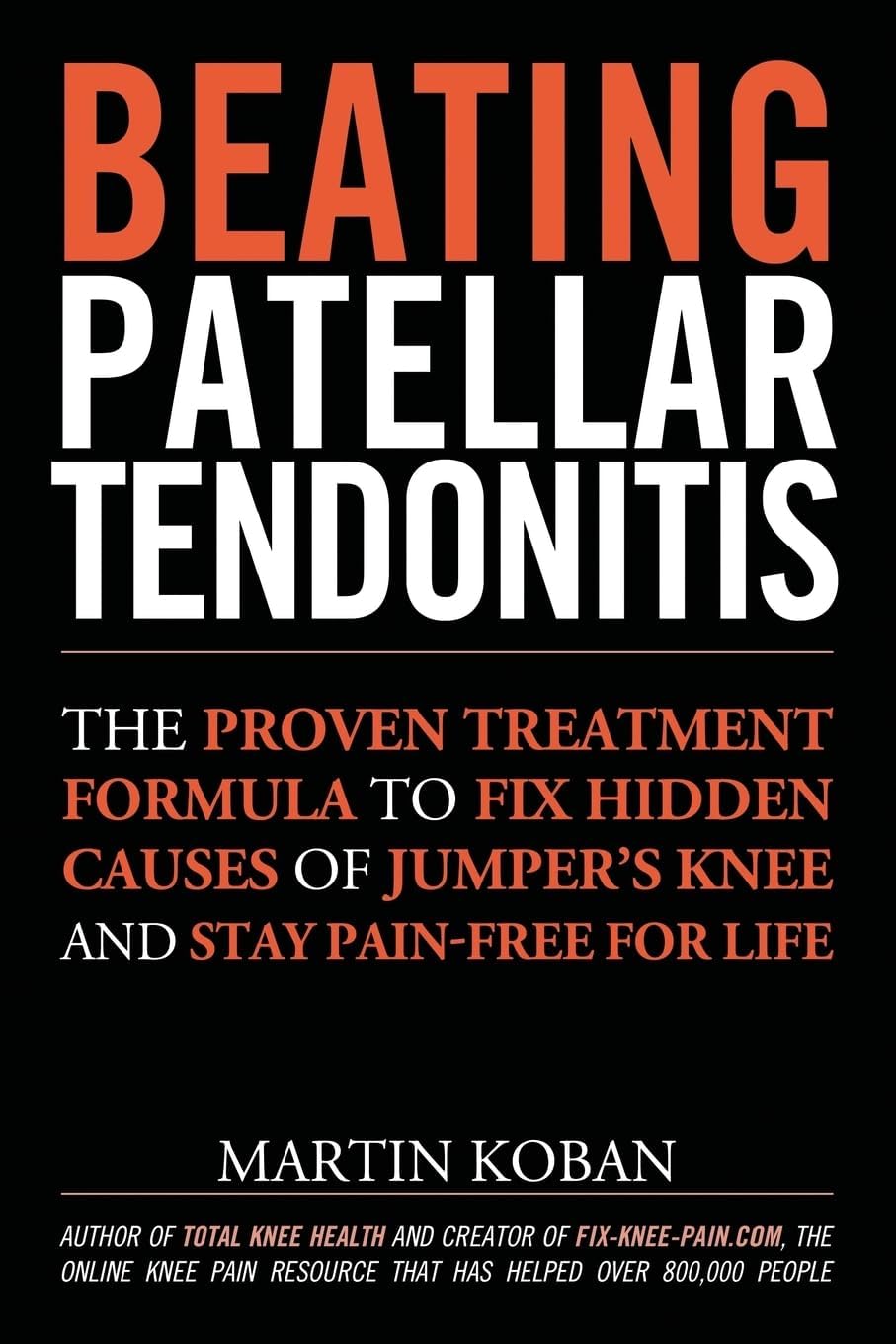
Are you struggling with patellar tendonitis (“Jumper’s Knee”) and can’t seem to make progress in recovering from it no matter what you do? It’s not your fault. Keep reading to learn the surprising truth about how you can finally fix this situation. The author’s story: “Back when I suffered from patellar tendonitis, I thought I was doing everything possible to treat this injury. I was stretching regularly, warming up before games, strengthening my legs, and doing whatever else doctors suggested might help. However, the pain never stopped. Sure, some days were better than others were, but I was still in pain and my athletic performance was severely handicapped. I was frustrated with my lack of progress, and I couldn’t believe that for all the effort and dedication I put into my training, I was being punished with pain that was impossible to get rid of. The worst part was that every time I thought I had made progress, the pain returned. The whole experience was so depressing that I almost quit playing my sport. Today, my knees are completely pain-free. I can play my favorite sports and train exercises that are extremely tough on my knees, such as deep single-leg squats, without having to worry about knee pain. I would have never imagined this to be possible. Today, my legs are stronger than before my injury, and the best part is that I know exactly how I can continue to get them into even better shape without any risk. The reason I struggled with patellar tendonitis for so long wasn’t my fault. I already knew some of the things I had to do, but to beat the odds, I needed to fix a number of hidden causes for patellar tendonitis and learn how to strengthen my weakened knees without reinjuring them. It took 3 years of research and self-experimentation to collect this knowledge, but now it is easily available in this book.” – Martin Koban , Author of Total Knee Health The reason people struggle with healing jumper’s knee is because they’re using an outdated treatment approach that is based on research just as outdated. Your rehab efforts are doomed to fail if you don’t eliminate all hidden causes for patellar tendonitis. These often ignored causes determine how much stress you patellar tendon is subjected to when you’re moving and if you don’t correct them, you will continue to overload your patellar tendon and the injury will simply reappear. Beating Patellar Tendonitis will hand you a proven treatment formula to fix these hidden causes of jumper’s knee and give you the tools you need to stay pain-free for life. The advice in this book is based on 3 years of self-experimentation through trial and error, hundreds of research studies published in academic journals, and the combined knowledge of thought leaders in the fitness industry. You Need to Buy This Book If: You’re an athlete with patellar tendonitis and you want to set new personal records You want to get rid of tendonitis knee pain once and for all You play volleyball, basketball, or any other sport that requires a lot of jumping and you want to stay on top of your competition You’re an athletic trainer and want your clients to stay healthy You’re a doctor and want to learn more ways how you can help your patients beat patellar tendonitis Review: FANTASTIC PROGRAM! - Why I purchased this book: Roughly three years ago I had a spinal reconstruction after no longer being able to deal with the pain from shattering my T9, T10 and T11 in a car accident. I will first point out that I am only 26, so I have a lifetime ahead of me, which means that understanding how I can strengthen my body from the foundation up has become a huge part of pain relief. About two years ago (a year after my surgery) I began to lift weights. Of course, I began this process slowly and did a lot of research (credible sources) to understand what I should know about my body and what I needed to do to prevent it. With that, a lot of trainers don't do things correctly, so watch for a trainer that practices what they teach. Someone who doesn't have people start with the foundation of the body is just throwing them into results. Lastly, if you walk away from 12 weeks of training and are unable to workout or understanding what to research on your own you were not "TRAINED" properly; that is, the very word training is to teach someone. Needless to say my back pain has improved A LOT, and I have a much stronger body overall. During this process I moved to quickly in training my legs and gluts, which got me to the point of patellar tendinitis. If your knees hurt while walking up the stairs, you already more than likely have it. After doing core and back strengthening on my own and being successful (I highly recommend the Tupler Technique - most outstanding core program I have ever used in my life!) I decided to utilize this program. Ir is partially because I tend to trust desertcart reviews more than anything; hence, why I feel the need to write them. It was extremely important for me to make sure the foundation of my body was strengthened because I can't have another serious issue --- so when my lower SI joint began to hurt and my right hip felt strained I moved fast in buying this book. How this program worked: First and foremost, healing anywhere is slow, so be patient!!! It is very challenging because you are working your muscles, joints and training your brain in ways you have never done before. Everything in this book is critical and can be applied to the rest of your body, especially the foam rolling. Even if you think you have foam rolling down, this book teaches you effective ways to foam role, so regardless if you think you know it all, you don't. This book is backed by outstanding research, and coming from an academic mindset I appreciate that aspect about this book. I am also no expert with fitness and anatomy, but with the injury I went through, and still go through, I have found that understanding my own body and why things happen benefits me in all anatomical aspects. I have been doing the program around 4 weeks, but I was much tighter than I thought so I will be listening to my body and extending the phase 1 out for another few weeks. I do the exercises three times a week and the other parts (stretching and joint mobility) around 5 days a week. Life gets hectic so I set a realistic goal for myself so that I would fulfill the phases of the program. I will say, however, even doing the total program three times a week will help immensely with pain from your lower back and down. I can go on and on about this program but if you experience Achilles pain, plantar pain (bottom of the foot), patellar tendonitis, lower back pain or just pain in general BUY IT! In addition, to helping with patellar tendonitis this book teaches you about the significance of compensating in other areas, which is very underestimated in my opinion. It is important for everyone to understand how the human body connects and how not being active, consistent, and smart about how you train can counteract the benefits and cause injury. This book has helped me immensely and I will implement these principles into my workout routine for the rest of my life. It is also a cost effective way to avoiding doctor bills and PT bills, although sometimes you just need to do those options if you are lacking in doing these exercises properly. I will also say one last thing, which is that you will need a foam roller (I recommend buying two - a half and full length roller), I recommend also buying a smaller hand held foam roller, a tennis ball (or foot roller), a slanted squat board, and a tall stick. All of this cost me about the same or less than a PT session - just a thought. Review: It really works!!! Life changing!!! - I was skeptical of a book being able to help me through this, but I'm healed! Here's my story: About 9 months ago I must have overdone it at some point when running. I was also overconfident and stupid. I skipped stretching and also did not do the correct stretches. I started suffering from debilitating knee pain before I even reached a mile of running. I figured I hit a surface the wrong way so I took a few days off like I normally would. I came back in 3 days, still had pain. So I took two weeks off. When I tried again the pain was even worse. I read that you need to rest for 2 months. I did that, still had pain. I went to a personal trainer, he told me I have flat feet and gave me some feet exercises and to take time off. I did that and I still had pain. Finally, I went to a physical therapist. She diagnosed me with jumper's knee (patellar tendonitis) She did some dry needling and recommended I do quad and IT band stretches and foam roll. She told me that I was only feeling pain from tight quads pulling at the tendon. She also claimed I needed insoles in my shoes. I'm sure she was working with what she knew but I think it was outdated knowledge. After trying again after 3 weeks of self massage and stretching the pain came back once again and I was truly defeated. At this stage I not only couldn't run, I couldn't hike either. This was devastating for my mental health because as much as I love running, hiking is near and dear to me. Then, I stumbled upon Martin's youtube channel. After reading other reviews for this book and seeing Martin's confidence I decided to read this book and give it a shot. I followed Martin's directions to the letter and stuck with it. The first phase it pretty brutal and eats up a lot of time. A silver lining to the COVID crisis and quarantine meant I suddenly had all the time in the world to commit to this. So I did. I followed the training plans through all phases. Once I had no more pain I followed Martin's advice and took an extra 4-6 weeks of training, the secret test. Make sure you really follow the training plans! No excuses, because they work! Last week I went hiking for an hour with no pain, and today I went running for a mile with no pain at all. Previously, I couldn't hike for more than 15 minutes before I got terrible pain. I couldn't run for a quarter of a mile without horrible pain. I am beyond thrilled with these results. This book is legit, and Martin is the real deal! He really knows what he's talking about! I have also followed Martin's advice to try minimalist shoes and barefoot running which has made a huge difference as well. My feet are getting stronger and running forefoot greatly reduces the stress on my knees. I've recently also learned as a result of this that I can eliminate my over pronation through barefoot/minimal shoe running! Insoles be gone. I highly recommend getting the book as opposed to only looking at his website because it's a fascinating read that explains the reasons for this injury in depth. You will have a better understanding of your body and how you can help it or hurt it going forward. For me, this has been the catalyst to taking better care of myself and taking a healthy, intelligent approach to fitness. Truly life changing! I plan on buying Martin's other book, Total Knee Health, as well. This experience gives me the confidence I can go through life and age gracefully without joint issues as long as I take care of them. If you are struggling with patellar tendonitis, or just want to learn how to have healthier knees and better running/sports habits, please please please buy this book! Thank you Martin!
| Best Sellers Rank | #624,016 in Books ( See Top 100 in Books ) #293 in Musculoskeletal Diseases (Books) #144,996 in Textbooks (Special Features Stores) |
| Customer Reviews | 4.8 out of 5 stars 375 Reviews |
R**N
FANTASTIC PROGRAM!
Why I purchased this book: Roughly three years ago I had a spinal reconstruction after no longer being able to deal with the pain from shattering my T9, T10 and T11 in a car accident. I will first point out that I am only 26, so I have a lifetime ahead of me, which means that understanding how I can strengthen my body from the foundation up has become a huge part of pain relief. About two years ago (a year after my surgery) I began to lift weights. Of course, I began this process slowly and did a lot of research (credible sources) to understand what I should know about my body and what I needed to do to prevent it. With that, a lot of trainers don't do things correctly, so watch for a trainer that practices what they teach. Someone who doesn't have people start with the foundation of the body is just throwing them into results. Lastly, if you walk away from 12 weeks of training and are unable to workout or understanding what to research on your own you were not "TRAINED" properly; that is, the very word training is to teach someone. Needless to say my back pain has improved A LOT, and I have a much stronger body overall. During this process I moved to quickly in training my legs and gluts, which got me to the point of patellar tendinitis. If your knees hurt while walking up the stairs, you already more than likely have it. After doing core and back strengthening on my own and being successful (I highly recommend the Tupler Technique - most outstanding core program I have ever used in my life!) I decided to utilize this program. Ir is partially because I tend to trust Amazon reviews more than anything; hence, why I feel the need to write them. It was extremely important for me to make sure the foundation of my body was strengthened because I can't have another serious issue --- so when my lower SI joint began to hurt and my right hip felt strained I moved fast in buying this book. How this program worked: First and foremost, healing anywhere is slow, so be patient!!! It is very challenging because you are working your muscles, joints and training your brain in ways you have never done before. Everything in this book is critical and can be applied to the rest of your body, especially the foam rolling. Even if you think you have foam rolling down, this book teaches you effective ways to foam role, so regardless if you think you know it all, you don't. This book is backed by outstanding research, and coming from an academic mindset I appreciate that aspect about this book. I am also no expert with fitness and anatomy, but with the injury I went through, and still go through, I have found that understanding my own body and why things happen benefits me in all anatomical aspects. I have been doing the program around 4 weeks, but I was much tighter than I thought so I will be listening to my body and extending the phase 1 out for another few weeks. I do the exercises three times a week and the other parts (stretching and joint mobility) around 5 days a week. Life gets hectic so I set a realistic goal for myself so that I would fulfill the phases of the program. I will say, however, even doing the total program three times a week will help immensely with pain from your lower back and down. I can go on and on about this program but if you experience Achilles pain, plantar pain (bottom of the foot), patellar tendonitis, lower back pain or just pain in general BUY IT! In addition, to helping with patellar tendonitis this book teaches you about the significance of compensating in other areas, which is very underestimated in my opinion. It is important for everyone to understand how the human body connects and how not being active, consistent, and smart about how you train can counteract the benefits and cause injury. This book has helped me immensely and I will implement these principles into my workout routine for the rest of my life. It is also a cost effective way to avoiding doctor bills and PT bills, although sometimes you just need to do those options if you are lacking in doing these exercises properly. I will also say one last thing, which is that you will need a foam roller (I recommend buying two - a half and full length roller), I recommend also buying a smaller hand held foam roller, a tennis ball (or foot roller), a slanted squat board, and a tall stick. All of this cost me about the same or less than a PT session - just a thought.
K**R
It really works!!! Life changing!!!
I was skeptical of a book being able to help me through this, but I'm healed! Here's my story: About 9 months ago I must have overdone it at some point when running. I was also overconfident and stupid. I skipped stretching and also did not do the correct stretches. I started suffering from debilitating knee pain before I even reached a mile of running. I figured I hit a surface the wrong way so I took a few days off like I normally would. I came back in 3 days, still had pain. So I took two weeks off. When I tried again the pain was even worse. I read that you need to rest for 2 months. I did that, still had pain. I went to a personal trainer, he told me I have flat feet and gave me some feet exercises and to take time off. I did that and I still had pain. Finally, I went to a physical therapist. She diagnosed me with jumper's knee (patellar tendonitis) She did some dry needling and recommended I do quad and IT band stretches and foam roll. She told me that I was only feeling pain from tight quads pulling at the tendon. She also claimed I needed insoles in my shoes. I'm sure she was working with what she knew but I think it was outdated knowledge. After trying again after 3 weeks of self massage and stretching the pain came back once again and I was truly defeated. At this stage I not only couldn't run, I couldn't hike either. This was devastating for my mental health because as much as I love running, hiking is near and dear to me. Then, I stumbled upon Martin's youtube channel. After reading other reviews for this book and seeing Martin's confidence I decided to read this book and give it a shot. I followed Martin's directions to the letter and stuck with it. The first phase it pretty brutal and eats up a lot of time. A silver lining to the COVID crisis and quarantine meant I suddenly had all the time in the world to commit to this. So I did. I followed the training plans through all phases. Once I had no more pain I followed Martin's advice and took an extra 4-6 weeks of training, the secret test. Make sure you really follow the training plans! No excuses, because they work! Last week I went hiking for an hour with no pain, and today I went running for a mile with no pain at all. Previously, I couldn't hike for more than 15 minutes before I got terrible pain. I couldn't run for a quarter of a mile without horrible pain. I am beyond thrilled with these results. This book is legit, and Martin is the real deal! He really knows what he's talking about! I have also followed Martin's advice to try minimalist shoes and barefoot running which has made a huge difference as well. My feet are getting stronger and running forefoot greatly reduces the stress on my knees. I've recently also learned as a result of this that I can eliminate my over pronation through barefoot/minimal shoe running! Insoles be gone. I highly recommend getting the book as opposed to only looking at his website because it's a fascinating read that explains the reasons for this injury in depth. You will have a better understanding of your body and how you can help it or hurt it going forward. For me, this has been the catalyst to taking better care of myself and taking a healthy, intelligent approach to fitness. Truly life changing! I plan on buying Martin's other book, Total Knee Health, as well. This experience gives me the confidence I can go through life and age gracefully without joint issues as long as I take care of them. If you are struggling with patellar tendonitis, or just want to learn how to have healthier knees and better running/sports habits, please please please buy this book! Thank you Martin!
H**O
Martin does a good job of looking through all the different research and ...
Together with advice from a Sports Physician and a physio, this book has really helped me get on top of my patellar tendinopathy. Martin does a good job of looking through all the different research and his own experience. I'm in the final stage now, about a month away from return to full competitive play (13 weeks now since I started rehab), and my knees feel pretty solid, I can pistol squat with 20kg on each side for 6 reps, back to pretty much completely full training with some rest days, full sprinting, jumping etc. I'm faster than I was before now. The biggest thing was understanding that pushing through pain wasn't the ideal, I had to take it slow and give enough rest time to establish a baseline pain level, then slowly add to my physical work while making sure pain scores dropped and stayed below about 2 out of 10 the whole time. I had already been doing decline pistols for months but they didn't help because I hadn't rested enough, also I was just elevating my heel with books and not using a proper flat board (I'm using a flat plank of wood now that I lay on the bottom stair in my house, it's stable enough) and I wasn't starting from the two leg progression- I had more than enough strength to do the single leg right away and a high pain tolerance to push through it, but it was overstressing my tendons. So instead of healing, it was hurting them because it was too much. Whereas the right amount with slow consistent progression, keeping the pain minimal, heals the tendons. I had two really easy off weeks during which my pain dropped although did not disappear. Two leg declines felt like nothing at first, but they helped, combined with relative rest- now I'm doing the single leg declines both eccentric and concentric, sometimes with added weight (8kg, 16kg), and varying the depth from parallel to full depth. I did the rehab slightly modified, the Sports Physician suggested the normal every day decline protocol, but Martin suggested that since collagen synthesis takes 36hrs to reach a positive net value, every second day would be good. So I did that, but I also did a couple of sets of slow heavy squats on the off days (using what for me was a light weight at first, 45kg for 15reps, and gradually increasing it to 72kg for 15reps). So kind of a combination of the decline protocol and the slow heavy protocol. I was starting from a pretty high level of fitness so I knew that wouldn't be too much for me, and it was a compromise between Martin's idea of doing declines every second day and the Physicians plan of doing it every day. I also had three sessions of shockwave therapy on the worse knee after about 8 weeks - the sports physician felt that it adds to the effect of the decline squats- I think it certainly toughens the tendon up somewhat. Personally, I tend to agree with the Hamilton-Purdam research that postulates that the degenerative or failed healing model of patellar tendinopathy is not quite accurate since tendinopathy is reversible whereas degeneration should not be, and also the changes in the tendon do not resemble age-related degeneration at all. Also, many asymptomatic pain-free athletes seem to have the hypoechoic region in the tendon which is typical of patellar tendinopathy. That research paper suggests that the hypoechoic change in the tendon is not degeneration but adaptation. So the initial change in the tendon itself is painless, but is probably an adaptation of the tendon to compressive forces at the bottom of the patella, which is why it doesn't spread to the whole tendon but only affects the area at the bottom of the kneecap usually. Since the tendon starts to adapt to compressive force, it can no longer handle so much tensile force, and eventually this causes tensile failure, which creates the pain. If on the other hand tensile failure was the root cause then after the tendon became weakened more and more of the tendon should fail and eventually the whole tendon would become hypoechoic, but this has not been seen in clinical studies. Tendon cells are able to adapt function to either compressive or tensile load, depending on stimulation, and in the patellar tendon we want it to be adapted to high tensile forces to handle sports. However, regardless of what theory is behind it, the exercises in this book work- it doesn't matter what is the true root cause so long as the techniques work. Either the decline exercises stimulate the body to realign the tendon collagen and lay down new collagen, or they stimulate an adaptation in the tendon towards handling more tensile force- both ways the key thing is they cause positive adaptation in your tendon and in the end it can handle more tensile force without pain, and then suddenly you can play sports without pain. Definitely worth the price. I'm glad I got the book, and I'm even more happy that I can play sports and move freely without pain now.
I**?
CHRONIC SUFFERERS MAY REQUIRE SUPPLEMENTAL THERAPY (IN ADDITION TO THIS BOOK)
This book is extremely well written and well researched. The phased massage, stretching, mobility, and strength routines are based on scientific evidence and have been proven to successfully treat patellar tendonitis. I’m four weeks into the program and am showing some good progress. So why did I give the book only four stars? The book did not go far enough and discuss a complimentary therapy that may be needed by those sufferers who have a chronic tendonosis and not simply tendonitis that has recently surfaced for the first time. My patellar tendon problems began six years ago when I was training for the world senior games. I have aggravated the problem repeatedly over the years by running and playing tennis. Recently, a Physical Therapist (PT), while examining my knee, identified significant scar tissue impacting the patellar tendon. The PT explained that scaring, which occurs each time you injure the knee, builds up and can interfere with movement, cause pain, and prevent the tendon from healing properly. He indicated there was a PT specialty called ASTYM (pronounced A-STEM) that could provide a non-invasive removal of the scar tissue. He referred me to another PT having the necessary certification and I have been under his care for just over one week. ASTYM is actually a refinement of an older therapy called Implement Assisted Soft Tissue Mobilization (IASTM). Basically it involves using a hard implement to gently but systematically break down scar tissue. From the ASTYM.com website: “Astym treatment stimulates tissue turnover, scar tissue resorption, and the regeneration of tendons, muscles and other soft tissue structures”….”ASTYM treatment is typically provided twice weekly for four to five weeks and is done in conjunction with eccentric loading, stretching, and functional exercises”…”The ASTYM process actually makes the tissue of the body stronger, and allows a patient’s body to become adapted to greater stress without injury”. According to the ASTYM.com website, the therapy has proven to be 97% successful. When I went to the ASTYM therapist I took Martin’s program with me and the PT indorsed it 100%! One other important point….insurance covers the treatment!
M**D
This book is amazing. I actually suffered from patellar tendonitis and patellofemoral ...
This book is amazing. I actually suffered from patellar tendonitis and patellofemoral pain, and after years of knee pain and unsuccessful (and expensive) physical therapy sessions, I started working from this book around June 2014 and my knees are back to feeling like normal knees again. I'm a dancer, and finally I can dance as much as I'd like and not worry about the state of my knees the next day. One thing that's great about this book is that the causes of knee pain are explained thoroughly, and the exercise program in the book is directed towards those causes. Having this information was extremely useful, as it allowed me to really become more familiar with my body and what was causing my issues. When I saw a physical therapist, he basically never addressed any of my hip strength and flexibility issues. He also never explained to me why I was doing any of the exercises he gave me, or how often I should do them outside of physical therapy. So this book gave me the knowledge to really take control of my knee pain and get better results in treating it. I started off following the program exactly, but then deviated from it as it became very obvious which exercises were most relevant to my levels of strength and flexibility. At 2 months pain had decreased drastically and I was able to return to a limited amount of dancing. At 5 months pain was reduced to insignificant levels and I was dancing more than ever. At 6 months I created a new workout routine for myself based on the information in this book, but taking advantage of some other workout equipment I have access to. I am now at around 9 months and my knee issues are gone. I've already thanked Martin directly, as this book has been tremendously helpful. Definitely worth the price and so much more.
J**N
Outstandingly researched and it did wonders for me!
I developed patellar tendonitis during my sprint triathlon training. I finished the season in a lot of pain and needed to rehab over the winter. Internet searches led me to the same treatment modalities - rest, NSAIDS, more rest, and see a doctor for a steroid injection if it didn’t resolve. As pointed out in the book, none of those “treatment” options heal the tendon, they just mask the symptoms. I received the book, read it and determined it was well researched and medically valid (I’m a physician) and dedicated myself to following the protocols. I gave up running for the duration of rehab and used swimming to maintain my fitness. The protocols are strict, but well planned and guide you through progressive increases in duration and resistance. I believe my rehab time was approximately 3 months. I slowly returned to running, increasing my mileage slowly and emphasized a proper warmup with special attention to stretching my quads. It has been four years since my rehab and I have had no further issues with my patellar tendon. I was able to set some Personal Records for my 5K pace in triathlon as well win some age group races. I was 48 at the time of my injury and am now 52, so the treatment works for us old folks. I highly recommend this well researched book. Even though the author does not carry a medical degree of any kind, his understanding of the subject is comprehensive. Get his book, follow the protocol, avoid invasive procedures, get rid of the pain, and get active again!
C**S
Wish I would have bought this sooner...
Having Patellar Tendonitis isn't a huge deal considering many other things that could be wrong with the body, but for me it was devastating. I was in the middle of training for a hiking trip that was planned a year in advance, training for a race, and had just joined a new CrossFit gym. I went to see a physical therapist who diagnosed me and gave me exercises do to and told me to rest. I followed it to a T and nothing changed. After an entire month of no change and having rested the entire time, and after having seen some of Martin's videos on youtube, I decided to buy the book and take matters into my own hands. Literally two weeks after reading the book (it's a very easy read) and following the protocol (easy to follow and much of it you can do while watching TV) I started noticing a change. A week after that (3 weeks in), I finally stopped having constant pain. I can finally go on walks again! I know there is a long road to healing (as he explains in the book), but I'm so relieved and excited that I can at least get back outside. And by the way - some of the things the physical therapist suggested were opposite of what I should have been doing! This book has the research to back up the protocol, which put my mind at ease. I strongly recommend if you have Patellar Tendonitis! I wish I would have bought this when I was first diagnosed!
O**D
Huge progress as a result of this book
To prepare for a mountaineering trip I was training extensively including hiking with weighted packs and began to get pain in the knee that would not go away. I was diagnosed with Patellar tendonitis by a doctor and physical therapist which prescribed rest and then exercises, however the knee pain returned when ever I tried to resume training. I had to cancel my planed trip and was still having issues after 9 months! I was so discouraged until I bought this book. My improvement after following the Authors treatment plan has been amazing! Martin's research and knowledge of patella tendonitis are a result of his own experience and how he healed himself. The main point I learned is that once you have patellar tendonitis it needs to heal and simply resting and resuming old training is a recipe for failure. The exercises in the book strengthen and increase mobility to muscles that work with the knee, especially hip and ankle regions while also to healing patella tendon tissue by increasing the fibers with the eccentric squats which he details. The plan is easy to follow and expertly detailed with instructions and pictures. The change has been slow and steady but dramatic considering how bad it got. On a recent trip to Alaska I enjoyed some excellent hikes that I thought would simply not be possible only 3 months earlier. I am so thrilled and grateful to have found this book. I will continue to make the tissue stronger so I can get back to mountaineering.
D**O
Excellent book
The programme is easy to follow but takes commitment but so far it's working for me. The book is easy to read and I highly recommend it. I am confident that my tendinitis will soon be fully healed
T**S
Klare Kaufempfehlung
Ich schreibe normalerweise keine Rezensionen. Aber hier kann ich nicht anders. Ich habe mir das Patellaspitzensyndrom eingefangen nach einer längeren Radtour, bei der ich es deutlich übertrieben habe und auch schon während der Fahr starke Schmerzen hatte. Hören wollte ich nicht auf meinen Körper daher musste ich mit den Knieschmerzen dafür bezahlen. Ich habe etwa 2 Monate damit gekämpft und die Schmerzen wurden stetig schlimmer, auch in der Ruhe, beim Sitzen, im Liegen. Egal wie oder was, es tat weh. Darauf hin bin ich über Recherchen im Internet auf dieses Buch gestoßen. Ich habe es an dem Tag als es angekommen ist komplett gelesen und direkt mit den Übungen begonnen. Zuerst war ich etwas erschrocken dass es doch recht Zeitaufwendig ist (eine Stunde am Tag darf man gut einplanen). Aber auf der anderen Seite habe ich auch Zeit täglich Laufen zu gehen, Fahrrad zu fahren oder ins Fitnessstudio zu gehen. Da das alles weggefallen ist, hab ich die Zeit dann gerne dafür genutzt. Und wenn es einem die Kniegesundheit wieder gibt dann ist es das allemal Wehrt. 6 Wochen bin ich jetzt mit dem Buch am Arbeiten und der Fortschritt könnte nicht besser sein. Aktivitäten die mir vor 4 Wochen noch durch Mark und Bein gingen vor lauter Schmerzen sind heute kein Problem mehr und vollständig Schmerzfrei. Ich bin Marathonläufer und mein großes Ziel ist es wieder mit dem Laufen zu beginnen. Momentan traue ich mir das aber noch nicht zu. Ich bin mir aber ziemlich sicher dass das relativ bald wieder möglich ist, wenn es so weiter geht wie bisher. Ich bedanke mich recht herzlich beim Autor Martin Koban für den extremen Mehrwert den das Buch einem bietet!!!
M**Y
"be kind to your knees, you'll miss them when they're gone"
If you are an active person, then any kind of injury which stops you enjoying your sport or hobby can be miserable. I found myself with a sore right knee after exercise for quite a few months before doing anything about it. I found Martin Koban's website, and from that bought this book, which I decided was a very small price to pay in order to be back training again. Although Koban makes it clear that he is not a medical practitioner, he has clearly researched this specific type of knee injury in great detail. He offers clear and practical advice on all aspects of knee health. I like the fact that he also goes beyond fixing tendonitis, and promotes long term knee health. The book is comprehensive, but not a challenging read, and is accessible to all, requiring no prior physiological knowledge. The book contains step-by-step guides, and specific training programmes. But like anything, to get results you will have to commit to the programme, and most likely temporarily stop any activity which aggravates your knee. This is the hardest bit, but worth it. If you ignore knee pain, then you risk getting progressively worse until it is permanently damaged. I would recommend "Beating Patellar Tendonitis" to anyone worried about this specific injury.
A**W
Guía para tratar la tendinitis en la rodilla
Recomiendo este libro a todos aquellos que esten interesados en curar una tendinopatia en la rodilla. En este libro se puede encontrar: sintomatología, causas, el tratamiento, ejercicios, alimentación, diferentes aproximaciones, etc todo referido a la tendinitis de rodilla. Tengo una tendinitis desde hace meses, y solo llevo unas semanas con el el tratamiento que propone el libro, y ya puedo notar cierta mejoría. Para los interesados: tener en cuenta que el autor hace bastante hincapié en que la recuperación de esta afección es un proceso muy lento y un tanto delicado. Lo recomiendo.
J**K
Excellent Therapy Book
A fantastic book by a superb author! Martin is such a caring and giving individual, it is so easy to work with him via this amazing book as I try to cure Patellar tendonitis. I have had this unfortunate injury for nearly 1 1/2 years and everything I have tried has failed. Now I'm beginning to see results although I have only been following the program for about 4 weeks. Even when this book does not have the answer to a problem (like eccentric squats - frequency and rep's) one can go to his website and discover more great info there. My 'hat is off' to Martin - keep up the great humanitarian adventure!! Jim
Trustpilot
1 month ago
3 days ago