
Desertcart purchases this item on your behalf and handles shipping, customs, and support to South Africa.
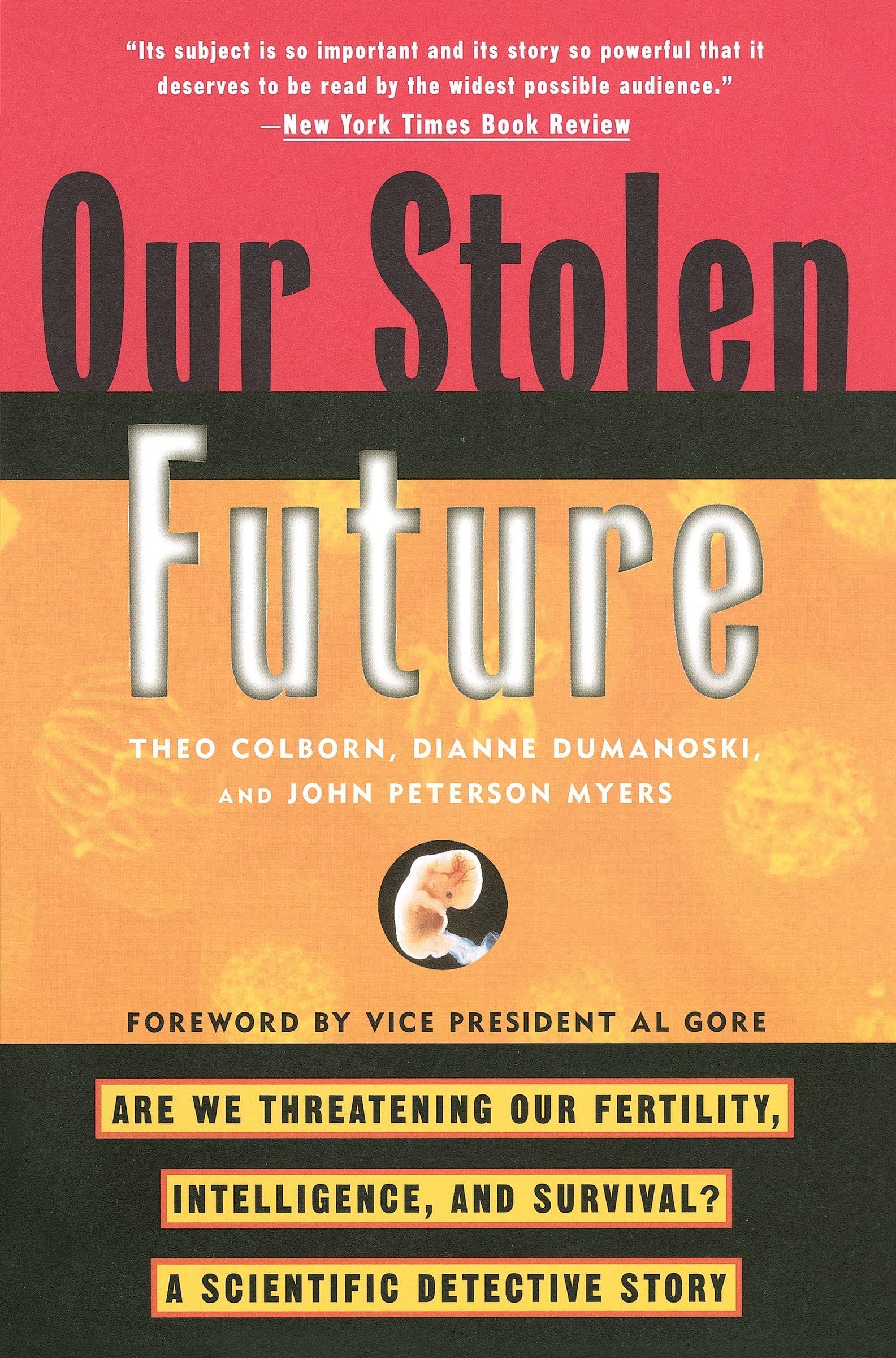
"A critically important book that forces us to ask new questions about the synthetic chemicals that we have spread across this earth."โformer vice president Al Gore , author of An Inconvenient Truth Our Stolen Future examines the ways that certain synthetic chemicals interfere with hormonal messages involved in the control of growth and development, especially in the fetus. The developing fetus uses these natural hormonal messages, which come from both from its own hormone system and from its mother, to guide development. They influence virtually all of the growing individual's characteristics, from determining its sex to controlling the numbers of toes and fingers to shaping intricate details of brain structure. Scientific research over the last 50 years has revealed that this hormonal control of development is vulnerable to disruption by synthetic chemicals. Through a variety of mechanisms, hormone-disrupting chemicals (also known as endocrine disrupting chemicals or endocrine disruptors) interfere with the natural messages and alter the course of development, with potential effects on virtually all aspects of bodily function. Our Stolen Future explores the scientific discovery of endocrine disruption. The investigation begins with wildlife, as it was in animals that the first hints of widespread endocrine disruption appeared. The book then examines a series of experiments examining endocrine disruption of animals in the laboratory which show conclusively that fetal exposure to endocrine disrupting chemicals can wreak life-long damage. These experiments also reveal some of the biological processes by which these chemicals have their effects, and that endocrine disruption effects can be caused by exposure to infinitesimally small amounts of contaminant. Moving from animals to people, Our Stolen Future summarizes a series of well-studied examples where people have been affected by endocrine disrupting chemicals, most notably the synthetic hormone dietheylstilbestrol (DES), to which several million women were exposed through misguided medical attempts to manage difficult pregnancies in the 1950s, '60s and '70s. Our Stolen Future then asks a broader, more difficult and more controversial set of questions. Given what is known from wildlife and laboratory studies, and from examples of well-studied human exposure, and given that exposure to endocrine disrupting chemicals in the real world is widespread at levels comparable to those sufficient to cause animal harm, what effects should health scientists be looking for in people in general? Effects to be expected include declines in fertility and other impacts on the reproductive system of both men and women, impairments in disease resistance, and erosions in intelligence. Review: An Important Read - Everyone needs to read this book. Our Stolen Future by Theo Colborn, Dianne Dumanoski, and John Peterson Meyers is a powerful book that warns of the harmful properties of chemicals we are surrounded by everyday. It contains research from many different scientists in different areas reaching similar conclusions: the man-made chemicals in our lives are causing reproductive problems. Chapter one gives us a timeline of different places, such as the Gulf Coast in Florida, England, Lake Michigan, The Mediterranean Sea, and more. In each case, there was an abnormality to the environment, like eagle population dropping, or female minks never giving birth. This chapter starts the book off on a dramatic tone, but quite effective and does grab the readerโs attention. For example, bald eagles became infertile, otters disappeared, mink birth rates declined, and many other species struggled. Each of these incidents indicated issues stemming from chemical pollution, but no action was taken until the 1980s. The second chapter, Hand-Me-Down Poisons, shows Theo Colbornโs research into incidents like these. Scientists began to notice reproductive issues in fish which stemmed from chemical contamination. Although cancer is a well-known consequence of toxic chemicals, it is not the only one. Pesticides such as DDT were revealed to act like the hormone estrogen, disrupting development of reproductive tracts, and even killing certain species. Chemicals found in parentsโ bodies were passed down from generation to generation. In chapter three, Chemical Messengers, the main focus is on the study of hormones and their impact on mice in the womb and early life. Even the smallest doses of hormones will affect developing offspring. Researchers realized that a female mouse that developed between two males in the womb had higher levels of testosterone, causing major behavioral changes. Contrary to what is expected, males with increased levels of estrogen were actually more masculine. Specifically, if there was excessive exposure to estrogen before a male is born, it will increase his sexual activity in adult life. Plus, any changes in the organs, glands, or tissues that send or receive hormonal messages could have dramatic and unexpected consequences elsewhere. In chapter four, Hormone Havoc gives us greater insight into how hormones affect unborn babies. It focuses on the synthetic chemical DES which acts like estrogen, and how it causes damage to the brain, immune system, and most of all the reproductive tract. These effects are not only present in mice but also in humans. Mothers who worried about their pregnancy were given DES, and while they seemed completely fine, this caused their female offspring to get a rare vaginal cancer. In the next chapter, Fifty Ways to Lose Your Fertility, it is explained how synthetic chemicals and some โmiracle drugsโ can act like hormones. They essentially trick the hormone receptors, fitting into them as a normal hormone would, and inciting a reaction as if it were a hormone. DES and DDT are some of the most common hormone disruptors, acting like estrogen and causing infertility. For example, DDT was seen as a โmiraculous pesticideโ, and although it was simply created to kill insects, it had an effect on the estrogen of roosters, and it feminized the young males, lessening fertility rates. In the To the Ends of the Earth chapter, it shows how widespread these toxic chemicals are on Earth. Hormone-like chemicals can travel thousands of miles, increasing their concentrations as they move up the food chain. Nowhere on Earth is truly uncontaminated, even the most remote locations. These chemicals threaten the next generation by making their way into our bodies and passing onto children. For example, PCBs were on the market for thirty-six years before any real questions about this wonder chemical came up. The drug was found everywhere, in soil, air, water, etc. In chapter seven, A Single Hit shows us how we all have concentrations of chemicals, no matter how small the dose. Hormone mimics such as dioxin cause long-term effects, causing our overall fertility rates to decline. In 1976, an explosion in northern Italy in a chemical factory had caused a cloud of dioxin over the city of Seveso. This contaminated many parts of the land and caused 183 cases of chloracne, a skin disease. This disaster puts the reader in perspective on how quickly a chemical leak can affect just about anything. In chapter eight, Here, There, and Everywhere shows us just how much these chemicals have become part of our lives. Seemingly harmless chemicals can be hormone disruptors, even plastic. Our tendency towards older ideas and scientific beliefs is preventing research progress in this area. Progress and action is needed, especially because only about 500 per every 100,000 synthetic chemicals are tested for their safety. Another problem shown here is that there are so many in use, for example, the pesticide use in the United States of America amounts to 2.2 billion pounds a year. This use can cause us to lose track on where pesticides are coming from and what is safe or not. The Chronicle of Loss chapter brings us back to animals and the impacts of toxic chemicals on their lives. Belugas washed up with incredibly high levels of accumulated chemicals in their body fat. It begs the question: are hormone disruptors causing population decline in endangered species, among other factors? Animals at the bottom of the food chain who are contaminated are detrimental to their ecosystems because everything eats them and therefore accumulates the toxins. The loss of animals can be so confusing and random yet make so much sense if we know what pesticide the mother consumed. The tenth chapter, Altered Destinies, demonstrates how we can use the similarities in human and animal DNA to predict what could become a threat to us in the future. We can see the reproductive problems in humans clearly: the average sperm count has decreased by 45% in 50 years. Data from animals has shown us the correlation between estrogen and diseases, and we have begun to see this in our human population. Chemicals are causing miscarriages, ectopic pregnancies, endometriosis, breast cancer, and neurological and behavior damage. Although throughout the book we are shown the effects pesticides have on different animals, these pesticides can go through the entire food chain and even reach us if we are to consume one of the affected species. In the eleventh chapter, Beyond Cancer, the author gives historical context, revealing that warnings about these chemicals started as early as the 1950s, but they went unheeded. Pesticides such as DDT were regarded as miracles before their consequences became known. Although hormone disruptors do not attack cells or DNA, they are able to jam signals and spread โmisinformationโ through the body. They have the potential to jeopardize the survival of entire species. We are also informed that while cancer is a dangerous disease, it overshadows others that result from chemical exposure. In chapter twelve, Defending Ourselves tells us that although no one should underestimate the problem, there are many ways we can help. Making sure our food and water are clean and not contaminated is essential. Defending Ourselves, in our opinion, is one of the most important chapters. It gives us ways on how to protect ourselves from being exposed to any pesticides. Other options offered were to wash hands, never assume a pesticide is safe, give babies unpainted, unvarnished toys made out of wood, and more. Governmental action is also necessary, as protocols must be put into place to keep untested chemicals off the market. Simply doing some research could prove critical for the health of this generationโs children. In the next chapter, Loomings, it reminds us that there are more questions about the problem of toxic chemicals than there are answers. However, it can be inferred that hormone disruption is contributing to societyโs unhealthy tendencies. For example, declining sperm counts still affect us. Also, for those who were exposed to PCBs prenatal, they often experienced learning disabilities, increasing the burden on some schools. Average IQ is declining, meaning that there will be less potential for great thinkers in the future. The hormone imbalances in animals caused elevated aggression; perhaps this is reflected in increasing levels of violence in our world. Contaminated gulls abandoned their young, possibly relating to rising levels of child neglect and abuse. The final chapter, Flying Blind, articulates uncertainty about the future and what it will hold. Our increasingly advanced technology and rising population is creating a larger and larger global impact, and it is up to us to decide what it will be. As of now, there is no truly uncontaminated person or place on the entire planet. We cannot foresee the consequences of our actions to guarantee safety as we advance, but we owe it to future generations to be cautious with our use of chemicals. Flying Blind, is another one of our favorites. While it may give off the depressing idea that we cannot protect ourselves from ever being exposed to synthetic chemicals, it gives us the goal and opportunity to work on our land and make it healthier for generations to come. Overall, Our Stolen Future can be a tricky read but worth it. The language used in this book is very clear, and straightforward. I felt I understood the ideas being put forward without struggling to understand the text. The issues described in the book are not commonly discussed, but they need to be addressed. The bookโs audience is the general public, aiming to share the message to make our planet safer. I think it is a must read because it raises awareness about topics that are not widely discussed. This book brings forth all the truth and the upsetting facts about our planet's health using facts and research. The value of this book in the discussion of sustainability is the fact that it is honest with us and gives us an idea in mind on how we can better our future. I definitely recommend this book, while it is quite long, its dramatic tone constantly kept me interested. Review: Truly a scientific thriller! - Why you should/shouldn't read this book - You should read this book if you are interested in the environment and want to learn more about the chemistry that makes it up. This book is very scientific and can sometimes feel a little boring but is also filled with powerful, haunting, and dramatic words that make you think, and sometimes make you want to go beyond thinking. This book encourages and brings hope. This book raises awareness and is a must read! Below is a chapter by chapter summary that I had to complete for an assignment. Chapter 1 Omens - This chapter introduces a major theme found throughout the book and that is hormonal disruption. The chapter is filled with many short happenings in a variety of different areas. It opens in the Gulf Coast of Florida in 1952, observing bald eagles and suggesting that contaminants might have been interfering with the hormonal control of their development. It then analyzes populations and mating behavior and several different species in several different locations, including human male sperm count, and views these instances with a current scientific understanding that abnormalities in hormone control were possibly caused by contaminants. Chapter 2 Hand-Me-Down Poisons - Chapter two takes the reader deeper into the mind of Dr. Theo Colborn and walks us through some of her thoughts and discoveries about these possible contaminants. She illustrates the Great Lakes in the United States and explains how a breakthrough happened when she linked all of her research and other research she studied with a common source; endocrine disruption. Chapter 3 Chemical Messengers - Chapter three covers the world of Frederick vom Saal who is a biologist at the University of Missouri. In his research, he explores the impact of tiny variations in hormone exposure on the development of fetal mice, and ultimately on adult characteristics of those mice when they mature. Through this work, he discovered that natural hormonal gradients around each fetus in the womb of a mouse alter the development of its neighbors and suggests that this finding can lay the groundwork for understanding how tiny variations in hormone-mimicking contaminants can also alter development. Chapter 4 Hormone Havoc - This chapter dives into a case where the hormonal control of development is altered. It showcased diethylstilbestrol, or DES, a synthetic estrogen invented in 1938 and subsequently used by physicians to manage difficult pregnancies. Time has shows that it caused severe damage to individuals exposed to DES when their mother was treated while they were in the womb. The symptoms didn't take effect until after puberty, but included rare cancers and damaged fallopian tubes. Chapter 5 Fifty Ways to Lose Your Fertility - This chapter explores the relationship between hormones and fetal development. It compares the chemical makeup of DES and DDT and explains how a fetus can often mistake these as the hormones estrogen and testosterone. Plant fertility was also discussed and it was shown that plant estrogens, or phytoestrogens, have the ability to bind with animal estrogen receptors, affecting animal fertility. The chapter ends by describing the work of Dr. Earl Gray. He studied how some synthetic chemicals disrupt male development by interacting with the receptor that normally binds testosterone, the androgen receptor. We learn from Gray that hormone disruption is not limited to the estrogen system and that virtually every hormone-receptor interaction is vulnerable. Chapter 6 To The Ends of The Earth - This chapter meticulously documents the journey of a polychlorinated biphenyl molecule from it from its production in a Monsanto chemical plant near Anniston, Alabama, to its entry into a polar bear in the Arctic. This is a known endocrine disruptor that is known to be potent and powerful, and it's also present in every ecosystem on earth. The chapter explains how the global transportation of these "persistent organic pollutants" is especially problematic for people who live in cold regions of the planet, like the Arctic, as they depend more upon locally available food like plants and wildlife. Chapter 7 A Single Hit - This chapter asks and answers the question, "How much of a synthetic chemical does it take to disrupt hormone levels and do lifelong damage?" The reader is presented with many different examples of when small amounts of Dioxin have had great impacts on contamination and reproductive problems. The author indicates that an exceedingly tiny amount, so small and so brief that it defies the imagination to contemplate, is enough to alter the course of development if exposure takes place in the womb. Our lesson from this chapter is that low dose vulnerability exists. Chapter 8 Here, There, and Everywhere - This chapter opens our eyes to the wonderful world that surrounds us, and that is also filled to the brim with hormone disruptors. They're everywhere! It describes a discovery by Dr. Ana Soto and Dr. Carlos Sonnenschein that nonylphenol, a common additive to certain plastics, binds with the estrogen receptor and stimulates estrogenic responses in cells and living animals. The chapter also shows that the basic building block of polycarbonate plastic, a compound called bisphenol A (BPA), also increases breast cancer cell proliferation rates. These compounds are all around us (!!!) and as a result, so is exposure to hormone disrupting compounds. Chapter 9 Chronicle of Loss - This chapter chronicles more of the events from chapter 1. Among the examples covered are Beluga whales in the St. Lawrence River between the US and Canada, Florida panthers, seals in Europe, alligators in Lake Apopka, Florida, and frogs around the world. This chapter highlights that these disruptions are not just theoretical, they are real and they happen everyday in the natural world. Chapter 10 Altered Destinies - This chapter brings all of this science back to the people. It questions the reader directly, and asks us what do we as human have to do with anything? What does this mean for us? The chapter explains that the answers aren't entirely clear, but all signs point to serious risk. It also explains that the risks we see in animals are risks for humans, and credits Rachel Carson in her book "Silent Spring" for introducing that idea. This chapter also battles the people who say there is no evidence of the damage being described and explains how they cling to the idea of scientific uncertainty to keep their malpractices. In fact, the risk is probably greater than we could ever realize, as most of the data takes into account high dosage cases and there's a serious lack of studies going on for background exposure and low dosage exposure. Chapter 11 Beyond Cancer - It seems as if all we hear about in the medical world is cancer and possible carcinogens. This chapter points out that cancer is killing individuals at a rate that should be alarming to people, but we tend to ignore the other "stuff." Cancer kills adults for the most part, while hormone disruption derails development early in life, putting at risk the ability of individuals to participate fully in society. This chapter stresses that we should try to protect against these disruptors with as much vigor as we protect ourselves from cancer. Chapter 12 Defending Ourselves - This is a chapter of choice. It outlines our circumstances and the choices we can take. We must protect ourselves and we must protect our children. One option given was public policy. We need policy focused on avoiding unnecessary uses of pesticides and reducing intake of contaminated food. Certain practices at home can help too, like not microwaving in plastic unless you are absolutely certain that the plastic does not leach endocrine disrupting compounds into the food it contains. While these things are far from perfect, they are a start and we need options to make progress. Chapter 13 Loomings - This chapter is about the future, and the uncertainties it holds. Only time will tell the long term effects of what we're doing currently. And although significant data on human exposure to endocrine disruptors is lacking, the evidence stands with animals, and the author stresses that we're next in line. Are falling SAT scores linked to intrauterine exposure? What about global declines in sperm count? Or increases in societal levels of aggression. All these endpoints--cognitive, behavioral, reproductive--are shown vulnerable in animal studies to exposure to endocrine disruption. The chapter holds these to be possibilities, what can we conclude for people? Chapter 14 Flying Blind - This chapter gives the reader a chance to step back from the details of endocrine disruptors and ask, "Why are we in this situation and how can we get out?" The chapter points out that the recent technological growth in the past 30 years has been incredible for mankind but we were in no way prepared for the risks that came along with it. The earth is no overflowing with contaminants and no area is left without them. This introduces a huge gap for humans in our knowledge of how the world works and we need to figure it out. We're going into the future blind. I love this quote, "As we work to create a future where children can be born free of chemical contamination, our scientific knowledge and technological expertise will be crucial. Nothing, however, will be more important to human well-being and survival than the wisdom to appreciate that however great our knowledge, our ignorance is also vast. In this ignorance we have taken huge risks and inadvertently gambled with survival."
| Best Sellers Rank | #175,556 in Books ( See Top 100 in Books ) #21 in Toxicology (Books) #78 in Fertility #107 in Environmental Engineering (Books) |
| Customer Reviews | 4.6 out of 5 stars 227 Reviews |
E**A
An Important Read
Everyone needs to read this book. Our Stolen Future by Theo Colborn, Dianne Dumanoski, and John Peterson Meyers is a powerful book that warns of the harmful properties of chemicals we are surrounded by everyday. It contains research from many different scientists in different areas reaching similar conclusions: the man-made chemicals in our lives are causing reproductive problems. Chapter one gives us a timeline of different places, such as the Gulf Coast in Florida, England, Lake Michigan, The Mediterranean Sea, and more. In each case, there was an abnormality to the environment, like eagle population dropping, or female minks never giving birth. This chapter starts the book off on a dramatic tone, but quite effective and does grab the readerโs attention. For example, bald eagles became infertile, otters disappeared, mink birth rates declined, and many other species struggled. Each of these incidents indicated issues stemming from chemical pollution, but no action was taken until the 1980s. The second chapter, Hand-Me-Down Poisons, shows Theo Colbornโs research into incidents like these. Scientists began to notice reproductive issues in fish which stemmed from chemical contamination. Although cancer is a well-known consequence of toxic chemicals, it is not the only one. Pesticides such as DDT were revealed to act like the hormone estrogen, disrupting development of reproductive tracts, and even killing certain species. Chemicals found in parentsโ bodies were passed down from generation to generation. In chapter three, Chemical Messengers, the main focus is on the study of hormones and their impact on mice in the womb and early life. Even the smallest doses of hormones will affect developing offspring. Researchers realized that a female mouse that developed between two males in the womb had higher levels of testosterone, causing major behavioral changes. Contrary to what is expected, males with increased levels of estrogen were actually more masculine. Specifically, if there was excessive exposure to estrogen before a male is born, it will increase his sexual activity in adult life. Plus, any changes in the organs, glands, or tissues that send or receive hormonal messages could have dramatic and unexpected consequences elsewhere. In chapter four, Hormone Havoc gives us greater insight into how hormones affect unborn babies. It focuses on the synthetic chemical DES which acts like estrogen, and how it causes damage to the brain, immune system, and most of all the reproductive tract. These effects are not only present in mice but also in humans. Mothers who worried about their pregnancy were given DES, and while they seemed completely fine, this caused their female offspring to get a rare vaginal cancer. In the next chapter, Fifty Ways to Lose Your Fertility, it is explained how synthetic chemicals and some โmiracle drugsโ can act like hormones. They essentially trick the hormone receptors, fitting into them as a normal hormone would, and inciting a reaction as if it were a hormone. DES and DDT are some of the most common hormone disruptors, acting like estrogen and causing infertility. For example, DDT was seen as a โmiraculous pesticideโ, and although it was simply created to kill insects, it had an effect on the estrogen of roosters, and it feminized the young males, lessening fertility rates. In the To the Ends of the Earth chapter, it shows how widespread these toxic chemicals are on Earth. Hormone-like chemicals can travel thousands of miles, increasing their concentrations as they move up the food chain. Nowhere on Earth is truly uncontaminated, even the most remote locations. These chemicals threaten the next generation by making their way into our bodies and passing onto children. For example, PCBs were on the market for thirty-six years before any real questions about this wonder chemical came up. The drug was found everywhere, in soil, air, water, etc. In chapter seven, A Single Hit shows us how we all have concentrations of chemicals, no matter how small the dose. Hormone mimics such as dioxin cause long-term effects, causing our overall fertility rates to decline. In 1976, an explosion in northern Italy in a chemical factory had caused a cloud of dioxin over the city of Seveso. This contaminated many parts of the land and caused 183 cases of chloracne, a skin disease. This disaster puts the reader in perspective on how quickly a chemical leak can affect just about anything. In chapter eight, Here, There, and Everywhere shows us just how much these chemicals have become part of our lives. Seemingly harmless chemicals can be hormone disruptors, even plastic. Our tendency towards older ideas and scientific beliefs is preventing research progress in this area. Progress and action is needed, especially because only about 500 per every 100,000 synthetic chemicals are tested for their safety. Another problem shown here is that there are so many in use, for example, the pesticide use in the United States of America amounts to 2.2 billion pounds a year. This use can cause us to lose track on where pesticides are coming from and what is safe or not. The Chronicle of Loss chapter brings us back to animals and the impacts of toxic chemicals on their lives. Belugas washed up with incredibly high levels of accumulated chemicals in their body fat. It begs the question: are hormone disruptors causing population decline in endangered species, among other factors? Animals at the bottom of the food chain who are contaminated are detrimental to their ecosystems because everything eats them and therefore accumulates the toxins. The loss of animals can be so confusing and random yet make so much sense if we know what pesticide the mother consumed. The tenth chapter, Altered Destinies, demonstrates how we can use the similarities in human and animal DNA to predict what could become a threat to us in the future. We can see the reproductive problems in humans clearly: the average sperm count has decreased by 45% in 50 years. Data from animals has shown us the correlation between estrogen and diseases, and we have begun to see this in our human population. Chemicals are causing miscarriages, ectopic pregnancies, endometriosis, breast cancer, and neurological and behavior damage. Although throughout the book we are shown the effects pesticides have on different animals, these pesticides can go through the entire food chain and even reach us if we are to consume one of the affected species. In the eleventh chapter, Beyond Cancer, the author gives historical context, revealing that warnings about these chemicals started as early as the 1950s, but they went unheeded. Pesticides such as DDT were regarded as miracles before their consequences became known. Although hormone disruptors do not attack cells or DNA, they are able to jam signals and spread โmisinformationโ through the body. They have the potential to jeopardize the survival of entire species. We are also informed that while cancer is a dangerous disease, it overshadows others that result from chemical exposure. In chapter twelve, Defending Ourselves tells us that although no one should underestimate the problem, there are many ways we can help. Making sure our food and water are clean and not contaminated is essential. Defending Ourselves, in our opinion, is one of the most important chapters. It gives us ways on how to protect ourselves from being exposed to any pesticides. Other options offered were to wash hands, never assume a pesticide is safe, give babies unpainted, unvarnished toys made out of wood, and more. Governmental action is also necessary, as protocols must be put into place to keep untested chemicals off the market. Simply doing some research could prove critical for the health of this generationโs children. In the next chapter, Loomings, it reminds us that there are more questions about the problem of toxic chemicals than there are answers. However, it can be inferred that hormone disruption is contributing to societyโs unhealthy tendencies. For example, declining sperm counts still affect us. Also, for those who were exposed to PCBs prenatal, they often experienced learning disabilities, increasing the burden on some schools. Average IQ is declining, meaning that there will be less potential for great thinkers in the future. The hormone imbalances in animals caused elevated aggression; perhaps this is reflected in increasing levels of violence in our world. Contaminated gulls abandoned their young, possibly relating to rising levels of child neglect and abuse. The final chapter, Flying Blind, articulates uncertainty about the future and what it will hold. Our increasingly advanced technology and rising population is creating a larger and larger global impact, and it is up to us to decide what it will be. As of now, there is no truly uncontaminated person or place on the entire planet. We cannot foresee the consequences of our actions to guarantee safety as we advance, but we owe it to future generations to be cautious with our use of chemicals. Flying Blind, is another one of our favorites. While it may give off the depressing idea that we cannot protect ourselves from ever being exposed to synthetic chemicals, it gives us the goal and opportunity to work on our land and make it healthier for generations to come. Overall, Our Stolen Future can be a tricky read but worth it. The language used in this book is very clear, and straightforward. I felt I understood the ideas being put forward without struggling to understand the text. The issues described in the book are not commonly discussed, but they need to be addressed. The bookโs audience is the general public, aiming to share the message to make our planet safer. I think it is a must read because it raises awareness about topics that are not widely discussed. This book brings forth all the truth and the upsetting facts about our planet's health using facts and research. The value of this book in the discussion of sustainability is the fact that it is honest with us and gives us an idea in mind on how we can better our future. I definitely recommend this book, while it is quite long, its dramatic tone constantly kept me interested.
C**.
Truly a scientific thriller!
Why you should/shouldn't read this book - You should read this book if you are interested in the environment and want to learn more about the chemistry that makes it up. This book is very scientific and can sometimes feel a little boring but is also filled with powerful, haunting, and dramatic words that make you think, and sometimes make you want to go beyond thinking. This book encourages and brings hope. This book raises awareness and is a must read! Below is a chapter by chapter summary that I had to complete for an assignment. Chapter 1 Omens - This chapter introduces a major theme found throughout the book and that is hormonal disruption. The chapter is filled with many short happenings in a variety of different areas. It opens in the Gulf Coast of Florida in 1952, observing bald eagles and suggesting that contaminants might have been interfering with the hormonal control of their development. It then analyzes populations and mating behavior and several different species in several different locations, including human male sperm count, and views these instances with a current scientific understanding that abnormalities in hormone control were possibly caused by contaminants. Chapter 2 Hand-Me-Down Poisons - Chapter two takes the reader deeper into the mind of Dr. Theo Colborn and walks us through some of her thoughts and discoveries about these possible contaminants. She illustrates the Great Lakes in the United States and explains how a breakthrough happened when she linked all of her research and other research she studied with a common source; endocrine disruption. Chapter 3 Chemical Messengers - Chapter three covers the world of Frederick vom Saal who is a biologist at the University of Missouri. In his research, he explores the impact of tiny variations in hormone exposure on the development of fetal mice, and ultimately on adult characteristics of those mice when they mature. Through this work, he discovered that natural hormonal gradients around each fetus in the womb of a mouse alter the development of its neighbors and suggests that this finding can lay the groundwork for understanding how tiny variations in hormone-mimicking contaminants can also alter development. Chapter 4 Hormone Havoc - This chapter dives into a case where the hormonal control of development is altered. It showcased diethylstilbestrol, or DES, a synthetic estrogen invented in 1938 and subsequently used by physicians to manage difficult pregnancies. Time has shows that it caused severe damage to individuals exposed to DES when their mother was treated while they were in the womb. The symptoms didn't take effect until after puberty, but included rare cancers and damaged fallopian tubes. Chapter 5 Fifty Ways to Lose Your Fertility - This chapter explores the relationship between hormones and fetal development. It compares the chemical makeup of DES and DDT and explains how a fetus can often mistake these as the hormones estrogen and testosterone. Plant fertility was also discussed and it was shown that plant estrogens, or phytoestrogens, have the ability to bind with animal estrogen receptors, affecting animal fertility. The chapter ends by describing the work of Dr. Earl Gray. He studied how some synthetic chemicals disrupt male development by interacting with the receptor that normally binds testosterone, the androgen receptor. We learn from Gray that hormone disruption is not limited to the estrogen system and that virtually every hormone-receptor interaction is vulnerable. Chapter 6 To The Ends of The Earth - This chapter meticulously documents the journey of a polychlorinated biphenyl molecule from it from its production in a Monsanto chemical plant near Anniston, Alabama, to its entry into a polar bear in the Arctic. This is a known endocrine disruptor that is known to be potent and powerful, and it's also present in every ecosystem on earth. The chapter explains how the global transportation of these "persistent organic pollutants" is especially problematic for people who live in cold regions of the planet, like the Arctic, as they depend more upon locally available food like plants and wildlife. Chapter 7 A Single Hit - This chapter asks and answers the question, "How much of a synthetic chemical does it take to disrupt hormone levels and do lifelong damage?" The reader is presented with many different examples of when small amounts of Dioxin have had great impacts on contamination and reproductive problems. The author indicates that an exceedingly tiny amount, so small and so brief that it defies the imagination to contemplate, is enough to alter the course of development if exposure takes place in the womb. Our lesson from this chapter is that low dose vulnerability exists. Chapter 8 Here, There, and Everywhere - This chapter opens our eyes to the wonderful world that surrounds us, and that is also filled to the brim with hormone disruptors. They're everywhere! It describes a discovery by Dr. Ana Soto and Dr. Carlos Sonnenschein that nonylphenol, a common additive to certain plastics, binds with the estrogen receptor and stimulates estrogenic responses in cells and living animals. The chapter also shows that the basic building block of polycarbonate plastic, a compound called bisphenol A (BPA), also increases breast cancer cell proliferation rates. These compounds are all around us (!!!) and as a result, so is exposure to hormone disrupting compounds. Chapter 9 Chronicle of Loss - This chapter chronicles more of the events from chapter 1. Among the examples covered are Beluga whales in the St. Lawrence River between the US and Canada, Florida panthers, seals in Europe, alligators in Lake Apopka, Florida, and frogs around the world. This chapter highlights that these disruptions are not just theoretical, they are real and they happen everyday in the natural world. Chapter 10 Altered Destinies - This chapter brings all of this science back to the people. It questions the reader directly, and asks us what do we as human have to do with anything? What does this mean for us? The chapter explains that the answers aren't entirely clear, but all signs point to serious risk. It also explains that the risks we see in animals are risks for humans, and credits Rachel Carson in her book "Silent Spring" for introducing that idea. This chapter also battles the people who say there is no evidence of the damage being described and explains how they cling to the idea of scientific uncertainty to keep their malpractices. In fact, the risk is probably greater than we could ever realize, as most of the data takes into account high dosage cases and there's a serious lack of studies going on for background exposure and low dosage exposure. Chapter 11 Beyond Cancer - It seems as if all we hear about in the medical world is cancer and possible carcinogens. This chapter points out that cancer is killing individuals at a rate that should be alarming to people, but we tend to ignore the other "stuff." Cancer kills adults for the most part, while hormone disruption derails development early in life, putting at risk the ability of individuals to participate fully in society. This chapter stresses that we should try to protect against these disruptors with as much vigor as we protect ourselves from cancer. Chapter 12 Defending Ourselves - This is a chapter of choice. It outlines our circumstances and the choices we can take. We must protect ourselves and we must protect our children. One option given was public policy. We need policy focused on avoiding unnecessary uses of pesticides and reducing intake of contaminated food. Certain practices at home can help too, like not microwaving in plastic unless you are absolutely certain that the plastic does not leach endocrine disrupting compounds into the food it contains. While these things are far from perfect, they are a start and we need options to make progress. Chapter 13 Loomings - This chapter is about the future, and the uncertainties it holds. Only time will tell the long term effects of what we're doing currently. And although significant data on human exposure to endocrine disruptors is lacking, the evidence stands with animals, and the author stresses that we're next in line. Are falling SAT scores linked to intrauterine exposure? What about global declines in sperm count? Or increases in societal levels of aggression. All these endpoints--cognitive, behavioral, reproductive--are shown vulnerable in animal studies to exposure to endocrine disruption. The chapter holds these to be possibilities, what can we conclude for people? Chapter 14 Flying Blind - This chapter gives the reader a chance to step back from the details of endocrine disruptors and ask, "Why are we in this situation and how can we get out?" The chapter points out that the recent technological growth in the past 30 years has been incredible for mankind but we were in no way prepared for the risks that came along with it. The earth is no overflowing with contaminants and no area is left without them. This introduces a huge gap for humans in our knowledge of how the world works and we need to figure it out. We're going into the future blind. I love this quote, "As we work to create a future where children can be born free of chemical contamination, our scientific knowledge and technological expertise will be crucial. Nothing, however, will be more important to human well-being and survival than the wisdom to appreciate that however great our knowledge, our ignorance is also vast. In this ignorance we have taken huge risks and inadvertently gambled with survival."
C**L
An excellent "Things that make you go Hmmm...." book
While this is nearly 10 years old it shows that people had been connecting the dots (and vigorously denying) synthetic hormones (and other chemicals that mimic the effects of hormones) in the environment for more then 60 years. Now in 2007 this book is still a good read, if a little outdated. Currently the science has evolved FAR past "what if" to "what now?" When Native Innuit populations show traces of Teflon and flame-retardant chemicals in their blood and breast milk, one truly understands that the diaper this planet wears is forever and mommy isn't going to come change it any time soon. Still, the pro-industry flunkies will cry and cry. "You'll ruin the economy!" they shout from the rooftops. Well my favorite part of this book so far is the allegory: "A robber sticks his gun in your ribs and says 'your money or your life' what do you choose? It doesn't matter if you're an investment banker, a soccer-mom or a homeless person, the choice is ALWAYS that no amount of money is worth your life; you can make more money later as long as you're still alive..." 4 stars instead of 5 for being 10 years old and not up with the more current research, but certainly a good place to start if you are interested in the subject.
L**A
Informative and convincing wake up call
I enjoyed reading this book. It is informative and educational. It gave me insights into lots of the 'mysterious' health issues we are facing. After I immigrated from China to US, a lot of my peers from China started family and had children in US. Their children have a wide spectrum of health issues: a variety of allergies (wheat, fish, peanuts, nuts, egg, milk, kiwi), asthma, autism. Almost 50% the Chinese families with children (that I know of) have some sorts of long term health problems. It was really alarming and scary to me. To have a baby seems to be lottery drawing by the parents. Even though the doctor can help and care for the Mother throughout pregnancy, there was no prediction or convincing explanation for why such high percentage of children of this generation have so many health issues that is largely non-existent in previous generations. This mysterious health issue has haunted me for years as I witness my friends fighting them painfully with their children. After reading the 'Our Stolen Future', I gained a better understanding about the subtle and lasting impacts of Endocrine Disruptors and other chemicals on our health. Many of the bio-accumulative chemicals are passed down to our future generations in a 'un-avoidable' manner. I don't have a biochem back ground. The authors are really masterful in explaining how the mechenics works for the Endocrine Disruptors in our bio systems. The complex environment we live in are saturated with 'invisible' chemicals: in air, food, water, packaging. It is really hard to trace and analyze the causality of the health issues we are all experiencing. I am grateful for the authors' extensive efforts in summarizing decades of critical scientific studies and present it to the public to inform and educate. The book will have a lasting impact on me. It motivated me to learn more and deeper about this subject. I will try to make better choices in my daily life and help people around me to do the same. I want share with everyone that the book authors created a website [...] to provide updates on research and regulatory progress related to the topics covered in the book. I find the website very useful in keeping track of the changes. I recommend two other books on the subject of chemicals and their environmental impacts: 1. BETWEEN EARTH AND SKY: How CFCs Changed Our World and Endangered the Ozone Layer 2. The Lawn: A History of an American Obsession Hope this is helpful.
G**L
I was amazed that there had not been more coverage in the ...
I first became acquainted with Dianne Dumanoski in about 1997 when I heard her address the problem of persistent chemicals in the environment in a radio broadcast on our local public radio station KUOW. I recorded part of the broadcast. I recently came upon that old recording and listened to it again. I was amazed that there had not been more coverage in the media in the interim. This led me to search for more information online, leading me to find this book. I find that the book is still an excellent source of information on the problems related to persistent chemicals in the environment. We continue to experience problems that can be directly related to these chemicals. In this book one can find an excellent historical discussion about how previously unexplained reproductive problems and behavioral deviations in the wild were related to these persistent chemicals that accumulate in the environment. It is my opinion that similar problems are now being observed in the general human population, not an unexpected result. We should have been working to reduce the introduction of these harmful chemicals a long time ago. Instead the problem has been ignored. This book should have been a wake-up call to action. It is still relevant today, because it appears that we have yet to wake up. This is a must-read for any person concerned with the health of the environment and the health of their own families. The sense of the book is that these harmful chemicals would be affecting future generation for many rears to come. We did not listen to the warning when the book first came out. Maybe it is not too late to get educated. It remains an open question whether it is too late to save the environment and our future generations. The book treats this complicated problem in a way that anyone can understand. The detective work involved in investigating the problem is no less fascinating that that found in a Sherlock Holmes mystery. A fascinating read.
N**C
An Eye Opener About the Effects of Chemicals on Our "Sleeping" Society...
Fantastic book. I was researching about autism and the possibility that the "pollutants" from the last 50 years may be part of the problem. I thought it extremely interesting that Vice President Al Gore says in his forward on the first page that "Even worse, in the womb and through breast milk, mothers pass this chemical legacy on to the next generation." January 22, 1996. This was the spark I needed to realize that yes indeed, the pollutants that are in our society and we ignore may already be causing our society major problems. I am "cleaning up my life" of as many pollutants as I can. Throughout the book the three scientists who wrote it help us understand how we have gotten where we are today. This is something we should not ignore. 1 in 47 autistic children born per year=about 84,000 per year! This book was first printed March, 1996. The rates have gradually increased to epidemic proportions. No, the book is not about autism....but how can we ignore the correlation? Glad I read it. A real eye opener.
C**E
More info just out
A new report just out Dec. 8, 2008, by Britain's ChemTrust, reports and summarizes findings from studies from over 200 environmental scientists that have found 'gender-bender' reproduction abnormalities and lowered sperm counts in species that include, deer, polar bears--and human babies. These scientists now say the findings "are a red flag" for humanity and show that evolution itself is being disrupted. Our Stolen Future was written over 10 years ago. Today these new studies support and expand upon the book's premise. The book gave us an early warning--too bad we ignored it. Looks as though rapidly dropping sperm counts and human penis abnormalities are putting humans on the endangered species list on the road to extinction. Better living through chemistry? I think not. Sad to say, just the opposite. Guess the de-bunkers can dismiss this one book, but what about the findings of the other 200-plus distinguished scientists??
A**R
This book will make you think
This book is an incredible read. I highly recommend it for anyone who is concerned about the environment and their own health. This book contains a lot of research, which contributes to its credibility, however it is far from your typical scientific book. It's a fascinating read for anyone, whether they have a background in biology or environmental science or not. I actually read it as part of an extra credit assignment for one of my college classes. My original intention was to skim the book and write a summary. I became so wrapped up in the book that I literally read it cover to cover - including the forward and the afterward. I later purchased my own copy. This book is both challenging and fascinating. Read it!
D**E
D. Duvauchelle
A l'origine des questions ecologiques
T**M
You want an answer to whatโs happening around you??
Everyone should be forced to read it It answers a hell of a lot of whatโs going on in the west with the way humans are nowadays My interpretation was that we have all been poisoned...... Yes-basically poisoned
J**E
Betere communicatie
Net tijdig informeren over niet te leveren artikelen
D**E
Our stolen future
Transazione perfetta, oggetto in ottime condizioni
ใฒ**ใ
็ฟใฎใใจใ่ชญใฟใไบบใฎใใจใ่ใใใปใใฎ194ใป187ๅ็ฎ
ใปใตใใผใใไธ่จใณใกใณใ ใๅฅชใใใใฎใฏใ่ชฐใฎๆชๆฅใชใฎใใใใใใใใคใใฉใฎใใใซๅฅชใใใใฎใใๅฅชใ่ฟใใใจใฏใงใใใฎใใ ใใตใใผใใใใใใๅบฆโ โ โ โ โ ใ ใปใฆใใผใใไธ่จใณใกใณใ ใ็ฅๆตใฎๅฎใ้ฃในใไบบ้กใใๅฐไธใซใชใใฃใ็ฉ่ณชใใคใใๅบใใใจใใๆฌๆฅใฎๆณๅใๅดฉๅฃใใ็ใใจใ็ใใใใฎใๆฌๆฅๅพใใใใฏใใฎๆจฉๅฉใใ่ ใใใใพใใใ ใใฆใใผใใใใใใๅบฆโ โ โ โ โ ใ ใปใตใใผใใใใฆใใผใใ่ชญๆธไผ ใตใใผใใ(ไปฅไธใต):ๆๅใซๆธใใฆใใใจใใใฎๆฌใซใคใใฆใฏใ่ณๅฆไธก่ซใใใ็งๅญฆ็่ๅฏใซๆฒ่ฆณ็่ฆณๆธฌใ็นใ่พผใพใใฆใใใจใใๅฎ้ใฎๅฎ้จใใผใฟใ่จๅบใใผใฟใซ็ธ้ใใใใจใใฃใๆๆใ ใ ใฆใใผใใ(ไปฅไธใฆ):ใใ ใใ ใใใจใใฃใฆใ่ชญใพใชใใใใซใฏใใใชใๅ ๅฎนใงใใ็ก็ฅใ ใฃใใจๅใใใจใใใชใใใซใ่ชญใฟ่พผใฟใ่ชๅใฎ็ฅ่ญใจ็ฅๆตใธใจใๆ่ฏใใใๅฟ ่ฆใใใใพใใ ใต:็ก็ฅใงใใใใจใซใใฃใฆใใใใใ็ใพใใฆใใไบบ้ใฎใๆชๆฅใใใๅฅชใใใใๅฏ่ฝๆงใใใใ ใฆ:ๆฌๆฅใ่ช็ถ็ใซๅญๅจใใชใใฃใ็ฉ่ณชใใๅ จใฆใฎ็ใ็ฉใซไธใใๅฝฑ้ฟใซใคใใฆๆธใใใฆใใใฎใงใใใไธปใชๅ้กใฏใๅ ้จๅๆณๆชไนฑ็ฉ่ณชใใซใคใใฆใฎไบไพใจ็ ็ฉถใไปๅพ่ใใใใๅฏ่ฝๆง็ญใงใใ ใต:็ใ็ฉใฎๆงๅฅใๆฑบๅฎใใใฎใฏใDNAใใ ใใใใฎ่จญ่จๅณใซๅพใฃใฆใๆงๅฅใฎๅๅฒใ่กใใๆ้ทใๅฎ็พใใฆใใใฎใฏใๆงใใซใขใณใใ ใๆชไนฑ็ฉ่ณชใฏใใใฎใใซใขใณใๆชไนฑใใ่จญ่จๅณใจใฏ็ธๅใใใๆงๅฅใใธใจๅคๅฎนใใใใ ใฆ:ใๆงๅฅใใฏใ่ไฝใใซๅฏพใใๅฝฑ้ฟใๅคงใใใใจใฏใใกใใใฎใใจใ็ฒพ็ฅใใซๅฏพใใๅฝฑ้ฟใๅคงใใใๆงๅฅใซ้ข้ฃใใ่ซธๅ้กใใฏใไบบ้กใฎใฟใชใใใ็ๅฝใฎๆจนใใจใใฆๆ็ซใใฆใใ่ช็ถ็ใซใๅคงใใชๅฝฑ้ฟใๅใผใใพใใ ใต:ใๆงๅฅใใๅญๅจใใๅ จใฆใฎ็ใ็ฉใใ็ๆฎใ่กใใชใใชใใใจใใใ็ตถๆป ใซ็ด็ตใใๅ้กใ ใ ใฆ:ใใใใ็ฎใซ่ฆใใใฌใใซใงๆจ็งปใใใชใใใใฃใจๆฉๆใซๅ้กใจใใฆๆฑใใใๅฑๆฉใจใใฆ่ช่ญใใใพใใใๆกๆฃใๅคๆงๅใใฆใใ็งๅญฆ็ฉ่ณชใใ้ฃ็ฉ้ฃ้ใซใใ้ทๅนดใใใใฆ่็ฉใๅ็ธฎใใใฆใใใใใใใฎๅ้กใฎๆทฑๅปใใ้ๅคงใใซใๆฐใไปใใชใใฎใงใใ ใต:ใใใใๆณๅพใงๅฎใใใใๆคๆปใใฏใชใขใใใฐใๆชๆฅใๅฅชใใใใๅฏ่ฝๆงใใใใจใใฆใใ็ตๆธ็ไพกๅคใจๅฉ็ใๅชๅ ใใใใ ใฆ:่ตคใกใใใใงใใๅใใใ็กๆ่ญใ็ก่ช่ฆใฎใใกใซ็ฐๅธธใ็บ็ใใๆบๅใ่กใใใฆใใฆใ่ๅ ใจใชใ้็จใ่ช็ใใ้็จใซใใใฆใใ่ตคใกใใ่ช่บซใซใฏใชใใ้ธๆๆจฉใใชใใพใพใ็ฐๅธธใใไป่พผใพใใใฆใใใ ใใใชใซๆใใใใใจใฏใใชใใจๆใใพใใ ใต:ๆฒๅใฏใใใใๅใ็ถใใใฆใใใใจใซใใใใๅๅ ไธๆใฎใขใฌใซใฎใผใใใซใขใณใฎใขใณใใฉใณในใ่ช็ซ็ฅ็ตใฎๅคฑ่ชฟใใใใใฎ่ฆๅ ใไฝไธไปฃใๅใซๆๅใใ้ฃ็ฉใๅคงๆฐใซใใฃใใจใใใชใใๅญๅญซใไปฃๅใๆใใฎใฏใใใพใใซใ็ไธๅฐฝใ ใ ใฆ:ใ่ช็ถใใญใไผใใใใจใใไบบ้กใใ่ชใ็ใฟๅบใใ็ฉ่ณชใซใใใไฝไธไปฃใใใใฆ่ฝๅใๅฅชใใใ็ฅๅใไฝไธใใใใพใใฏใๅ ๆๅพใไบบ้ใฎใใใซๅญๅจใใใฎใงใฏใชใใใจใใ่จผๆใใฆใใพใใ ใต:ใใฎๆฌใงใฏๆใใจใชใใๅฏพ็ญใใซใคใใฆใใๆธใใใฆใใใ ใฆ:ๆณ่ฆๅถใๅฝ้็ใช็งฉๅบใซใคใใฆใฏใ่บซ่ฟใซๆใใใฎใฏ้ฃใใใงใใใๅฃใซใใ้ฃๅใๆฐดใ็ฉบๆฐใจใใฃใ็ฐๅขใซๅฏพใใๆ่ญใซใคใใฆใฏใใใพใใใซใใงใใพใใ ใต:ใจใใใใใ้ฃฒใฟ็ฉใฏใๆฐดใใซๆปใใใใใใใๅฎๅฟใงใใๅ ๅฎนใใฉใใใ่ชๅใง็ขบ่ชใใใใใๆฏๆใใใใ ใฆ:ใงใใใใจใใๅงใใฆใ็ถใใฆใใใพใใใใๅพฎๅใงใใ็ฅใฃใฆใใพใฃใไปฅไธใฏใๆชๆฅใๅฅชใใใใใจใซๆตๆใใ็พฉๅใใใใพใใ ใไบใ
Trustpilot
2 days ago
1 week ago