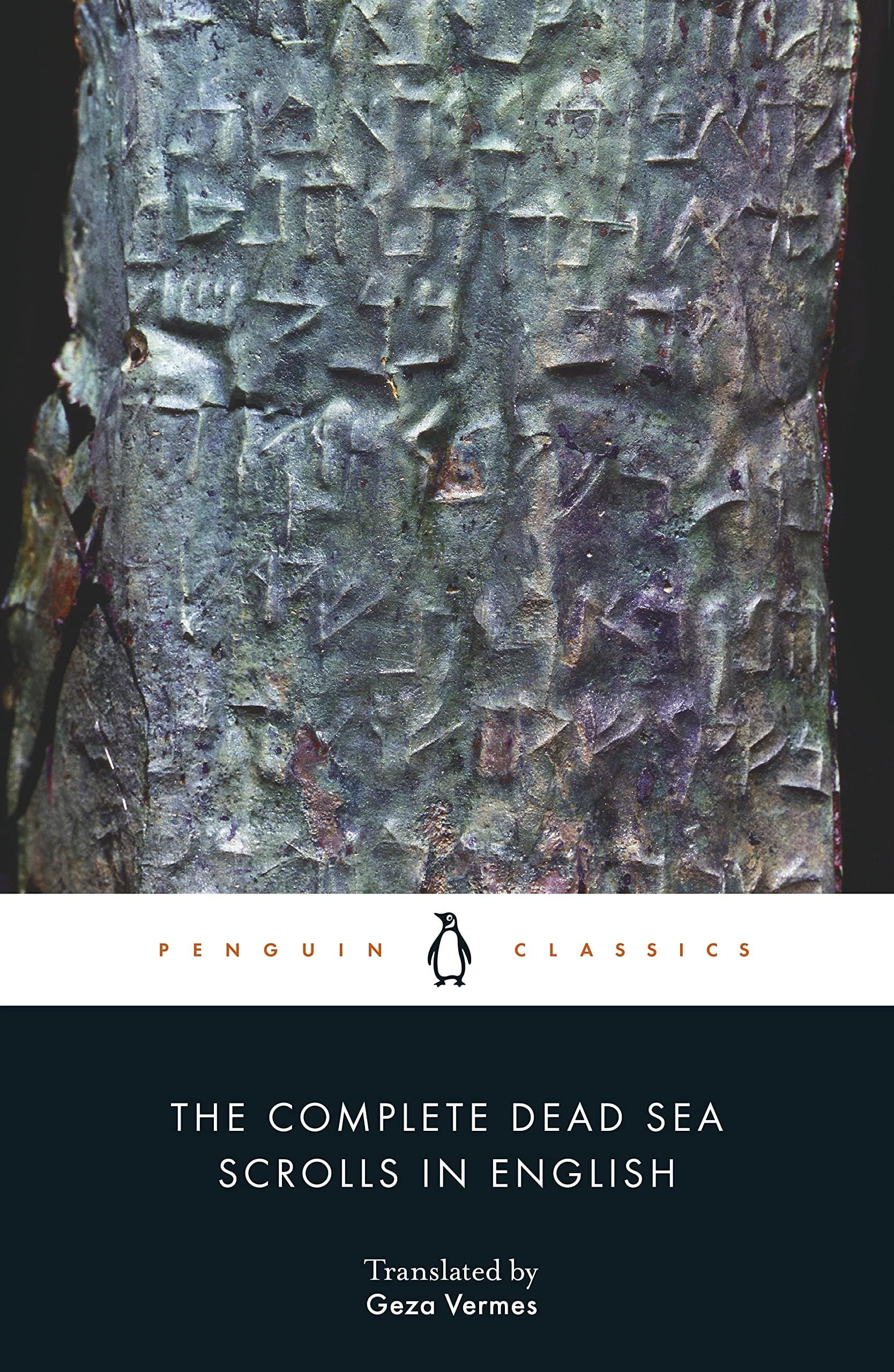

The Complete Dead Sea Scrolls in English: Seventh Edition (Penguin Classics)
Product ID: 1695848
Desertcart purchases this item on your behalf and handles shipping, customs, and support to South Africa.
A newly updated edition of the landmark translation by one of our greatest religious scholars Since its publication in 1962, esteemed biblical expert Géza Vermes's translation of the Dead Sea Scrolls has established itself as the authoritative standard. The original manuscripts, discovered in the Judean Desert between 1947 and 1956, completely transformed our understanding of the Hebrew Bible, early Judaism, and the origin of Christianity. Now in its seventh edition, The Complete Dead Sea Scrolls in English has been updated with a number of previously unpublished texts, as well as extensive new introductory material and notes. Some sixty years after the Scrolls' discovery, this revised and expanded volume crowns a lifetime of research by Vermes. For more than sixty-five years, Penguin has been the leading publisher of classic literature in the English-speaking world. With more than 1,500 titles, Penguin Classics represents a global bookshelf of the best works throughout history and across genres and disciplines. Readers trust the series to provide authoritative texts enhanced by introductions and notes by distinguished scholars and contemporary authors, as well as up-to-date translations by award-winning translators. Review: Text for Classroom - I'm taking an upper level history course on Dead Sea Scrolls, and this is one of my two texts for the class. I'm very impressed with the accuracy of translation and the writing competency of the author. It is clearly written and documents all of the non-Biblical writings found in the Dead Sea sea scrolls. When I first got the book, I was disappointed that the books of the Bible and Torah had been omitted from the work, but I soon learned in class that these were readily available in (drumroll, please) the Bible and the Torah. The significance of the scrolls is that they confirm the accuracy of the already-known but younger copies of these much-read and loved works. Although the scrolls are over a thousand years older than any of the previously known extant writings, they are almost identical to the newer copies! The scrolls included in this book are peshars, midrashes and targums (commentaries on Biblical books such as Nahum and Habakkuk); a Community Rule for the sect which apparently lived at Qumran, a settlement near the caves where the scrolls were found; eschatological writings regarding the end of times (such as the War Scroll); and directives to the Leader of the sect which presided over the congregation. Very, very interesting window on sectarian life. The only complaint I have--and it's probably one born of ignorance--is that it is somewhat difficult to find specific documents by using the indices at the end of the book. I'm never sure I've completed a reading assignment because of the cluttered way that the manuscripts are referenced. But when I consider how many thousands of fragments were organized and of how many copies of the same text were found in 11 different caves, it's no wonder the index is so complex. Some people use this book to study only ONE of the copies of a document. So all of the works must be referenced and cross-referenced in the index--not just the best preserved of the bunch. Likewise, in reading the translations of the manuscripts, the brackets and parentheses, used in the middle of words and sentences to distinguish between texts from different caves, are rather distracting because they aren't utilized in the manner that I'm accustomed to in reading and writing. It takes a little getting used to. But it is a very effective means for the writer to pull together a fragment of a document from one cave to fill in missing text from another copy of the same document found in another cave. I don't know if any of that even makes sense. This is a book which really needs a companion text, such as James VanderKam's The Dead Sea Scrolls Today . Unless you already know the history of the sect and how the scrolls were discovered, the manuscripts alone are fairly meaningless to the modern reader. It was a daunting task, assembling the fragments of the scrolls and cataloging all of the documents found in those caves. To organize all of that information into one cohesive anthology and then translate it from Aramaic, Hebrew and Greek into English and other languages is nothing short of heroic. Vermes is a brilliant man indeed. Review: Scholarly yet so interesting - As an Anthro major, this work really has been a great read. Geza Vermes has the amazing ability to deliver solid academic knowledge in a manner you can actually read in bed. I'd always been interested in the Essenes and for years wanted to address what the Dead Sea Scrolls really contained on this interesting sect and where the discrepancies were in what made it's way into Biblical text and what the actual belief structure was. It is an undertaking but a really good read if you are interested in the material. I was and having read about Vermes' life prior to buying the books and his impeccable reputation, once I received the books I dove in wholeheartedly. Vermes presents the facts, cold, as they are. Whatever conclusions can be drawn from the facts, at least as far as I can tell as I read, is really left up to the individual, but Vermes does an excellent job of presenting the picture as it was, in context of what was occuring politically, socially, pointing out where information is missing, and the effect Time may have had on the sect, from inception through to their demise given the age of the scrolls in different caves. Again, if the material is of interest, the journey through this volume is well worth the effort.











| Best Sellers Rank | #9,845 in Books ( See Top 100 in Books ) #3 in Dead Sea Scrolls Church History #5 in Torah #22 in General History of Religion |
| Customer Reviews | 4.6 out of 5 stars 2,363 Reviews |
P**G
Text for Classroom
I'm taking an upper level history course on Dead Sea Scrolls, and this is one of my two texts for the class. I'm very impressed with the accuracy of translation and the writing competency of the author. It is clearly written and documents all of the non-Biblical writings found in the Dead Sea sea scrolls. When I first got the book, I was disappointed that the books of the Bible and Torah had been omitted from the work, but I soon learned in class that these were readily available in (drumroll, please) the Bible and the Torah. The significance of the scrolls is that they confirm the accuracy of the already-known but younger copies of these much-read and loved works. Although the scrolls are over a thousand years older than any of the previously known extant writings, they are almost identical to the newer copies! The scrolls included in this book are peshars, midrashes and targums (commentaries on Biblical books such as Nahum and Habakkuk); a Community Rule for the sect which apparently lived at Qumran, a settlement near the caves where the scrolls were found; eschatological writings regarding the end of times (such as the War Scroll); and directives to the Leader of the sect which presided over the congregation. Very, very interesting window on sectarian life. The only complaint I have--and it's probably one born of ignorance--is that it is somewhat difficult to find specific documents by using the indices at the end of the book. I'm never sure I've completed a reading assignment because of the cluttered way that the manuscripts are referenced. But when I consider how many thousands of fragments were organized and of how many copies of the same text were found in 11 different caves, it's no wonder the index is so complex. Some people use this book to study only ONE of the copies of a document. So all of the works must be referenced and cross-referenced in the index--not just the best preserved of the bunch. Likewise, in reading the translations of the manuscripts, the brackets and parentheses, used in the middle of words and sentences to distinguish between texts from different caves, are rather distracting because they aren't utilized in the manner that I'm accustomed to in reading and writing. It takes a little getting used to. But it is a very effective means for the writer to pull together a fragment of a document from one cave to fill in missing text from another copy of the same document found in another cave. I don't know if any of that even makes sense. This is a book which really needs a companion text, such as James VanderKam's The Dead Sea Scrolls Today . Unless you already know the history of the sect and how the scrolls were discovered, the manuscripts alone are fairly meaningless to the modern reader. It was a daunting task, assembling the fragments of the scrolls and cataloging all of the documents found in those caves. To organize all of that information into one cohesive anthology and then translate it from Aramaic, Hebrew and Greek into English and other languages is nothing short of heroic. Vermes is a brilliant man indeed.
A**A
Scholarly yet so interesting
As an Anthro major, this work really has been a great read. Geza Vermes has the amazing ability to deliver solid academic knowledge in a manner you can actually read in bed. I'd always been interested in the Essenes and for years wanted to address what the Dead Sea Scrolls really contained on this interesting sect and where the discrepancies were in what made it's way into Biblical text and what the actual belief structure was. It is an undertaking but a really good read if you are interested in the material. I was and having read about Vermes' life prior to buying the books and his impeccable reputation, once I received the books I dove in wholeheartedly. Vermes presents the facts, cold, as they are. Whatever conclusions can be drawn from the facts, at least as far as I can tell as I read, is really left up to the individual, but Vermes does an excellent job of presenting the picture as it was, in context of what was occuring politically, socially, pointing out where information is missing, and the effect Time may have had on the sect, from inception through to their demise given the age of the scrolls in different caves. Again, if the material is of interest, the journey through this volume is well worth the effort.
V**L
An Essene Jesus At Last!
Thank you, Geza Vermes! Without trying, this book is likely to convince you that Jesus and John the Baptist were Essene Jews. The similarities of language and idea between the New Testament and the scrolls is significant. One reason why this is important is to reconnect Jesus with the Essene emphasis on reason, intelligence and understanding. Even Isaiah characterizes the Messiah as wise, but that side of Jesus is often downplayed. Ideas of God have always been exploited by the power hungry, so reconnecting Jesus with reason empowers individuals. Another reason why an Essene Jesus is important as it helps us get a handle on how the people at the time of Jesus viewed the (Messiah). The Essenes had 4 views on the Messiah. One example is the Messiah of Aaron and the scrolls claim he would suffer and be humiliated before being glorified by God. They also claim he would teach righteousness at the end of days - and the Essenes (like Jesus) felt that they were living in the end times of Israel (see War Scroll). Moreover, he had a council of 12.... A final reason why it is important to reconnect Jesus with Essene Judaism is Truth. The gospels have been edited with anti-Semitism; thus, re-centering Jesus in his Jewish context offers healing. It allows Christians to respect the Jewishness of Jesus and to interpret it wisely. In so many ways Jesus parallels the main points of the scrolls, as though he allegorizes them. Of course, the gospels claim that Jesus broke with Essene exclusionism after being rejected in the temple at Nazareth, illustrating that he interpreted the role of the Messiah of Aaron for all Israel (which is, in fact, what the scrolls say.) Still, even if you only read the Community Rule, the parallels between Essene thought and the lives/teachings of Jesus and John the Baptist are too obvious to ignore. But read on because this book is packed full of treasures.
M**Z
Not a "complete," yet worthy compilation
The biblical texts are not included. Sure, they'd fill a lot of volume and for most people may be redundant, for he have modern translations of the canonical texts at our fingertips. But for s/he who is precisely interested in the famously abundant variants retrieved at Qumran, well, they are not here included. This book does not encompass "the complete Dead Sea scrolls in English," but "the complete NON-BIBLICAL Dead Sea scrolls." The introduction is wide-ranging and generally excellent. The author traces the history of the recovery and publication of the DSS and, understandingly, permits himself a few swipes at people involved in the well known delays. It's a good read. Two requirements for a future revised versions: (a) greater attention to the archaeological finds, on which there have been new publications in the past 20 years (the introduction is from 2004). Notably, archaeologists now date the inauguration of the Qumran community to 100 BCE or later, no longer to 150-140 BCE as does the author. This revised timeline has repercussions on his section on the history of the community (a) engagement with the developments of the past 20 years in the history of Palestine and the possible datings of Biblical texts. Indeed, it was only these past 20 years that saw the emergence of a genuinely scientific history of BCE Palestine unencumbered by theology. Notably the dating of DSS texts, which at present relies much on palaeography, which is important but comes with large margins of error, can now be complemented with a cross-check against plausible dates of composition of Biblical texts to which some of the DSS refer or owe a debt (though the textual priority may not in all cases been obvious). The author makes a very admirable effort to link DSS textual evidence to the historical context; this effort now deserves a thorough review and update.
J**N
Worth having in your reference library
I had an older version from the 90’s and this helps update my understanding
W**.
The Dead Sea Scrolls: The Jewish religion of Christ
The Dead Sea Scrolls? What can I say about them? In many parts, they are the words of YHWH as expressed by man. In many parts they are the Torah. So as a believer of God, I must reserve a certain awe, a certain respect. In the words of the translator of the Dead Sea Scrolls. An unbeliever will not understand this nor will they appreciate these scrolls. O my God, hast sealed them all and there is none to open (them) … Does one measure by the hollow of a human hand the waters of the great (ocean)? Are [the heavens estimated by the span (of fingers)? In one third (of a measure)] can any contain the dust of the earth, and weigh the mountains in a balance, or the hills in scal[es]? Man did not make these. How can he measure the spirit of [God]? (Fragment 30 of the 511th scroll of the 4th Cave 4Q511 Fr 30) What we have are the religious library of the Essene Jews occupying a religious or scholarly city of Qumran. These works were hidden in at least 11 caves in the vicinity of Qumran. So there are original copies of the Bible as known by the Jews in all of the three centuries before Christ, commentaries, peshers (interpretations there of,) and apochrophial works. These have been translated from Aramaic, Hebrew and Greek into English. Ostensibly, they were hidden to avoid there destruction by the Kittims: the Romans. There is a close relationship of Qumran to the Zealots of Masada. This is not easy reading, no more easier than the Bible today. Much of the works are fragmentary as the scrolls have deteriorated with age and subsequent treatments. And yet the devotions of the Jews at the time of Christ has become vivid. But, if you are interested in what Jewry was like during the times of Jesus (Jesus was a Jew,) then there is no better place to study than these scrolls! What you should gain are the importance of the Covenants! the importance of the distinction between clean and unclean the importance and rituals of sacrifice the order and rankings of the populace with respect to the religion the interpretations of the Torah (the first five books of the Bible) the respect for the prophets Much of this, perhaps by the translations, is still hidden even from a scholarly reader. But one has a new perspective of the times of Christ from these scrolls.
D**B
Bigger print Submit
Writing is to small for my old eyes
C**H
Good study book for DSS.
Great book. DSS were a great historical breakthrough. Should be read by all students of scripture.
L**N
Användbar för den som behöver en översättning till engelska av texter ur Dödahavsrullarna.
Mycket användbar för mig som studerar texter ur Dödahavsrullarna.
M**A
Extraordinario.
Un libro maravilloso del gran Geza Vermes. Muy satisfecho con su lectura.
J**O
Un libro útil para el conocimien de la Comunidad del Qumram
Hace tiempo que deseaba tener este libro "los rollos completos del mar muerto", una pena que no esté en español. Pero me vale
R**T
Scrolls
If you are interested in the religious beliefs of the Middle East you may find this book interesting. Translated from thousands of tiny fragments of parchment the Dead Sea Scrolls are an amazing glimpse back in time to the thoughts and doctrines of the period. The rules and beliefs of the Essene Community are fascinating as are the references to examples of various 'sacred' texts connected to other beliefs. A great guide to the state of religious thought in the early years of Christianity and the continuing evolution of Jewish belief and orthodoxy. The Romans wiped out the Essene Community so this offers us a rare insight into their organisation.
Ö**R
Sansürsüz Basım
Türkçe'ye çevirisinde sansüre maruz kaldığı için ingilizce biliyorsanız bunu almanız en iyisi çünkü eksik değil :)
Trustpilot
1 month ago
2 months ago