Hullabaloo in the Guava Orchard: A Novel
Product ID: 16083731
Desertcart purchases this item on your behalf and handles shipping, customs, and support to South Africa.
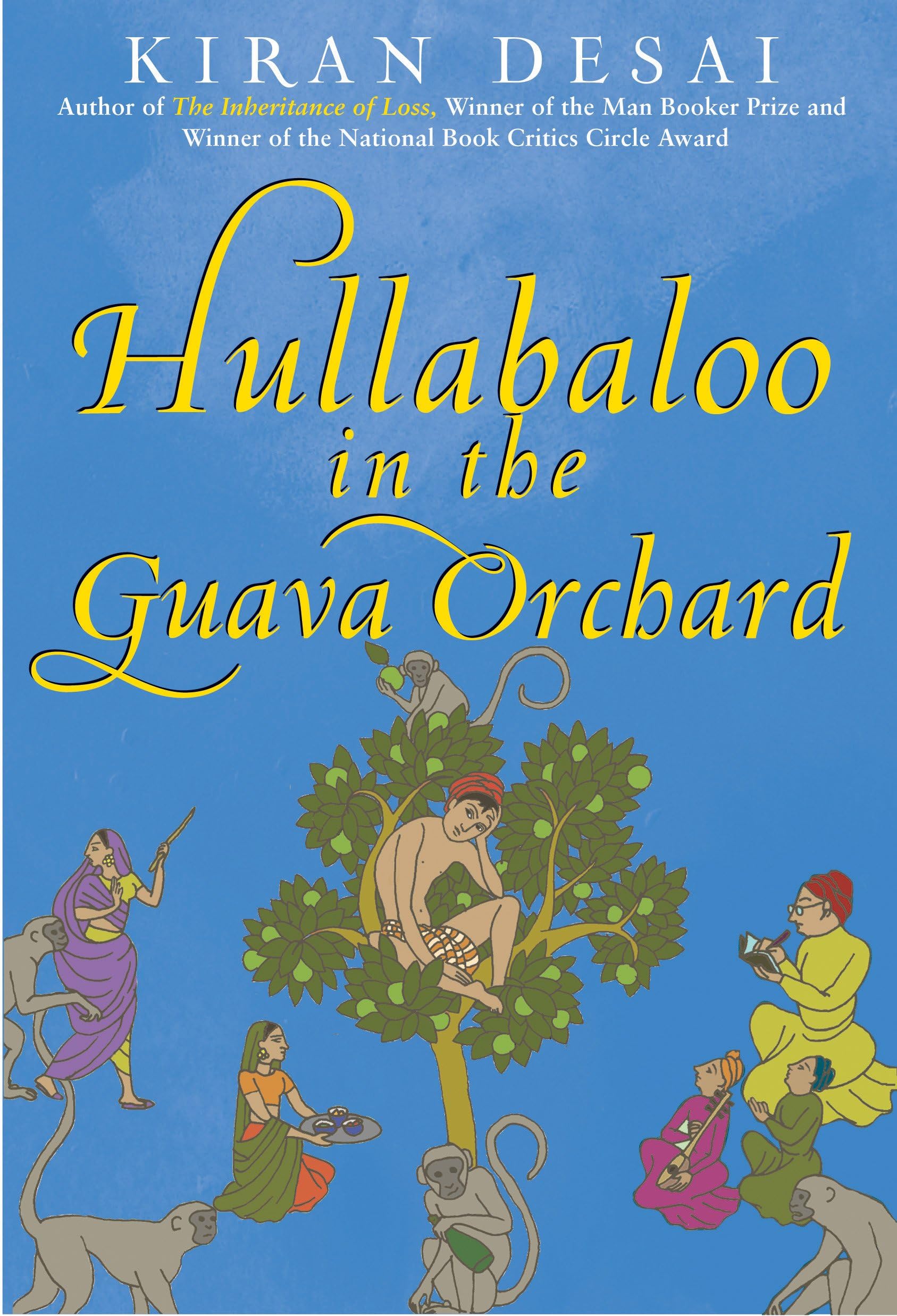
Winner of the 2006 Man Booker Prize and the National Book Critics Circle Award for Fiction for her second novel The Inheritance of Loss , Kiran Desai is one of the most talented writers of her generation. Now available for the first time as a Grove Press paperback, Hullabaloo in the Guava Orchard —Desai’s dazzling debut novel—is a wryly hilarious and poignant story that simultaneously captures the vivid culture of the Indian subcontinent and the universal intricacies of human experience. Sampath Chawla was born in a time of drought into a family not quite like other families, in a town not quite like other towns. After years of failure at school, failure at work, of spending his days dreaming in tea stalls, it does not seem as if Sampath is going to amount to much—until one day he climbs a guava tree in search of peaceful contemplation and becomes unexpectedly famous as a holy man, sending his tiny town into turmoil. A syndicate of larcenous, alcoholic monkeys terrorizes the pilgrims who cluster around Sampath’s tree, spies and profiteers descend on the town, and none of Desai’s outrageous characters goes unaffected as events spin increasingly out of control. Review: Don't read this book in public - they'll think you can do nothing but render varieties of laughter - Shades of P.G. Wodehouse! Hullabaloo renders reality in all the glory of its attendant insanity. I have met all this book's characters in person: in preschool classrooms; at church; shopping in Walmart; within my own family. I even met myself as I read. Take one town, one family, one pivotal member of that family; a variety of officials, romance, religion, gastronomy; add dashes of other whimsies and shake well with a troop of monkeys (who may be the sanest of all the characters) and you have this wonderful story. But, if you cannot enjoyably laugh at yourself don't bother reading it. Why P.G. Wodehouse? Just like him, Desai magnificently handles a slew of delightfully weird, albeitrecognizable, characters, capably weaving them into a Persian carpet of plots and counterplots, and ending the whole thing with all strings tied and the reader very satisfied. Review: Light read giving a glimpse of Indian society - I enjoyed reading this book. It was a light read ( which a good thing in my opinion) and humourous in places. I particularly liked the narratives about Kulfi and the insights into how Sampath thinks. Interesting characters, pinky and Mr Chawla. The books deals with issues in India. It is interesting how controlling the alcoholic monkeys becomes a religious issue. The book finishes with an open end, what happened to Sampath and the spy. And this is a good topic for discussion
| Best Sellers Rank | #660,163 in Books ( See Top 100 in Books ) #1,963 in Magical Realism #8,083 in Family Life Fiction (Books) #9,182 in Literary Fiction (Books) |
| Customer Reviews | 3.7 out of 5 stars 700 Reviews |
D**E
Don't read this book in public - they'll think you can do nothing but render varieties of laughter
Shades of P.G. Wodehouse! Hullabaloo renders reality in all the glory of its attendant insanity. I have met all this book's characters in person: in preschool classrooms; at church; shopping in Walmart; within my own family. I even met myself as I read. Take one town, one family, one pivotal member of that family; a variety of officials, romance, religion, gastronomy; add dashes of other whimsies and shake well with a troop of monkeys (who may be the sanest of all the characters) and you have this wonderful story. But, if you cannot enjoyably laugh at yourself don't bother reading it. Why P.G. Wodehouse? Just like him, Desai magnificently handles a slew of delightfully weird, albeitrecognizable, characters, capably weaving them into a Persian carpet of plots and counterplots, and ending the whole thing with all strings tied and the reader very satisfied.
P**Y
Light read giving a glimpse of Indian society
I enjoyed reading this book. It was a light read ( which a good thing in my opinion) and humourous in places. I particularly liked the narratives about Kulfi and the insights into how Sampath thinks. Interesting characters, pinky and Mr Chawla. The books deals with issues in India. It is interesting how controlling the alcoholic monkeys becomes a religious issue. The book finishes with an open end, what happened to Sampath and the spy. And this is a good topic for discussion
D**H
How to lose your job and live in a tree: a primer
Behind every prophet is a trickster. In Sampath Chawla's case, he loses his job as a postal clerk after performing an impulsive striptease at the wedding of his boss's daughter. "How he hated his life. It was a never-ending flow of misery. It was a prison he had been born into. The one time he has a little bit of fun, he was curtailed and punished." And so, when his family attends another wedding, they leave Sampath at home "to be sure he would not pull down his pants at yet another important event." And that's when the young man decides to live in a guava tree and eventually convinces his neighbors that he's a mind-reading guru by publicly revealing their most closely held secrets. Little do they know: he's been steaming open their mail for months. The basic story--boy gets sick of family, boy heads up a tree, boy decides to live in the trees, young man becomes famous as a guru of sorts--shares much with Italo Calvino's "The Baron in the Trees." In spite of the addition of monkeys and the change of setting to India, it's almost impossible for readers who have read Calvino to not think of his 1957 parable. (Note to authors: I do think the genre of satirical bildungsoman featuring a tree-living renegade-boy turned prophet is pretty much tapped out at this point.) Calvino sets his tale on a broader canvas: the adventures of his tree-guru provide a sardonic window on the Age of Enlightenment. For her part, Desai keeps her story local, poking fun at village life in India and portraying elected officials and the police as a postmodern version of the Keystone Kops. Unlike Calvino's fantasy, there are few grandiose metaphysical or historical themes here, and Desai's prose, at times, feels light--almost as if it were meant to be young-adult fiction. But her novel surpasses Calvino's in one notable respect. In "Baron," Cosimo's farcical family leaves the stage relatively early in the book, but in "Hullabaloo," Sampath's relatives not only share equal billing but also become the targets of the author's finest mockery. The scheming father realizes his son can be the source of a fortune from gullible disciples; the addled mother sees her son's truancy as an opportunity to cook increasingly elaborate meals with increasingly exotic ingredients; his sister takes advantage of their parents' neglect to (literally--and violently) hunt down a boyfriend; the grandmother dispenses wisdom and dentures with equal aplomb. Meanwhile, the tribe of tree-dwelling simians serving as Sampath's most fervent acolytes becomes an alcohol-fueled menace to the entire region--although certainly it's hard to say which group of primates is behaving more like a bunch of monkeys. The distance between this debut and Desai's second, more mature novel, "The Inheritance of Loss," is vast. Although I believe the latter is nearly a masterpiece, both novels are excellent in their own way--yet it's staggering to think they are by the same author, written only eight years apart. I can't wait to see what Desai, like Sampath's mother, testing new ingredients and inventing new recipes, cooks up next.
F**Z
laugh out loud outrageous
Enjoyable. Kiran Desai has a way with words. Her ability to take every little nuance of every day life and blow it up to a big balloon of laughter while weaving a story of a holy man phenom is to be enjoyed. Our hero just wants to be alone, and eventually takes up residence in a large guava tree, eventually joined by a horde of monkeys, including Cinema Monkey who has been known to vandalize young women going to the movies. Huh? what? yes, you read it and it all culminates in what could best be described as a Pink Panther rout. Don't expect anything from this book. There's no overlying moralistic question to be answered. It is a good read, an occasional laugh out loud, and an easy way to spend some time curled up.
G**F
Not charmed
My India lit class loved this book and read all kinds of things into it: irony, social commentary, spirituality, etc. I thought it was so silly as to be almost stupid and only finished it because of the class. I kept picturing the children's book "Caps for Sale." You may be charmed, but I was not.
A**S
A little disappointed.
I enjoyed her prose and great imagination, however I expected a more profound plot. I've read another book of hers, I just can't remember its title, I considered a literary gem. She has a great future in the literary world.
J**Y
Monkeybusiness
I laugh just thinking about this book. It's been a while since I read it but I will read it again. The hullabaloo centers around a monkey versus a village. The monkey has taken up residence in the orchard which causes a commotion with the people of a village nearby. It is a flight of fancy and a fun read.
A**O
It was okay . . .
This story was entertaining, but to me, at times it lagged and I didn't feel like finishing it although I did. I love the author and I love her other work, but this story just didn't really do it for me. I must say though, that it is fun and interesting story if you are in the mood for something light and not super serious. The ending was a shock and I did like it. This novel wasn't horrible, but do read Kiran Desai's other work as I think you will like it much better!
1**9
fantástica
es uno de los libros más bonitos que he leído sin lugar a dudas aunque el final es un poco confuso
B**N
A feast of storytelling
Often moving, frequently hilarious, this charming story of a dysfunctional family in rural India is a real winner: a face that deepens as the family's son takes to the trees as a sort-of-guru. Since reading it, I have been pushing it mercilessly on to friends and family. To say that is is a parable about the power and value of literature and the imagination, when confronted by utilitarian values, is to miss its humanity and readability. A great read.
K**N
かわいい
可愛い表紙で、すぐに読みたくなりました。綺麗な本の状態でした。
A**.
Amazing quality
Got my second hand copy from the seller name RN used books and the quality is amazing... it's a hardcover
V**A
Loved it
Awesome story
Trustpilot
2 weeks ago
3 weeks ago