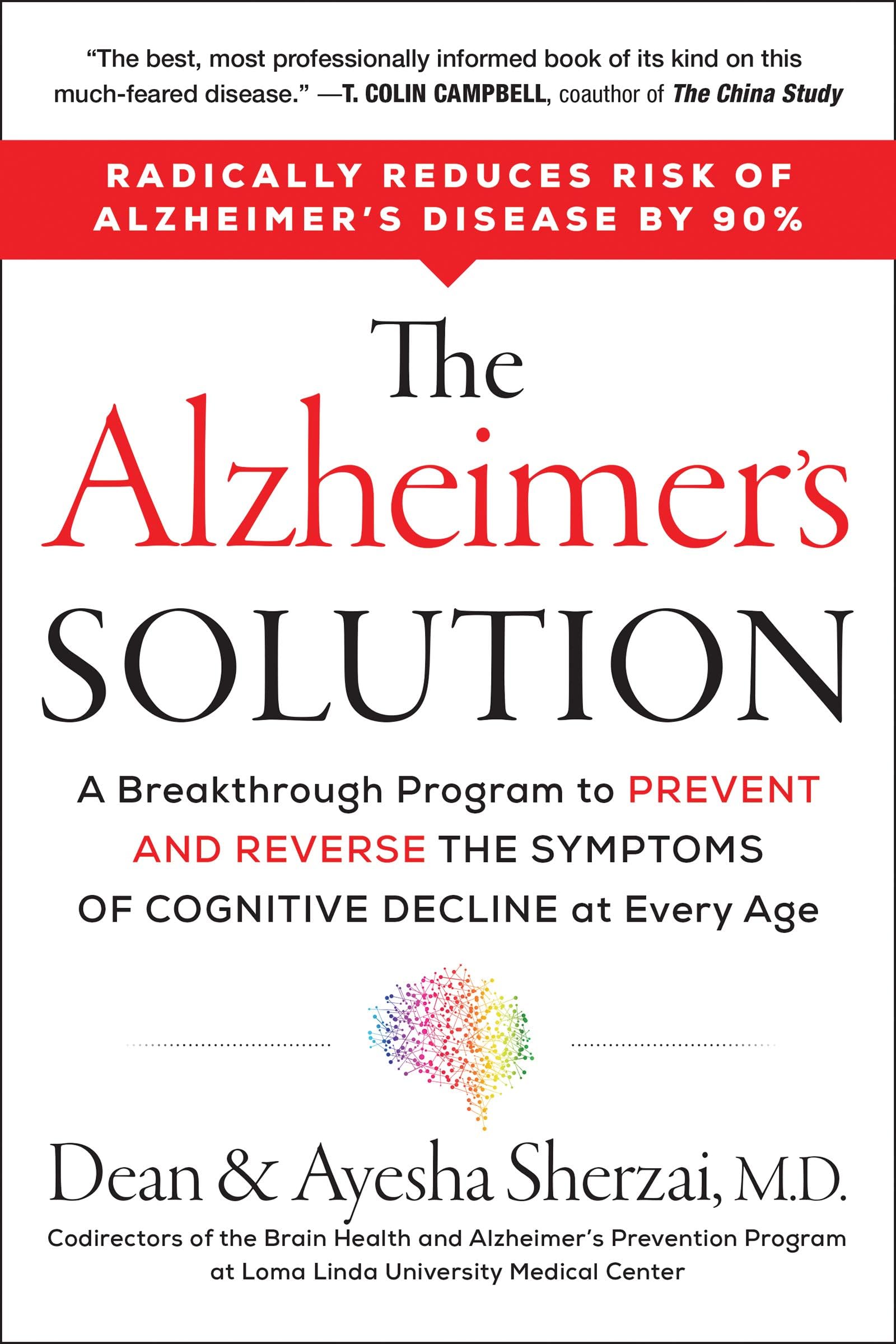
The Alzheimer's Solution: A Breakthrough Program to Prevent and Reverse the Symptoms of Cognitive Decline at Every Age ― A Neurological Protocol Guide
Product ID: 153552038
Desertcart purchases this item on your behalf and handles shipping, customs, and support to South Africa.
A revolutionary, proven program for reversing the symptoms of Alzheimer's disease and cognitive decline from award winning neurologists and codirectors of the Brain Health and Alzheimer's Prevention Program at Loma Linda University Medical Center Over 47 million people are currently living with Alzheimer’s disease worldwide. While all other major diseases are in decline, deaths from Alzheimer’s have increased radically. What you or your loved ones don’t yet know is that 90 percent of Alzheimer’s cases can be prevented. Based on the largest clinical and observational study to date, neurologists and codirectors of the Brain Health and Alzheimer’s Prevention Program at Loma Linda University Medical Center, Drs. Dean and Ayesha Sherzai, offer in The Alzheimer’s Solution the first comprehensive program for preventing Alzheimer’s disease and improving cognitive function. Alzheimer’s disease isn’t a genetic inevitability, and a diagnosis does not need to come with a death sentence. Ninety percent of grandparents, parents, husbands, and wives can be spared. Ninety percent of us can avoid ever getting Alzheimer’s, and for the 10 percent with strong genetic risk for cognitive decline, the disease can be delayed by ten to fifteen years. This isn’t an estimate or wishful thinking; it’s a percentage based on rigorous science and the remarkable results the Sherzais have seen firsthand in their clinic. This much-needed revolutionary book reveals how the brain is a living universe, directly influenced by nutrition, exercise, stress, sleep, and engagement. In other words: what you feed it, how you treat it, when you challenge it, and the ways in which you allow it to rest. These factors are the pillars of the groundbreaking lifestyle medicine program you’ll find in these pages, which features a personalized assessment for evaluating risk, a five-part program for prevention and symptom-reversal, and day-by-day guides for optimizing cognitive function. You can prevent Alzheimer’s disease from affecting you, your family, friends, and loved ones. Even with a diagnosis, you can reverse cognitive decline and add vibrant years to your life. The future of your brain is finally within your control. This comprehensive guide to brain health offers a science-backed plan to: Evidence-Based Prevention: Learn how 90 percent of Alzheimer’s cases can be prevented through targeted lifestyle changes based on the largest clinical study to date. The NEURO Protocol: Master the five pillars of brain health―Nutrition, Exercise, Unwind, Restore, and Optimize―to fight back against cognitive decline. Personalized Risk Assessment: Utilize a comprehensive self-assessment to evaluate your personal risk factors and create a tailored prevention strategy. Symptom Reversal Strategies: Follow day-by-day guides designed to improve cognitive function, reverse symptoms, and add vibrant years to your life. Review: Read this thoroughly researched book! - The Sherzai’s base all their recommendations on high quality research—large sample size, controlled-for variables that could affect results, and researchers without financial ties to their results and conclusions. They focus on long-term research studies. This is very much not the case of all health and dementia books. Some authors of similar books ignore long-term outcomes of their recommendations, even though they are poor, maybe because of their own financial incentives. I recommend listening to the Rich Rolls podcast where he interviews the Sherzai’s. It is long yet it had me hanging on every word. It is so worth your time and you will not be bored. As I apply the Sherzai’s recommendations I feel better and have gotten rid of brain fog. I listen to it on audible and refer to my printed copy. I keep reminding myself with it to help avoid “cheating.” Please know that the research on the benefits of eating fish are comparing eating fish to eating more highly saturated meat, NOT to plant-based diets supplemented with DHA & EPA from algae. The fish get it from algae and we can benefit from also getting it from algae and avoiding the saturated fat, mercury and micro plastics in the fish. Yes, fish is better than beef and even poultry, but we can do better. We are fortunate to be able to do better. I hope you read and apply the information in this cutting-edge book. We need to stop the horrific Alzheimer’s epidemic and this book explains how to do it. According to the authors mild cognitive impairment can usually be reversed and, started early enough, Alzheimer’s can be prevented except in a few rare genetic cases. But prevention is a lifetime program. It comes with the benefit of being good for your heart, anti-inflammatory and reducing cancer risks It’s also good for mood. The book includes about 40 pages of brain-healthy recipes. So far I’ve only tried one of them-turmeric milk. It’s made from just five ingredients. I put the ingredients in the blender and blend long enough that it heats. I’ve adjusted the amounts of the spices to my taste. I like it so much that I have it first thing every morning. It’s a treat I look forward to. Plus it’s made with ingredients that repair and rejuvenate the brain. I plan to try more of the recipes as some look easy and with inexpensive ingredients found in any grocery store. But, honestly, I like the turmeric milk so much that the book was worth the cost even if I got nothing else from it. Please do yourself and your family a huge favor and get this book from the library if you don’t want to buy it. Just read it. Alzheimer’s is no walk in the park-so it’s worth putting in some effort to prevent it. Review: When an Author Gets It Right - In their book “The Alzheimer’s Solution,” Drs. Dean and Ayesha Sherzai propose an ambitious plan with a promising positive influence not only over your memory performance and prevention of dementia, but your overall health. The bullet points of their plan are already mentioned in some previous reviews, but what stood out for me, as a psychotherapist with background in medicine, are the following: 1. The Authors’ Holistic Approach: The authors, unlike many other professionals in their field, are fully aware - and proponent of – a holistic approach and its importance in treating (and most importantly, preventing) diseases, particularly dementia. They objectively highlight the problem of having a myopic approach to medical challenges, which is unfortunately rampant in the medical field, and which is often dismissive of prevention and behavioral change. This is critical because as long as our approach is myopic, and pathology/disease-oriented, we are looking for one-dimensional, simplistic solutions and ignore the role of lifestyle and multiple other factors that help ensure and maintain better health. 2. The Authors’ Objectivity: If you are already exposed to the field of self-help and happened to have read a few self-help books, you probably know that there is plethora of information on the market in the form of books, e-books, magazines, websites, blogs, etc. Alas majority of the information offered for readers sandwiched as self-help is purely subjective and lacking sufficient, objective material. This is because a significant number of self-help books follow a familiar narrative style of focusing on few cases of individuals who have overcome a life challenge, achieved success in another domain of their lives. Such experiences are, to the most part, not replicable. Nevertheless, the Sherzais’ approach is objective, scientific, and well-researched, not to mention they have been working with hundreds of patients for years and had the resources to closely monitor their progress. Additionally, the "Notes" are particularly impressive, demonstrating the depth of their efforts in the subject matter and providing wealth of knowledge and resources for those who are interested to read more on the subject. 3. Not only theoretical, but also practical The authors, who have done extensive research in addition to comprehensive meta-analysis of hundreds of studies on dementia, not only explain the theoretical and scientific mechanisms behind dementia (as much jargon-free as possible!), but they also offer workable strategies and practical solutions in the form of NEURO (Nutrition, Exercise, Unwind, Restore, and Optimize). The bullet points of the plan is already mentioned in other reviews, but it was a breath of fresh air to read the rationale behind their holistic plan, and much to the satisfaction of a scientific, objective mind, every step is supported by scientific data. Last but not least, I immensely enjoyed reading the book, learned a few new things on memory performance and overall optimal physical/mental functioning and, of course, the significance of behavioral change in preventing chronic diseases. And this simply means the authors got it right!


| Best Sellers Rank | #11,203 in Books ( See Top 100 in Books ) #5 in Aging Medical Conditions & Diseases #10 in Nervous System Diseases (Books) #14 in Dementia |
| Customer Reviews | 4.6 out of 5 stars 1,213 Reviews |
C**R
Read this thoroughly researched book!
The Sherzai’s base all their recommendations on high quality research—large sample size, controlled-for variables that could affect results, and researchers without financial ties to their results and conclusions. They focus on long-term research studies. This is very much not the case of all health and dementia books. Some authors of similar books ignore long-term outcomes of their recommendations, even though they are poor, maybe because of their own financial incentives. I recommend listening to the Rich Rolls podcast where he interviews the Sherzai’s. It is long yet it had me hanging on every word. It is so worth your time and you will not be bored. As I apply the Sherzai’s recommendations I feel better and have gotten rid of brain fog. I listen to it on audible and refer to my printed copy. I keep reminding myself with it to help avoid “cheating.” Please know that the research on the benefits of eating fish are comparing eating fish to eating more highly saturated meat, NOT to plant-based diets supplemented with DHA & EPA from algae. The fish get it from algae and we can benefit from also getting it from algae and avoiding the saturated fat, mercury and micro plastics in the fish. Yes, fish is better than beef and even poultry, but we can do better. We are fortunate to be able to do better. I hope you read and apply the information in this cutting-edge book. We need to stop the horrific Alzheimer’s epidemic and this book explains how to do it. According to the authors mild cognitive impairment can usually be reversed and, started early enough, Alzheimer’s can be prevented except in a few rare genetic cases. But prevention is a lifetime program. It comes with the benefit of being good for your heart, anti-inflammatory and reducing cancer risks It’s also good for mood. The book includes about 40 pages of brain-healthy recipes. So far I’ve only tried one of them-turmeric milk. It’s made from just five ingredients. I put the ingredients in the blender and blend long enough that it heats. I’ve adjusted the amounts of the spices to my taste. I like it so much that I have it first thing every morning. It’s a treat I look forward to. Plus it’s made with ingredients that repair and rejuvenate the brain. I plan to try more of the recipes as some look easy and with inexpensive ingredients found in any grocery store. But, honestly, I like the turmeric milk so much that the book was worth the cost even if I got nothing else from it. Please do yourself and your family a huge favor and get this book from the library if you don’t want to buy it. Just read it. Alzheimer’s is no walk in the park-so it’s worth putting in some effort to prevent it.
E**N
When an Author Gets It Right
In their book “The Alzheimer’s Solution,” Drs. Dean and Ayesha Sherzai propose an ambitious plan with a promising positive influence not only over your memory performance and prevention of dementia, but your overall health. The bullet points of their plan are already mentioned in some previous reviews, but what stood out for me, as a psychotherapist with background in medicine, are the following: 1. The Authors’ Holistic Approach: The authors, unlike many other professionals in their field, are fully aware - and proponent of – a holistic approach and its importance in treating (and most importantly, preventing) diseases, particularly dementia. They objectively highlight the problem of having a myopic approach to medical challenges, which is unfortunately rampant in the medical field, and which is often dismissive of prevention and behavioral change. This is critical because as long as our approach is myopic, and pathology/disease-oriented, we are looking for one-dimensional, simplistic solutions and ignore the role of lifestyle and multiple other factors that help ensure and maintain better health. 2. The Authors’ Objectivity: If you are already exposed to the field of self-help and happened to have read a few self-help books, you probably know that there is plethora of information on the market in the form of books, e-books, magazines, websites, blogs, etc. Alas majority of the information offered for readers sandwiched as self-help is purely subjective and lacking sufficient, objective material. This is because a significant number of self-help books follow a familiar narrative style of focusing on few cases of individuals who have overcome a life challenge, achieved success in another domain of their lives. Such experiences are, to the most part, not replicable. Nevertheless, the Sherzais’ approach is objective, scientific, and well-researched, not to mention they have been working with hundreds of patients for years and had the resources to closely monitor their progress. Additionally, the "Notes" are particularly impressive, demonstrating the depth of their efforts in the subject matter and providing wealth of knowledge and resources for those who are interested to read more on the subject. 3. Not only theoretical, but also practical The authors, who have done extensive research in addition to comprehensive meta-analysis of hundreds of studies on dementia, not only explain the theoretical and scientific mechanisms behind dementia (as much jargon-free as possible!), but they also offer workable strategies and practical solutions in the form of NEURO (Nutrition, Exercise, Unwind, Restore, and Optimize). The bullet points of the plan is already mentioned in other reviews, but it was a breath of fresh air to read the rationale behind their holistic plan, and much to the satisfaction of a scientific, objective mind, every step is supported by scientific data. Last but not least, I immensely enjoyed reading the book, learned a few new things on memory performance and overall optimal physical/mental functioning and, of course, the significance of behavioral change in preventing chronic diseases. And this simply means the authors got it right!
C**R
Books
Great! Well done!
A**S
Excellent on numerous counts with a couple of caveats
The authors, two qualified neurologists, have developed an empirical and scientific based approach to reducing and preventing the symptoms of Alzheimer’s disease. I read this book fairly shortly after reading the equally excellent “The End of Alzheimer’s” by Dale Bredesen. As can be expected both respective authors/books approach to managing and reducing the risk of Alzheimer’s Disease (AD) overlap a lot. Their approaches are based on healthy lifestyle modifications. While Bredesen is mainly focused on nutrition and fasting, the Sherzais have a more multidimensional approach including also exercise, meditation, sleep, and building cognitive reserves (exercising your brain in different ways). Bredesen does touch on some of those subjects but often merely in passing. In contrast, the Sherzais dedicate an entire chapter on each of those subjects, including surveys of self-assessment and plans for self-improvements in each of those areas. The Sherzais are also really strong in explaining the different causal mechanisms that cause AD including: 1) oxidation; 2) inflammation; 3) glucose dysregulation; and 4) lipid dysregulation. By contrast, Bredesen is mainly focused on inflammation. He also mentioned inadequate nutritional and hormonal support to the brain as a second factor and toxicity (mercury, etc.) as a third factor. However, on this count I do find the Sherzais explanation of AD much more thorough from a physiological standpoint. Just about all the Sherzais’ earmarked chapters addressing any single topic are excellent. Even a mundane topic like exercise is really insightful. They also make suggestions that are original and helpful. What you get is that our sedentary lifestyle is slowly killing us. Sitting all week behind a computer then running a half marathon on the weekend is not optimal. The human body was made to be in almost permanent motion. So, they recommend you do a little exercise just about every hour on the hour. It could be for just a minute. But, it is a lot better than nothing. Also, what you get is that exercise is truly a brain-rebuilding machine. Exercise can literally regrow brain cells, brain matter and neuronal pathways. Similarly, their last chapter on optimizing your brain (building cognitive reserve) is truly outstanding and is genuinely encouraging. By engaging in mental and social complex activities, you develop numerous neural pathways that create a healthy redundancy. Later in life if your brain has some of the physiological symptoms of AD (amyloid tangles, tau plaque) that impair some of those pathways, you will have enough other pathways whereby you could still be 100% cognitively fit. They call this building your cognitive reserve. There is one chapter where one has to express reservation, and it is the one on nutrition. They stick to a low fat, low cholesterol mantra relying on the research by Ancel Keys dating back to 1951. We now know his research was highly biased, and his conclusion very much wrong. Extensive scientific rebuttals have been disclosed in numerous books. Probably the best one on the subject is Uffe Ravnskov’s “The Cholesterol Myth” published in 1999. But, other current books also hammer away on the fallacies of Keys’ studies, including Dr. Mercola’s “Fat for Fuel” among many others. In view of the Sherzais diverging views on nutrition, they constantly warn against the profound ill impact of saturated fats and eggs (cholesterol). Well, in both cases they are deemed inaccurate by many other neurologists and nutritionist experts much concerned about overall health and the health of the brain. In this camp you will find not only Ravnskov and Mercola, but also Dale Bredesen, and Steven Gundry (the author of “The Plant Paradox”). Among Ancel Keys followers there is much confusion regarding saturated fats. They are known to boost LDL cholesterol, which is deemed the bad cholesterol. However, LDL cholesterol is subdivided into two different categories: small, dense LDL vs. large not so dense LDL. The small LDL is a heart disease risk. The large LDL is not. And, it is the one that saturated fat enhances. Thus, from this standpoint saturated fats do not cause heart disease. Additionally, saturated fats are associated with numerous health benefits including enhancing absorption of numerous vitamins and minerals, boosting HDL levels (the good cholesterol), enhancing mitochondria energy metabolism, contributing to brain health (the brain does need much fat to function). Another area where the Sherzais impart questionable information is concerning the overall risk of AD. On page 22, they indicate that if you have no ApoE4 genes, you have a 50% risk of developing AD by 85 years old. 23andme, a genetic testing company, relying on a very large sample of Caucasians, discloses an AD risk that is more than 5 x lower than the Sherzais. They come up with a risk of 5-8% for men and 6-10% for women. The Framingham Study comes up with an overall risk of AD (that does not exclude individuals that have the ApoE4 genes) by 85 years old of 12% for men and 20% for women. I have mentioned those data divergences to the Sherzais. And, they have not responded. I suspect they never will. The two above caveats (nutrition and AD risk) are material. And, this is why I can’t give this book a 5 rating. Otherwise, the book is excellent and still warrants a very strong 4 rating. Additionally, the Sherzais have provided much supplementary information to Bredesen’s book on the same subject. By reading both books, you will know much more about AD then reading just either one of them.
J**N
Very Informative.
This book, The Alzheimer's Solutin, by Dean Sherzai, is very well written, researched and informative, yet easy to understand, relate to and utilize in daily life for yourself, a loved one, care giver, nurse or Doctor. Everybody can use this information. Very well executed and a must read by everybody.
C**E
A Book for All Families to Achieve Health and Well-being through the Life Course & Avoid Alzheimer's Disease
"The Alzheimer's Solution" presents a hopeful and fresh approach to the problem of the increasing prevalence of this disease currently affecting 47 million people worldwide and expected to balloon to about 150 million by 2050 without any way to reverse Alzheimer's once it has taken hold. Drs. Dean and Ayesha Sherzai are experts in this domain through their medical training in neurology, preventive medicine, dementia, and culinary science and experience at Loma Linda University where they studied two different populations - Seventh Day Adventists in Loma Linda (a noted Blue Zone) and residents of San Bernadino, California, an underserved population. They sought to understand what they were observing - Why and how were the Seventh Day Adventists much healthier and live longer than the individuals in San Bernadino? The authors provide a convincing argument by combining their research with the extant literature on lifestyle/health behavior change to say that 90% of Alzheimer's cases can be prevented through lifestyle modifications. They created a plan using the heuristic NEURO, standing for Nutrition, Exercise, Unwind, Restorative Sleep and Optimize. The authors describe research in accessible language and translate what that research signifies to the Alzheimer's problem. Namely, through eating a plant-based diet, exercising regularly, practicing rest and relaxation like meditation, prioritizing sleep and engaging in sleep hygiene behaviors, and optimizing one's functioning and ability can we each attain health and well-being and avoid developing Alzheimer's, or delay its onset by a significant number of years. I believe that this book should be read by all families in an effort to focus on prevention rather than adopt a reactive or fatalistic approach to dementia care. The authors do an exceedingly good job at providing frameworks for individuals to tailor each NEURO section to their own lives, recognizing the variability of lifestyle preferences and constraints. No one-size-fits-all here! It is high time that Alzheimer's prevention became a public health campaign because of the shift in the numbers of older adults (age is the number 1 risk factor tied to developing Alzheimer's disease). Thanks to Drs. Sherzai for starting this conversation and bringing the power of knowledge and individual agency to the community level.
C**Y
it would have been nice to have been told
first, this is an English - as in UK - edition. While I think it's the same book as the one published in Sept, it would have been nice to have been told. No real problem - the few differences in spelling as obvious, but I spent come time checking the index of both, etc . So let's start out with the good. There are some good suggestions for what someone concerned can do. BUT - the authors act as if they're the only ones doing this sort of work. Bredesen, clearly the top researcher, isn't even listed in the index although various other presenters and writers are. This is a MAJOR omission. Then, the education that the second author got in food is clearly dated and stereotyped. As another reviewer mentioned (maybe in the Sept reviews), she ignores gluten. I add she seems to have no information about coconut oil and olive oil, putting them in the bad category and ignoring research. Then, while they talk about all the research they've done, not a shred shows up in the book. So, I see this book as great for the totally uninformed who think they've taken a big step toward health by swapping their regular Coke for a artificially sweetened one. Or for people like me who are very well informed and can take what is useful and discard the rest, being about to know which is which. Bit for those in the middle, good luck.
J**S
This Book Will Preserve Your Brain!
This book is a crucial breakthrough on several different fronts. First, it shows that cognitive decline and dementia are almost always a function of lifestyle. This has massive implications when the population is aging and dementia is the one disease that is growing at an almost unsustainable rate. The notion that all of us can actually make choices now that will reduce our risk of cognitive decline and dementia is groundbreaking and critical because the current rate of dementia could bankrupt the health system let alone the country, if it continues to grow at predicted pace. Secondly, the book is a brilliant promotion for the notion of lifestyle as medicine. One of the failings of our medical system is that it treats disease and dysfunction as something that happens to us and is beyond our control when, for the most part, that is a convenient lie. Our health is very much determined by our lifestyle choices and the sooner we recognize that and start to practice health care rather than symptomatic disease care, the better off we will all be. To this end the authors should be commended for not just writing a book summarizing the latest research but have also ensured that this is a practical guide for anyone who is willing to change their health by changing their choices. Indeed, one of the strongest sections of the book is the way the Sherzais have set out their habit change section. It is full of great practical tips but utilizes what we know about the neuroscience of learning to give any willing reader the tools to change their health behaviors, and in so doing reduce their dementia risk. I recommend you read it while you still can -- you will preserve your brain in the process.
I**A
Absolut empfehlenswert!
Schade das es das Buch nur in Englisch gibt, sonst hätte ich für meine gesamte Verwandtschaft die deutschen Exemplare bestellt, damit sie durch die führenden Fachärzte und Forscher auf diesem Gebiet wachgerüttelt werden, bevor es zu spät ist. Ich habe es verschlungen, man erhält ein weit umfangreicheres Bild der Krankheit als sonst - wie auch der Prävention. Der Mensch als Ganzes wird betrachtet, was nicht alltäglich ist, wenn man sonst mit Medizinern spricht oder Studien liest.
C**H
Read This And Start Preventing Cognitive Decline
A comprehensive text by the Brain Docs, Dr. Dean and Ayesha Sherzai, covering a definition of Alzheimers, and ways to prevent and delay cognitive decline with Lifestyle Medicine. As persons in their 70s with family members who have gone before us to experience the horrors of cognitive decline and dementia, we were anxious to learn more about how we could prevent this fate ourselves (and for our adult children). The book is clearly written and works well as a read aloud book, which is what we did since Ed has recently had eye surgery and does not have clear eyesight in one of his eyes. We also joined in with the NEURO Academy Community for a few months but were dealing with several other tasks and felt that we needed to withdraw from an online community and focus on what we had learned and our nearby neighbors, our family, etc. Since the community involvement and reading the book we have both spent the first weeks of 2024 learning and refreshing in languages other than English (German for me, and German-French and Spanish for Ed). We have also begun to build meditations into our life, for stress release, and even to help overcome difficult situations (like illness). This is a very positive experience. We eat a plant-based diet, and have been exercising and making plans for other brain-growing-and-nururing experiences. My husband and I recommend the book and the Sherzai community NEURO Academy.
S**P
Very helpful
A very 'generous' book the authors are obviously passionate about their work and it shows, lots of information and the latest research which is very helpful, usable and easy to read. Very practical advice and recipes that can be incorporated into real life.
A**.
The Alzheimer's Solution
This is a very practical and encouraging account of changes you can make in your diet, exercise and relaxation to reverse cognitive decline and dementia. Thus dementia joins the large array of health problems in which life style plays a major part. These health problems include, but are not limited to, dental caries, type 2 diabetes, strokes, coronary thrombosis and obesity. The good news is that similar lifestyle changes are likely to be helpful for each of the above conditions. The authors describe treating each person as an individual in negotiating lifestyle change. The main text of the book is followed by a selection of recipes for meals to suit the brain and nervous system. The book is American, and some sceptical Brits may be put off by its hype and up-beat tone: (I can't recall any of the patients described, failing to respond to the efforts of the authors.) Numerous specific recommendations are made and even should some details prove wrong, as suggested by one reviewer, the authors provide ample evidence that mental deterioration can be helped and sometimes reversed by lifestyle changes.
L**N
Dementia
This book was very informative in describing the ravages of this disease that is effecting a lot of people
Trustpilot
2 weeks ago
5 days ago