
Brain Food: The Surprising Science of Eating for Cognitive Power
Product ID: 146964258
Desertcart purchases this item on your behalf and handles shipping, customs, and support to South Africa.
How to eat for maximum brainpower and health, from an expert in both neuroscience and nutrition. "Powerful advice on how to eat for maximum brainpower." --Mark Hyman, MD, New York Times --bestselling author of Eat Fat, Get Thin In this eye-opening book, Dr. Lisa Mosconi, a neuroscientist and integrative nutritionist, explains why the dietary needs of the brain are different from those of other organs. Her innovative approach to cognitive health encompasses a complete food plan, including comprehensive lists of what to eat and what to avoid as well as information to help you determine where you are on the brain-health spectrum. Brain Food can help improve memory, prevent cognitive decline, eliminate brain fog, and lift depression. "Incredible." --Maria Shriver "This fascinating book not only reveals the science behind neuro-nutrition, it shows us what we could be eating for maximum brain power." --Sara Gottfried, MD, New York Times -bestselling author of Younger , The Hormone Reset Diet , and The Hormone Cure "An empowering resource for anyone who wants to take their brain health into their own hands (and spoons and forks)." --Kelly McGonigal, PhD, author of The Willpower Instinct , The Upside of Stress , and The Joy of Movement
| Dimensions | 5.96 x 0.92 x 9.01 inches |
| Edition | Reprint |
| Isbn 10 | 039957400X |
| Isbn 13 | 978-0399574009 |
| Item Weight | 2.31 pounds |
| Language | English |
| Print Length | 368 pages |
| Publication Date | December 31, 2019 |
| Publisher | Avery |
User
Excellent book with the latest science on the subject
There are many books about nutrition and cognitive functions. The authors ground their nutrition protocol on what humans ate during the paleolithic era. Often these authors contradict each other. For some, we were better hunters than gatherers so we ate mostly meat. For others, we were better gatherers and ate primarily nuts, plants, fruits. Others advance our digestive system can’t tolerate grains because it was a modern invention of the first agricultural revolution (about 10,000 years ago).However, anthropology suggests that paleolithic diets were dependent of where people lived. Close to shores, they ate more fish; within the forest they ate plants; in areas with herbivores they ate more meat. Also, humans ate grains millions of years before the agricultural revolution. And, we can digest those just fine because of an enzyme earmarked to digest grains (amylase). So, paleolithic diets were as varied as they are today.Mosconi gets the anthropology right. Her foundation is based on two empirical findings. The first one is her studying of the “Blue Zones” or the five areas in the World associated with the greatest proportion of centenarians. And, her second one is her experience as a neuroscientist. She has seen thousands of brain MRIs while knowing what diet her patients ate. She uncovered a link between brain health and diet. The ones who ate a Mediterranean diet had far healthier brains (per MRIs) than the ones on an American diet. She also observed that 2 out of the 5 Blue Zones eat a Mediterranean diets. And, the three other ones have major overlapping components with a Mediterranean diet including complex carbohydrates (fresh produce) that have a lot of fiber, starches (sweet potatoes), nuts, fish, and not much meat and animal protein.By eating fish just twice a week, elderly can reduce their risk of Alzheimer’s (AD) by up to 70%.Mosconi uses a pragmatic approach to improve your diet for brain health. The book is divided in three parts. The first one provides information regarding the brain nutritional requirement. The second one teaches you how to eat better. And, the third part tests you to find out where you are in terms of feeding yourself well. This includes an 80 question test that grades you as either Beginner/Intermediate/Advanced. “Beginner” entails you have little food awareness. You eat a lot of processed food. “Advanced” entails you eat very healthily, mainly organic foods. And, “Intermediate” falls in between.Mosconi states that based on one’s result on the test, she has a good idea of what your brain looks like. She has seen a correlation between people’s diet and their brain’s MRI.Mosconi clarifies a few concepts. Other authors have advanced that the brain needs fat, including saturated fat, and cholesterol to function properly. Not so, Mosconi indicates that the fats we eat (saturated fat from animal protein) and cholesterol can’t even cross the blood-brain barrier. The brain needs a completely different type of fat: essential Polyunsaturated Fatty Acids (PUFAs). They include Omega-3s and Omega-6s fatty acids. Good sources of Omega-3s include fish, oils, eggs.Saturated fats are not good for the brain. They are associated with a 4 x increase in the risk of developing cognitive deterioration later in life.Also, brain cholesterol is very different from the cholesterol we eat. High cholesterol level (> 240 mg/dl) leads to 3 x the risk of cognitive issues and dementia later in life.The low-carb & high-fat diet (includes keto-diet) are not good for you because the brain needs glucose for fuel. It can burn fat. But, the brain’s preferred energy source is glucose. The key is to provide the brain with glucose without raising glucose/serum blood level. You do that by avoiding sugar and eating complex carbohydrates (fresh produce) that convert into glucose.Keto-diets have other negatives. An increase intake of saturated fat increases cholesterol levels (more than eating cholesterol directly). Also, fat-rich foods are often low in fiber, which is hard on your digestive system, and high in protein which is hard on your kidneys.A healthy diet has to include a lot of prebiotics food (good for microbiome). They include onions, asparagus, artichokes, garlic, bananas. These foods are rich in carbohydrates called oligosaccharides. The latter lower cholesterol, prevent cancer, and detoxify your body.Probiotics (foods that include live good bacteria) are also key. They include yogurt, kefir, sauerkraut, and other fermented foods.Regular meats are really bad. They are loaded with antibiotics and antibiotic resistant strains of bacteria.So far there is no evidence that eating grains is associated with any cognitive decline. One can verify that at PubMed.Mosconi imparts information regarding food codes (small labels with codes stuck on fresh produce). A number starting with a 4 means a produce is not organic (has fertilizers and pesticides); Starting with an 8 means GMO; and with a 9 means organic.Exercise is important too. Vigorous, frequent exercise can reduce your risk of AD by 43%. However, daily activities like walking, gardening, can reduce your risk of AD by 35%.There are three mechanisms that clean up the internal infrastructure of the brain: 1) sleep, especially during the deep sleep zone (that activates the cleaning glymphatic system); 2) aerobic exercises that boosts enzymatic activity that dissolves AD plaques in the brain; and 3) Intermittent fasting (12 hours +) that cleans up amyloid in the brain.
User
Several things I love about the book
A MUST READ IF YOU CARE ABOUT YOUTH HEALTH AND BRAIN.Dr. Mosconi’s book is keystone book for advancing the dialogue and practice of integrative brain health. This is the book I’ve been waiting for. As someone who is obsessed with nutrition, it’s very hard to find REAL research and sound logic. There’s a lot of people who proclaim to be health experts, but few people who can say they are trained in both scientific and holistic approaches. Dr. Mosconi’s book FINALLY gets to the bottom of what we all need to know to take care of our brains.Several things I love about the book:*She incorporates her own research from her experiences of running some of the most cutting edge Alzemeihr’s research programs in the world.*She is also a certified integrative nutritionist, so she gives practical executional advice on how to eat better - so it’s not just “here’s all this research,” but she’s all saying “here’s what to buy and book.”She is very clear in her thesis that is preventable and/or is possible to halt/slow-down through nutrition and lifestyle changes.*She actually tackles the heart of the paleo-gluten debates with logic - it can be a nasty, confusing field but Dr. Mosconi doesn’t shy away from sorting through the hype to give us practical advice.*And she also includes a quiz for you to self-assess where you are on the brain health spectrum.PS - And if you are already a fan of integrative health experts such as Dr. Terry Wahls, Dr. Sarah Ballentyne, Dr. Mark Hyman, Dr. Colin T. Campbell, Dr. Michael Greger, Dr. Dean Sherzai and Dr. Ayesha Sherzai - then this is a beyond worthy book to add to your collection.
User
A must read!
Outstanding book! I have originally found a free audio version in my local library, but after listening to it I decided to purchase a paper copy of this book so I can highlight important details.I am already eating better thanks to the author and encouraged my family to read the book as well.I am giving it 4 starts and not 5 because the author suggests red wine consumption (in moderation). The most recent research clearly indicates that no amount of alcohol (even 5 oz per day) is good for you. Maybe because the book is older, the info is a bit outdated regarding alcohol?As a scientist I think the author should know better not to recommend an addictive and toxic substance (by definition).
User
Simply understandable information in a practical guide!!
You need this book! Thank you Dr. Lisa Mosconi! Having members of my own extended family now showing signs of Alzheimer’s, I am eager to keep it at bay. I have learned in Brain Food, “less than one percent of the population develops Alzheimer’s due to a rare genetic mutation in their DNA.” (p. 11). This means, I can take control of one of the largest factors - my diet! Brain Food provides a clear dietary guide for nourishing your brain. The 3-step guide is easy to understand for those of us who aren’t scientists, and I did’t feel the information was dumbed down or that I was being talked down to. It’s simply understandable information in a practical guide. Give this to those loved ones you want to spend your golden years with!
User
Very interesting
I really like this book, very interesting. I have read it twice and each time I come away with more useable information. As with any program you have to be willing to give it a try.
User
Informative
Easy to read and full of useful information about the food we need for brain health. Dr. Mosconi writes in a way that displays her knowledge of the subject and at the same time it is understandable for those that may not be scientifically minded. A must read!
User
Nothing new, very mainstream
I read 2 of this authors books and they pretty much say the same thing. Most of it I was familiar with and some information was outdated and incorrect. I was disappointed, but if you don't know much about health, you may find some good information here. Very mainstream, no real insights or gems for me.
User
looking for wellness stop here!
This MD knows her stuff plus more. The first couple chapters are deep if you don't know medical arena but the rest of the book is so Right about the industry it is amazing. The Only thing I disagree with is the *wine, she states it is good for antioxidants however over the years the Science has recanted on promotion and there are far better ways to get antioxidants then this and ANY Alcohol is not good for any organ in the body and it actual causes dysfunctional not only of the brain but depresses serval organ functions! All information you can sift through and discard what you don't agree with by researching .... for the most part I have bought several books for people looking to increase their healthy living profile. Great book over all.
User
Excelente libro
Un libro de cabecera. Muy importante saber de ese tema para gente mayo
User
Food , l’arte del mangiare bene
Brain Food è un libro che esplora il legame tra alimentazione e salute cerebrale, offrendo una prospettiva scientifica e accessibile su come il cibo può influenzare la nostra mente. Scritto dalla neuroscienziata Lisa Mosconi, il libro fornisce una panoramica completa delle ultime ricerche nel campo della nutrizione e del cervello.Una delle cose che ho apprezzato di più di questo libro è la sua approccio basato sulla scienza. Mosconi si basa su studi e ricerche scientifiche per supportare le sue affermazioni, rendendo il libro affidabile e ben documentato. Non si tratta di una semplice raccolta di consigli dietetici, ma di una guida completa che spiega il perché dietro le raccomandazioni.Il libro è organizzato in modo chiaro e logico, con capitoli dedicati a diversi aspetti dell'alimentazione e del cervello. Mosconi esplora i nutrienti chiave per la salute cerebrale, come i grassi omega-3, le vitamine del gruppo B e gli antiossidanti, spiegando come influenzano la nostra mente e fornendo suggerimenti su come includerli nella nostra dieta.Un altro aspetto interessante del libro è la sua attenzione alla prevenzione delle malattie cerebrali. Mosconi discute dei fattori di rischio per l'Alzheimer e altre patologie neurodegenerative, e offre consigli su come modificare la propria alimentazione per ridurre il rischio di sviluppare queste malattie.Unica nota negativa che ho riscontrato è che a volte il libro può risultare un po' tecnico e denso di informazioni scientifiche. Tuttavia, Mosconi fa del suo meglio per rendere il materiale accessibile anche a chi non ha una formazione scientifica, spiegando i concetti in modo chiaro e utilizzando esempi pratici.In conclusione, Brain Food è un libro che consiglio a chiunque sia interessato a migliorare la propria salute cerebrale attraverso l'alimentazione. È una lettura informativa e stimolante, che offre una prospettiva scientifica su come il cibo può influenzare il nostro cervello.👍
User
Top quality, with some extra quantity
For some years I m really interested in food and nutrition. I found this book and I was instantly interested. A neuro scientist with a nutritional degree, that can only lead to some good insights.The first +/- 10 chapters were really interesting. A lot of information (which was in line with my previous knowledge) and also good 'neuro' explainations.The part I didnt like that much wrre the last chapters of the book. A lot of repetition and too many recipes. The test is fun, useful but time consuming.Only the science and explanations would have been enough for me. Too much quanity of information in the last chapters. Anyways, very good book!
User
A must read if you care about your LT mental health!
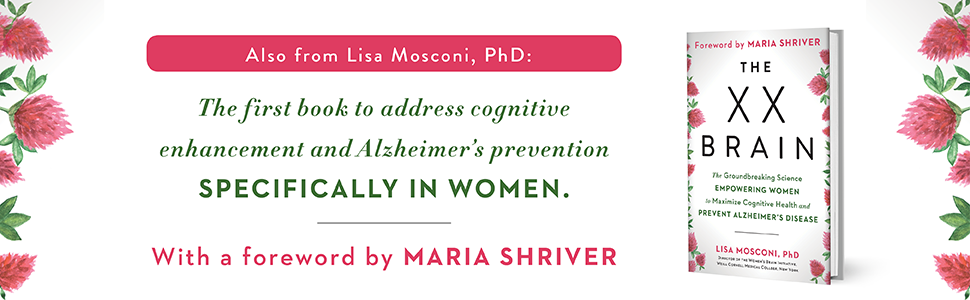
A must read in conjunction with the XX Brain. Changing my life by changing my eating habits. Sleeping better & loosing the weight (gradually & without cravings - quality organic dk chocolate is my treat) I have tried to loose for past 5 years. 🙏🌻
User
Everyone should read this! A very worthwhile read!
First, I’ve read through the reviews and very sad that the negative reviews have so many helpful votes on them and you can tell those reviews didn’t even read the entire book!!!!!!!I read this on our ereader and then had to have a paper copy because I found it so helpful and easy to understand! Sure, it has a lot discussed that we should already know but she goes into detail and discusses studies and her experience with brain scans too. She also does NOT ONLY recommend expensive food items like caviar as one reviewer was brazen enough to say without even reading the book but because “it fell open” to a page that does happen to talk about how good caviar is.I think everyone should give this book a read! She really drives home the importance of a healthy life. It breaks down and explains why and what our diet should look like for a healthy brain. I find she explains the science/studies behind it all in a very convincing and easy to read way. It even includes recipes! I can’t wait to read her next book, The XX Brain.
Trustpilot
1 month ago
1 week ago
2 weeks ago
4 days ago