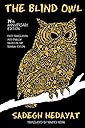
The Blind Owl (Authorized by The Sadegh Hedayat Foundation - First Translation into English Based on the Bombay Edition)
Product ID: 11871559
Desertcart purchases this item on your behalf and handles shipping, customs, and support to South Africa.
Widely regarded as Sadegh Hedayat's masterpiece, the Blind Owl is the most important work of literature to come out of Iran in the past century. On the surface this work seems to be a tale of doomed love, but with the turning of each page basic facts become obscure and the reader soon realizes this book is much more than a love story. Although the Blind Owl has been compared to the works of the Kafka, Rilke and Poe, this work defies categorization. Lescot's French translation made the Blind Owl world-famous, while D.P. Costello's English translation made it largely accessible. Sadly, this work has yet to find its way into the English pantheon of Classics. This 75th anniversary edition, translated by award-winning writer Naveed Noori and published in conjunction with the Hedayat Foundation, aims to change this and is notable for a number of firsts: *The only translation endorsed by the Sadegh Hedayat Foundation *The first translation to use the definitive Bombay edition (Hedayat's handwritten text) *The only available English translation by a native Persian and English speaker *The preface includes a detailed textual analysis of the Blind Owl Finally, by largely preserving the spirit as well as the structure of Hedayat's writing, this edition brings the English reader into the world of the Hedayat's Blind Owl as never before. Extensive footnotes (explaining Persian words, phrases, and customs ignored in previous translations) provide deeper understanding of this work for both the causal reader and the serious student of literature. "....There are indeed marked differences between Costello's and Noori's translations. As Noori indicates, his attempt to preserve the overabundance of dashes gives the reader a more immediate sense of the narrator's agitation...The first sentence flows on in Noori's translation, piling sensation upon sensation never allowing us to pause and catch our breath or separate out the images from the sensations. In his discussion of the relationship between his translation and Costello's, Noori also draws on translation theory and sees Costello's focus on the fluidity of the text in English as a "domestication" of Hedayat's original. Noori's new English translation and his preface are a welcome addition and will no doubt draw the attention of scholars interested in Hedayat's works. The close textual and comparative analysis of the type Noori offers marks a new and long-overdue critical approach to the translation of the most celebrated work of modern Persian prose." -Professor Nasrin Rahimieh in Middle Eastern Literatures Review: A madman commits a gruesome murder. Or does he? - Brilliant in form and content, this novella is a must-read for any lover of psychological thrillers, creative fiction, and foreign literature. It’s for fans of Gabriel Garcia Marquez, David Foster Wallace, Haruki Murakami, Mark Z. Danielewski, Roberto Bolano, and open minds! Our narrator is a physically and mentally ill man, hurriedly writing down the events that led up to his current condition: covered in blood, awaiting arrest. His chosen audience is his owl-like shadow, reflected on the walls of the room to which he's been confined for seemingly an eternity (repeated references to ancient currency and historic artifacts suggest that he’s been suffering for more than a single lifetime, though he occasionally thinks that the life-changing event in his life occurred only 2 months and 4 days earlier. Bouts of uncontrollable laughter and shrieking punctuate the narrator’s nightmarish existence, as all he is capable of, whether he's asleep or awake, is replaying the same images and scenes over and over: a bruised morning glory flower, a crouching old man in a turban, a beautiful young woman in a black dress, a bone-handled knife, a glazed jug, a butcher. His shadow is his only remaining companion as he grows increasingly detached from "the rabble" - his dismissive term for the incomprehensible people who populate the world beyond his room - and waits for death to grant him the relief he has been begging for. To cope with his unbearable pain, our narrator smokes opium, which further contributes to his hallucinatory state throughout the novel. At a high level, the story is as follows. Our narrator was born to a young merchant father and an Indian temple dancer mother. When his father's identical twin brother seduces his mother, she devises a test. The two men have to go into a dark room with a venomous snake. Whoever walks out alive gets to keep the woman. After a blood-curdling scream, the door opens and his uncle (we think - the men are identical twins, after all - so identical that even the woman couldn't tell them apart!) walks out, white-haired and mentally disturbed. The uncle and the narrator’s mother leave town, leaving the narrator in the care of his paternal aunt. The narrator becomes so enamored of his aunt that when her daughter (his cousin) begins to look like her as she grows older, he decides to take the girl as his wife. This young girl becomes the object of his lifelong obsession, jealousy and paranoia, as he convinces himself that she is a whore who sleeps with multiple lovers while denying him any physical contact in order to torture him. In fact, it appears that he takes the young girl by force in order that family members, in keeping with tradition, will require him to marry her. Eventually, during one of his manic episodes, he again forces himself onto his wife, stabs her and dismembers her body. But the book is written in such a way that there is no real reason to believe that this is an actual murder, rather than just another one of his crazy hallucinations or nightmares, the tauntings of his conscience. Our narrator is unreliable, as the memories he conjures up are, by his own admission, without place or time. Characters seemingly blend into each other: his actions are often no more attributable to him than they are to his father, his uncle, the local butcher, or the old peddler/gravedigger, all of whom might be one person! The same is true of his mother, wife, aunt, and nanny. But throughout these indiscernible scenes and persons from his life, he is convinced of one thing: his loneliness and isolation in a life devoid of purpose or meaning. His obsession with possessing his wife is rivaled only by his obsession with death and being erased out of his miserable existence. This is not an uplifting tale. It is a story of pain and suffering. But it is masterfully woven, moving, sad, and unforgettable. Review: A Fascinating, Non-linear and Unsettling Tale - This edition of "The Blind Owl", by Sadegh Hedayat, and translated by Naveed Noori (who provides a very thorough and informative preface) is a fever dream of mystery, pain, lust, and murder. It has brilliant moments of stream of consciousness, almost lyrical, revelations. Our narrator becomes increasingly unhinged and disconnected from himself and the rest of the world. A short, but sense and wild read. I dug it.
| Best Sellers Rank | #1,420,248 in Books ( See Top 100 in Books ) #42 in Middle Eastern Literature (Books) |
| Customer Reviews | 4.2 out of 5 stars 367 Reviews |
K**B
A madman commits a gruesome murder. Or does he?
Brilliant in form and content, this novella is a must-read for any lover of psychological thrillers, creative fiction, and foreign literature. It’s for fans of Gabriel Garcia Marquez, David Foster Wallace, Haruki Murakami, Mark Z. Danielewski, Roberto Bolano, and open minds! Our narrator is a physically and mentally ill man, hurriedly writing down the events that led up to his current condition: covered in blood, awaiting arrest. His chosen audience is his owl-like shadow, reflected on the walls of the room to which he's been confined for seemingly an eternity (repeated references to ancient currency and historic artifacts suggest that he’s been suffering for more than a single lifetime, though he occasionally thinks that the life-changing event in his life occurred only 2 months and 4 days earlier. Bouts of uncontrollable laughter and shrieking punctuate the narrator’s nightmarish existence, as all he is capable of, whether he's asleep or awake, is replaying the same images and scenes over and over: a bruised morning glory flower, a crouching old man in a turban, a beautiful young woman in a black dress, a bone-handled knife, a glazed jug, a butcher. His shadow is his only remaining companion as he grows increasingly detached from "the rabble" - his dismissive term for the incomprehensible people who populate the world beyond his room - and waits for death to grant him the relief he has been begging for. To cope with his unbearable pain, our narrator smokes opium, which further contributes to his hallucinatory state throughout the novel. At a high level, the story is as follows. Our narrator was born to a young merchant father and an Indian temple dancer mother. When his father's identical twin brother seduces his mother, she devises a test. The two men have to go into a dark room with a venomous snake. Whoever walks out alive gets to keep the woman. After a blood-curdling scream, the door opens and his uncle (we think - the men are identical twins, after all - so identical that even the woman couldn't tell them apart!) walks out, white-haired and mentally disturbed. The uncle and the narrator’s mother leave town, leaving the narrator in the care of his paternal aunt. The narrator becomes so enamored of his aunt that when her daughter (his cousin) begins to look like her as she grows older, he decides to take the girl as his wife. This young girl becomes the object of his lifelong obsession, jealousy and paranoia, as he convinces himself that she is a whore who sleeps with multiple lovers while denying him any physical contact in order to torture him. In fact, it appears that he takes the young girl by force in order that family members, in keeping with tradition, will require him to marry her. Eventually, during one of his manic episodes, he again forces himself onto his wife, stabs her and dismembers her body. But the book is written in such a way that there is no real reason to believe that this is an actual murder, rather than just another one of his crazy hallucinations or nightmares, the tauntings of his conscience. Our narrator is unreliable, as the memories he conjures up are, by his own admission, without place or time. Characters seemingly blend into each other: his actions are often no more attributable to him than they are to his father, his uncle, the local butcher, or the old peddler/gravedigger, all of whom might be one person! The same is true of his mother, wife, aunt, and nanny. But throughout these indiscernible scenes and persons from his life, he is convinced of one thing: his loneliness and isolation in a life devoid of purpose or meaning. His obsession with possessing his wife is rivaled only by his obsession with death and being erased out of his miserable existence. This is not an uplifting tale. It is a story of pain and suffering. But it is masterfully woven, moving, sad, and unforgettable.
R**N
A Fascinating, Non-linear and Unsettling Tale
This edition of "The Blind Owl", by Sadegh Hedayat, and translated by Naveed Noori (who provides a very thorough and informative preface) is a fever dream of mystery, pain, lust, and murder. It has brilliant moments of stream of consciousness, almost lyrical, revelations. Our narrator becomes increasingly unhinged and disconnected from himself and the rest of the world. A short, but sense and wild read. I dug it.
Y**H
Excellent
I love it .
L**N
Unpopular (Confused) Opinion
“The Blind Owl,” a novella by Sadegh Hedayat is considered the most important work of modern Iranian lit. I stumbled upon it a few months ago and after reading up on it, learning of its cultural importance and controversy, the English major in me felt compelled to read it. Here’s the thing. Part of me wants to fall in line with all of these five-star ratings saying it’s amazing and epic because I’m supposed to (and it’s wildly considered Hedayat’s Magnum Opus), but the truth is, I finished it and feel like the kid sitting in class where everyone is mind blown and I’m in the corner…confused. If I gave it anything other than a three I’d be a total poser. Here’s what I understood—and from my research this work is realllllly open to interpretation and lots of people who swear by it still don’t really know exactly what it’s about other than a surface overview and spiraling thoughts from there. The book is a slow decent into madness, incredibly dark, claustrophobic, and terrifying. The man, an opium addict in a non-lucid, trance-like, often repetitive state is confessing his thoughts and sins to an image of an owl on the wall (or so I think). He talks often of death and two major (and very opposite) themes of despair and desire are wound throughout the work. For those saying it has Poe vibes, I would agree. For as short as it is, I had to plow through it and was often forcing myself to stick with it counting the pages until it was over. The book is still banned in Iran because it is said to bring about suicide after reading it. The literary junkie in me is glad I read it simply so that I can weigh in on it, but I wish I had read it in my college or a group setting to bounce these thoughts and ideas off of my peers—and for them to possibly shed a bit more light on it for me.
A**L
yowza - tough read but worth it.
Poe, hysteria, manic obsession, death, madness. A beautiful symmetry. I’m amazed by the eloquence and terrified but the darkness. It’s crazy, but beautiful.
H**Y
Surreal (before the term was invented)
This is “Lucy in the Sky with Diamonds” in textual form, written feverishly as if in an opium-induced haze. The narrator is addicted to one or more unattainable women, and has or imagines encounters with them. What’s real and what’s not are unclear. The imagery is of horror films or the Surrealist films of Bunuel. This book is to be read in a gulp, without getting up and going to the bathroom, to get sucked in to the author’s twisted world.
J**M
Mixed Feelings
I scooped this in an attempt to connect with my lineage, and I'm giving it five stars out of loyalty to and love for my ancestral culture, but man this book was lame. Granted I only got about halfway through it, but there was something so cringey about the style, the obsession... Keep in mind I was coming at this after reading Burroughs and Henry Miller, so the psychopathic-nihilist writing finesse had been the most recent trainer of my critical scalpel... but hey that's not illegitimate, even if you think those authors were bad people. Yeah, there's just something limp about this. And all the reviews treat it like it's the movie Hereditary (2018), profoundly disturbing, dark, horrible, liable to inspire suicides.. Yeah the stuff that takes place in the book is technically weird, even disturbing, but the writing style isn't moving enough to convey the story, or the protagonist's experience. I just felt bored, scrunchy-faced and embarrassed at how corny Persians can be. Maybe it's just the translation. PS: Don't watch Hereditary.
P**A
An authoritative translation
An authoritative translation by Noori. So much better than Costello's translation. Why? Because Costello, most likely, based his translation, to some extent, on a French translation of the earliest known book, the Bombay edition. Noori based his translation on a copy of the transcript sent to the Bombay publishers. Also, Noori is a speaker of Persian (the language of the author), unlike Costello. The author tells a story of darkness, broken, for a moment, by a beam of sunlight. He witnesses a woman standing by a stream. Her beauty is like that of a celestial angel. The author writes: ". . . those terrifying and enchanting eyes that seemed to bitterly mock one, those restless, wondrous, threatening and promising eyes of hers . . . and my lifeblood fell into those meaningful and shiny globes and was absorbed into their depths." She disappears from his life as quickly as she entered it. He searches for her . . . Will you like this book? Some compare the author to Poe but I think he's in the same league as Jean Genet -- one of France's greatest writers -- who spent much of his life in the darkness of prisons.
S**I
Arrived in good condition
Yet to read the book ! Came in excellent condition.
S**A
Loved it!
Good quality book
G**G
Great Book and Translation
A great translation of a Persian modernist masterpiece.
A**N
Good translation of the original book
My partner and I are reading this book together. My partner loves this book so we are able to make comparisons in Persian (my partners mother-language), German, and English. It seems to be very good translation based on the comparisons we've made. Not completely done the book but I will update this comment (if I remember) when I am done reading it. My partner would 100% recommend this book to anyone but understand that's it's not a happy book.
K**M
A classic
A psychological classic
Trustpilot
1 month ago
1 month ago