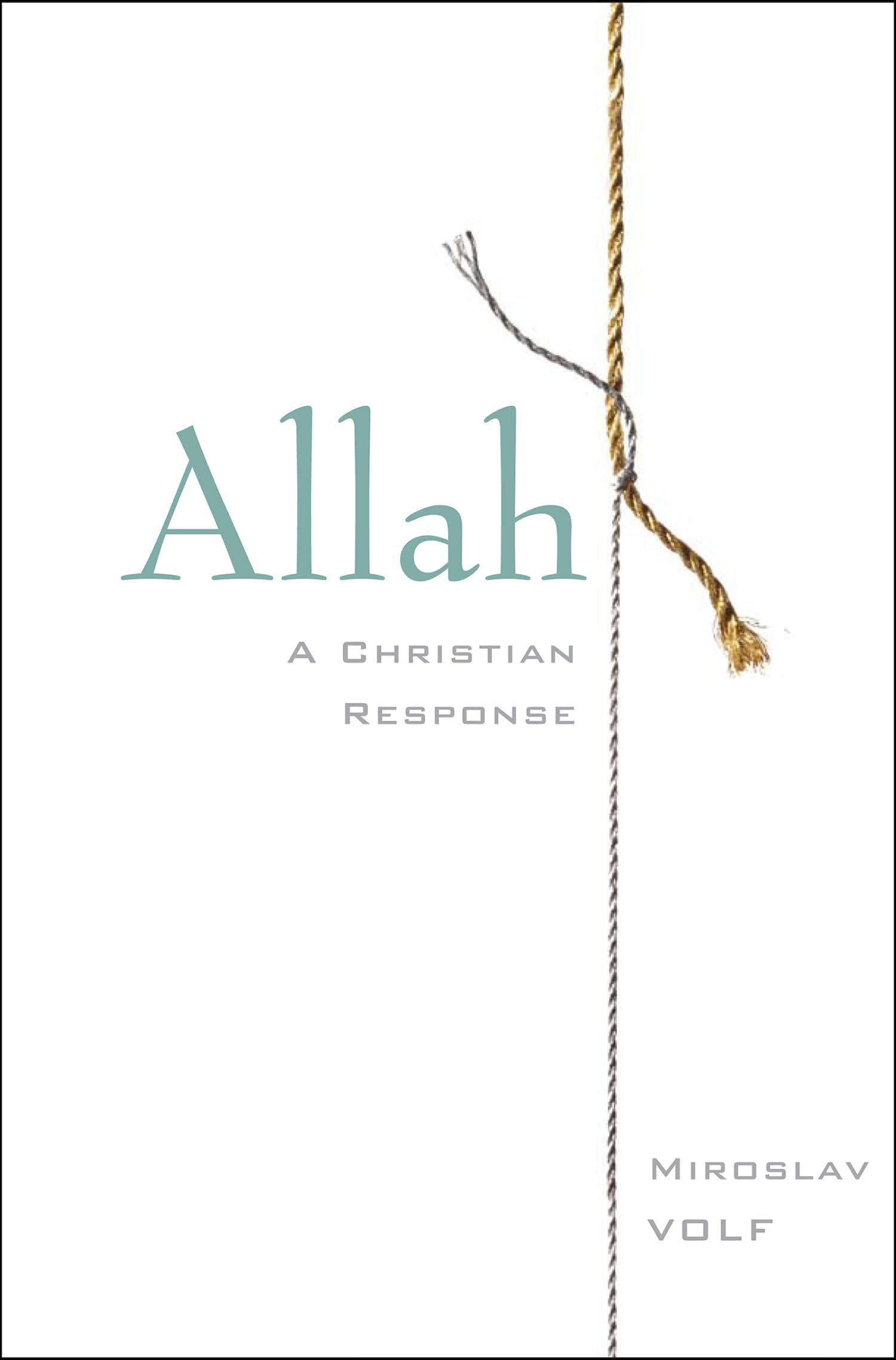
Allah: A Christian Response – A Provocative and Timely Theology of Islam, Muslims, and Dialogue for the Twenty-First Century
Product ID: 109205695
From Miroslav Volf, one of the world's foremost Christian theologians—and co-teacher, along with Tony Blair, of a groundbreaking Yale University course on faith and globalization—comes Allah, a timely and provocative argument for a new pluralism between Muslims and Christians. In a penetrating exploration of every side of the issue, from New York Times headlines on terrorism to passages in the Koran and excerpts from the Gospels, Volf makes an unprecedented argument for effecting a unified understanding between Islam and Christianity. In the tradition of Seyyed Hossein Nasr’s Islam in the Modern World, Volf’s Allah is essential reading for students of the evolving political science of the twenty-first century. But in an age of religious conflict, how can two faiths with such different views of God find common ground? A Common God: Explore the provocative argument that Muslims and Christians worship the one and same God, moving beyond headlines and polemics to find a shared theological foundation. The Trinity and the Qur’an: Discover why a foremost Christian theologian argues that what the Qur’an denies about the Trinity is exactly what orthodox Christians ought to deny as well. Love and Justice: Examine the shared emphasis on a God who is both loving and just, and how these divine attributes provide a moral framework for living together in peace. Political Pluralism: Learn how shared convictions about God can foster a robust political pluralism where two faiths can coexist constructively under a single government. Review: Living with the neighbor who is different - Mirsolav Volf grew up in Yugoslavia, a country that was destroyed by tensions turned into wars among some of its ethnic groups. Two of these wars were between Muslims and Christians. He wrote movingly and perceptively about the cruel drama played out in his homeland in his earlier book, Exclusion and Embrace, Abingdon, 1996. In that book he suggested that the Christian church fulfils its Godly calling in a broken world as it learns to live from a theology of embrace rather than one of exclusion. Miroslav is the son of a Pentecostal Christian pastor who would never abide anything negative being said about any other person -- including Muslims. He writes from an experienced history to seek a better way that is true to the God whom Christians worship. In the introduction to Allah: A Christian Response, Volf, who now teaches at Yale University, declares, "A deep chasm of misunderstanding, dislike, and even hatred separates many Christians and Muslims." His interest, he says, "is the proper Christian stance toward the God of the Qur'an and what that stance means for Christians' and Muslims' ability to live together well in a single and endangered world." And that sets the goal of this book: "to explore how Christian and Muslim convictions about God bear on their ability to live together well in a single world." He also says, "This entire book is about what Christians should think about the issue, not what Muslims should think." On the other hand he hopes that Muslims who read this book will find it treats their religion fairly and that they will be helped in their understanding about Christians. As he says, "I am offering a Christian suggestion to Muslims about how Muslims and Christians might think about the one God we understand and worship in partly different ways and about how to live in the one world and share in light of our convictions about God." His central thesis is that "Christians and Muslims worship one and the same God, the only God. They understand God's character partly differently, but the object of their worship is the same." He rejects "the idea that Muslims worship a different God than do Jews and Christians." The first three parts of the book -- chapters one through nine -- present a tightly but clearly argued review of history, scripture and theology -- both Catholic and Protestant. By Chapter 10 in Part IV Volf concludes, "Muslims and Christians have a common God and partly overlapping understandings of God and God's commandments -- above all that God is one and that God is benevolent and commands us to love God with our whole being and our neighbours as ourselves." The remainder of the book then seeks to explore how it might be possible for Muslims and Christians to live at peace in a threatened world. One of Volf's important conclusions is that, "the claim that Christians and Muslims, notwithstanding their important and ineradicable differences, have a common and similarly understood God (1) delegitimizes religious motivation to violence between them and (2) supplies motivation for care for others to engage in a vigorous and sustained debate about what constitutes the common good in the one world we share." The book does not shy away from tough questions such as the threat that Muslims perceive in Christian mission activity, nor the problems that Christians read in the Muslim refusal under their apostasy laws to allow for Muslims to convert to another religion. This is an optimistic, but also realistic exploration of the problems, pitfalls and challenges that await those Christians who want to reach out to "normative" Islam. It is also a deep challenge to those Christians who want to emphasise the divide between religions. The question always and ever remains whether we embrace or exclude the neighbour who is different. Allah: A Christian Response is, in my view, an invaluable resource that, I hope, will gain a very wide readership. Review: Four Stars - solid, challenging and instructive
| Best Sellers Rank | #439,042 in Kindle Store ( See Top 100 in Kindle Store ) #94 in Women in Islam (Books) #131 in Christian Church Growth (Kindle Store) #209 in Men's Inspirational Spirituality |
G**S
Living with the neighbor who is different
Mirsolav Volf grew up in Yugoslavia, a country that was destroyed by tensions turned into wars among some of its ethnic groups. Two of these wars were between Muslims and Christians. He wrote movingly and perceptively about the cruel drama played out in his homeland in his earlier book, Exclusion and Embrace, Abingdon, 1996. In that book he suggested that the Christian church fulfils its Godly calling in a broken world as it learns to live from a theology of embrace rather than one of exclusion. Miroslav is the son of a Pentecostal Christian pastor who would never abide anything negative being said about any other person -- including Muslims. He writes from an experienced history to seek a better way that is true to the God whom Christians worship. In the introduction to Allah: A Christian Response, Volf, who now teaches at Yale University, declares, "A deep chasm of misunderstanding, dislike, and even hatred separates many Christians and Muslims." His interest, he says, "is the proper Christian stance toward the God of the Qur'an and what that stance means for Christians' and Muslims' ability to live together well in a single and endangered world." And that sets the goal of this book: "to explore how Christian and Muslim convictions about God bear on their ability to live together well in a single world." He also says, "This entire book is about what Christians should think about the issue, not what Muslims should think." On the other hand he hopes that Muslims who read this book will find it treats their religion fairly and that they will be helped in their understanding about Christians. As he says, "I am offering a Christian suggestion to Muslims about how Muslims and Christians might think about the one God we understand and worship in partly different ways and about how to live in the one world and share in light of our convictions about God." His central thesis is that "Christians and Muslims worship one and the same God, the only God. They understand God's character partly differently, but the object of their worship is the same." He rejects "the idea that Muslims worship a different God than do Jews and Christians." The first three parts of the book -- chapters one through nine -- present a tightly but clearly argued review of history, scripture and theology -- both Catholic and Protestant. By Chapter 10 in Part IV Volf concludes, "Muslims and Christians have a common God and partly overlapping understandings of God and God's commandments -- above all that God is one and that God is benevolent and commands us to love God with our whole being and our neighbours as ourselves." The remainder of the book then seeks to explore how it might be possible for Muslims and Christians to live at peace in a threatened world. One of Volf's important conclusions is that, "the claim that Christians and Muslims, notwithstanding their important and ineradicable differences, have a common and similarly understood God (1) delegitimizes religious motivation to violence between them and (2) supplies motivation for care for others to engage in a vigorous and sustained debate about what constitutes the common good in the one world we share." The book does not shy away from tough questions such as the threat that Muslims perceive in Christian mission activity, nor the problems that Christians read in the Muslim refusal under their apostasy laws to allow for Muslims to convert to another religion. This is an optimistic, but also realistic exploration of the problems, pitfalls and challenges that await those Christians who want to reach out to "normative" Islam. It is also a deep challenge to those Christians who want to emphasise the divide between religions. The question always and ever remains whether we embrace or exclude the neighbour who is different. Allah: A Christian Response is, in my view, an invaluable resource that, I hope, will gain a very wide readership.
J**E
Four Stars
solid, challenging and instructive
R**E
A call to radical attitude change among nations/religions
After reading this book on Muslim-Christian conflict, I think the author's unstated thesis is: "I can't change other people's attitudes and actions, I can only change mine." Volf's concern is not what Muslims think of us, or even whether they might be inclined to meet us halfway (although that is his hope) in dialogue and mutual tolerance. He can only speak as a Christian. But this limitation exposes the weakness of his argument in an otherwise excellent book. So what if our "circle" includes them; it matters little if their circle excludes us...unless we love them so much that they come around, which appears to be Volf's sincere hope. In order to promote solidarity, Volf argues that Christianity and Islam have the same God: "Christians and Muslims name in different names and worship in different ways the one true God." However, there is no consensus among Muslims as to whether Allah is the God of Christians (Jews are omitted for the most part from the discussion, as are all other faiths). And some Christians respond to terrorism by concluding "their God can't be ours." Fear of Islam (however justified) does not welcome reconciliation. A stumbling block to harmony is the Trinity. In order to defend a Trinitarian position against the charge that Christians say but don't mean that God is "one", Volf gives the best explanation I've read of the Trinity. Muslim criticism is toward a misguided view of the doctrine, Volf claims...which even many Christians admittedly get wrong; it's a difficult doctrine to grasp. Volf insists, "the talk about `three Persons' does not subvert God's oneness...God is beyond number" (which seems to imply 1 + 1 + 1 = 1). He speculates that the term "person" may not accurately describe what is largely inexpressible (language has limitations). He goes on to say, "The divine `Persons' are tied together in their mutual indwelling...you cannot say that the act of one is the act of that Person alone; the other two are always `in' the third." In dealing with stereotypes, Volf spends considerable time unpacking Pope Benedict XVI's volatile comment that Islam is a violent religion...which resulted in some Muslims declaring the Pope must die. If a Muslim cleric said Christians were violent, would there have been comparable rioting in the streets? My response to Volf's overall argument is that it doesn't matter whether we worship different deities; we can choose to be at peace regardless, with anyone. Volk asks, "Is monotheism by its very nature religiously and politically exclusive?" No, our prevalently Judeo-Christian nation is not at war with India, Japan, or China, yet their religions are even more at odds with ours. Does it really matter (politically) whether or not we worship the same God? Can Muslims and Christians "live under the same political roof and work together for the common good?" Volf asks. In describing religious differences, Volf omits what I see as the major difference between the two, namely grace: "God demonstrates His love for us in that, while we were yet sinners, Christ died for us," Romans 5:8. How do Muslims satisfy the justice of God? But Volf's book is about political theology, not soteriology. This emphasis on justice plays out with Islam's denial of love toward enemies. They are told to love their neighbor...but what if that neighbor isn't a Muslim? Is God's love conditional? In writing to a Christian audience, Volf rightly charges us: "If you say that Your God is unconditional Love, you should show unconditional love towards Muslims." Volf envisions a world that can embrace diversity and religious pluralism, and the free exercise of religion, to include the right to witness and to leave one's religion--no problem in America, but a huge problem in some Muslim countries. But the real issue is the human heart: "Bad people, with no intention of doing good, can think alike about God, and that won't prevent them from being at each other's throats." Volf admits, "We fail often, and fail miserably, not because of our convictions, but despite them." Volf is hoping that Muslims and Christians will decide our religions are not "radically incompatible" and thus choose to coexist for the sake of peace. Otherwise clashes and conflict will continue. Changes in attitudes on a global scale are critical: "Our common future is at stake." There will be no peace unless all nations choose religious tolerance. There must be charitable dialogue, engagement--conversation, not crusade.
S**V
Review on the book: Allah: A Christian Response by Miroslav Volf
Review on the book: Allah: A Christian Response by Miroslav Volf. Decision to purchase this book came after reading an interesting article in Christianity Today "The Son of Crescent" by Collin Hansen Feb 2011 and advertisement in WSJ regarding book of Volf. After reading this article I had so many questions, do we really believe in same God or not. Practically right now everybody agrees that we believe in same God with Jews, but with Muslims? Pope John Paul II declared, yes, we believe in same God. Still so many questions are not answered. This book: Allah: A Christian Response by Miroslav Volf answers many questions and shows the way to solve other problems too. Sometimes this book is very controversial, but gives a lot of information for your own decision. I like to share my experience with Muslim brothers. During my service in Soviet Army in early 80's I had many encounters with Muslims (usually soldiers who served in Soviet Army from Central Asian republics). I understand the problems with using words such as Son of God, Trinity, Jesus Christ, Gospels. When talking about Christian beliefs, everything depends on the background of the believers of Islam. Practically, much of their understanding of religion is based on cultural traditions, on the opinions of people who surrounded them, on family teaching, but not always directly on the Quran. It is much easier to have conversations with someone who reads the Quran himself. We can talk about similarities in Bible and Quran. For person who never read Bible it is amazing discovery. We're not talking about Abraham, Isaac, Ishmael, all that stories absolutely same as in Old Testament. According to Muslims we Christians believe in many gods, believe in human person and have many different sacred texts (4 gospels). Someone who hasn't read the Quran doesn't know that this book contains story about Mary and Jesus (sura 19), Trinity ("And We made the son of Mary and his mother as a Sign: We gave them both shelter on high ground, affording rest and security and furnished with springs". Uran 23:50). Christ is the Word in the Quran too.(Isa son of Miriam is only a messenger of Allah and His Word which He communicated to Miriam and a spirit from Him...(4:171) To make easier conversations with Muslims, it is better to use Quran in the beginning. According to Quran Jesus (Isa) is a second Adam as Paul teaches us too, He is a Word as in John 1:1, and even according to Quran Isa is much higher than Mohamed. His birth story is very similar to what we know from Gospels. Also, Mary is the only woman who is mentioned by the name and she even has a special sura: 19 Mariam. Another problem for Muslims believers is that we have four Gospel; according to their teaching Isa must have only one book, it's why Mohamed was chosen to fix all mistakes. "And We caused Jesus, son of Mary, to follow in their footsteps, confirming that which was (revealed) before him in the Torah, and We bestowed on him the Gospel wherein is guidance and a light, confirming that which was (revealed) before it in the Torah - a guidance and an admonition unto those who ward off (evil). (5:46)" For me this question is much more difficult. Also they believe that Isa will come before the end. For someone of Muslims background who didn't read Quran my advice: go buy the book and read, because conversations with such person who has no knowledge of Quran is nonsense. He will tell you hundreds of stories, what he thinks from Quran but they are not to be found in the text, and it is very difficult to read aloud Quran for this person because he will not believe that this is a real Quran. He will tell you that only right Quran is in Arabic, but when he asked to read on Arabic he can't. Many similarities in conversation have Jews when you talk to them. Jesus Christ to them is a dirty word, but when you start to talk about Messiah it will be different and they will listen. Couple years ago I had very interesting conversation with young Jews during a flight from Paris to Jerusalem. For two hours we have been talking about the Messiah and his coming. They were Hassidic. But still we had problems when I started to read Old Testament: Ps 2, Is 53 in English, they told me that my translation is wrong. Basically I am making the point that when I follow sacred texts (Quran or Torah) rather than religious traditions and traditional stories, believers have a tendency to not think critically but instead follow according their lifelong experience. In conclusion I can tell from my own experience: we can preach Gospel and Jesus Christ using Quran for Muslims, and afterwards invite them to small Bible Study group (they can be afraid of large gatherings in churches). Same situation is with Jews, we can tell them about Messiah using Old Testament (basically Torah, Isaiah and Psalms) and afterwards bring them in small groups as Jews for Jesus, where they have familiar faces around. I believe that this book: Allah: A Christian Response by Miroslav Volf is very useful not only for Christian and also to Muslims. After reading this book we can understand each other more respectfully. I think that background of author Miroslav Volf (he was born in former Yugoslavia with great diversity Christian and Muslims)) helps him to make this book. March edition of Christianity today published an interview with Miroslav Volf: Do Muslims and Christians Worship the Same God? I think it will be very helpful to everybody who interesting with interreligious contacts
G**M
Well researched, and well reasoned
Volf is not aiming at "evangelism" as many Christian books are the subject do; his goal is to create a framework and a foundation for civil dialogue and peaceful political co-existence by drawing out some key similarities and compatibilities. It is significant to note that Volf acknowledges that for Christians, none of the similarities are enough to constitute a "saving knowledge" of God; his focus is on the implications of this "social knowledge." One could almost see it as a Christian rebuttal to Huntington's popular but simplistic "Clash of Civilizations" argument several years ago. And yet, this book is so much more. It is a stunning tour de force look at the subject in a way that is equal parts "historical theology," "philosophical theology," "systematic theology," and "political theology." Most Christians would gain from the extensive history Volf provides of what the Church has said about its Muslim brothers and sisters. Much of our post 9-11 conclusions about Islam are fearful and hateful....and stunningly ignorant. Volf deconstructs the quick and cheap arguments against a "common God" (like those that insist the Trinity is incompatible with the Qu'ran) by drawing on sources like a famous letter from a Cardinal some 800 years ago, Martin Luther, and a modern day letter from a Muslim prince signed by Islamic "theologians." Volf is also clear, though, about the key differences (and distortions!) in the understanding of this God; having a "common God" does not mean having the same vision of that God. Well researched and well reasoned, Volf in a C. S. Lewis-esque argument style, clearly and compellingly calls us to the common ground of "love for a single, sovereign, benevolent God who commands us to love our neighbor" as a starting point for political dialogue.
B**G
Four Stars
Interesting read for Christians.
B**R
A thoroughly Christian response to Islam
In this book Volf relies primarily on the resources of Christian theology (and only secondarily on philosophy) to argue that mainstream Christians and normative mainstream Muslims worship the same God. Acknowledging worship of a common God does not rule out significant differences between the two groups: Volf is NOT in the "all religions are basically the same" camp. When Christians and Muslims hold the belief that they worship a common God AND follow the ethical precepts of that God, summed up as loving God and loving neighbor, then they have a strong basis from which they can pursue peace and the common good with each other. The most surprising part of the book was his analysis of the Christian doctrine of the Trinity in the light of Islamic monotheism. By his accounting, and he relies on traditional orthodox accounts of the Trinity, the affirmations and denials that make up the doctrine are well in line with Muslim teachings on the nature of God. Particularly interesting was his use of Nicholas of Cusa, a Christian theologian and philosopher who wrote eirenically toward Islam in the medieval era. If you are looking for a thoroughly biblical and deeply Christian rationale for engagement with Muslims, you need to consider this book and its arguments. Volf's style is clear and accessible, with plenty of scholarly substance, yet written in a way accessible to non-scholars. If you take up Volf's arguments, you will find ways to maintain a deep commitment to Christ (even be an exclusivist committed to witness to Muslims) while loving Muslims in a way they will very likely perceive to be loving.
H**F
Timely and full of “sight”
We live in a world beset by demons of fear, hate, and prejudice between Christians and Muslims. But it is also a world in which faithful disciples, of Jesus and Mohammad, seek to overcome them, if not exorcise them, by walking the path of faith. Miroslav Wolf is one of those. He asks central questions—most importantly, do we worship the same God?—and examines the implications when the answer is, “Yes.” Living in a town that has experienced the work of these demons first-hand (Murfreesboro, Tennessee), I know how healing it is when right-hearted worshipers from both sides meet, talk, and share life with each other. And how blessed are those encounters. The importance of this book is not the answers Wolf provides but the effort to examine the questions. As Episcopalians, he and I share a love of and appreciation for convocation: come, let us reason (and perhaps to pray?) together. This book is a great vehicle for that conversation.
E**R
A Deeply Reflective Read
Miroslav Volf takes a great deal of time to reflect into the relationship between Christians and Muslims. On the deepest levels I resonate that for us to truly love God we must love all others regardless of religious, political, or national differences. My prayer is that we might share that love in a way that might foster it's equal return.
M**N
A clear and comprehensive discussion of a potentially confusing issue
Ten years on, Volf has provided one of the most thorough examinations of a question that came to be asked more often after 9/11: “Do Muslims and Christians worship the same God?” At one end of the spectrum we mainly find exclusivist conservative evangelical Christians who say “No!” and claim that any other response confuses and betrays the Gospel. They compare other beliefs with counterfeit banknotes: however closely they resemble the real thing, they can never be the same. At the other end, are those like Volf who claim that to assert: “Muslims and Christians do worship the same God” is something which helps to build bridges and promote harmony. In fact Volf’s response is more nuanced than his opponents admit. At one point (page 123) he says; “No simple yes or no is possible”. Ultimately it may not be a helpful question, because people’s perceptions of the degree of difference lie on a spectrum, and a yes or no answer is a binary choice based on an arbitrary boundary. However, as the “primary drafter” of the “Yale response” to the Islamic initiative “A Common Word”, Volf is more familiar than most with the ongoing debates.
J**N
Un livre phare pour les temps que nous vivons
Ce livre est écrit avec intelligence et respect en doses égales. Loin de critiquer la foi musulmane, l'auteur nous amène dans une recherche approfondie de ce que croient les musulmans non-extrémistes et dessine un chemin d'entente entre Chrétiens et Musulmans montrant ce qui nous unit sans passer outre ce qui nous distingue.
C**H
Four Stars
Good for the essay as described
P**A
Eye-opener
Interesting points of view. Makes one think.
Trustpilot
3 weeks ago
2 months ago